When you purchase through links on our site, we may earn a commission at no extra cost to you. Learn more.
“Pet the belly,” they said. “It’ll be fine,” they said. Then came the claws, the betrayal, and the deeply personal hiss. So… do cats like belly rubs? Sure, some do, until they absolutely don’t.
Table of Contents
Some cats offer the floof as a gift of trust. Others? It’s bait. This article will help you decode which one you’re dealing with before you reach in and lose a finger.

Do Cats Like Their Belly Rubbed?
Here’s the thing: a cat showing you their belly isn’t always an invitation. Sometimes it’s a “try it, human” trap.
Yes, some cats genuinely enjoy a good belly rub. It’s a vulnerable move, and for a rare few, it means trust. But for most, the exposed belly is a defensive posture. Not a green light to dive in with both hands like it’s tummy time at a dog park.
Want our human-written content to rank above AI-generated garbage? Help us out by clicking this button!
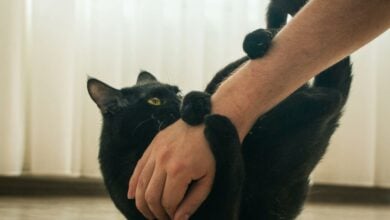
When a cat rolls onto its back, it could just be stretching, cooling down, or showing they’re comfortable around you, but not necessarily asking for affection. The result? You reach in, and your sweet, purring pet goes full kung-fu murder mittens.
Trust Fall or Trap?
| Cat Behavior | What It Probably Means |
|---|---|
| Belly exposed, eyes half-closed, paws relaxed | Chill vibes. Might allow a gentle rub. |
| Belly exposed, ears twitching, tail flicking | Warning signs, this cat is on alert. |
| Belly exposed, staring you down, back legs tense | Ambush mode. Abort mission. |
Bottom line: don’t assume the floof is friendly. Cat bellies are emotional minefields. So, pet with caution, or prepare for betrayal, including claws out and even a nip or serious bite if the kitty feels frightened.
Most felines enjoy being petted, at least a little. However, where they like petting is a different story. No two animals are the same, and all have individual preferences. Only some purr babies are comfortable with being touched in this area.
Up next: The real reasons cats show their belly in the first place, and why it has nothing to do with you.
Why Do Cats Show Their Belly?
A cat flopping onto its back can feel like a grand gesture of affection, but that belly flash isn’t always what it seems.
In the wild, a cat’s belly is its most vulnerable area. Exposing it isn’t just a sign of trust; it can also be a defensive move. When a cat lies on its back, it has better access to all four paws (and claws) plus its teeth. Translation: they’re fully armed and ready to strike.
Other times, it’s just physics. Cats stretch like this when they’re comfortable, when they’re hot and need to cool their core, or when they want to scratch their back on the floor.

Sure, some cats do it because they trust you. But trust doesn’t always mean “please rub my guts.” For many cats, physical affection has limits, and the belly is the line.
There is a large misconception that all kitties like their bellies rubbed or that when a cat lies back and exposes the abdomen, they want to be petted. This is most likely because dogs expose their belly to the ones they love because they want good boy and girl belly rubs. But not cats.
Understanding why your cat is showing their belly is the first step to not misreading the moment and getting swatted for your efforts.
Up next: Let’s decode what belly rubs actually mean to cats and why they’re so hit-or-miss.
What Belly Rubs Mean to Cats
Humans see belly rubs as affection. Cats see them as… something else entirely.
To cats, touch is all about context and control. Some love a firm cheek scratch but absolutely lose it if you even hover near their stomach. That’s because the belly is loaded with nerve endings, making it one of the most sensitive spots on their body. For many cats, rubbing it feels less like affection and more like sensory overload.
It’s also worth noting that not all cats were socialized to enjoy human touch in the same way. A belly rub might be comforting to one cat and feel like a threat to another, even if they like being petted elsewhere.
Then there’s overstimulation. A cat might enjoy a belly rub for three seconds, until it flips, bites, and bolts. That doesn’t mean they never want it. It means they wanted it on their terms, and you missed the window.

So yes, some cats like belly rubs. Others tolerate them briefly. And many prefer you just admire the belly from a safe distance.
Up next: Find out which cats actually enjoy belly rubs and who’s just baiting you with the fluff.
Which Cats Say Yes to Belly Rubs?
It’s not just luck; some cats really are more likely to enjoy belly rubs than others.
Cats with laid-back personalities, high socialization from kittenhood, or strong bonds with their humans tend to be more open to full-body touch. Breeds like Ragdolls, Maine Coons, and Sphynx cats are known for being especially tolerant, or even enthusiastic, about belly rubs.

Age matters too. Kittens might be more playful and curious about touch, while senior cats often become more sensitive and less tolerant of overstimulation. Even cats in the same litter will have different preferences regarding affection and human touch.
And cats that have been spayed or neutered can sometimes become more affectionate overall, but that doesn’t guarantee belly access.
Up next: How to tell, without a doubt, if your cat actually wants a belly rub.
Signs Your Cat Secretly Loves Belly Rubs
Yes, some cats actually enjoy a good belly rub, but they’re not going to send you a written invitation. You’ll need to read the signs. These include:
- Exposing the belly, rolling over, and stretching out in front of you
- Purring and nuzzling on you
- Experiencing deep relaxation
- Pawing at you for attention
- Rubbing up against you
- Breathing slowly and steadily. Upright ears and a slowly moving tail.
- Pushing at you with their head and face
- Upright ears

There’s no sudden tail flicking, no tense muscles, no laser-focused stare like you’re the prey. Just chill body language and maybe even some full-body flop action.
These cats exist, but they’re rare. If you’ve got one, appreciate the trust. If your cat gives you even two seconds of belly rub tolerance without retaliation, take the win and stop while you’re ahead.
Up next: The red flags that mean your cat is not feeling the belly love and what to do before the claws come out.
Warning: When a Belly Rub Will End in Betrayal
Just because a cat shows their belly doesn’t mean it’s safe to touch. In fact, that’s often the moment right before the ambush.
The stomach area is a very sensitive part of the body for felines. Their tummies, along with the feet, legs, tail, and whiskers, are generally body areas kitties would prefer we leave alone.
The abdominal area contains all of a kitty’s vital organs, including the kidneys, liver, and primordial pouch. The primordial pouch is made up of fatty tissue and extra skin and protects those vital organs. Both males and females have them.
Watch for these danger signs:
- Showing their tummy
- Swatting and clawing at your hands or feet
- Biting
- Running away and hiding
- Hissing and growling
- Going very quiet
- Twitching skin and muscles
- Ears pinned back and thrashing of the tail
These aren’t mood swings. They’re precision-calculated feline warnings. Touch the belly now, and you’re officially in the splash zone.

Along with feeling uncomfortable with petting in their tummy area, felines can also experience petting-induced or overstimulation aggression. Their sensitivity threshold varies from cat to cat, but they can reach a point where this physical touch becomes painful to them rather than enjoyable.
Felines who are experiencing petting-induced aggression need time and space to calm down. It is also essential to have your purr baby checked out by the veterinarian, as it can be due to pain in their body.
Sometimes, it’s not about mood at all. If your cat suddenly reacts negatively to belly touch when they didn’t before, it could signal pain, illness, or a medical issue like skin sensitivity, digestive discomfort, or injury.
Pay attention. A cat that’s normally chill but suddenly gets defensive isn’t being “grumpy”; they’re trying to tell you something important.
Up next: The five petting zones cats actually enjoy, no betrayal, no claws, just purrs.
The 5 Safe Petting Zones Cats Like More Than Their Belly
If the belly is a trap, these spots are the treasure map.
Most cats prefer touch in places that feel good but don’t make them feel vulnerable. Stick to these zones and you’re way less likely to get swatted:
- Behind the ears – Soft fur, lots of scent glands, zero risk
- Under the chin – Instant purr button for most cats
- Along the cheeks – Another scent zone, often overlooked
- Top of the head – Head boops are basically hugs
- Base of the tail – Some love it, some hate it, so test gently
Want bonus points? Let the cat initiate. If they nudge your hand into a certain spot, congratulations, you’ve been granted temporary access.

Just keep your hands away from the belly unless you know you’ve earned that level of trust. These five zones? Usually safe, effective, and claw-free.
Up next: Can you actually train your cat to enjoy belly rubs, or is it a lost cause?
Can You Train a Cat to Like Belly Rubs?
Short answer: kind of. Long answer: only if your cat’s personality allows it.
Cats aren’t wired to enjoy full-body handling the way dogs are, but with trust, timing, and tons of patience, you might be able to condition a cat to tolerate, maybe even like, belly rubs.
Here’s how to increase your odds:
- Build trust first. If your cat doesn’t already enjoy petting elsewhere, don’t even think about the belly.
- Go slow. One-second touches at first, max. Watch for reaction cues.
- Use positive reinforcement. Treats, gentle praise, or slow blinks afterward can create good associations.
- Know when to stop. If the tail flicks or pupils dilate, back off immediately.
- Respect their baseline. Some cats will never enjoy belly rubs, and that’s normal.
Trying to force it won’t make your cat more affectionate. It’ll just make them avoid you.
Our Team’s Personal Experience With Feline Belly Rubs
We have quite a few feline friends here on the LoveYourCat crew, and from our survey of 10 kitties, only two like or even tolerate tummy attention.
One of the LYC kitty crew reports a cat liking tummy attention only with feet. However, the owner must take care to wear socks, or their foot gets shredded. Others, however, react worse to feet than to hands.
One cat of the ten tolerates tummy touching for more than just a few minutes and is fine with both hands and feet. However, that pet has a limit and will let owners know with a soft nip.

The kitty that tolerates abdominal attention the most likes it when our male cat lies on his side, but not particularly when he lies on his back. This cuddly buddy is fine with being picked up, cuddled, and rubbed on his stomach, but will clearly let you know when he is done.
I have personally owned over 10 cats and have only had one or two that even tolerate being touched on the stomach area.
In our case, the majority of kitties do not like tummy massages, and most take great offense. Based on our experience and research, we can confidently say that most felines don’t like tummy attention.
Up next: Should you even bother with belly rubs at all? The final answer.
Should You Try Cat Belly Rubs at All?
Here’s the truth: most cats don’t want belly rubs. And that’s okay.
The exposed belly might mean “I trust you,” but it doesn’t always mean “please touch me here.” It’s a compliment, not a consent form.
If your cat rolls over and stretches out, enjoy the moment, but don’t assume it’s an invitation. Watch their body language, respect their limits, and keep your hands in the safe zones unless you’re absolutely sure the belly is open for business.
And if you do have a belly-rub-loving cat? You’ve won the feline lottery. Proceed with caution, and maybe wear long sleeves.
Frequently Asked Questions
Still curious about the mysteries of the floof? Here are quick answers to the most common questions cat parents ask about belly rubs. Got one I missed? Drop your question in the comments – we’d love to hear what your cat does.
What Does It Mean When a Cat Lets You Rub Its Belly?
If your kitty lets you rub their tummy, this is a sign of ultimate trust and contentment and is a great compliment. The abdomen is one of, if not the most vulnerable spot, on a feline’s body. Permission to pet and touch this area means a kitty truly trusts you.
This behavior is often reserved for a special person, a kitty’s primary caretaker, someone they have imprinted on, rather than a stranger or someone with whom they are uncomfortable.
Can I Train My Cat to Like Belly Rubs?
It is certainly possible to try to train your pet to tolerate and even like these. Owners must remember that some kitties simply do not like their bellies touched, and this is not an issue to force.
However, if your kitty is mildly tolerant of tummy touches and you would like to increase that tolerance, you may be able to train this behavior.
This will only be possible if you have a kitty motivated by treats, food, and rewards. By offering positive rewards after petting, owners can associate this behavior with positive actions and feelings. But it is not possible to train every pet to like the human touch.
Is It Rare For Cats To Want Belly Rubs?
It is not necessarily rare for cats to enjoy tummy massages, but that does not mean it is extremely common either. Of course, felines are unpredictable creatures and are all individual animals. Some cats like them, while others do not.
In our experience, more would prefer no petting in the stomach area, but there is no way to determine exactly how many kitties like or do not like rubbing on their bellies.
What Percentage Of Cats Like Belly Rubs?
This is a hard question to answer, as there have been few, if any, studies done on the percentage of cats that appreciate belly massages. Many kitties will tolerate minimal abdominal rubbing. For some, this can be just a few brief seconds. For others, it can last a few minutes or more.
Keep Your Cat Happy Beyond Belly Rubs
If your cat isn’t a fan of tummy time, keeping their nails trimmed with the best cat nail clippers can help protect your hands when they decide playtime’s over. For cats that prefer a good grooming session, the best cat brush can turn petting into a bonding ritual without risking the belly trap.
If your cat has energy to burn, a cat exercise wheel is a safer outlet than ambushing your hand during rub attempts. And for anxious cats who tense up at any kind of touch, the best CBD oil for cats may help them relax and enjoy affection on their own terms.
Survived a Belly Rub? Tell Us Below! Did your cat purr like an angel or go full ninja on your hand? Share your belly rub victory (or horror story) in the comments. We’re keeping score.