When you purchase through links on our site, we may earn a commission at no extra cost to you. Learn more.
Your cat gives your hand a few sweet licks—and then, without warning, CHOMP.
Table of Contents
Most of the time, this lick-then-bite routine is normal feline communication. It may be part of grooming, play, affection, or your cat’s way of saying, “That’s enough touching now.”
The body language around the bite matters more than the bite alone. A relaxed cat giving a gentle nibble is very different from a tense cat with flattened ears, twitching skin, or a whipping tail. Sudden, forceful, or increasingly frequent biting can also point to stress, overstimulation, or pain.
Here’s how to tell which message your cat is sending, and how to spot the chomp before it lands.
Want our human-written content to rank above AI-generated garbage? Help us out by clicking this button!
What to Watch for Before the Bite
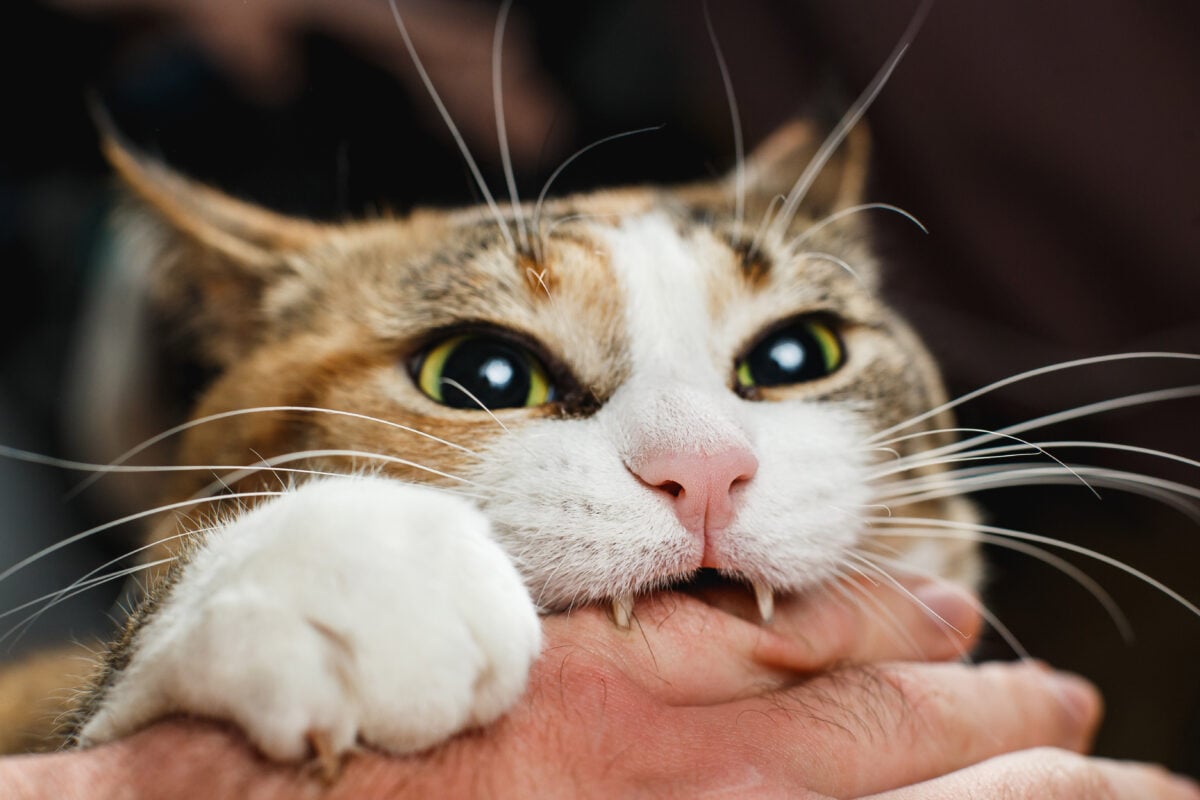
Cats rarely go from perfectly relaxed to biting without showing at least one small warning. The signs can last only a second, so watch for:
- A flicking or thumping tail
- Ears turning sideways or flattening
- Skin twitching along the back
- Pupils suddenly widening
- The body becoming unusually still
- Turning away or trying to leave
One sign does not automatically mean a bite is coming. But when several appear together, stop touching your cat and give them room to move away.
Why Does My Cat Lick Me Then Bite Me?
It’s a classic move in the feline playbook. Your cat licks you like you’re the love of their life, then suddenly chomps down like you’re a chew toy. What gives?

Lick-then-bite behavior is surprisingly common and often rooted in instinct, mood, or communication quirks. Think of it less as betrayal and more as a cat’s version of “mixed signals.”
It’s not always aggression. Licking and biting can be how your cat communicates affection, playfulness, or even mild annoyance.
Cats don’t speak our language, so they use their mouths and body language to get the point across. A lick might mean “I like you,” and a bite might mean “but not that much right now.”
At other times, the bite is part of the same ritual, such as grooming, marking territory, or initiating play.
So no, your cat isn’t turning on you. They’re just being cats.
Next, let’s break down the most common reasons cats lick and then bite.
7 Surprising Reasons Your Cat Licks You, Then Bites
Not all lick-bite combos mean the same thing. Your cat could be showing love, setting a boundary, or just vibing in their own weird little way.
Here are the seven most common reasons behind this classic feline move—and the body language clues that can help you figure out which one is happening.
1. Overstimulation
Sometimes the bite simply means your cat’s senses have reached their limit.
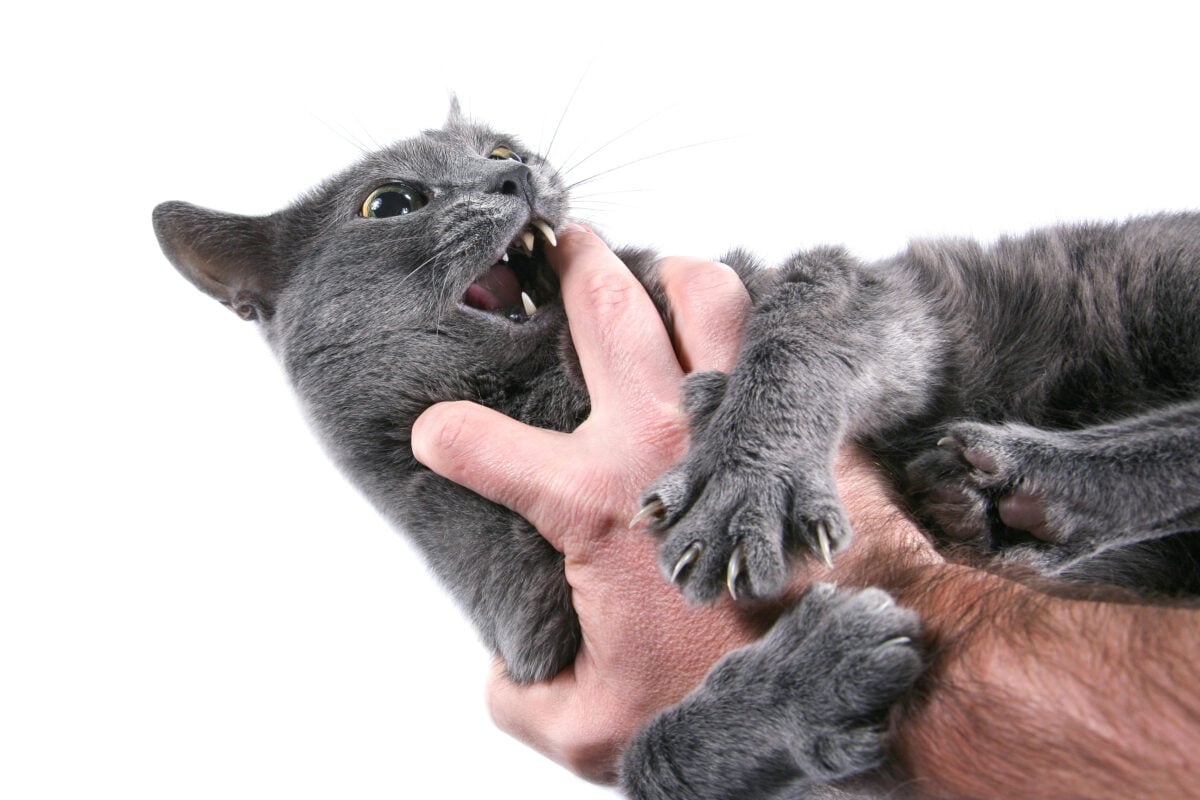
Too much touching, noise, movement, or activity can turn an enjoyable interaction into sensory overload. The licking may begin as affection or self-soothing, while the bite is your cat’s way of saying, “I need a break.”
Watch for: Skin twitching, faster tail flicking, ears turning sideways, widening pupils, tense muscles, or sudden stillness.
Stop petting as soon as these signals appear. Let your cat move away rather than trying to calm them with more touch.
Our Personal Experience: Luna Doesn’t Do Repeat Pets
Overstimulation seems to catch people off guard, especially those used to dogs. My cat Luna is especially prone to overstimulation bites.
I had to train my partner to watch for her warning signs so he knows when to offer pets and when to give her space.
– Tara Maurer, Cat Parent & Love Your Cat Writer
2. Petting-Induced Aggression
Petting-induced aggression is more specific than general overstimulation: the touch itself is the immediate trigger.
Your cat may enjoy the first few strokes but become uncomfortable when petting continues too long, repeatedly touches the same spot, or reaches a sensitive area such as the belly, lower back, or base of the tail.

Even purring does not always mean your cat wants the interaction to continue.
Watch for: Turning toward your hand, suddenly stopping their purr, tensing their shoulders, flattening their ears, twitching the tip of the tail, or shifting as though preparing to leave.
Keep petting sessions short and pause occasionally. If your cat leans back in, continue. If they turn away or move off, let the session end.
Watch the Warning Signs Before the Bite
In this video, notice how the cat’s body language changes before the nip. Tail flicking, tense posture, shifting ears, and attempts to move away can all mean petting time is over.
Still Concerned? Talk to your vet or a feline behaviorist to rule out underlying pain or anxiety.
3. Play Biting
A quick lick, gentle nip, and dramatic getaway can be an invitation to play.
Play bites are usually brief and controlled. Your cat may crouch, wiggle, pounce, run away, and return for another round. This is especially common in kittens and energetic adult cats that have learned hands are part of the game.
A playful cat typically has a loose, bouncy posture rather than a stiff or defensive one.
Redirect the action to a wand toy, kicker toy, or soft ball instead of wrestling with your fingers. The goal is not to stop normal play—it is to give your cat’s teeth a safer target.
4. Grooming Behavior
Cats often combine licking with small, careful nibbles while grooming themselves or a trusted companion.
When your cat does this to your hand, hair, or face, they may be treating you like a member of their social group. The nibble may help separate hair, remove debris, or simply continue the grooming rhythm.
A grooming bite should feel controlled, and your cat’s body should remain loose and relaxed.
If the pressure increases or their posture becomes tense, the interaction may have shifted from bonding to overstimulation. Stop the session and give your cat space.

5. Familiar Scent and Social Bonding
Licking can help create a familiar shared scent and may be part of the way your cat bonds with you.
The bite that follows is not necessarily a declaration of ownership. It may be a grooming nibble, a request for attention, or a quick boundary once your cat has had enough interaction.
Look at the entire sequence rather than the bite alone. A relaxed posture, soft eyes, and a controlled nibble suggest social behavior.
A stiff body, flattened ears, whipping tail, or forceful bite means your cat is uncomfortable and needs space.
6. Stress or Anxiety
Stress can make a cat’s behavior change quickly.
A cat unsettled by guests, loud noises, a new pet, schedule changes, or too little enrichment may become clingier, hide more often, groom excessively, or react sharply during contact.
Licking may help your cat self-soothe, while biting creates distance when they begin to feel overwhelmed or trapped.
Watch for: Crouching, scanning the room, ears held back, rapid grooming, hiding, pacing, a tucked posture, or repeatedly trying to leave.
Reduce the immediate pressure and give your cat access to a quiet retreat. If the behavior continues, consider what has recently changed in their environment or routine.
7. Pain or Illness
A new, unusually intense, or increasingly frequent bite can mean something hurts.
Your cat may lick for comfort and then bite when your hand touches a painful area. Skin irritation, mats, wounds, dental discomfort, arthritis, and other medical problems can all make a normally friendly cat less tolerant of contact.
Watch for: Flinching, guarding one area, limping, reduced jumping, hiding, appetite changes, excessive licking of one spot, or biting only when a particular area is touched.

Do not repeatedly press or test the suspected sore area. Arrange a veterinary examination if the behavior begins suddenly, becomes more forceful, or appears alongside other physical or behavioral changes.
Cat Lick-Then-Bite Decoder Chart
Not sure what your cat’s mixed signals really mean? The lick-then-bite move can have very different meanings depending on context, body language, and even timing.
Use this quick-reference guide to decode what your feline might be trying to say, and how you should respond.
| Behavior | What It Likely Means | What You Should Do |
|---|---|---|
| Lick → Gentle Bite | Playful or affectionate grooming | Engage with a toy or let them initiate play |
| Lick → Sudden Hard Bite | Overstimulation or sensory overload | Stop petting, give them space |
| Lick → Bite While Sitting On You | Territory marking or mild dominance | Let them chill, but avoid escalating touch |
| Bite → Lick | Apology or social bonding | Stay calm and observe their body language |
| Bite During Cuddles | Petting-induced aggression | Limit petting time and avoid sensitive zones |
| Frequent Grooming + Biting | Anxiety or boredom | Increase stimulation, try calming aids |
| Unprovoked or Intense Biting | Pain or underlying medical issue | Contact your vet |
Bite First, Lick Later? 3 Things This Could Say About Your Cat
So your cat flips the script. First comes the bite, then the lick.

It might feel like an apology, but this reversal has its own meaning. A bite followed by a lick can signal a few different things:
- A quick mood shift. Your cat gets overstimulated or annoyed, then immediately tries to smooth things over.
- Dominance or control. The bite marks territory or sets a boundary. The lick is a softer follow-up, like saying, “We’re still cool.”
- Grooming behavior. Sometimes they bite to get your attention and lick because they think you need cleaning.
If the bite is gentle and your cat seems relaxed, it’s likely harmless. But if they clamp down hard or appear agitated, give them some space and reassess your interaction.
If this behavior starts suddenly or becomes more intense, think about what might have changed. A new pet, a different food, or even a shift in your daily routine can throw off your cat’s sense of stability. Minor changes to us can feel huge to them.
Is the Behavior Changing?
Lick-then-bite behavior is often normal, but sudden or escalating changes deserve attention.
Notice whether it happens after petting or play, at the same time each day, or after a recent change in your cat’s routine. Patterns can help you tell the difference between normal communication, stress, and possible discomfort.
When a Cat Bite Is More Than Just a Nip
Even a small cat bite or scratch can introduce bacteria beneath the skin, so do not ignore it if the skin is broken.
Wash the area right away with warm, soapy water. Keep it clean and watch for increasing redness, swelling, warmth, pain, or drainage.
Contact a healthcare professional if the wound is deep, will not stop bleeding, is on the hand, face, foot, or near a joint, or begins showing signs of infection. You should also seek advice if the cat appears sick, its rabies vaccination status is unknown, or your tetanus vaccination may not be current.
If your cat has started biting aggressively or unpredictably, schedule a veterinary visit to rule out pain or illness before treating it as a behavior problem.
How to Stop the Love Bites: 4 Gentle Ways
You love your cat. You just do not love being used as a chew toy.
When licking turns into biting too often—or the bites are getting harder—these steps can help set clearer boundaries without adding fear or stress.
1. Redirect Biting to a Toy
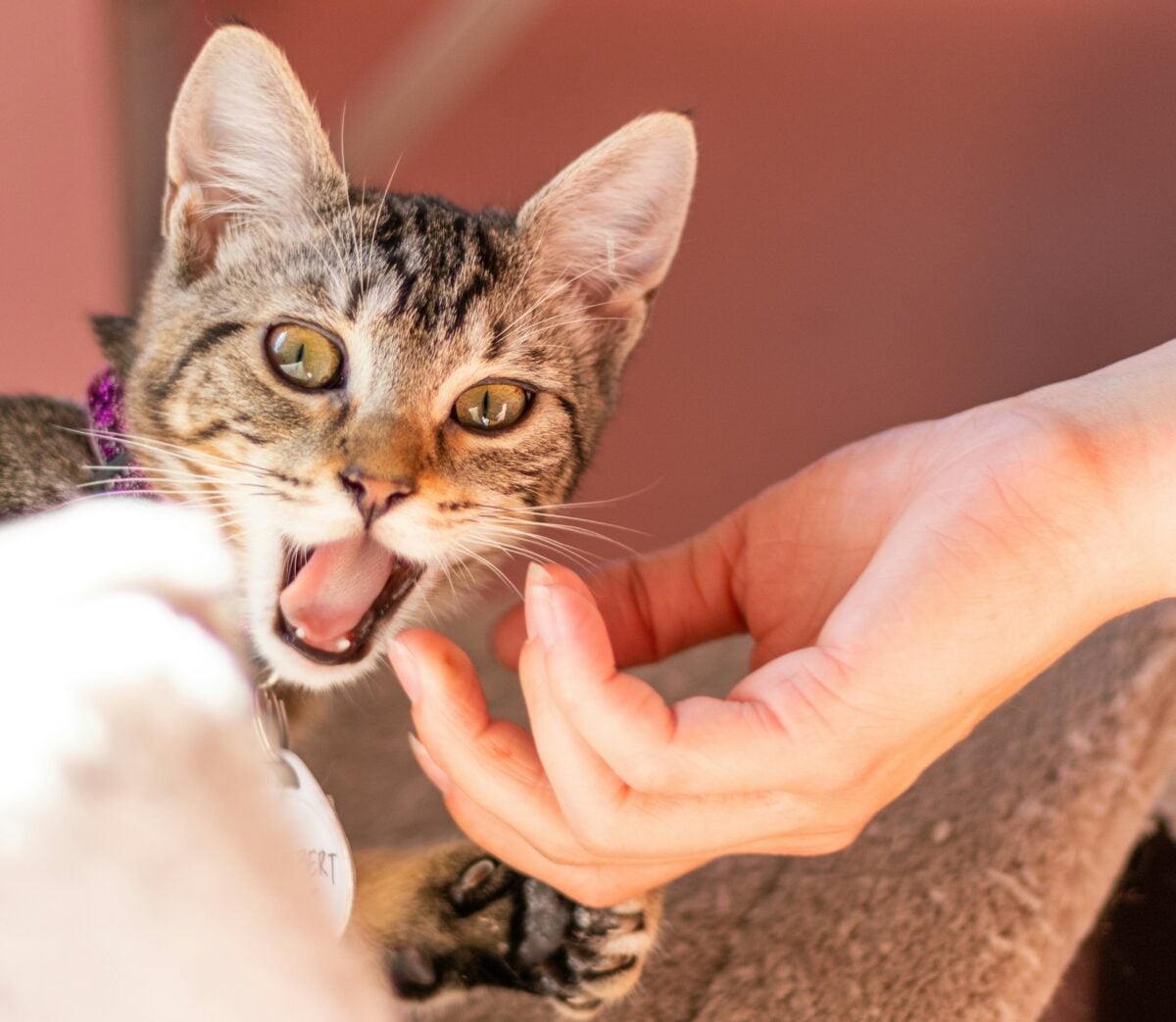
Give your cat an appropriate target for their hunting and play instincts.
Use wand toys, kicker toys, soft balls, or puzzle feeders to burn off extra energy. If biting begins during petting, calmly end the interaction and offer a toy once your cat has settled.
2. Keep Your Reaction Calm
Sudden movement, yelling, or physical punishment can increase excitement or fear.
Do not wrestle with your cat or turn the bite into a game. Stay still, allow them to release, and quietly end the interaction. Consistent, calm responses help teach your cat that biting makes attention stop.
3. Reward Gentle Behavior
Pay attention to the moments when your cat plays softly, keeps their claws in, or stops before biting.
Reward that behavior with praise, a treat, or continued play. Positive reinforcement makes it more likely that your cat will repeat the calmer choice.
A pheromone diffuser may also help some cats when stress is contributing to the behavior, but sudden or persistent changes should be discussed with a veterinarian. Some owners find calming aids like catnip, pheromone diffusers, or vet-approved CBD products helpful as part of a routine
4. Teach That Hands Are Not Toys
Avoid using your fingers or feet for wrestling, especially with kittens.
A playful nip may seem harmless when your cat is small, but the habit can become painful as they grow. Use toys for chasing, grabbing, and kicking instead.
Quick tip: Keep a toy nearby during cuddle time so you can redirect your cat as soon as you notice tail flicking, skin twitching, or other signs that a bite may be coming.

Frequently Asked Questions
Cats are full of contradictions, especially when it comes to affection. Below are answers to some of the most common questions about feline licking, biting, and everything in between.
Don’t see your question? Ask us in the comments!
Why Does My Cat Lick Me Aggressively?
Licking is usually a sign of affection, but it can feel intense if your cat is excited or anxious. What seems aggressive to you may just be enthusiastic grooming.
If it comes with biting or happens suddenly, your cat may be overstimulated or trying to get your attention.
Why Does My Cat Lick Me, Bite Me, Then Run Away?
Your cat may be inviting you to play, releasing a burst of energy, or ending the interaction on their own terms.
A playful bite is usually gentle and followed by loose, bouncy movement, a quick sprint, or a return for another round. If your cat runs away with flattened ears, a whipping tail, or a tense body, they were more likely overstimulated and wanted space.
Pay attention to what happened just before the bite. If it followed petting, your cat may have reached their limit. If it happened during an energetic moment, it was probably part of play.
Why Does My Cat Bite Me Gently After Grooming Me?
Gentle nibbling can be part of normal social grooming.
Cats sometimes use their front teeth to work through fur, remove debris, or continue the grooming rhythm. When your cat does this to you, they may be treating you like a trusted member of their social group.
It is usually harmless when the bite stays soft, and your cat’s body remains relaxed. Stop the interaction if the pressure increases or you notice tail flicking, flattened ears, skin twitching, or other signs of irritation.
Is Biting Always Caused By Aggression?
Not at all. Most feline biting is not aggressive. Soft bites are often part of play or a way to say “I need space.”
True aggression usually comes with other warning signs like hissing, growling, or tense body language.
What Cat Breeds Are Most Likely To Bite?
Some breeds are more prone to high-energy or dominant behavior. Siamese cats are known for being vocal and assertive, which can include nipping.
Bengals, Sphynx, Pixie Bobs, and Scottish Folds also tend to be more active or reactive. Keep in mind that individual personality and environment play a big role, too.
That said, any cat may bite if they are in pain or dealing with a medical condition that makes them sensitive to touch, like arthritis or skin issues.
Breed matters, but health and environment do too.
Why Does My Cat Bite Me While Cuddling?
Your cat might love the cuddle session at first, but if they bite partway through, they are likely overstimulated or done with touch for now. Watch for subtle signs like tail twitching, flattened ears, or body tension before the bite happens.
Can I Train My Cat To Stop Biting Completely?
You can reduce or redirect biting with consistency and patience. Use toys for play, reward gentle behavior, and avoid reinforcing biting with attention.
While you may not eliminate every nip, you can teach your cat better boundaries.
Want To Decode More Strange Cat Behaviors?
Your cat’s lick-then-bite move is just one part of their mysterious behavior toolbox. If you’re still scratching your head over growling, kneading, or staring contests at 3 a.m., we’ve got answers. Explore the behaviors cat owners eventually stop questioning and the cat behaviors that seem rude but usually aren’t.
Lick ➝ Bite Club: Your Turn! Has your cat ever licked you sweetly… then gone full Dracula? We want to hear your story! Drop your funniest, weirdest, or most “what just happened?!” lick-then-bite moment in the comments. Your chaos cat might just be totally normal or totally legendary.