When you purchase through links on our site, we may earn a commission at no extra cost to you. Learn more.
At first glance, every giant, fluffy cat looks like it could stride out of a snow-covered forest or claim a sunny window as a royal throne. But not all big-furred beauties are the same.
Table of Contents
Some are Siberian Forest Cats, the Arctic noble of the feline world, built for deep Russian winters with a cloud-soft triple coat and a fearless, athletic spirit. Others are Maine Coons, the charismatic all-American royal with a lionlike mane, outsized personality, and a legendary history rooted in New England lore.
So how do you choose between these two fluffy furballs when both seem equally majestic and made for snuggling? This guide compares the Siberian Cat vs Maine Coon, from looks and temperament to the lifestyle each one fits best.
Spot The Difference: Siberian vs Maine Coon
At first glance, the Siberian Forest Cat and the Maine Coon look strikingly similar. Both are large, longhaired cats with winter-ready coats and an impressive amount of fluff. With their size and luxurious fur, it is easy to assume they come from the same lineage.
Want our human-written content to rank above AI-generated garbage? Help us out by clicking this button!
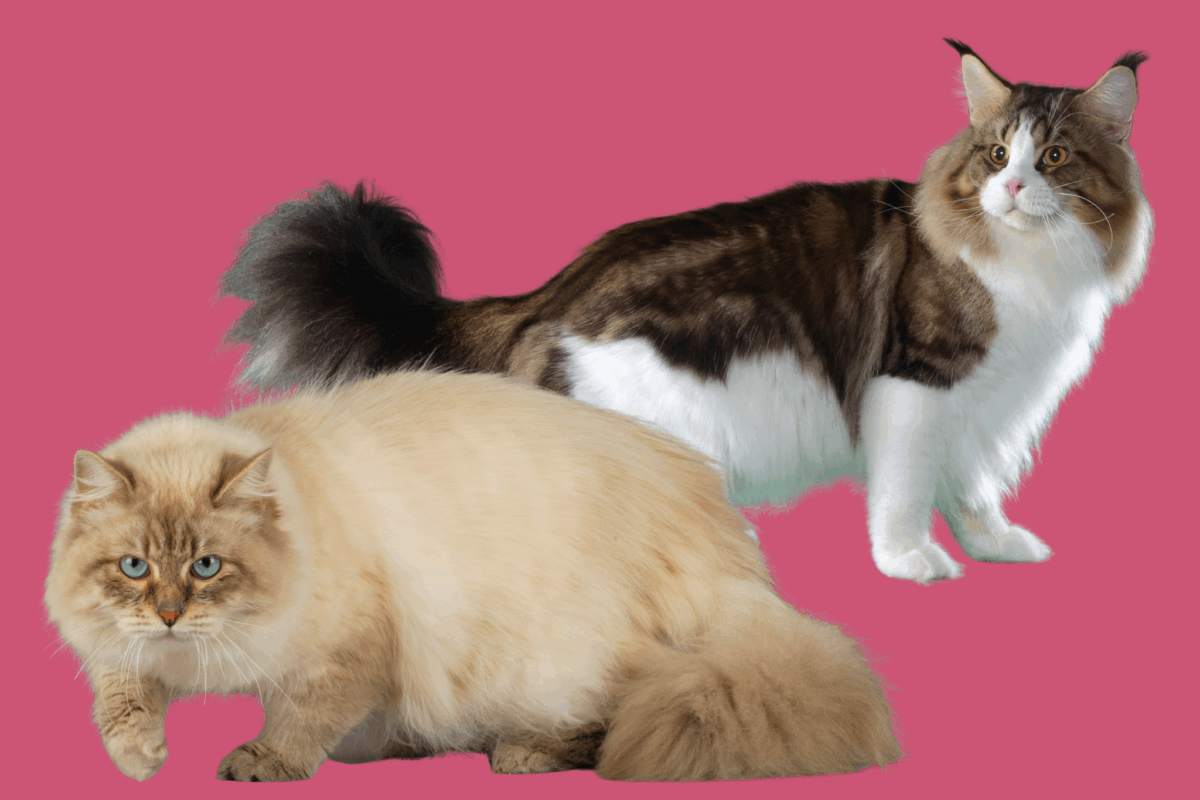
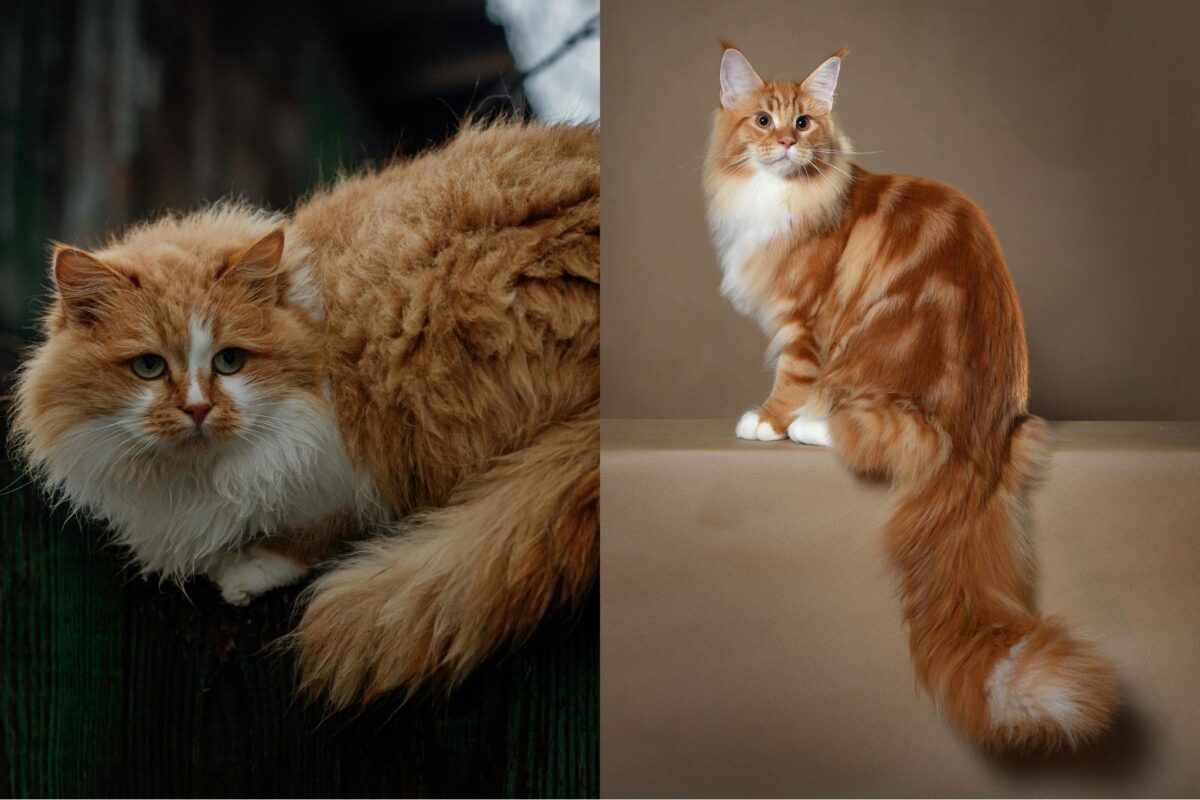
A closer look tells a different story. Siberian on the left, Maine Coon on the right.
Siberians tend to have rounder heads, fuller cheeks, and a plush triple coat that sits close to the body. Maine Coons usually have longer, more rectangular frames, a square muzzle, taller ears, and those iconic tufted tips that give them a slightly wild expression.
Both breeds are undeniably majestic, but their coat texture, face shape, and overall silhouette make it possible to tell them apart once you know what to look for. Here is how these two gentle giants compare side by side.
Breed Comparison
- SizeLarge, muscular, compact build
- SizeLarge, long-bodied, rectangular frame
- CoatPlush triple-coat, springy texture
- CoatShaggy double-coat with dramatic mane
- TemperamentSocial, curious, easy-going
- TemperamentFriendly, affectionate, doglike
- Energy LevelModerate to high
- Energy LevelModerate
- Good For Allergies?Known for lower Fel d 1 levels
- Good For Allergies?Not hypoallergenic
- Grooming NeedsHigh during seasonal sheds
- Grooming NeedsModerate to high
- Lifespan13 to 15 years
- Lifespan10 to 15 years
- Cost$$$$
- Cost$$$
- OriginRussia
- OriginNew England, USA
The Making Of A Cold-Weather Cat
Both of these cats developed in harsh, chilly climates, but on opposite sides of the world. Their origins shaped everything from their coat texture to their size to the way they move.
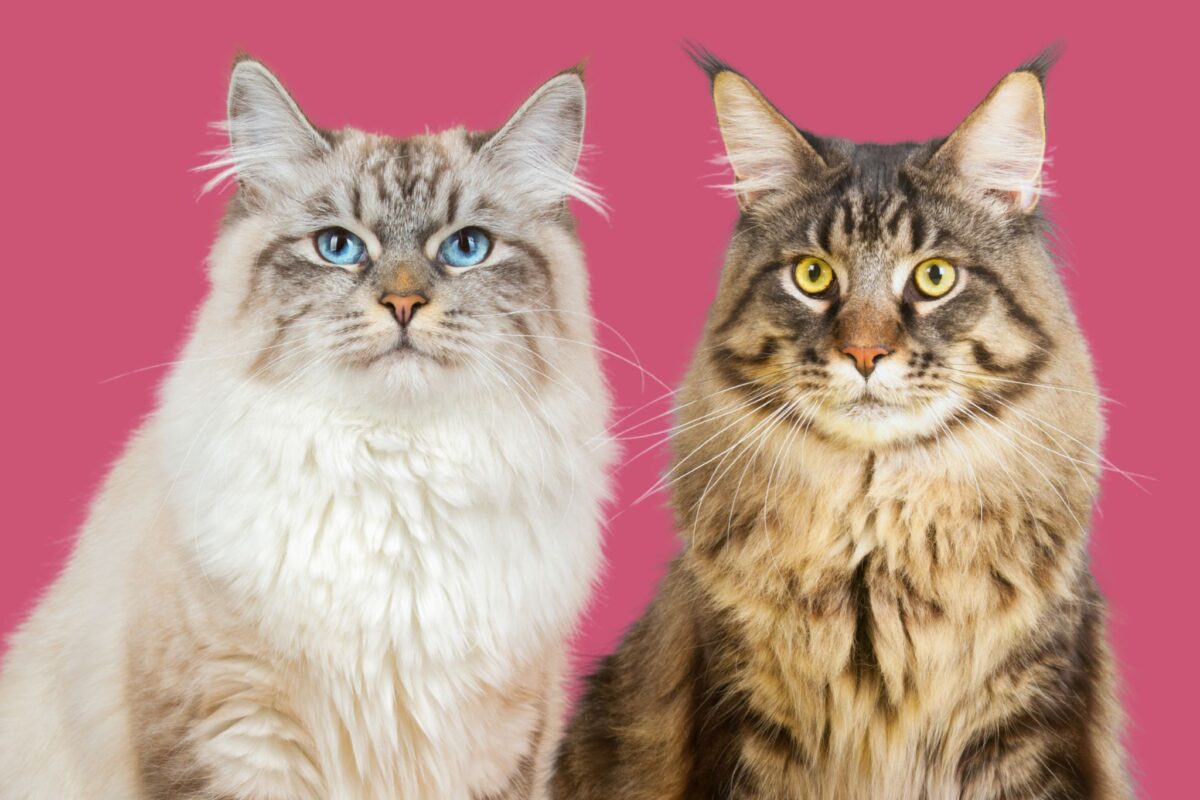
The Siberian Forest Cat is a natural breed that evolved in the snowy Russian wilderness hundreds of years ago. Its dense triple coat, strong build, and impressive agility were all survival tools for navigating icy forests and long winters. Siberians were prized as farm cats and companions, known for their bravery and keen hunting instincts.
The Maine Coon also has working-cat roots, but its story begins in New England. Early settlers valued these large, shaggy cats for their ability to keep barns and ships free of mice. Over time, the Maine Coon became a regional icon known for its bushy tail, striking ruff, and friendly, outgoing personality.
Today, both breeds carry the rugged charm of their origins. Their size, fluff, and strength all trace back to generations of life in cold, demanding environments.
Watch: You can see the differences in this short video from The International Cat Association (TICA), where they compare the Siberian Cat vs. Maine Coon, and — bonus — a Norwegian Forest Cat.
For a deeper dive into how Maine Coons compare with Norwegian Forest Cats (and how that helps clarify what you’re looking at), check out this article: Maine Coon vs Norwegian Forest Cat.
Head To Tail: What Sets Them Apart
These two breeds share the same oversized, fluffy silhouette at first glance, but a closer look reveals apparent differences in shape, expression, and texture. Let’s compare the looks of the Siberian Cat vs. Maine Coon.
Reading The Eyes
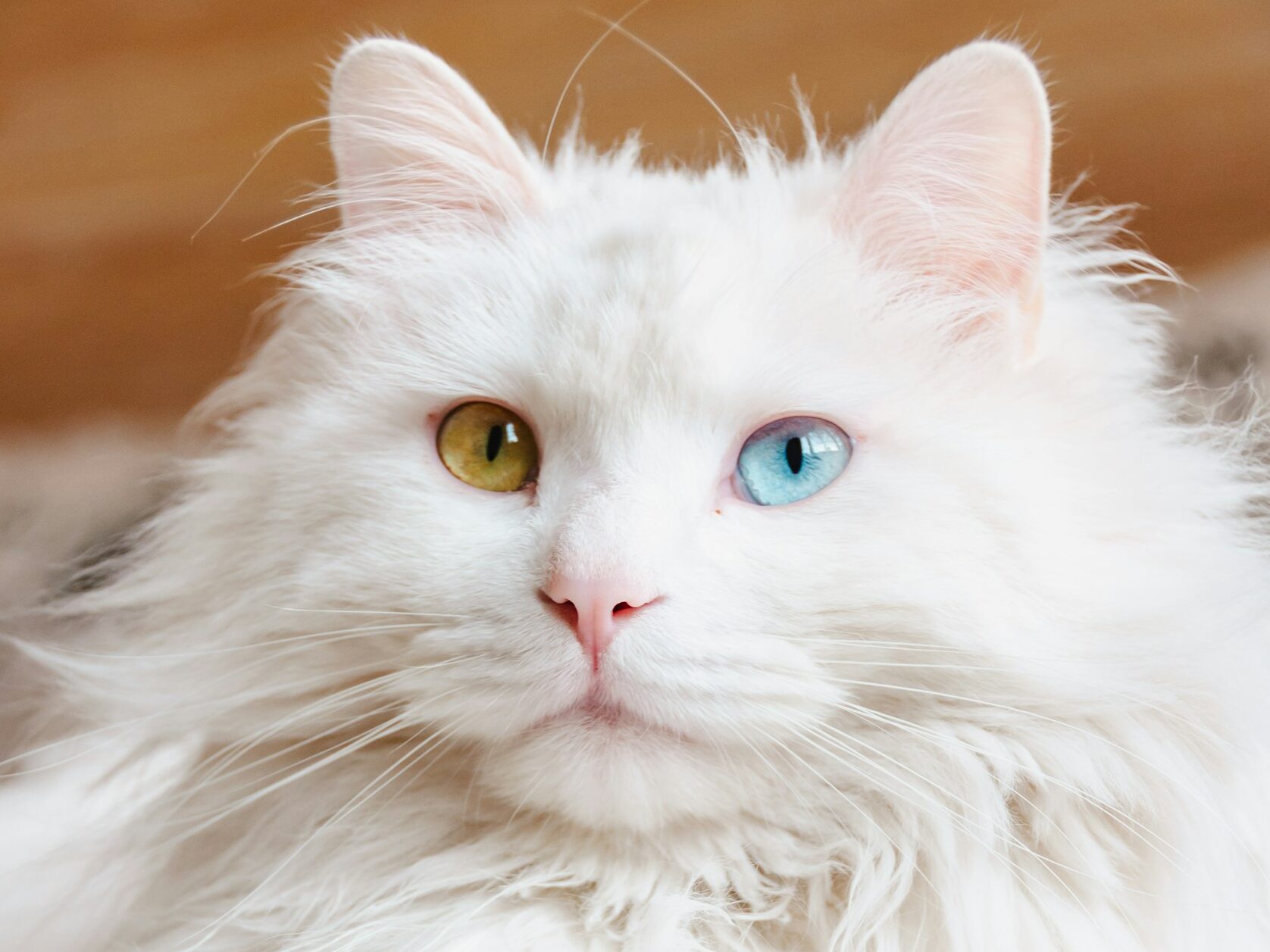
The Siberian’s eyes are medium to large and almost round, giving the breed a curious, expressive look. Even as adults, they keep a kitten-soft warmth that makes their expression feel open and friendly.
Their eyes sit relatively close together, which adds to that alert, engaged appearance. Siberians can have green, gold, green-gold, copper, blue, or odd eyes, with only color-pointed cats consistently showing blue.
The Maine Coon’s wide-set eyes are more oval-shaped and gently taper toward the outer corners. This creates a slightly wilder, more lynx-like expression that pairs naturally with their tall ears and long muzzle.
Maine Coons also come in green, gold, green-gold, and copper. White cats and cats with white may have blue or odd eyes.
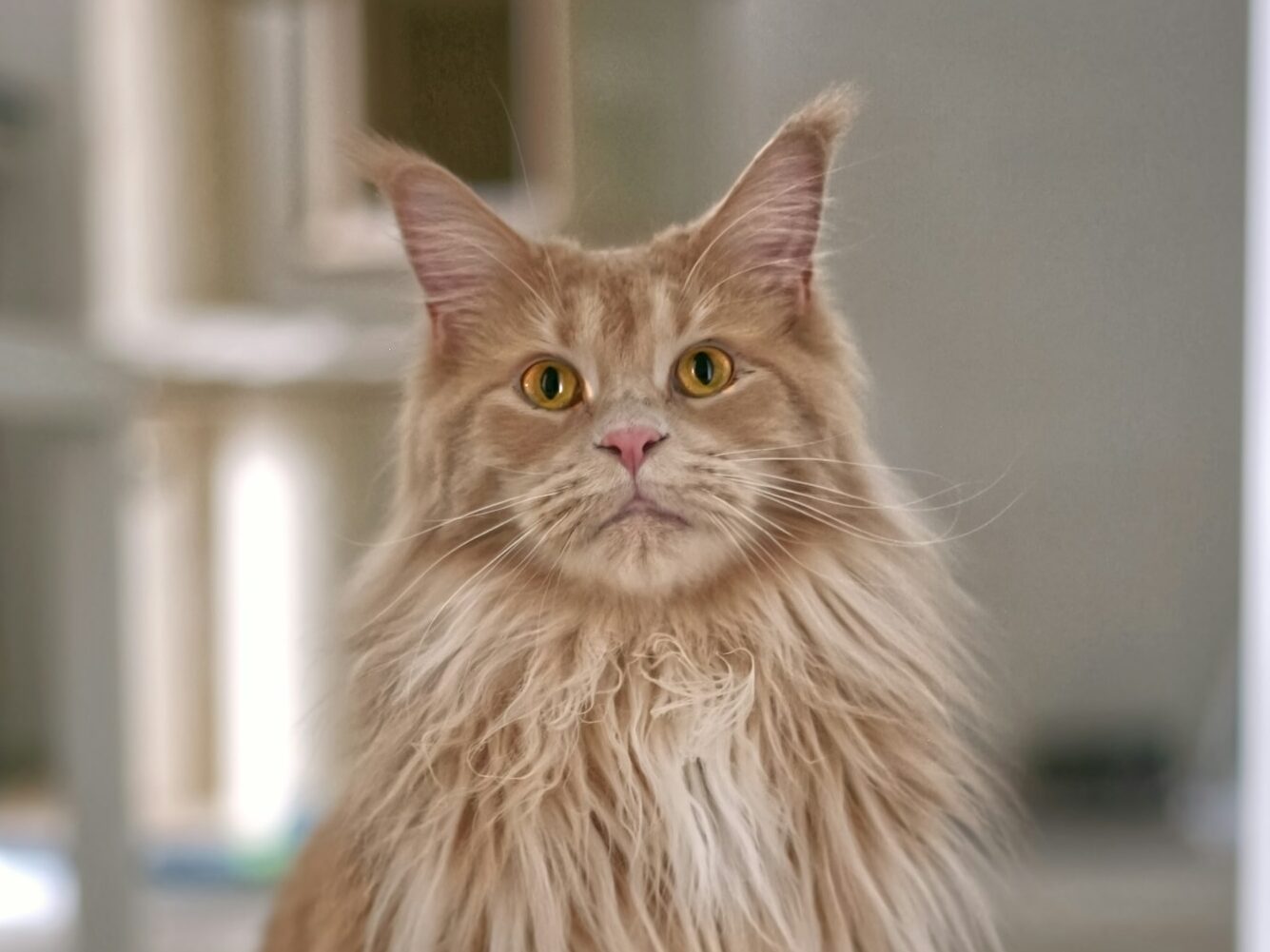
Quick Takeaway For Buyers: Choose a Siberian if you love big, round, almost kawaii-style eyes with a warm, friendly expression. Choose a Maine Coon if you prefer an open, curious eye with a more wildcat-inspired look.
Face Shape & Expression
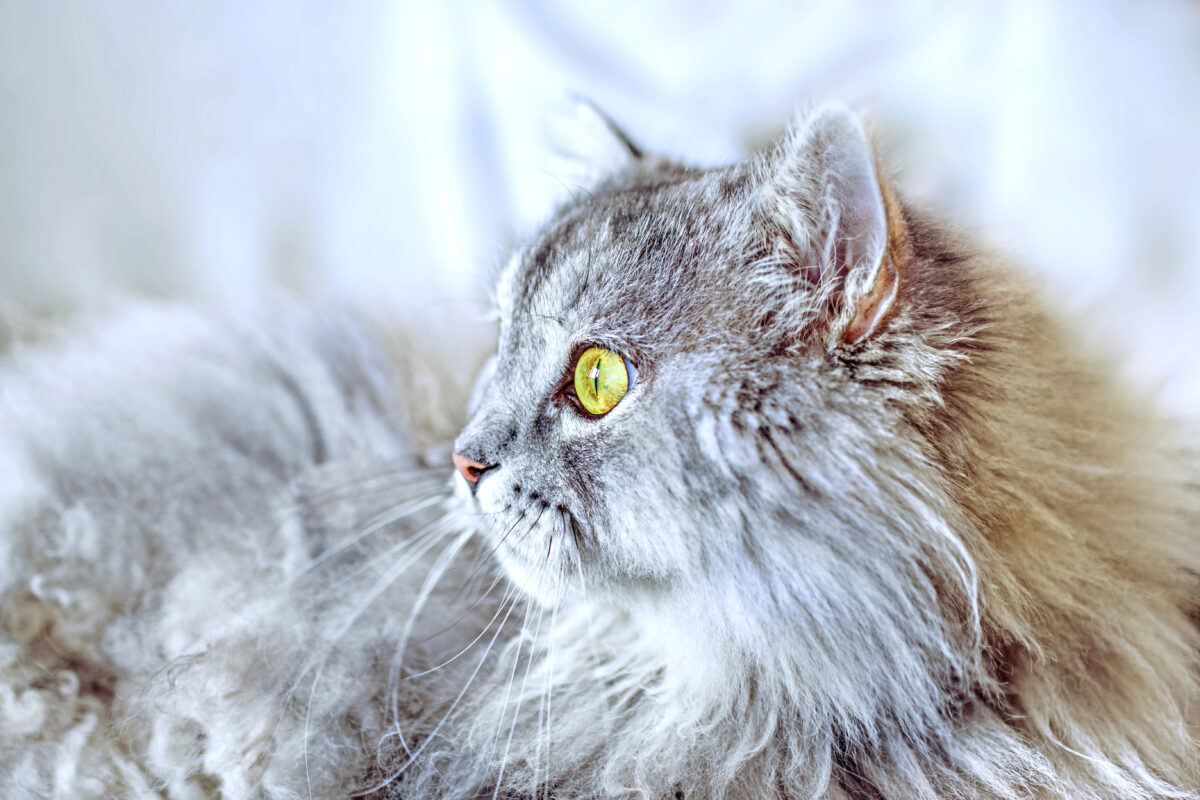
A Siberian has a rounded face, sturdy cheeks, and a shorter muzzle. The head forms a modified wedge, and the features blend smoothly, creating a sweet, friendly expression.
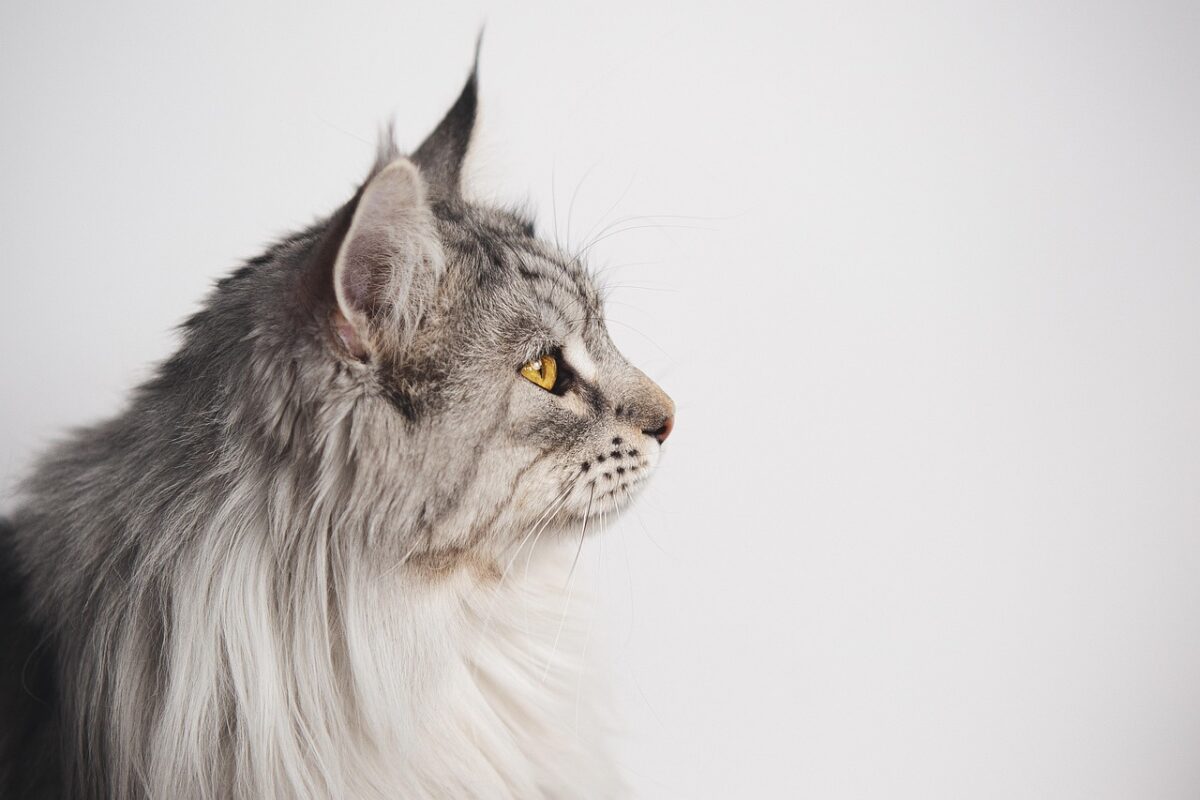
The Maine Coon is instantly recognizable by its long muzzle and visibly squared jaw. The head is medium in width but slightly longer than it is wide, which gives the face a more rectangular, structured appearance. Paired with a prominent ruff, it creates the classic lion-like look fans love.
Body Built For Winter Survival
The Siberian has a compact, muscular body with strong legs and a solid, athletic build. The general impression is one of circles and roundness rather than long rectangles.
Males typically weigh 12 to 18 pounds and females 8 to 12 pounds. Their shape stays plush and sturdy rather than long and lean, creating a powerful yet cuddly silhouette.
The Maine Coon has a long, rectangular body with broad chests, long torsos, and substantial bone structure. Males usually weigh 13 to 20 pounds and females 7 to 11 pounds.
It is worth noting that certain breeders prioritize exaggerated size, which can lead to health issues and is not recommended for the cat’s long-term well-being. You can learn more about their growth via our Maine Coon size chart.
A healthy Maine Coon often reaches the size of a small dog, such as a Beagle, while a Siberian tends to be slightly smaller and more compact.
Watch: Siberian and Maine Coon size comparison. Although their weights often overlap, the Maine Coon’s stretched, rectangular body makes it look noticeably larger, while the Siberian has a rounder, more compact “marshmallow” shape.
Quick Takeaway For Buyers: Choose a Siberian if you want a large but compact cat with a rounded, marshmallow-soft silhouette. Choose a Maine Coon if you prefer a longer cat with a dramatic, rectangular build and big presence.
The Signature Coat
The Siberian has a dense triple coat that feels plush, springy, and incredibly insulating. Their fur varies from coarse to soft depending on color, and they have a full, cloudlike ruff around the neck that makes them look even rounder.
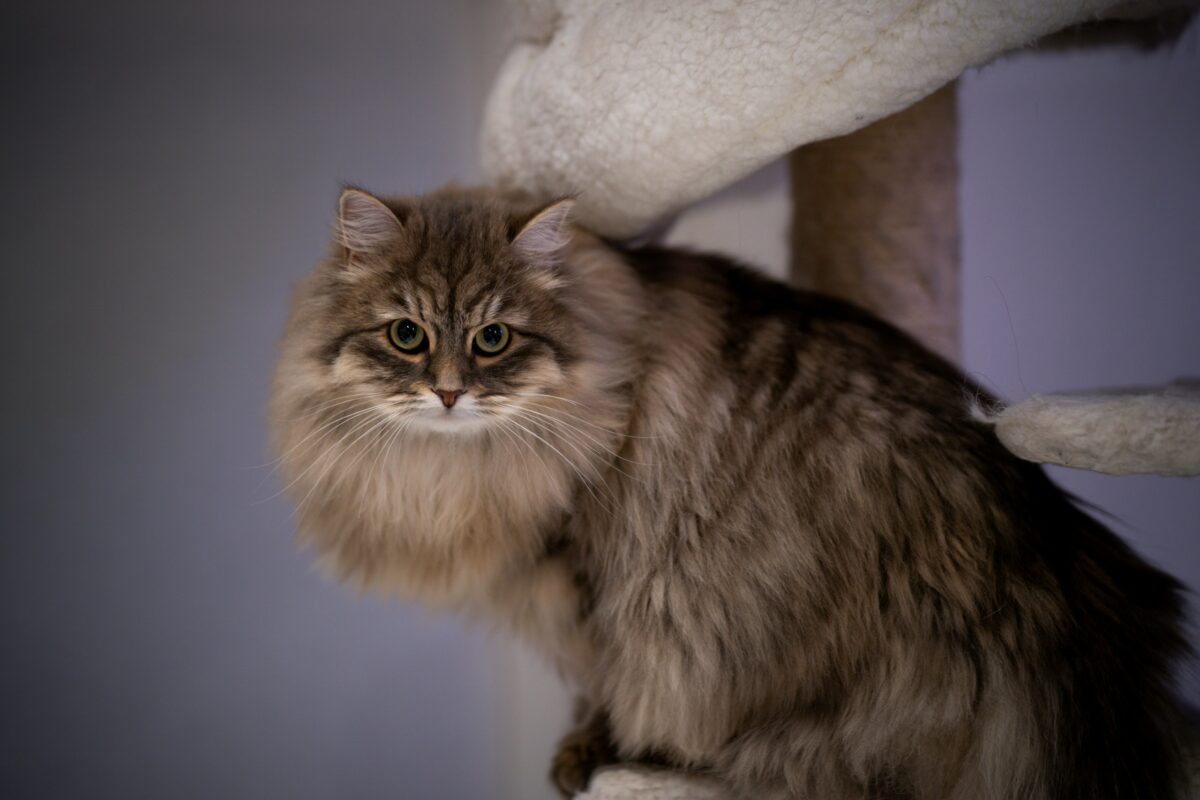
Siberians come in nearly every color and pattern, including the colorpoint pattern that Maine Coons never have. Their coat is also considered more hypoallergenic for many households, since they tend to produce lower levels of Fel d 1.
The Maine Coon has a heavy coat with long guard hairs that give it a naturally shaggy, windswept look. They have a dramatic ruff as well, but it reads more “lion’s mane” than “fluffy collar.”

Their double coat includes a water-repellent outer layer and a soft, dense undercoat that adds warmth without the thick bulk of a Siberian’s triple coat. Maine Coons also come in a wide variety of colors and patterns, though never in colorpoint.
Quick Takeaway For Buyers: Choose a Siberian if you want a plush, marshmallow-soft triple coat, hypoallergenic potential and rare colorpoint options. Choose a Maine Coon if you love a silky, shaggy coat with a big, flowing mane and a classic longhaired look.
Ear & Tail Details
The Siberian has medium-sized ears with rounded tips, giving the face a softer look. Their tail is thick, dense, and plush, with fur that stays full from base to tip.
The Maine Coon has tall, wide-set ears with noticeable lynx tips that add instant wildcat energy. Their tail is long, flowing, and extremely full, creating the classic sweeping “feather duster” look.
Personality Showdown: Siberian vs Maine Coon
Both breeds are friendly, social, and deeply rewarding family companions, but they express their affection in different ways. Here’s how their personalities compare when looking at the Siberian Cat vs. Maine Coon.
Sociability & Attention Needs
The Siberian is deeply people-oriented and tends to bond closely with their family. They enjoy being near their humans and make an excellent lap cat.
The Maine Coon is social in a more laid-back way. They love being around people but are perfectly content lounging nearby rather than seeking constant interaction. Their independent nature makes them a favorite in busy households.
Playfulness & Energy Levels
Siberians tend to have moderate to high energy, with a steady, athletic play style. They stay active throughout the day, often climbing, pouncing, and exploring with the confidence of a natural-born hunter.
Maine Coons are playful too, but their energy is usually more moderate. They enjoy bursts of enthusiasm followed by long, relaxed stretches. Think gentle batting at toys, slow-paced games, and a more laid-back approach to mischief.
If you want a cat that stays consistently active, the Siberian leans that way. If you prefer a big, goofy playmate who mixes fun with plenty of lounging, the Maine Coon fits the vibe.
Affection & Bonding Style
The Siberian bonds intensely and loves being part of daily routines, from morning coffee to bedtime wind-down. They enjoy physical closeness and often choose to sit right beside you.
The Maine Coon is affectionate on their own terms and tends to show love through presence rather than constant contact. They may not be lap cats, but they like staying close enough to keep an eye on everything you do.
Voice & Chatty Behavior
The Siberian communicates with soft vocalizations and expressive body language. They are not overly talkative but make their needs known in a gentle way.
The Maine Coon is known for chirps, trills, and full conversations. They use a wide range of sounds and often develop a “dialogue” with their people.
Intelligence & Trainability
The Siberian is bright, curious, and very engaged with their environment. They pick up on routines quickly and respond well to positive reinforcement.
The Maine Coon is highly intelligent and can learn tricks, leash walking, and even fetch with ease. Their doglike problem-solving skills shine in enrichment games and puzzle toys.
Quick Takeaway For Buyers: Choose a Siberian if you want an affectionate, active cat that loves being part of your daily life. Choose a Maine Coon if you prefer a friendly, easygoing companion with playful bursts and a famously chatty personality.
Cost: Bringing Home A Gentle Giant
Both of these breeds are premium cats, but their price ranges reflect availability and demand.
Maine Coons are easier to find in the United States. Pet-quality kittens from reputable breeders usually cost $1,000 to $2,500, though show-quality lines can reach $3,000 or more. Adoption is occasionally possible, especially through breed rescues, and prices tend to be lower.
Siberian cats are rarer in the U.S., so their prices run higher. Expect $1,500 to $4,000 depending on breeder reputation, location, and lineage. Their rising popularity with families and allergy-sensitive owners keeps demand high.
Quick Takeaway For Buyers: If affordability and easier availability matter most, the Maine Coon is usually the more accessible option. If you want a rarer cat or are hoping for a lower-allergen breed, the Siberian is worth the higher price tag.
Beyond The Basics: Long Hair Is Not A Breed
Many longhaired cats look like Siberians or Maine Coons, but most fluffy housecats are simply domestic longhairs.
Domestic longhairs may have thick ruffs, fluffy tails, big paws, and striking cheek fluff. These features often mimic both Siberians and Maine Coons, which makes visual identification unreliable.
Then, there are other pedigree breeds with long coats that share some of the same visual traits.
If you want a guaranteed Siberian or Maine Coon, pedigree paperwork is essential. Coat length and fluff alone are not indicators of breed.
Other Large, Longhaired Cats
Some pedigree cats share the same big, fluffy presence that Siberians and Maine Coons are known for. While not identical in build or origin, these breeds are large, longhaired, and often mistaken for each other due to their dramatic coats and substantial frames.
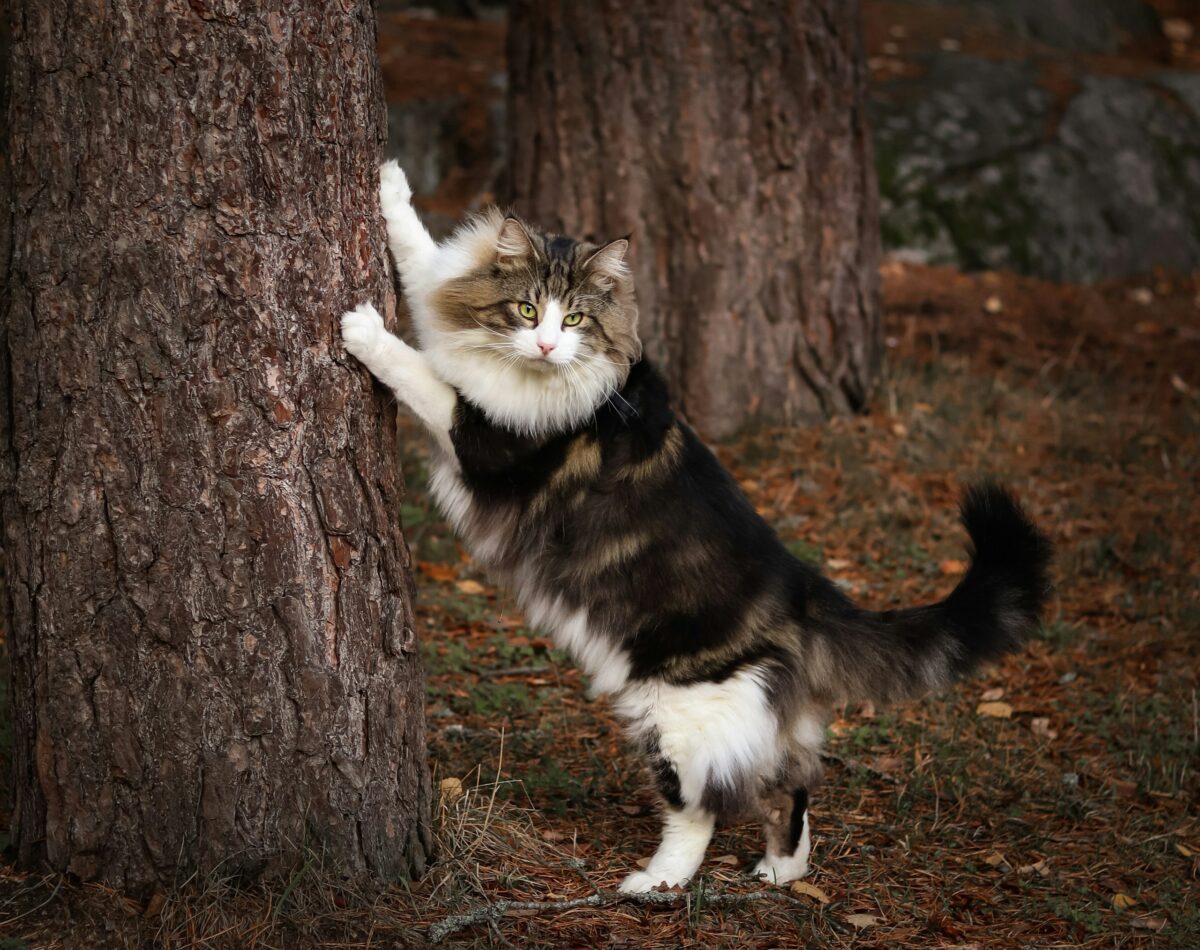
- Norwegian Forest Cat: One of the closest look-alikes. Heavy double coat, strong build, and a winter-ready ruff make them look forest-cat adjacent. Their triangular face and high-set ears are the easiest giveaways.
- RagaMuffin: Big, plush, and teddy-bear soft. Their size and calm sweetness often resemble Siberians, but their silky fur and rounder eyes give them a distinct look.
- Ragdoll: Large and long-bodied with semi-long fur. They’re not as rugged as Maine Coons or as round as Siberians, but their size and fluff make them a common source of mistaken identity.
Puffball Longhairs
These breeds are the epitome of marshmallow cats — round above all else.
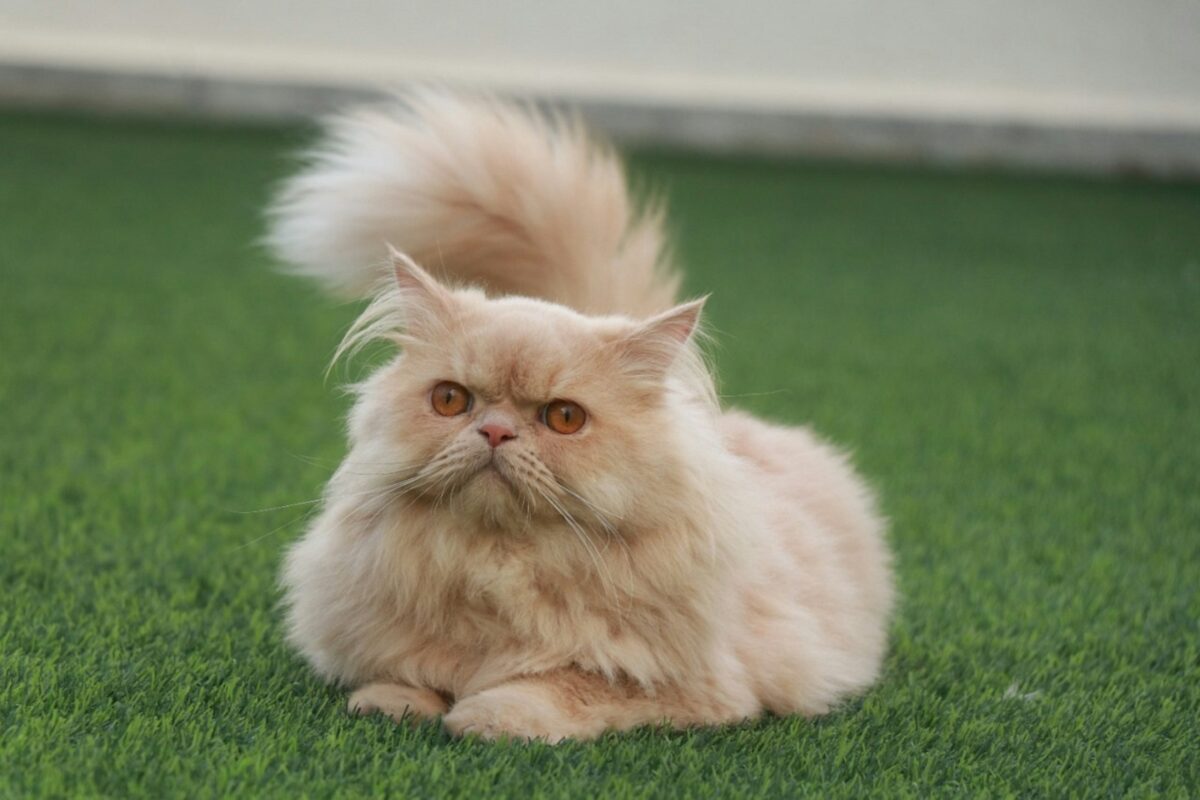
- Persian: Think big, round eyes, pillowy cheeks, and a plush, teddy-bear coat.
- Exotic Longhair: Created by crossing Persians with American Shorthairs to develop a shorthaired Persian-type cat. The longhaired version — the Exotic Longhair — is essentially identical to a Persian in both appearance and temperament.
Longhairs With Glossy, Flowing Coats
These breeds have long fur, but are built lighter, sleeker, or more refined.
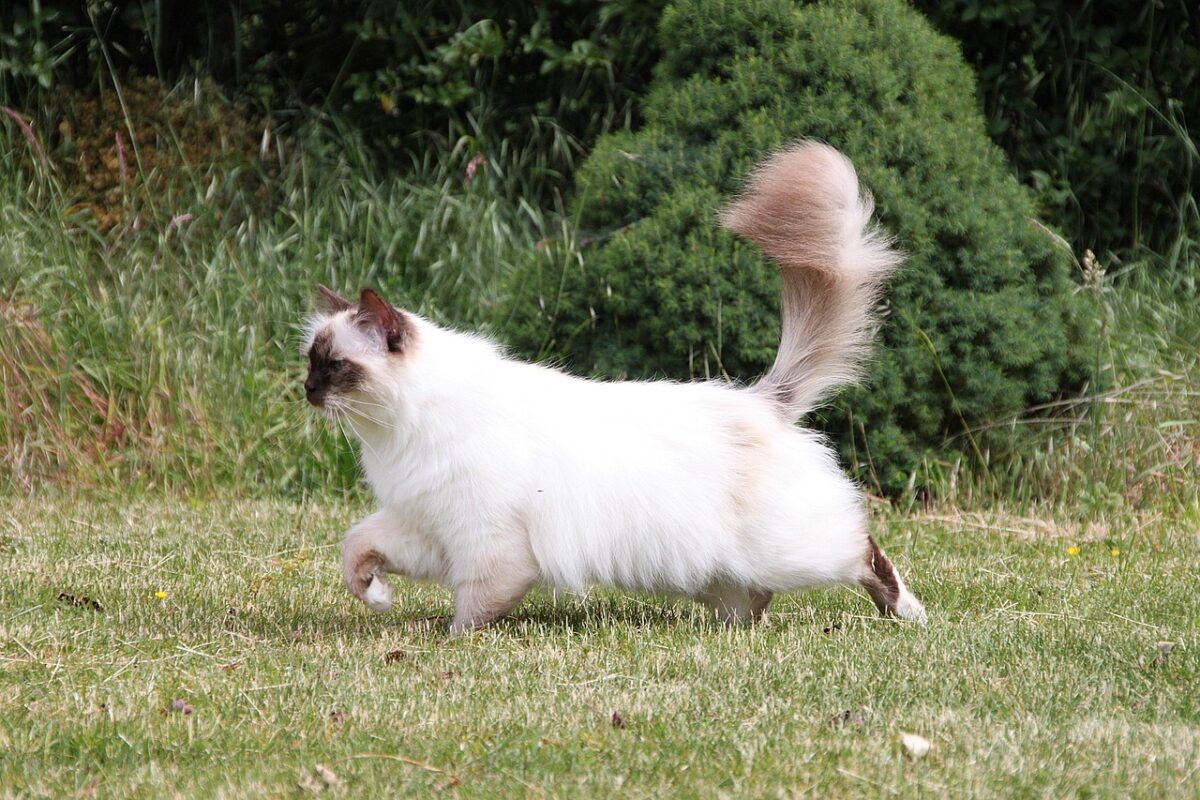
- Birman: Color-pointed with blue eyes and soft, flowing fur. Their silky coat lacks the dense, weatherproof structure of a Siberian or Maine Coon.
- Balinese: Elegant and airy, with long, silky fur and a slim frame. They look like a longhaired Siamese — nothing rugged or heavy-boned here.
- Turkish Angora: Graceful, athletic, and plumed from head to tail. Their coat is long and airy, not thick or shagged like the forest breeds.
- Somali: A longhaired Abyssinian with a fox-like tail. Their coat has flow but not bulk, placing them firmly in the “sleek fluff” category.
Curly & Wavy Longhairs
These breeds add texture to the longhair gene pool, sometimes creating silhouettes that mimic fluffier forest cats.

- LaPerm: Recognized for tousled ringlets and gentle, affectionate personalities.
- Selkirk Rex: Soft, plush curls that give them a teddy bear appearance.
Check out our guide covering curly-haired cat breeds.
Longhairs With Distinctive Features
Some longhaired cats stand out because of ear shapes, tails, or silhouettes.

- Scottish Fold (Longhair): Round-faced, calm, and known for folded ears that make them instantly recognizable.
- American Curl (Longhair): Sociable and curious, with backward-curled ears and a soft, flowing coat.
- American Bobtail (Longhair): Muscular, confident, and wild-looking with a natural bobbed tail.
- Manx (Longhair): Tailless with a powerful hind end and a distinctive hop when they run.
3 Common Myths About Siberians & Maine Coons
Siberians and Maine Coons attract a lot of attention, which means they also attract a lot of misinformation. Before choosing your gentle giant, it helps to separate fact from fiction so you know exactly what to expect from each breed.
1. All Big Fluffy Cats Are Maine Coons
Long fur makes many cats appear larger than they are. True Maine Coons have rectangular bodies and squared muzzles, while domestic longhairs often do not.
Maine Coons can also be much larger than your standard domestic. Many reach 30-40 inches long and 16 inches high, compared to 9-10 inches for most house cats.
Fun Fact: According to Guinness World Records, the longest domestic cat ever was a Maine Coon named Mymains Stewart Gilligan (Stewie), who measured 48.5 inches long.
2. Siberians Are Fully Hypoallergenic
Siberians may produce lower levels of Fel d 1, but results vary widely by individual cat. Some allergy sufferers experience relief, while others react immediately.
Grooming, cleaning, and air filtration matter just as much as breed when it comes to allergens.
3. Maine Coons Are Always Massive
Maine Coons range from medium-large to very large, depending on genetics and nutrition. Some stay around 12 pounds, while others grow much bigger.
Size should never outweigh overall health, which is why reputable breeders focus on structure and longevity rather than extreme growth.
Frequently Asked Questions
If you still have questions about the Siberian cat vs. Maine Coon, you’re not alone. These answers cover the most common things future owners want to know about Siberian Forest Cats and Maine Coons, from size and personality to grooming and allergies.
Don’t see your question? Respond in the comments, and we’ll get back to you!
Is The Maine Coon Or Siberian Bigger?
Maine Coons tend to be longer and taller. Siberians are dense and compact. Weight ranges often overlap.
Which Breed Has The Better Temperament?
There is no universal “better.” Maine Coons are playful and social. Siberians are affectionate, family-oriented, and curious.
Do They Shed The Same Amount?
Both breeds shed heavily, especially during seasonal coat changes.
Maine Coons tend to mat more easily because of their long guard hairs and dense undercoat. Siberians shed in thick “waves” and blow their coat more dramatically, but their fur often tangles less.
For deeper details on shedding in Siberian Cat vs Maine Coon, view these guides:
How Much Grooming Do Siberians & Maine Coons Need?
Both cats require regular grooming, but the amount depends on their coat type.
Siberians usually need brushing a few times a week, especially during seasonal sheds. Maine Coons benefit from more frequent brushing, as their silky guard hairs and undercoat can mat if neglected.
Check out these helpful grooming guides and tools:
What Is The Lifespan Of Siberian Cat vs Maine Coon?
Siberians average 13 to 15 years. Maine Coons average 12 to 15 years. Proper nutrition, weight control, and genetic screening improve longevity.
More Cat Comparisons
If you’re exploring big, fluffy breeds, check out these guides:
- Maine Coon Siberian Mix: Learn what happens when two forest-cat legends combine — size, personality, grooming needs, and more.
- Maine Coon vs Ragdoll: A side-by-side look at two of the most popular large, affectionate breeds and how their personalities differ.
- RagaMuffin vs Maine Coon: See how the sweet, teddy-bear-soft RagaMuffin compares to the Maine Coon’s rugged, outdoorsy charm.