When you purchase through links on our site, we may earn a commission at no extra cost to you. Learn more.
You already know the names. The Maine Coon, famous for its massive size and rugged charm. The Ragdoll, the charmingly gentle companion who melts in your arms.
Table of Contents
They’re both big. Both fluffy. Both incredibly sweet.
So how do you know which cat is the right choice for you? This guide breaks down the real differences between the Maine Coon and Ragdoll so you can decide with confidence.
Spot The Difference: Maine Coon vs Ragdoll
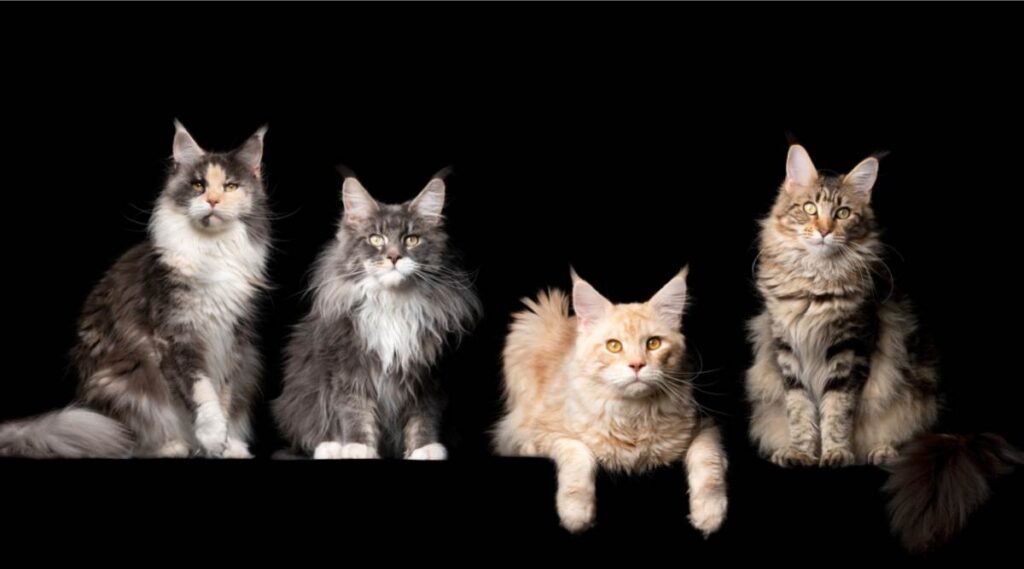
Put a Maine Coon and a Ragdoll next to each other, and most people see one thing: big, fluffy, gentle. But take a closer look, and the differences are hard to ignore.
Want our human-written content to rank above AI-generated garbage? Help us out by clicking this button!
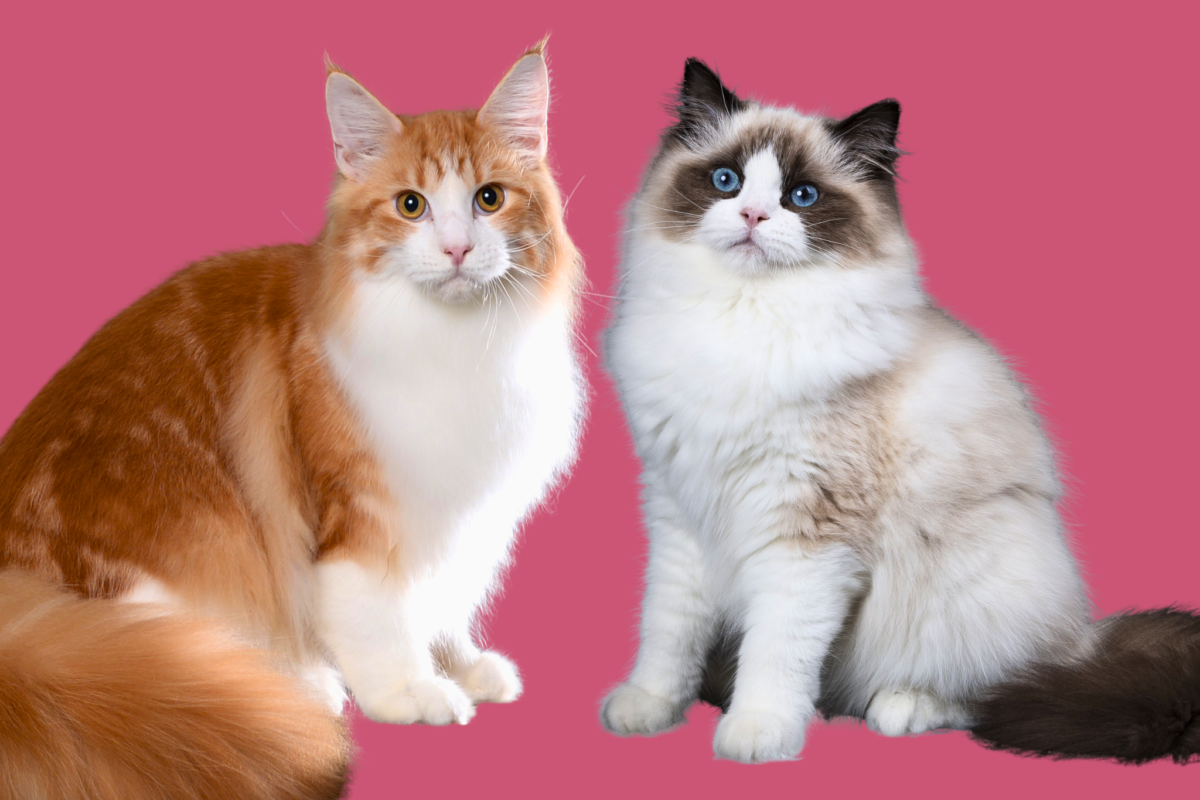
The Maine Coon has a more rugged presence. The square muzzle, high-set ears, and slightly wild expression give it a look that feels closer to “forest cat” than “lap ornament.” Even when relaxed, there’s an alertness to them.
The Ragdoll reads softer immediately. Rounder features, wide blue eyes, and a face that looks permanently gentle. They tend to carry their bodies with less tension, too, often draped or stretched out rather than perched and observing.
Then there’s the coat. A Maine Coon’s double coat has density and structure. It looks built for weather.
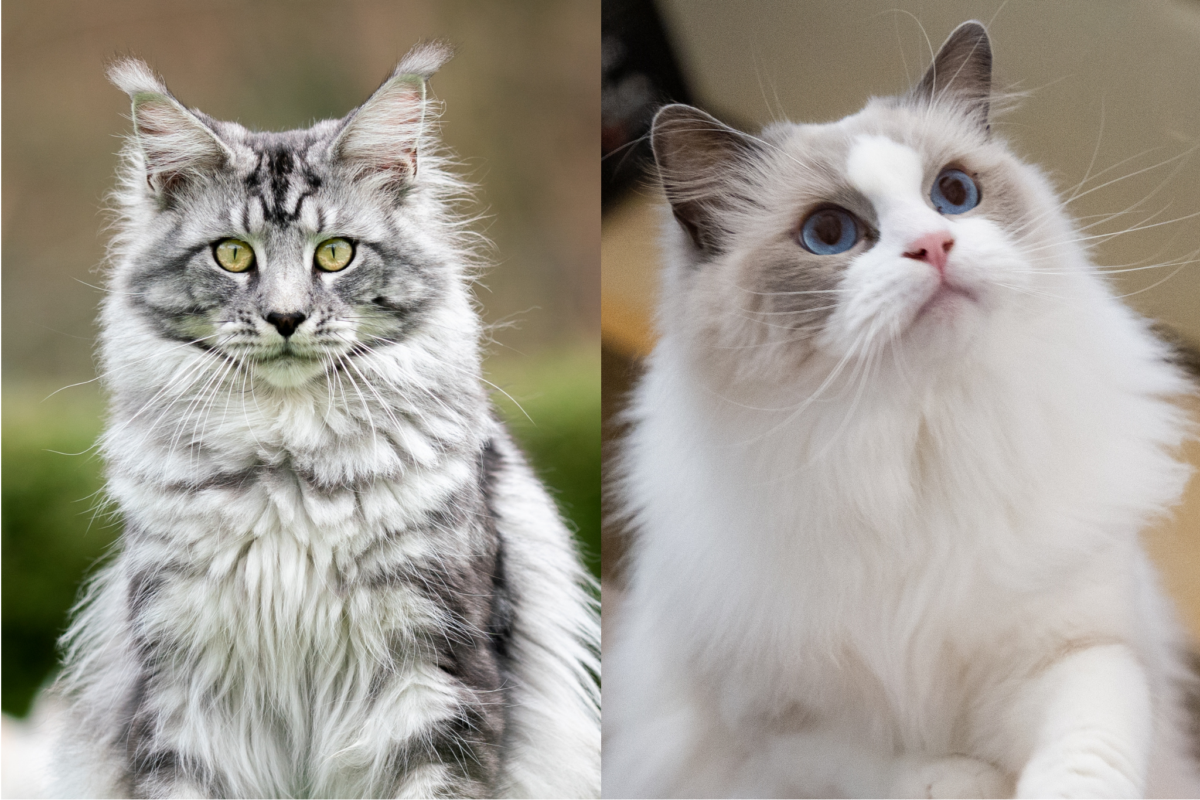
A Ragdoll’s fur falls more loosely and silkily, with less of that heavy undercoat bulk.
When you line them up like this, you can see why they’re both called “gentle giants.” But you can also see that they’re not interchangeable.
And those differences only expand when it comes to personality, energy, and daily life.
Breed Comparison
- SizeLarge to XL, 10–25+ lbs
- SizeLarge, 8–20 lbs
- CoatLong, shaggy double-coat
- CoatSemi-long, silky single-coat
- TemperamentConfident, social, slightly independent
- TemperamentGentle, affectionate, people-oriented
- Energy LevelModerate
- Energy LevelLow to moderate
- Grooming NeedsModerate to high
- Grooming NeedsModerate but consistent
- Lifespan10 to 15 years
- Lifespan10 to 15 years
- Cost$$$
- Cost$$$
- OriginNew England, U.S.
- OriginCalifornia, U.S.
The Making Of Two Gentle Giants
he Maine Coon and the Ragdoll didn’t just develop in different places. They were shaped for different roles.
The Maine Coon is one of the oldest natural breeds in North America. These cats evolved in harsh New England climates, likely descending from longhaired ship cats that adapted to cold winters and working environments.
That rugged origin still shows up today. Maine Coons tend to be observant, confident, and comfortable doing their own thing — even if they’re deeply attached to their families.
The Ragdoll’s story is very different. The breed was intentionally developed in California in the 1960s with one goal: temperament.
Early breeding focused on producing a large, striking cat with an exceptionally relaxed, affectionate personality. The result was a cat that not only tolerates handling, but often seeks it out.
That difference in origin helps explain why one often feels like a sturdy, independent presence in your home, and the other feels like a soft, devoted shadow.
Head To Tail: What Sets Them Apart
When you move past the general “big and fluffy” impression, the structural differences become clearer. From face shape to coat density to color rules, these breeds were built very differently.
Face & Expression
The Maine Coon’s face is angular and defined. The square muzzle is one of its most recognizable traits, giving the breed a strong, almost lynx-like look. High-set ears, often with visible tufts, add to that rugged outline.
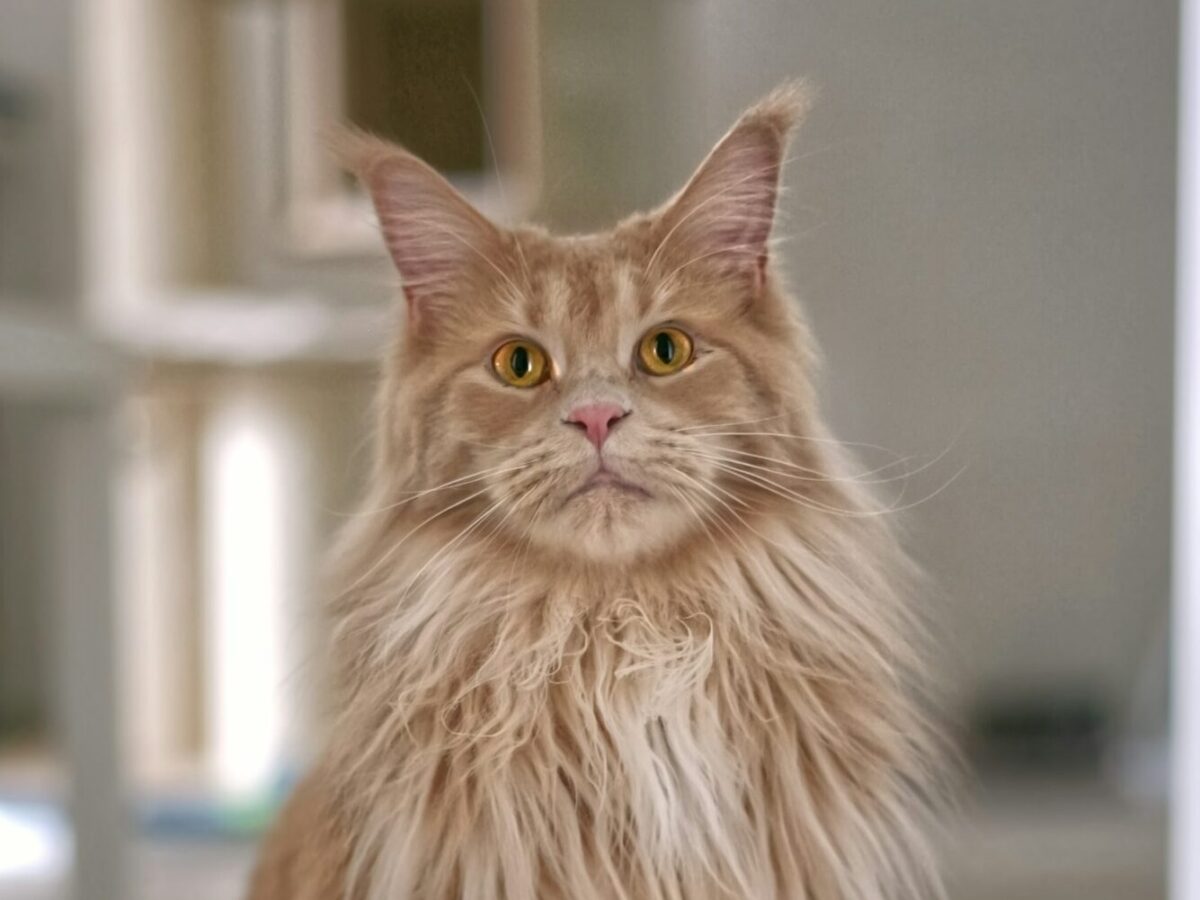
Key facial traits you’ll notice:
- Large, square muzzle that gives a strong, structured look
- High cheekbones
- Big, slightly oval eyes set at a slight angle
- Tall, wide-set ears, often with visible lynx-like tufts
- A pronounced neck ruff, especially in males
Overall Impression: alert, rugged, and slightly wild.
The Ragdoll’s features are softer overall. Their expression tends to read open and gentle rather than alert and structured.
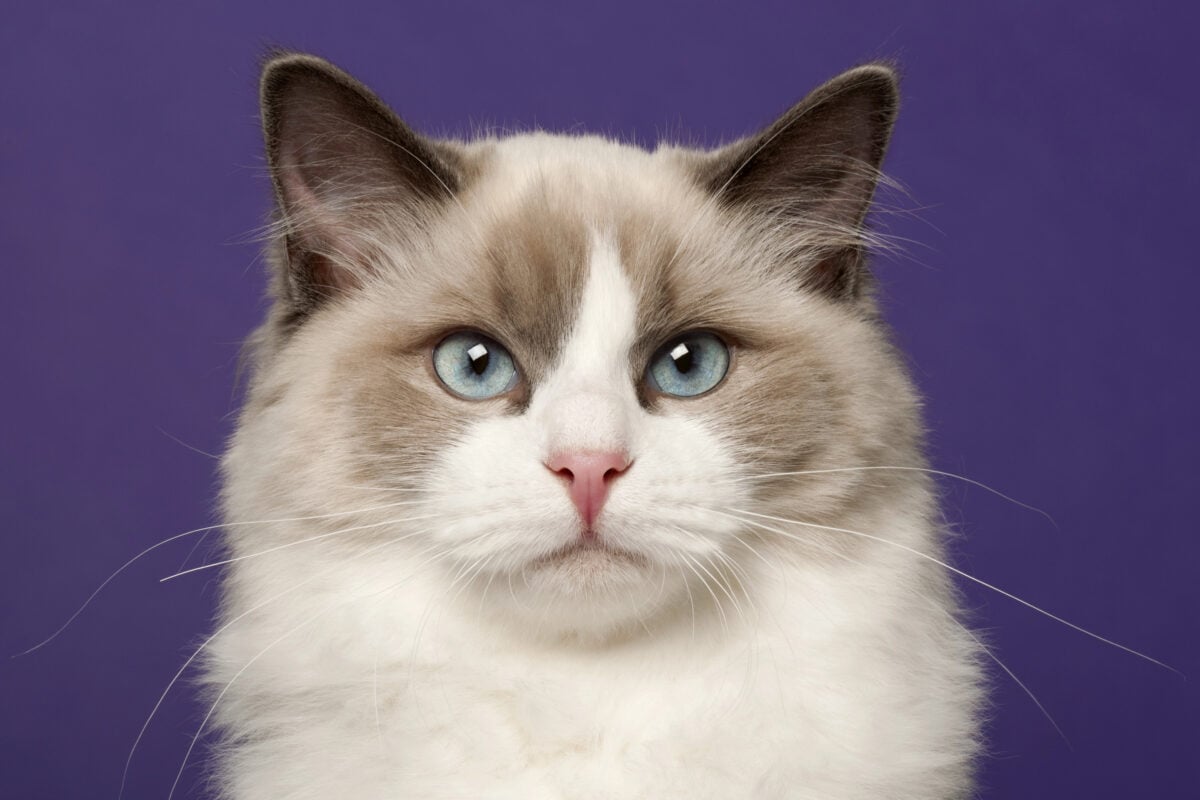
Key facial traits you’ll notice:
- Large, oval blue eyes that dominate the face
- A broad head with a softly defined wedge shape
- A straight, medium-length nose with a gentle curve in profile
- Rounded contours rather than sharp angles
- An open, expressive look rather than a watchful one
Overall Impression: soft, gentle, and approachable.
Body Build & Size Reality
Maine Coons are longer and often heavier, especially males. Their bodies feel solid and muscular beneath the coat.
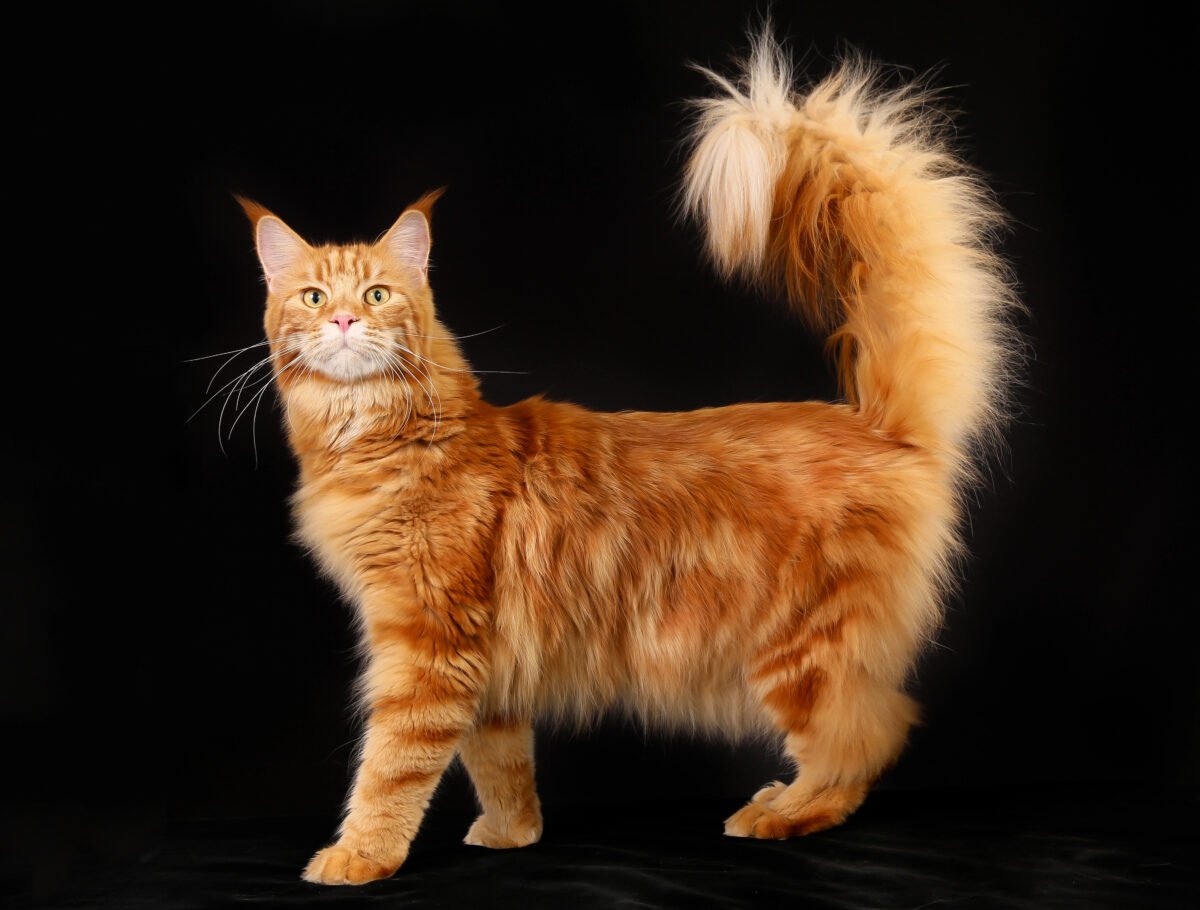
- Weight: 15 to 25+ pounds (males often at the high end)
- Height: 10 to 16 inches
- Length: Up to 40 inches including tail
They mature slowly, sometimes not reaching full size until 3 to 5 years old.
Ragdolls are also substantial, but they tend to look softer rather than powerful. Their build is broad and heavy-boned, yet their posture is more relaxed.
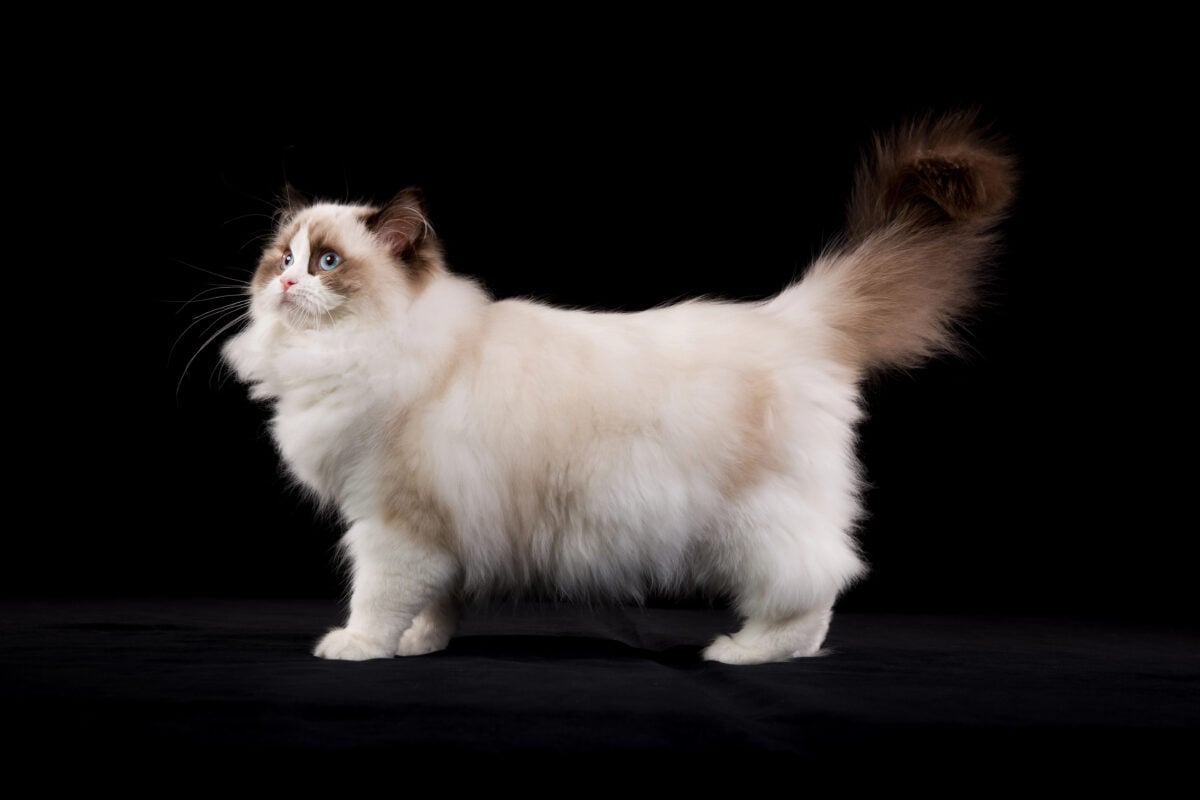
- Weight: 8 to 20 pounds
- Height: 9 to 11 inches
- Length: Typically shorter than Maine Coons overall
They reach full size sooner, usually around three to four years.
Watch: This quick video shows the size difference between a Maine Coon and Ragdoll.
Coat Structure & Color Options
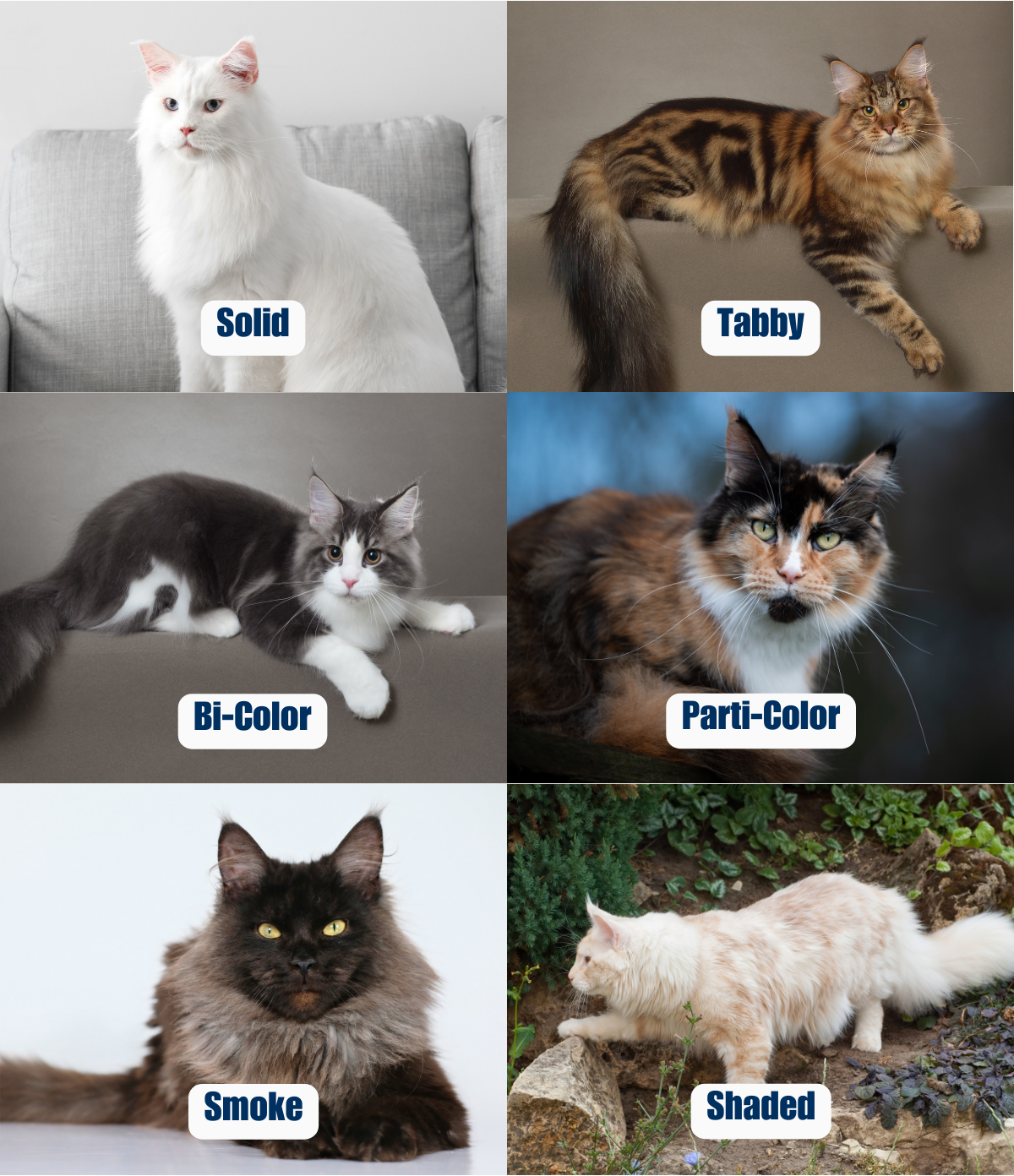
Maine Coons have a long, thick double coat with a dense undercoat. It was built for harsh weather, which means more volume and more brushing commitment.
They come in an enormous range of colors and patterns, including:
- Solid (black, white, blue, red, cream)
- Tabby (classic, mackerel, patched, ticked)
- Bi-color (e.g., black & white)
- Parti-colors (e.g., tortoiseshell, blue-cream, calico)
- Shaded and smoke
- Silver variations
Eye colors vary widely: green, gold, copper, blue, or odd-eyed.
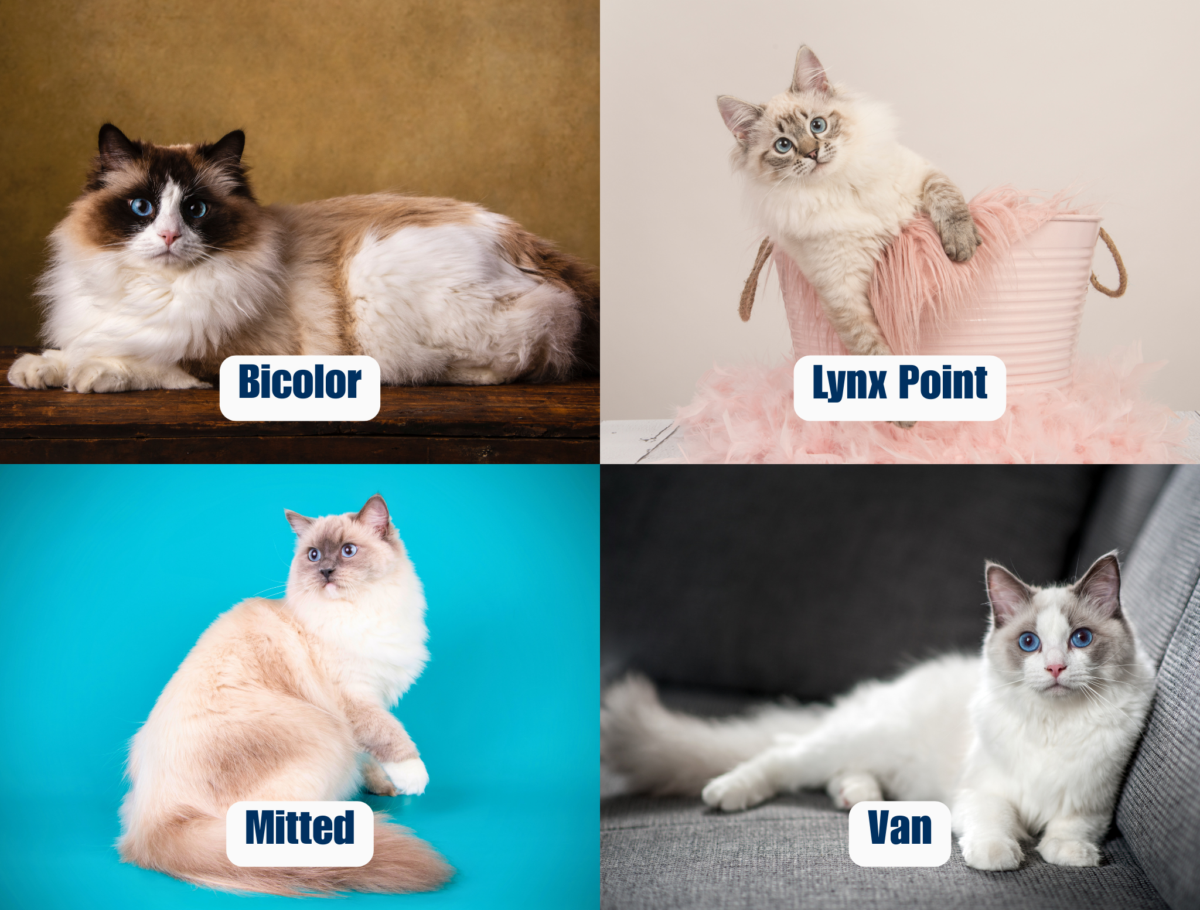
Ragdolls have a semi-long, silky coat with minimal undercoat. The texture is softer and less dense, which usually means fewer mats and slightly easier maintenance.
All Ragdolls are colorpoint-based (darker colors on face, ears, paws, and tail) and always have blue eyes. Accepted patterns include:
- Mitted: white paws plus a white chin and belly stripe
- Bicolor: an inverted white “V” on the face, with white chest and legs
- Van: mostly white body with color on the ears, tail, and mask
Colors include seal, blue, chocolate, lilac, cream, and flame variations.
Tail & Overall Silhouette
A Maine Coon’s tail is long, thick, and dramatic — often nearly as long as the body itself. Combined with ear tufts and a pronounced ruff, the silhouette feels bold.
A Ragdoll’s tail is full and soft but less structured. Their outline tends to look rounded and plush rather than angular and wild.
Personality & Temperament: How They Love Their Humans
Both breeds are affectionate, gentle, and known for bonding closely with their families. The differences show up in how they seek attention, how active they are, and how they prefer to share space with their humans.
Affection & Bonding Style
Maine Coons are deeply loyal, but they often show affection on their terms. They may follow you from room to room, observe what you’re doing, and stay nearby — but they’re not always demanding physical contact. They tend to bond strongly without becoming clingy.
Ragdolls are more immersive. They actively seek contact and often enjoy being picked up and held. Many will go limp in your arms and settle fully into your lap without hesitation.
Watch: A Ragdoll demonstrate the classic “go limp” reaction that gave the breed its name.
Sociability & Strangers
Maine Coons are typically confident and curious around new people. They may approach visitors with interest, especially if properly socialized. Their natural self-assurance tends to make them comfortable in busier households.
Ragdolls are also friendly, but often slightly more sensitive. They may take a moment to assess a new person before engaging. Once comfortable they’re affectionate, but their first instinct is usually calm observation rather than bold approach.
In multi-guest or high-traffic homes, Maine Coons often adapt a bit more easily.
Playfulness & Energy Levels
Maine Coons have a longer runway of kitten-like energy. They enjoy climbing, exploring, and interactive play. Many retain a playful streak well into adulthood and benefit from vertical space and structured enrichment.
Watch: Playtime between a Maine Coon and Ragdoll cat.
Ragdolls enjoy play, but at a gentler pace. They’re less likely to launch themselves onto high shelves or initiate intense bursts of activity. Their play style tends to be slower and more people-oriented.
Watch: Ragdolls can be playful, but they also really enjoy their lounge time.
Voice & Communication
Maine Coons are known for their trills and chirps. They’re not typically loud, but they are communicative. Many owners describe them as conversational without being overwhelming.
Watch: The signature Maine Coon trill that owners describe as part purr, part conversation.
Ragdolls tend to be quieter overall. When they do vocalize, the sound is usually soft and gentle rather than insistent.
If you enjoy subtle chatter, the Maine Coon may feel more interactive. If you prefer minimal vocal input, the Ragdoll leans quieter.
Indoor vs Outdoor Instincts
Maine Coons retain more of their working-cat instincts. They’re curious and observant. Some adapt well to leash training or supervised outdoor access.
Watch: Maine Coons are often fascinated by windows, movement, and outdoor stimulation.
Ragdolls are strongly indoor-oriented. Their trusting nature and lower defensive instincts make them less suited to independent outdoor time. Most thrive best as strictly indoor cats.
Living With One: Daily Reality
Both breeds are adaptable and generally easy to live with, but the day-to-day commitment looks slightly different depending on which cat you bring home.
Grooming Commitment
Maine Coons require consistent brushing. Their dense double coat can mat, especially around the chest, belly, and behind the ears. Skipping grooming sessions often leads to tangles that are harder to fix later.

Expect to brush several times per week, and more often during seasonal shedding.
Ragdolls are easier in this department. Their silky coat has far less undercoat, which reduces matting and bulk shedding. Regular brushing is still important, but it’s typically lower effort and faster to maintain.
If grooming time is a concern, the Ragdoll generally demands less structure.
Space & Home Environment
Maine Coons benefit from space — especially vertical space. They enjoy climbing, perching, and observing from above. A tall cat tree or sturdy shelving setup suits them well.
Ragdolls adapt easily to apartments and smaller homes. They’re less likely to seek high vantage points and more likely to settle into couches, beds, and laps. While they still appreciate enrichment, their physical needs are typically less demanding.
Intelligence & Trainability
Maine Coons are problem-solvers. They tend to engage with puzzle toys, learn routines quickly, and can adapt to leash training or trick training with consistency.
Ragdolls are highly responsive to positive reinforcement but are typically less driven by curiosity. They learn commands and routines, but their motivation is often social rather than exploratory.
Enrichment Needs
Maine Coons need stimulation. Without interactive play, climbing opportunities, and rotating toys, they can become bored. Their working-cat background means they benefit from movement and engagement.
Ragdolls require play, but at a calmer pace. Short daily sessions and interactive toys usually meet their needs. Many are content simply being near their people.
Watch: Living with a Maine Coon vs Ragdoll cat.
Health & Lifespan
Both Maine Coons and Ragdolls are generally healthy breeds, especially when responsibly bred. But like all purebred cats, each has inherited vulnerabilities worth understanding before you commit.
Maine Coon Health & Lifespan
Maine Coons typically live 10 to 15 years. Because of their large size and genetic history, they are predisposed to certain conditions, including:
- Hypertrophic cardiomyopathy (HCM)
- Hip dysplasia
- Spinal muscular atrophy (SMA)
- Polycystic kidney disease (PKD)
- Periodontal disease
HCM is the most widely discussed concern in this breed. Responsible breeders screen breeding cats to reduce risk, but it cannot be eliminated entirely.
Their large frame also makes weight management especially important. Extra pounds place additional stress on joints and the heart.
Ragdoll Health & Lifespan
Ragdolls often live 10 to 15 years, with many reaching the mid-teens. Their most significant inherited concern is also HCM.
Additional health considerations may include:
- Polycystic kidney disease
- Urinary tract issues
- Periodontal disease
While Ragdolls are not as large as Maine Coons, they are still heavy-bodied cats, and obesity can contribute to joint strain and metabolic problems over time.
Cost & Availability
Maine Coon kittens typically range from $1,000 to $2,500, depending on pedigree, breeder reputation, and location. Show-quality cats may cost more.
Ragdolls often fall between $1,500 and $3,500, with high-demand lines pushing prices higher.
Beyond the initial purchase price, remember that both breeds are large cats. They eat more, require larger litter boxes and sturdier equipment, and may have higher long-term grooming and veterinary costs.
Which One Fits Your Life Better?
Both breeds are affectionate, large, and people-oriented. The difference comes down to how much independence you want, how much grooming you’re willing to commit to, and what kind of daily energy feels right in your home.
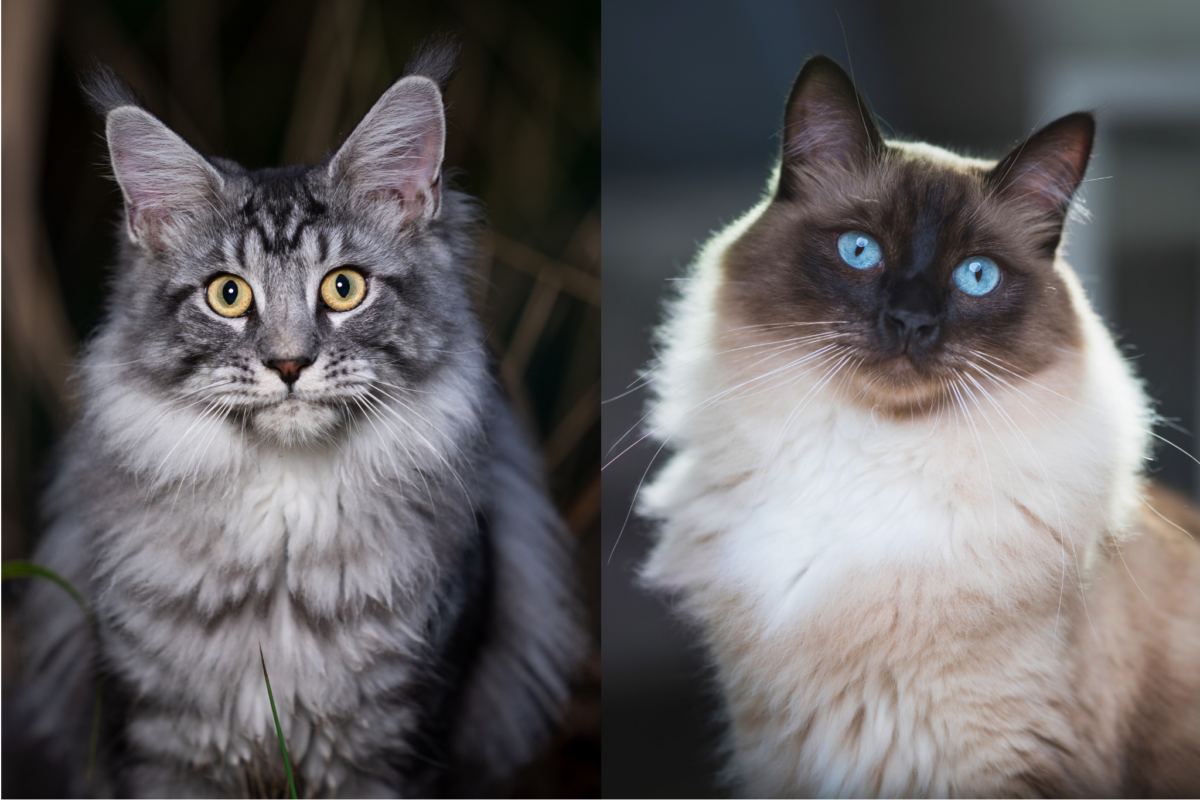
Choose A Maine Coon If…
- You like a cat with presence and confidence
- You enjoy interactive play and mental stimulation
- You want a companion who stays close but isn’t constantly on your lap
- You’re drawn to a rugged, “forest cat” look
- You want flexibility in coat color and eye color options
- You’re comfortable with more consistent grooming
A Maine Coon feels like a capable, observant companion who bonds deeply but keeps a bit of autonomy.
Choose A Ragdoll If…
- You want a true lap cat who actively seeks physical contact
- You prefer a calmer, lower-intensity play style
- You love bright blue eyes and colorpoint patterns
- You want slightly easier coat maintenance
- You live in an apartment or quieter household
- You prefer a cat that centers its world around you
A Ragdoll feels immersive. They don’t just live in your space — they attach to you.
Beyond The Basics: More Fluffy Companion Breeds
If you’re drawn to Maine Coons and Ragdolls, chances are you’re looking for a large, affectionate, plush-coated companion. But they’re not the only breeds that fit that description.
Here are a few other fluffy cats worth considering.
Siberian
Large, athletic, and built for cold climates, the Siberian shares some of the Maine Coon’s sturdiness but often with a slightly more balanced mix of independence and affection.
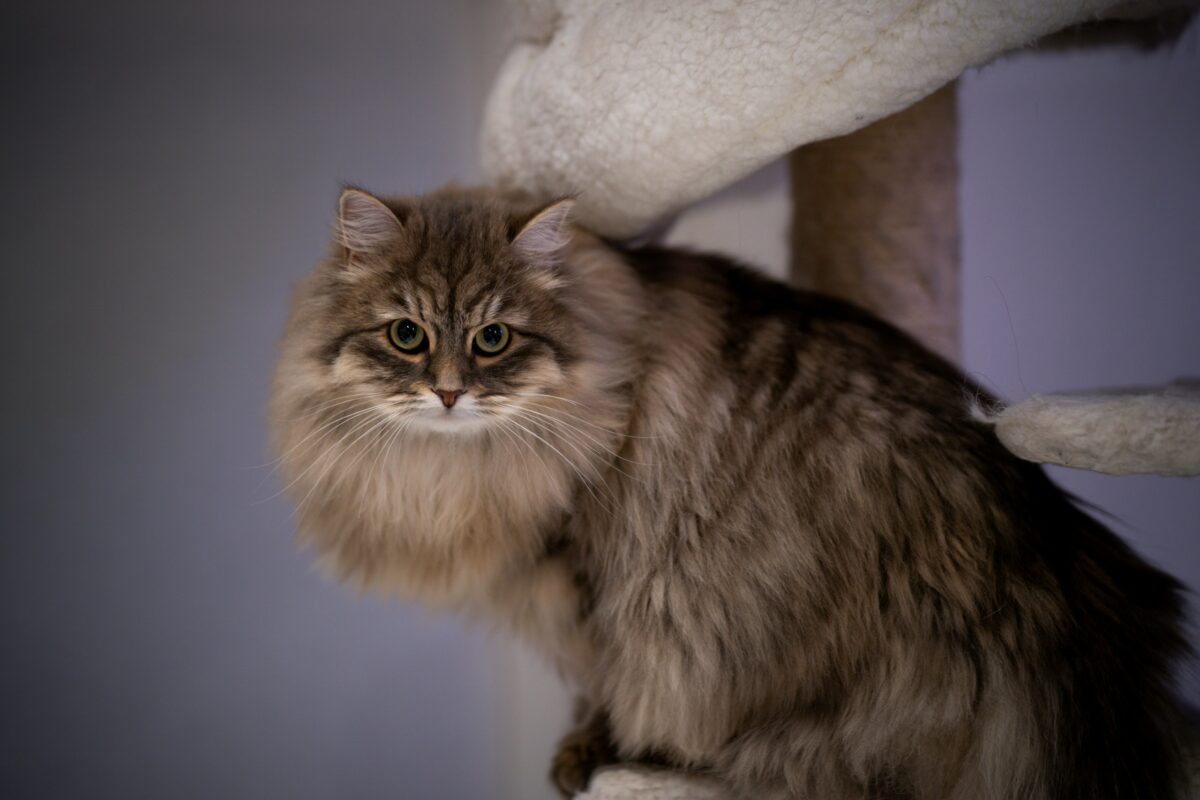
- Dense, triple coat
- Moderate to high energy
- Confident and adaptable
- Considered hypoallergenic
Best for: Someone who wants a big, active cat with a hypoallergenic coat.
Norwegian Forest Cat
Another natural, cold-weather breed with a stocky and thick double coat. Norwegian Forest Cats are affectionate but typically more reserved than Ragdolls.

- Large body and fluffy coat
- Moderately active and adaptable
- Independent and intelligent
Best for: Homes that want a majestic presence without constant physical clinginess.
Ragamuffin
Often confused with Ragdolls, Ragamuffins are large, plush, and famously gentle. They share the relaxed temperament but offer more variation in eye color and coat patterns.
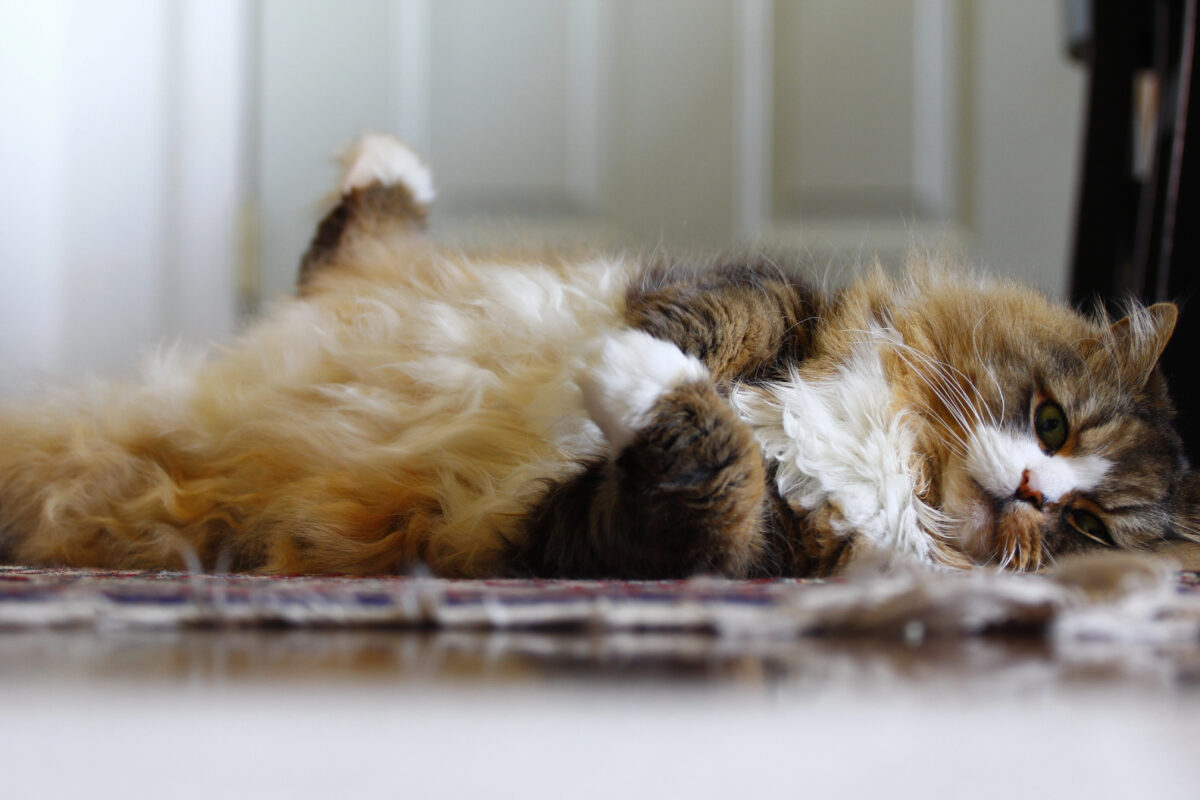
- Soft, dense coat
- Extremely people-oriented
- Broader range of acceptable colors
Best for: Someone who loves the Ragdoll personality but wants more visual variety.
Birman
Slightly smaller but still substantial, Birmans are affectionate without being demanding. Their silky coats are easier to maintain than many longhaired breeds.
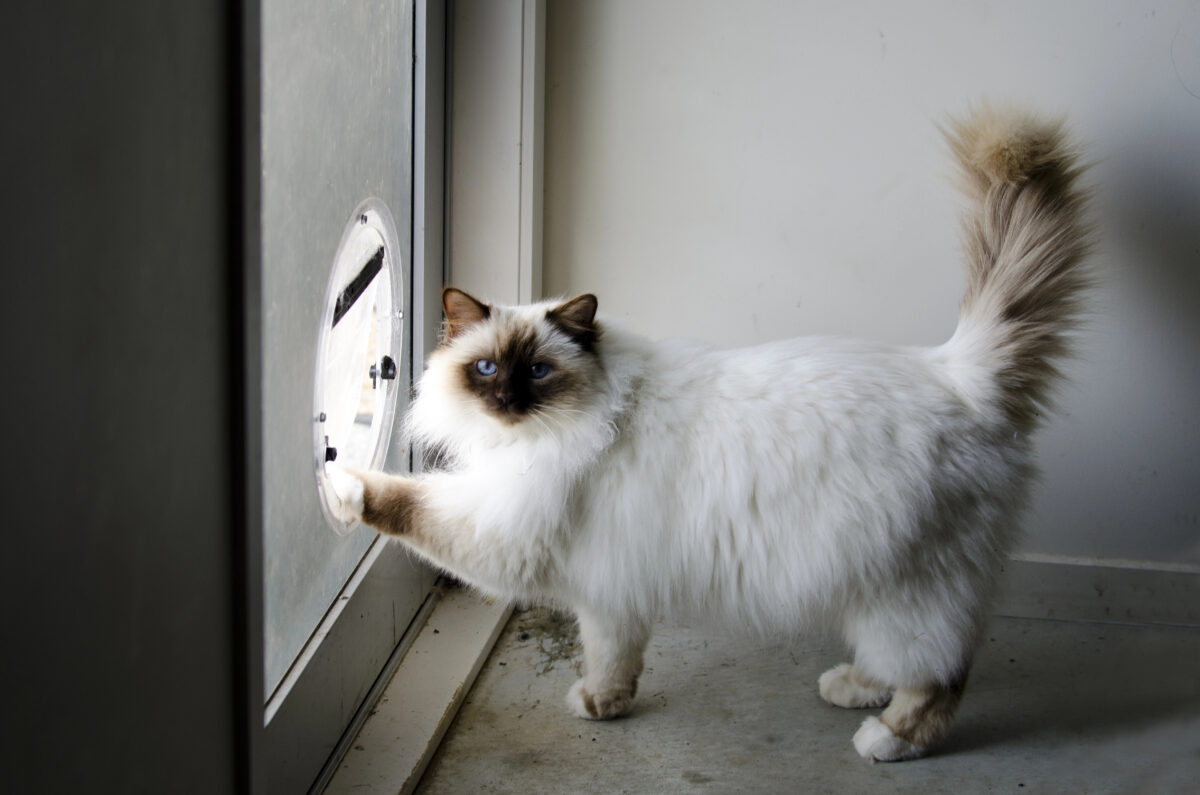
- Always blue-eyed
- Colorpoint pattern with white “gloves”
- Calm, people-focused temperament
Best for: Someone who wants elegance and companionship with slightly less size and coat bulk.
Frequently Asked Questions
Choosing between two popular breeds usually brings up practical questions beyond personality and looks. Here are the answers to the most common comparisons buyers ask when deciding between a Maine Coon and a Ragdoll.
Don’t see your question? Respond in the comments, and we’ll get back to you!
Is The Maine Coon Or Ragdoll Larger?
The Maine Coon is typically larger overall, especially in length. While both breeds are considered large, Maine Coons often weigh more and can reach up to 40 inches in total length including the tail.
Which Breed Is More Affectionate?
Both breeds are affectionate, but they express it differently.
Ragdolls are more likely to seek physical closeness and enjoy being held. Maine Coons tend to show affection through proximity and loyalty, often staying nearby without always climbing into your lap.
Which Breed Sheds More?
Maine Coons generally shed more due to their dense double coat and heavier undercoat. Ragdolls have a silkier coat with less undercoat, which often results in slightly less matting and bulk shedding.
Are Maine Coons Or Ragdolls Hypoallergenic?
No. Neither breed is considered hypoallergenic. Both produce the Fel d 1 protein that triggers allergies.
Do Maine Coons Or Ragdolls Get Along With Dogs?
Both breeds are generally known for being dog-friendly when properly socialized.
Maine Coons tend to be confident and adaptable. Ragdolls are typically tolerant and gentle. Individual personality and early introductions matter more than breed alone.
Which Breed Is Easier To Groom?
Ragdolls are usually easier to maintain due to their minimal undercoat. Maine Coons require more consistent brushing to prevent matting, particularly around the chest and belly.
More Cat Comparisons
Maine Coons and Ragdolls are two of the most popular gentle giants, but they’re not the only large, affectionate breeds worth considering.
If you’re still narrowing it down, these comparisons may help:
Choosing the right breed isn’t just about size or coat. It’s about energy, attachment style, and how a cat fits into your daily rhythm.