When you purchase through links on our site, we may earn a commission at no extra cost to you. Learn more.
You’re settled into the sofa after a long day, reading or watching television, when you feel it: a soft, velvety paw gently pressing against your forearm. Or maybe you’re typing an urgent email, and out reaches a tiny leg, resting a quiet paw across your wrist. Perhaps you’re even fast asleep, only to be nudged awake by a soft pad placed delicately against your cheek.
Table of Contents
No claws. No obvious agenda. Just four fuzzy toes and a set of pink, or black, or magnificently multicolored, beans resting against you.
Then comes the look. If you live with a cat, you know the one. So…what exactly is happening here?
It’s one of the quietest gestures a domestic cat can make, but it stops us in our tracks every single time.
Want our human-written content to rank above AI-generated garbage? Help us out by clicking this button!
Much like the curious habit of a cat touching your face, a paw touch is rarely random. While dogs are famously direct with their wet noses and enthusiastic head-butts, cats specialize in subtle, tactile dialogue.
Depending on the context, the pressure, and what the rest of their body is doing, that tiny paw can communicate a whole vocabulary of affection, comfort, polite demands, and deep trust.
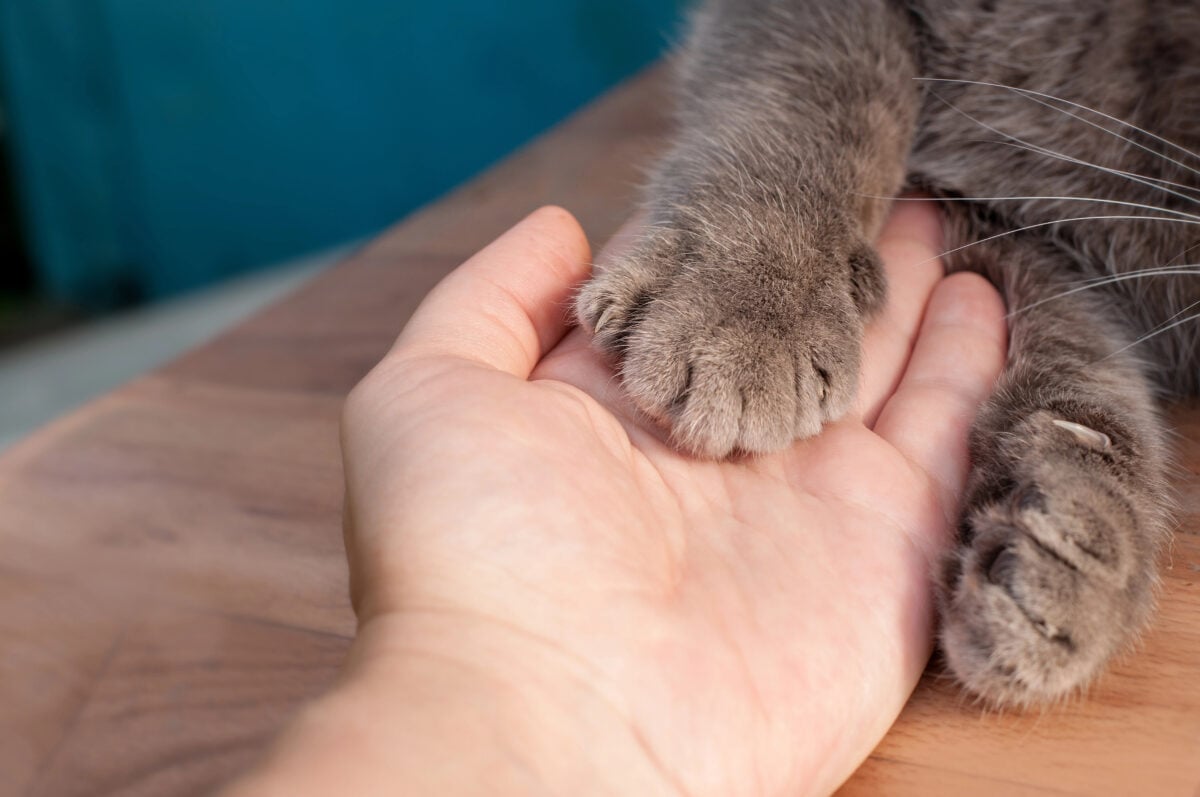
Here is what your feline companion is really trying to tell you when they reach out and touch you.
One Little Paw, a Whole Lot of Possible Meanings
The quick answer: Your cat may put their paw on you because they feel safe with you, want your attention, are asking for more petting, feel playful, or want a little space. The rest of their body language usually tells you which one it is.
- A soft paw that stays put: “I’m comfortable here.” Relaxed eyes and a loose body make affection or simple companionship likely.
- Tap, tap…tap: “Human. I require you.” Look for the obvious suspects: attention, play, petting, or an offensively late dinner.
- A paw reaching after you stop petting: “Who said you could stop?” If they lean back into your hand, they’re probably asking for more.
- Two paws working overtime: Welcome to the biscuit factory. Kneading is a kittenhood behavior many cats carry into adulthood when they’re relaxed.
- A playful bat or grab: Your hand may have just become prey. Big pupils and an energized body usually point toward play.
- A firm paw pushing you away: “That’s enough, thanks.” If you also see a twitching tail, turned head, tense body, or ears shifting back, give them some room.
The best part is figuring out which message you’re getting.
A paw can be affectionate, practical, playful, or wonderfully bossy. The cat who rests one sleepy paw on your wrist isn’t necessarily saying the same thing as the cat tapping your leg beside an empty food bowl. And the cat who gently pushes your hand away after six minutes of belly rubs is communicating something else entirely.
The clues are in the details: when they touch you, how they do it, and what the rest of their body is saying.
So let’s start with the paw touch cat people secretly hope it is… the quiet one that happens when your cat is completely relaxed beside you.
6 Reasons Your Cat Puts Their Paw on You
Now for the fun part: figuring out why your cat does it. Some paw touches are about closeness, while others are requests your cat has learned work astonishingly well on you. Kneading brings kittenhood behavior into the mix, and a paw planted directly on your face can have an entirely different explanation—especially when it happens five minutes before breakfast.
Then there are those quiet touches that don’t seem to ask for anything at all. Your cat stretches out, finds you with one paw, and simply leaves it there. No tapping, no grabbing, no apparent agenda.
There isn’t a single explanation that fits every cat or every moment, but most of those mysterious little reaches fall into a handful of familiar patterns. Here are six of the most common, along with the clues that can help you figure out which one you’re seeing.
1. They Feel Safe and Comfortable With You
Start with the version that makes cat people melt: your cat is relaxed beside you and quietly places a paw on your arm, leg, or hand. Nothing else happens. They just…leave it there.
A cat willing to lounge against you with loose muscles, soft eyes, neutral ears, and perhaps an occasional purr is giving you some pretty good evidence that they feel comfortable in your company. The paw itself isn’t definitive proof of undying devotion, but in that context, it’s part of a much bigger picture of trust.
There may be another layer to all this touching, too: scent. Cats experience their social world partly through smell, and they have scent-producing glands in several areas of the body, including around their paws. Scratching, rubbing, and other forms of physical contact can all contribute to the familiar scent landscape cats create around themselves.
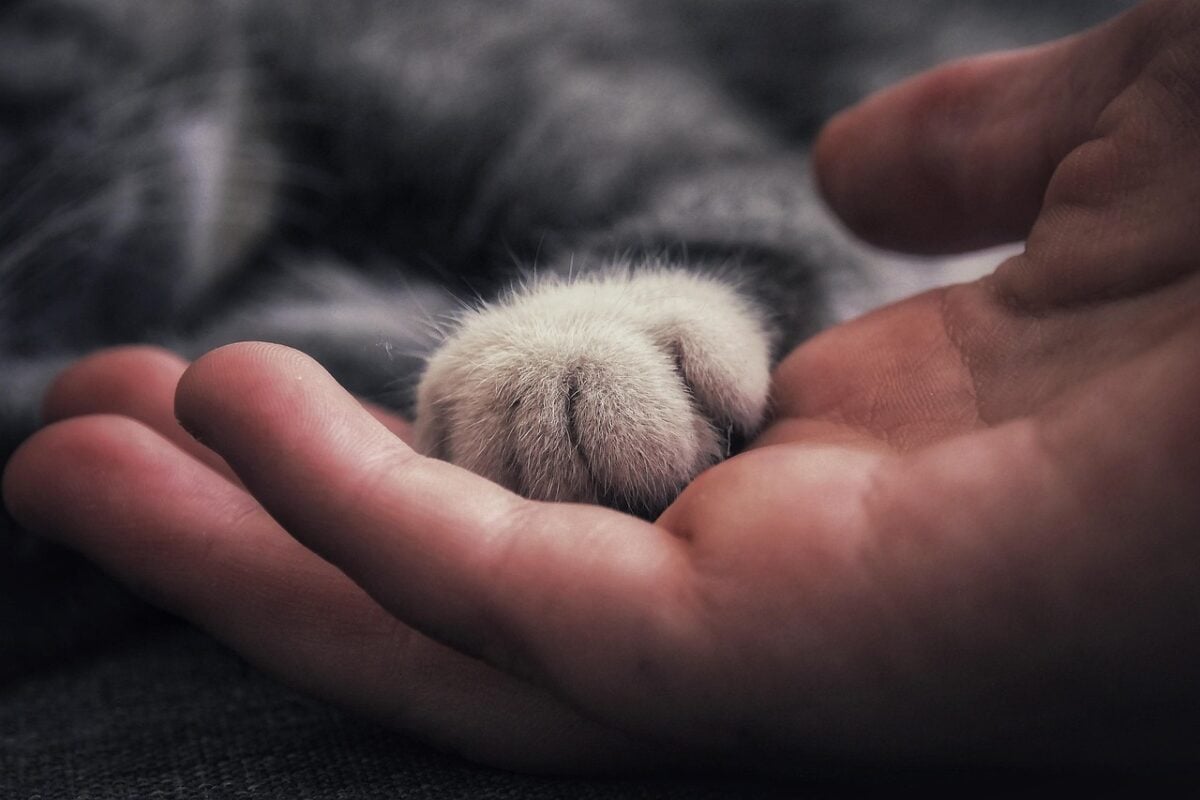
That doesn’t mean every time your cat puts a paw on your wrist, they’re consciously stamping you PROPERTY OF MITTENS. DO NOT REMOVE. Cat behavior isn’t quite that tidy.
Still, scent helps cats create familiarity in their environment, and close physical contact with you becomes part of that familiar sensory world. Think less of a formal declaration of ownership and more of you belonging in the collection of things that smell, feel, and behave like home.
Which, from a cat, is arguably better.
2. They Want Your Attention—or More of What You Were Doing
Sometimes it is about getting or keeping your attention. You’re scratching your cat’s cheeks. The motor is running, their eyes are closed, and everyone is having an excellent time. Then you stop for about two seconds, and a paw immediately reaches out and lands on your hand.
Subtle. Devastatingly effective.
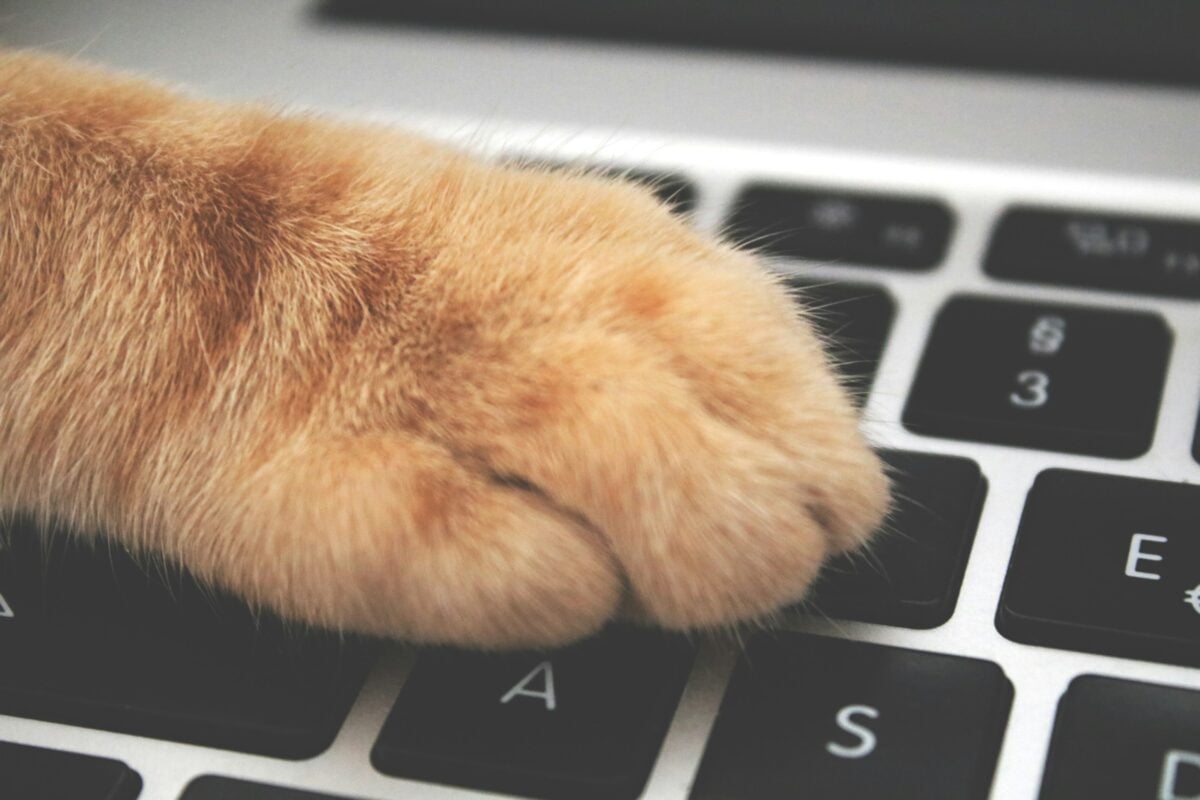
Some cats learn remarkably quickly that touching us gets a response. If pawing your hand makes the chin scratches resume, congratulations: you have just participated in a simple training exercise, and your cat appears to be winning.
That doesn’t make the gesture less affectionate. A behavior can be socially meaningful and learned because it works. Cats also use touch in friendly relationships with other cats, including rubbing, resting together, and, among some socially bonded cats, grooming one another. Your petting sessions aren’t literally the same as cat-to-cat grooming, but physical contact can certainly become part of the social routine you two build together.
So when the paw comes out the moment you stop petting, you don’t always need a complicated behavioral theory.
Sometimes your cat really does seem to be saying, Um. We weren’t finished.
3. They’re Kneading Because It Feels Good
Sometimes the paw doesn’t stay still. It presses, releases, presses again, and then the other paw joins in. Left, right, left, right.
The biscuit factory is open.
Kneading begins very early in a cat’s life. Nursing kittens knead around their mother’s mammary glands, and many cats continue the motion long after kittenhood. Adult cats may knead blankets, beds, other cats and, with remarkable enthusiasm, the softest and most vulnerable part of your stomach.
There probably isn’t one explanation for why the behavior persists. Kneading commonly appears in relaxed, comfortable situations and may retain some of the soothing associations established during nursing. Because cats also have scent glands associated with their paws, scent may play a role as well.

Whatever is going through your particular cat’s head, the scene is familiar to anyone who has lived with an enthusiastic baker: heavy purring, sleepy eyes, toes spreading dramatically with every push, and perhaps a tiny spot of drool appearing on your shirt. A cat in full biscuit mode can look as though they’ve temporarily left this plane of existence.
Of course, cats don’t necessarily retract their claws just because the dough they’re kneading happens to be your thigh. Some knead delicately. Others put their entire soul, and every available claw, into the job.
If your cat belongs to the second camp, keep a thick blanket nearby. You don’t need to discourage something they clearly enjoy just because you’d rather keep the skin on your legs.
The biscuits continue. The baker remains employed.
4. Your Face Is Fascinating, and Impossible to Ignore
An arm is one thing. A paw directly on your mouth at 6:12 a.m. feels considerably more personal.
Cats may touch human faces for several reasons, and once again, context does most of the translating. If you’re lying together and your cat lazily stretches a paw onto your cheek, it may simply be part of the comfortable physical contact they enjoy elsewhere. When you’re talking and they reach toward your moving mouth, curiosity could be involved. If you’re asleep and breakfast is late, we can probably close the investigation.
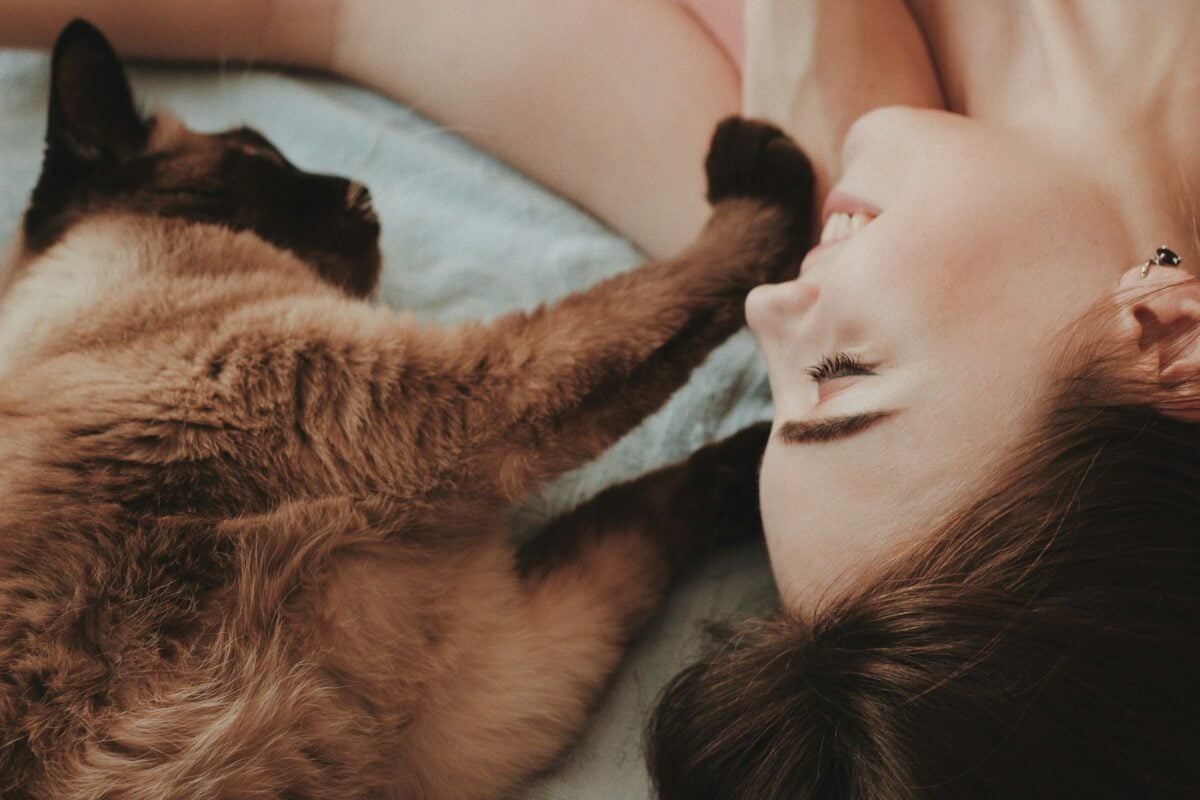
Our faces are also surprisingly interesting from a cat’s perspective. We blink, talk, breathe, move our eyes, twitch our lips, and make tiny movements without noticing them. To an observant little predator lying six inches away, plenty is going on.
Some cats are fascinated by it all. There’s also a practical reason not to romanticize every face touch, though. A relaxed paw resting against your cheek is very different from a cat with enormous pupils repeatedly grabbing at your hair, eyelashes, or moving fingers. One looks like cuddle territory; the other may be the opening round of a game you didn’t realize you had entered.
Because claws and eyeballs are an objectively terrible combination, redirect enthusiastic face-play toward a toy.
5. They Want to Stay Physically Connected to You
This one is almost unfairly cute. Your cat curls up next to you, falls asleep, and leaves one paw touching your ankle, arm, chest, or hand. You shift a few inches and, somehow, the paw finds you again.
Some cats simply seem to enjoy maintaining physical contact while they rest. Your warmth, smell, movement, and presence are familiar, and a cat sleeping deeply beside you is already choosing a fairly vulnerable activity in your company.
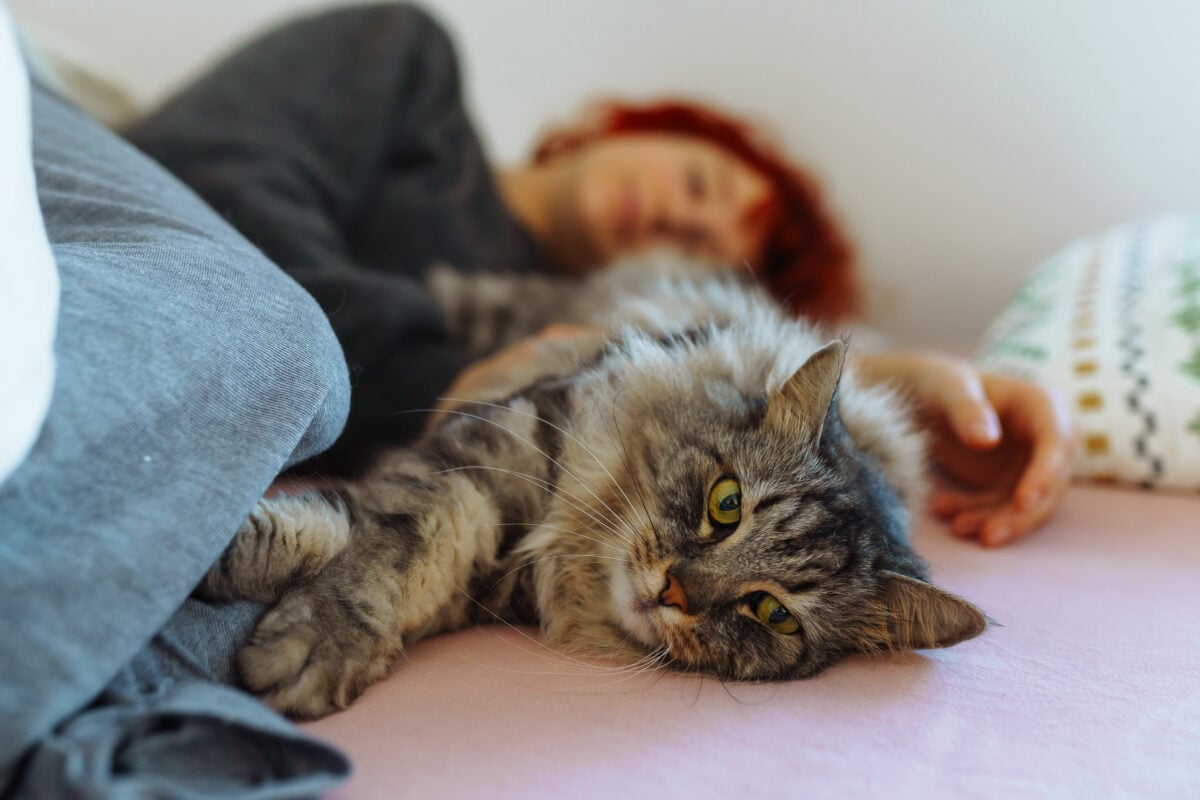
What makes this behavior particularly endearing is that your cat doesn’t necessarily need to be on you. One paw will do. It’s the feline equivalent of reserving a seat by leaving a jacket on it—except the jacket has toe beans and immediately knows when you get up to pee.
6. They’ve Learned That Tapping You Works
Some cats don’t scream for attention. They tap.
Maybe you’re working on your laptop when a paw lands gently on your forearm. You keep typing, so another tap follows. When you finally look down, a face is staring up at you with the weary patience of someone who has already contacted management.
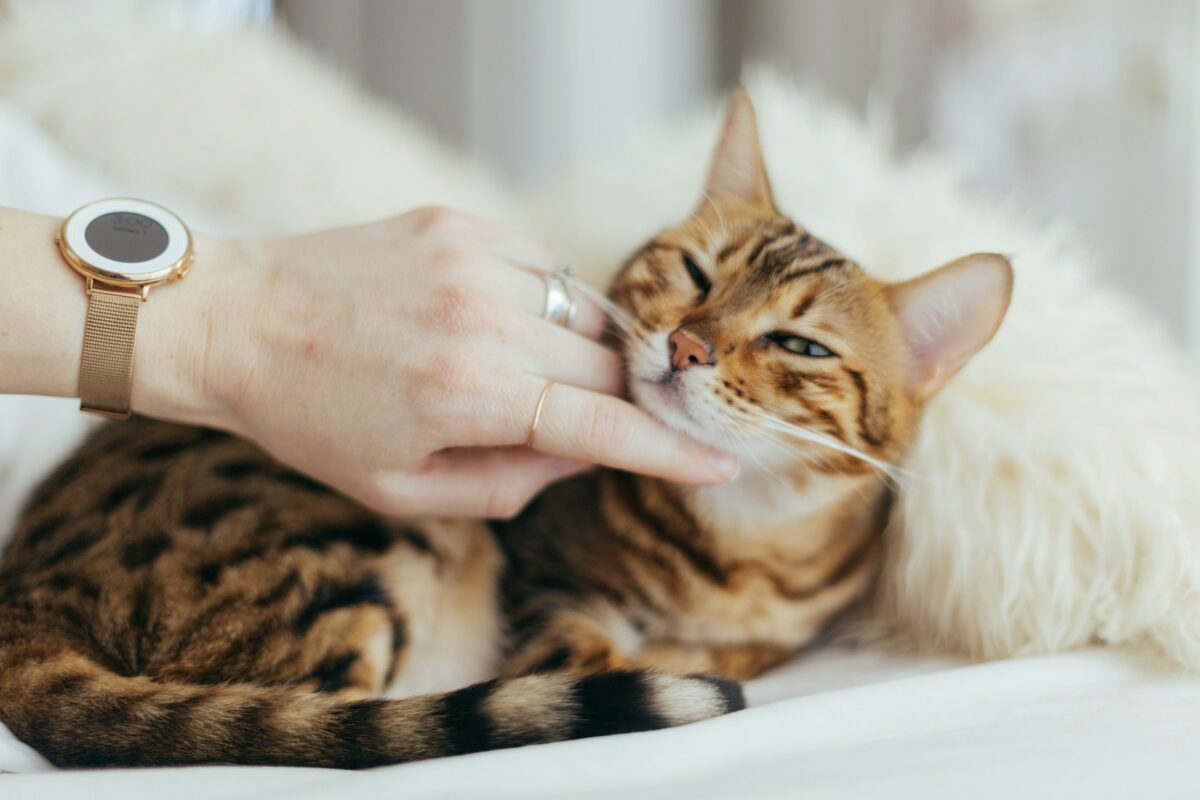
Cats are excellent at learning which behaviors produce results. A paw on your arm gets you to look at them. Looking may lead to talking. Talking may lead to petting. Petting may lead to snacks or playtime. The system works, and once a cat discovers an effective system, it has little incentive to abandon it.
Pay attention to when the tapping happens, and you may discover an embarrassingly predictable pattern. Five minutes before dinner? Probably not a coincidence. After you’ve been staring at your computer for an hour? Attention may be the goal. Beside the toy basket? Your tiny project manager has assigned you a task.
This is why context tells you more than the paw itself.
Reading the Touch: Love, Play, or “Please Stop”
A paw touch doesn’t come with subtitles, but fortunately the rest of the cat usually provides clues. Tail movement, ear position, muscle tension, eyes, posture, and what happened immediately before the touch can completely change its meaning.
| What the Paw Does | What the Rest of Your Cat Is Doing | What It May Mean |
|---|---|---|
| Soft paw resting on you | Loose body, soft eyes, neutral ears, maybe purring | Comfortable contact, affection, or simply wanting to stay close |
| Repeated light taps | Alert, ears forward, watching your reaction | Attention, food, play, or a request they’ve learned works |
| Reaches for you when petting stops | Relaxed and leaning toward your hand | They may want the petting to continue |
| Alternating paw presses | Purring, relaxed body, toes flexing | Kneading, comfort, or contentment |
| Pushes your hand away | Turns away, skin twitches, tail gets active | They may be asking you to pause or give them space |
| Fast batting or grabbing | Big pupils, alert posture, playful energy | Play or predatory excitement |
| Quick, tense swat | Ears back or sideways, stiff body, tail lashing | A warning: stop and give them some space |
The important part is to read the whole cat. A tail that starts thumping matters. Ears rotating backward matter. Skin twitching along the back matters. A cat who suddenly turns their head toward your hand while you’re petting them is giving you information.
So is the cat who pushes their forehead straight back into your fingers the second you stop.
The paw is one word in the sentence. Read the rest before deciding what it means.
When a Sweet Paw Comes With Claws
Sometimes affection has knives. Anyone who has ever hosted a passionate biscuit session on bare skin understands this.
The goal isn’t to punish your cat for using their paws naturally. Instead, make the interaction easier for both of you. A folded fleece blanket is one of the great pieces of cat technology: put it between your lap and an enthusiastic kneader, and your cat gets a wonderfully squishy surface while you retain your epidermis.
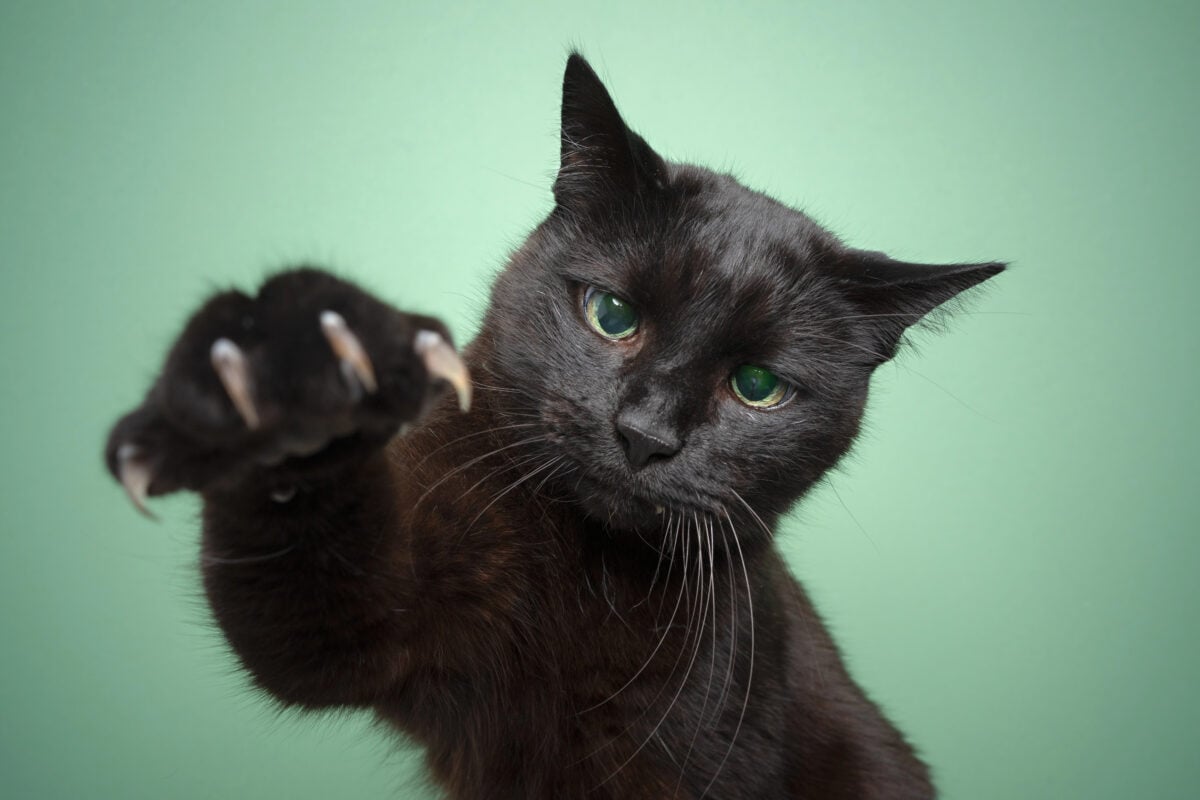
It also helps keep hands from becoming prey. Wiggling fingers are extremely tempting, particularly for kittens, and it’s adorable right up until that kitten becomes a ten-pound adult who believes human hands are interactive hunting equipment. For enthusiastic batting and grabbing, redirect the action to a wand toy, kicker toy, or another object your cat can stalk and wrestle.
Regular claw trims can also blunt those needle-like tips. If you haven’t trimmed cat claws before, ask your veterinarian or veterinary technician to show you where the quick ends and how little actually needs to come off.
And if a claw gets caught in your clothes, resist the instinct to yank away. Instead, support the paw and carefully free the snag. You can prevent many household emergencies by remembering one simple fact: cat claws curve.
How to Answer When Your Cat Reaches for You
The fun part of understanding cat communication is realizing that you get to answer. Not every paw touch requires petting, and sometimes the best response is to let the contact continue, but a few gentle ways can help you figure out what your cat wants.
Try a Slow Blink
This one actually has some science behind it. Researchers studying cat-human interaction found that cats showed more eye-narrowing movements when their owners performed slow-blink sequences. In another experiment, cats were more likely to approach an unfamiliar researcher after a slow-blink interaction than after the person maintained a neutral expression.
In other words, the famous cat-person slow blink isn’t merely internet folklore. Research suggests these eye-narrowing exchanges can play a role in positive cat-human communication.
So soften your expression, slowly narrow or close your eyes, then reopen them. No need to stare dramatically until somebody gets uncomfortable.
Let Them Sniff First
If your cat approaches but seems undecided about touch, offer a relaxed finger or hand within sniffing distance rather than immediately reaching over their head. Then let the cat make the next move.
A cheek pressed firmly into your fingers is a fairly compelling follow-up.
Use a Simple Consent Test
If you’re not sure whether your cat wants the petting to continue, try something beautifully complicated: stop.
After a few seconds of petting, pause your hand and see what your cat does. If they lean back into you, nudge your hand, reposition themselves under your fingers, or reach for you, they’ve given you useful information. If they remain where they are without soliciting more—or move away—let the interaction end.
This tiny pause is especially useful with cats who enjoy affection but have a definite threshold for how much they want at once. Respecting that threshold is part of becoming a person your cat can genuinely relax around.
Why Do Some Cats Hold Hands While Others Prefer a Respectful Distance?
Cat people already know the truth: no two cats received the same operating system.
One sleeps under your chin, follows you into the bathroom, and supervises showers. Another has loved you deeply for nine years and considers sitting at the opposite end of the sofa an extravagant public display of affection. Both can bond strongly with their humans.
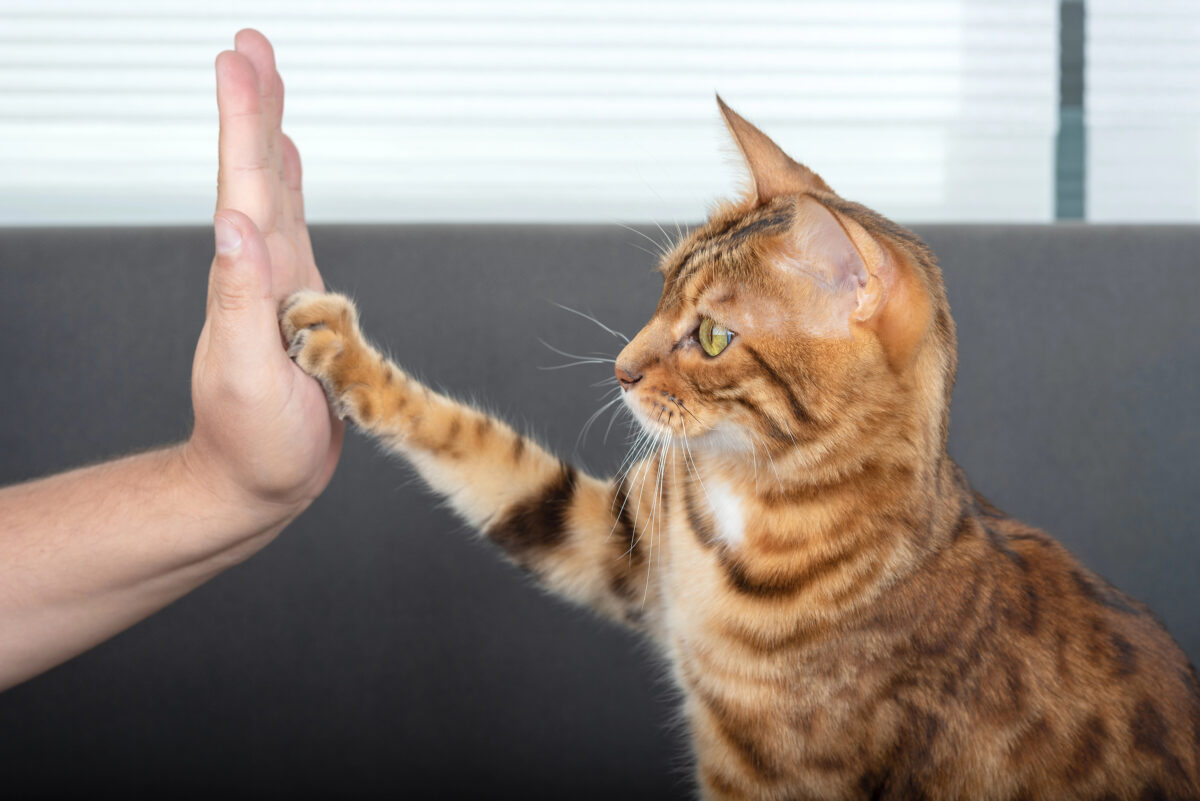
Individual temperament matters, as do early experiences with people and what a cat learns after joining your household. If touching your arm reliably earns something enjoyable—attention, conversation, petting, play, or the opening of a suspiciously treat-shaped cabinet—that behavior has a reason to repeat itself.
Over time, households develop their own tiny languages. One cat chirps from the hallway. Another sits silently beside the food bowl and stares into your soul. One taps your ankle; another reaches up and hooks a paw over your wrist.
That’s part of the joy of living with cats. Eventually, you stop learning what cats do and start learning what your cat does.
What About Breed?
You’ll often see breeds such as Ragdolls, Siamese, Burmese, and Maine Coons described as especially social or people-oriented. Breed can influence tendencies, but it can’t tell you whether an individual cat will be a paw-holder.
Personality, history, socialization, environment, age, and what the cat has learned from living with you all come into play. Your mixed-breed shelter cat may be the clingiest creature you’ve ever met, while your supposedly cuddly purebred may prefer admiring you from a tasteful distance of four feet.
Cats remain committed to proving our generalizations wrong.
When a Change in Pawing Is Worth Paying Attention To
Most paw touches are ordinary cat behavior. From a health perspective, what matters more is a change from your cat’s normal behavior, especially when it comes with other signs that something isn’t quite right.
Cats can be remarkably subtle when they’re uncomfortable, which is why changes in everyday behavior can matter. Pain doesn’t always look like crying or an obvious limp. The American Animal Hospital Association notes that behavior changes may be among the signs of pain in cats. Changes in activity, grooming, appetite, social interaction, movement, sleeping habits, or tolerance of touch can all be worth noticing.
That means a normally independent cat who suddenly wants to spend an afternoon glued to you isn’t automatically sick. Neither is a cuddly cat who becomes temporarily less interested in cuddling. But a meaningful change deserves more attention when it comes with things like eating or drinking less, hiding, litter-box changes, unusual irritability, stiffness, hesitation before jumping, reduced grooming, unusual vocalization, or a noticeable drop in normal play and activity.
This is especially important to watch for in older cats. Joint discomfort can show up as changes in ordinary movement and routines rather than the dramatic limp people expect. A cat may hesitate before jumping onto the bed, choose lower surfaces, move stiffly after resting, or simply stop doing something they’ve done for years.
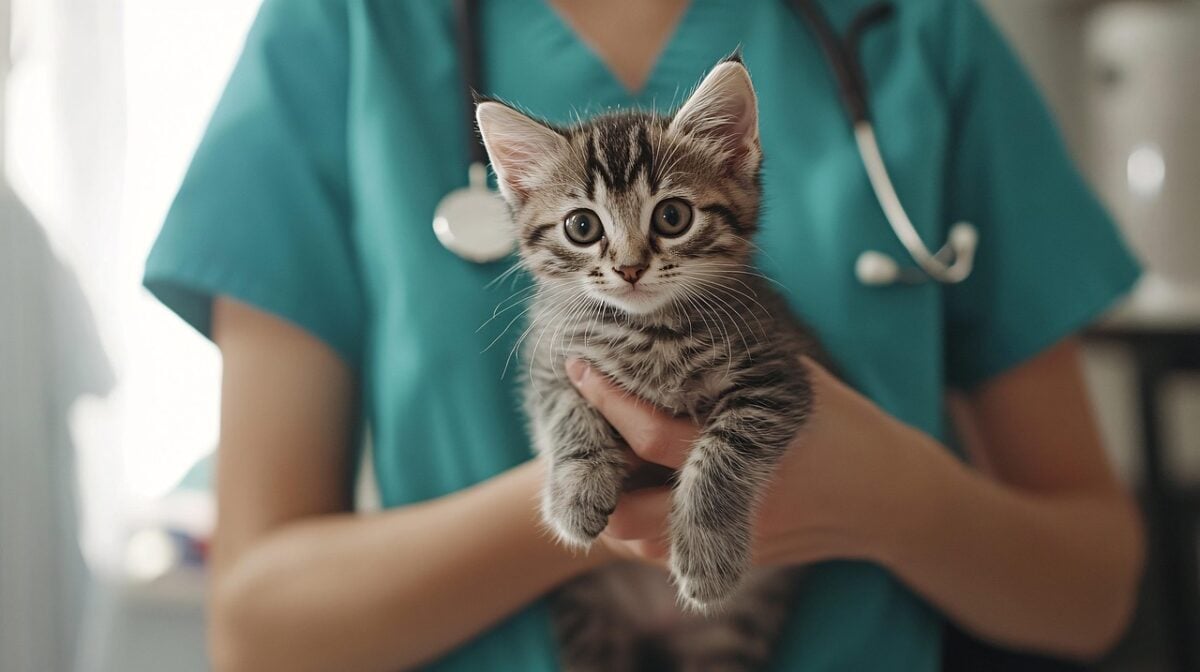
You know your cat’s normal better than anyone. If something feels genuinely different—particularly if several changes appear together—call your veterinarian and describe exactly what you’ve noticed. A short phone video of unusual movement or behavior at home can be helpful, too, because cats have a remarkable ability to arrive at the veterinary clinic and pretend nothing has ever been wrong in their entire lives.
Unexpected vet visits have a way of arriving without much warning, which is one reason some cat owners choose pet insurance: to make the financial side of an unexpected illness or injury a little less daunting when the priority is figuring out what’s wrong. If you’re weighing the cost against the potential benefits, take a closer look at whether cat insurance is worth it before deciding what makes sense for you and your cat.
So, Why Does Your Cat Put Their Paw on You?
Maybe they want another cheek scratch. Or maybe dinner is four minutes late, which is obviously a crisis. Perhaps you stopped petting them before the contractually agreed-upon end of the session, or they’ve discovered that one tiny tap can make a fully grown human immediately put down a $1,000 phone and say, “What is it, baby?”
Maybe they’re kneading because a behavior that began in kittenhood still feels good. Maybe you’re warm. Or maybe they want to play. Maybe they’ve simply chosen to stay in physical contact with someone they trust.
And sometimes, that last explanation is enough.
Cats have plenty of ways to share a room with us without touching us. They can take the windowsill, curl up at the other end of the sofa, or disappear into a cardboard box that is objectively too small for them. Instead, yours has stretched out one paw and left it on you.
You don’t need to turn that into a grand declaration or translate it into a perfect human sentence. Look at the rest of your cat: soft eyes, loose body, one warm little paw resting against your hand.
Message received.
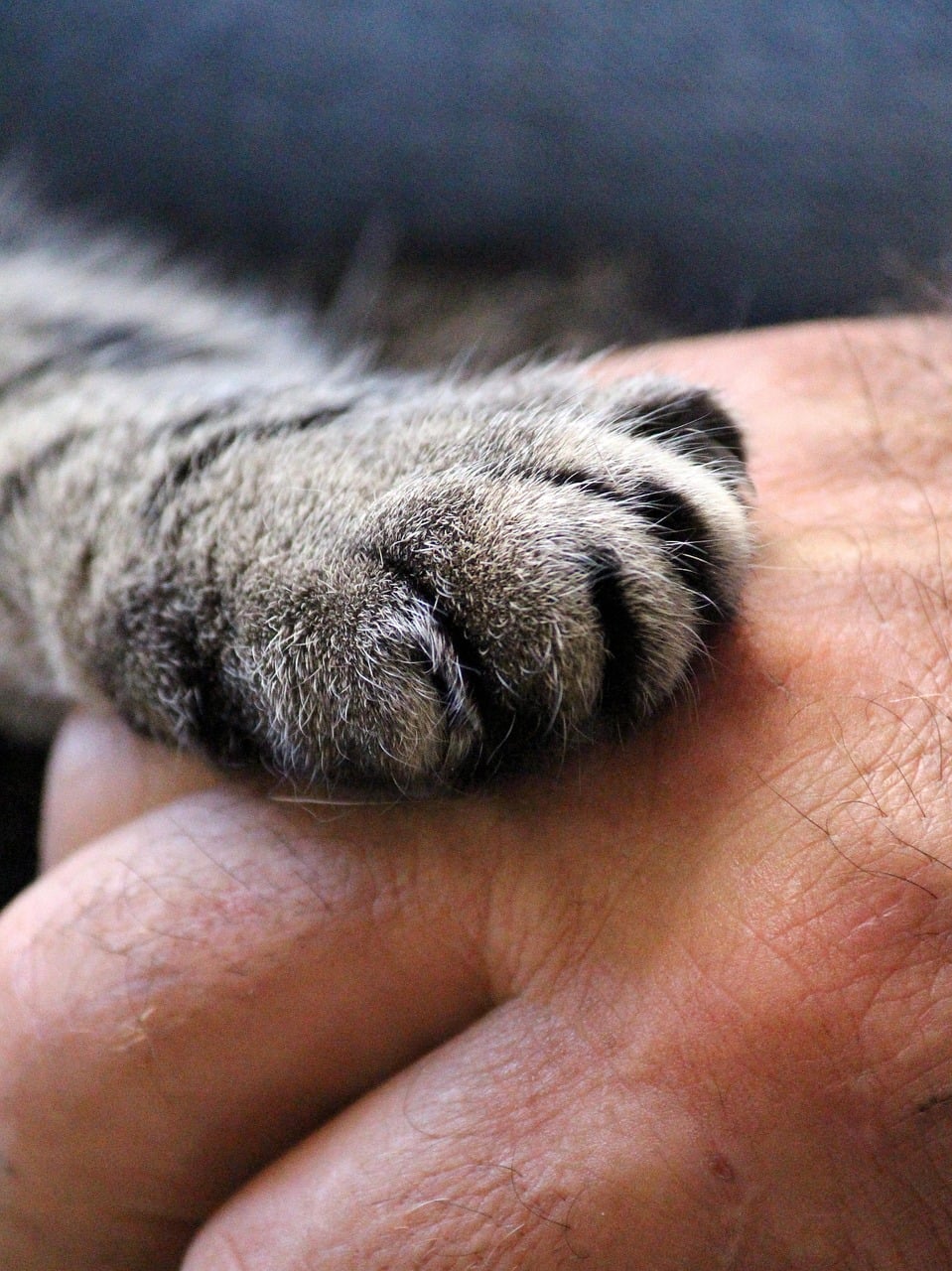
Still Wondering What That Paw Means?
Cats rarely make things quite that simple. The same tap can mean keep petting me in one house, and the food situation requires your immediate attention in another. Here are a few of the paw questions that tend to come up once you start noticing the details.
Why does my cat put their paw on me when they sleep?
Some cats seem to enjoy keeping a little physical contact with their person while they rest. If your cat is loose, comfortable, and happily snoozing with one paw on your arm or leg, it’s usually just part of settling somewhere they feel safe.
Why does my cat put their paw on me and push?
Look at what happened right before the push. If you were petting them and their tail has started twitching, their ears have shifted, or they’re turning away, that paw may be asking for some space. A relaxed stretch that happens to push against you is a different story—which is why the rest of the cat matters.
Why does my cat tap me and then walk away?
Follow the cat. Seriously. Some cats tap their humans before heading toward the food bowl, a favorite toy, a closed door, or wherever they’ve decided your services are required. If it happens repeatedly, pay attention to where they go next; your cat may have developed their own surprisingly effective way of saying come with me.
Have a Paw Mystery We Didn’t Cover?
Cats are wonderfully specific little creatures, and yours may have a paw move all their own. Drop your question in the comments and tell us what your cat does, when they do it, and what happens next. Those little details can make all the difference when you’re trying to figure out what they’re saying.
Your Tiny Overlord Has More to Say
The paw is only one part of the conversation. Once you start paying attention, you notice just how many odd little ways cats communicate with us. There’s the cat who sleeps pressed against you despite having an entire bed available, the one who stares at you from across the room as though waiting for you to figure something out, and, of course, the cat who decides a perfectly pleasant cuddle should include a gentle bite.
Then there are the habits that seem designed specifically to get a reaction out of us—the tapping, yelling, interrupting, knocking things over, and sitting exactly where they shouldn’t. If you’ve ever wondered why your cat can be so spectacularly annoying, there’s an uncomfortable possibility worth considering: some of those behaviors work because we’ve spent years responding to them.
Eventually, though, you stop needing an explanation for everything. The blank-wall staring, the 3 a.m. zoomies, the insistence on sitting directly on whatever you’re using—it all just becomes part of life with a cat. In fact, there are some things every cat owner eventually stops questioning.
Maybe that’s when you officially become a seasoned cat person: not when you finally understand your tiny overlord, but when you learn which questions aren’t worth asking.
Okay, Cat People: What Does Your Cat Do?
Does your cat gently hold your hand, tap you until you surrender the treats, or have a very specific excuse me, human move?
Tell us about your cat’s signature paw move in the comments. Because if there’s one thing cat people love almost as much as talking about their own cats, it’s hearing about everyone else’s.