When you purchase through links on our site, we may earn a commission at no extra cost to you. Learn more.
Your cat’s acting weird — extra naps, clingier than usual, maybe even a little round in the middle. Could she actually be pregnant?
Table of Contents
It happens more often than people think. If she’s not spayed and has spent time around male cats, pregnancy is a real possibility. But don’t panic yet; there are several early signs a cat is pregnant, and most are easy to spot once you know what to look for.
This guide breaks down how to tell if a cat is pregnant, what to expect during each stage, how vets confirm it, and how to care for your expecting queen.
Extra Fluff Or Future Family? How Do I Know If My Cat Is Pregnant?
Maybe your usually aloof feline has suddenly turned clingy. Or she’s sleeping more, eating differently, and starting to resemble a fuzzy pear. If your cat isn’t spayed and has been around male cats, these could be the early signs that a cat is pregnant.
Want our human-written content to rank above AI-generated garbage? Help us out by clicking this button!
When I first noticed changes in Cleo, a young “stray” Tortoiseshell I rescued from a plant nursery, I didn’t think pregnancy. (After all, we had been told she was spayed.) She just seemed tired and unusually needy. A few weeks later, her appetite took off — and so did the mystery.
The truth is, early cat pregnancy symptoms can be subtle. You’ll notice a mix of physical and behavioral shifts about three weeks after mating, though every cat’s timing is different.
6 Physical Changes You Might Notice
Pregnancy brings noticeable shifts to your cat’s body long before the kittens arrive. Within just a few weeks, you’ll start to see subtle physical clues — from appetite changes to a telltale “glow” that’s hard to miss once you know what to look for.
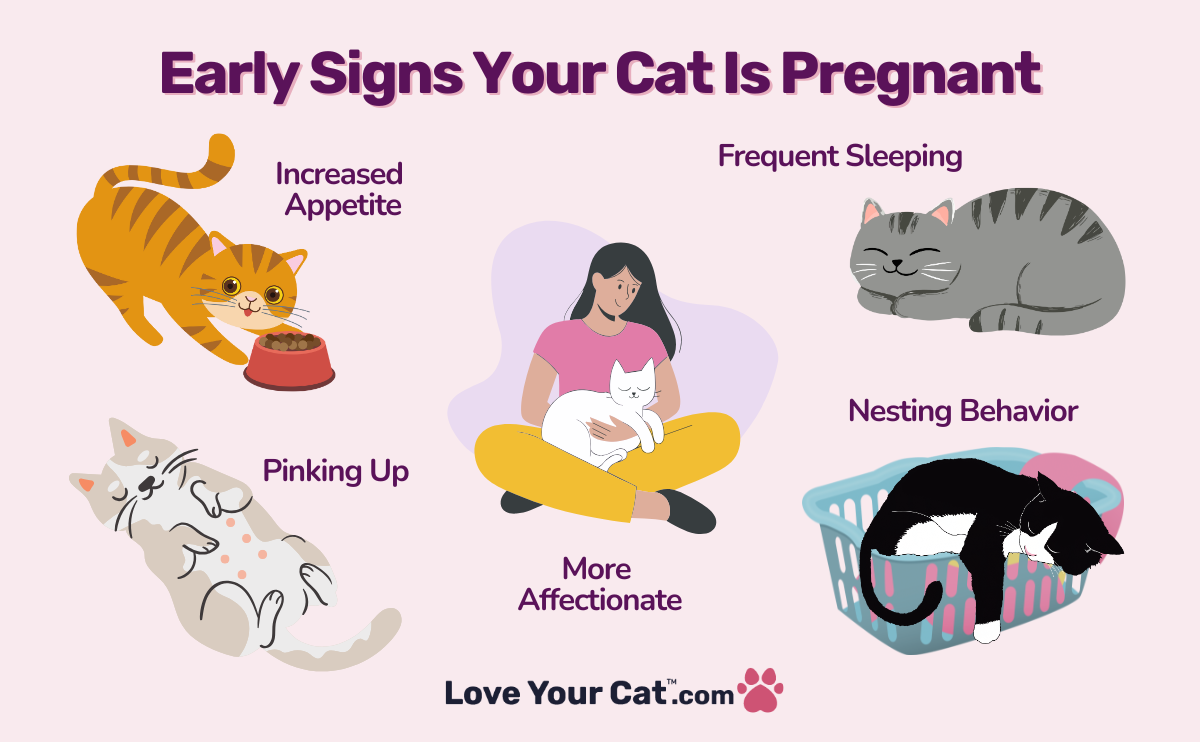
- Appetite shifts.
During early pregnancy, your cat may eat less or even skip meals (mild morning sickness, including vomiting and nausea, is common). A few weeks later, her appetite will increase dramatically because she’s now eating for several. - Pinked-up nipples.
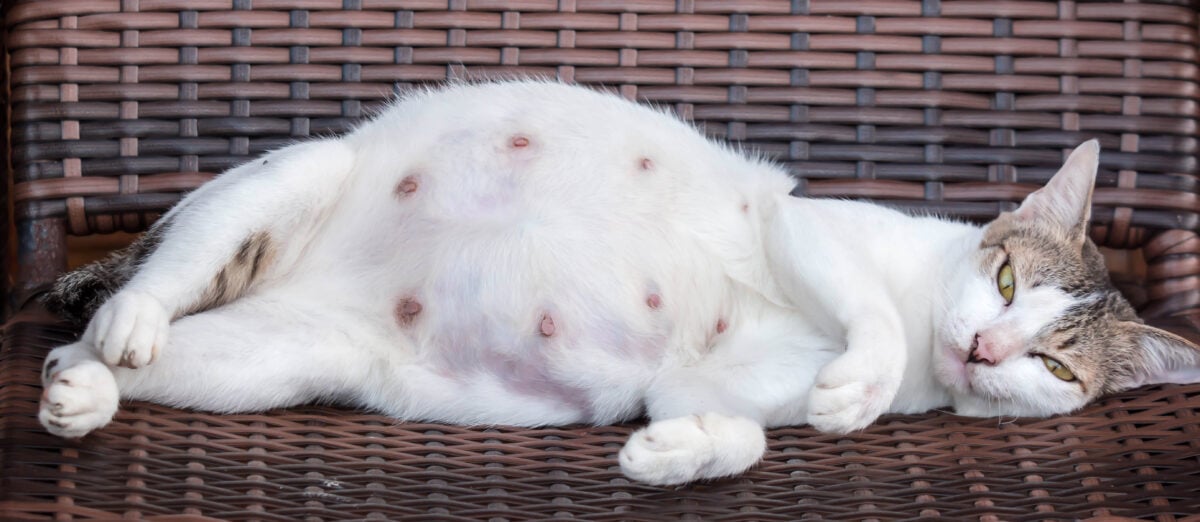
Around week three, you may notice her nipples becoming larger, rounder, and rosier in color. Vets call this pinking up, and it’s often the first obvious sign of pregnancy. - A rounder belly.
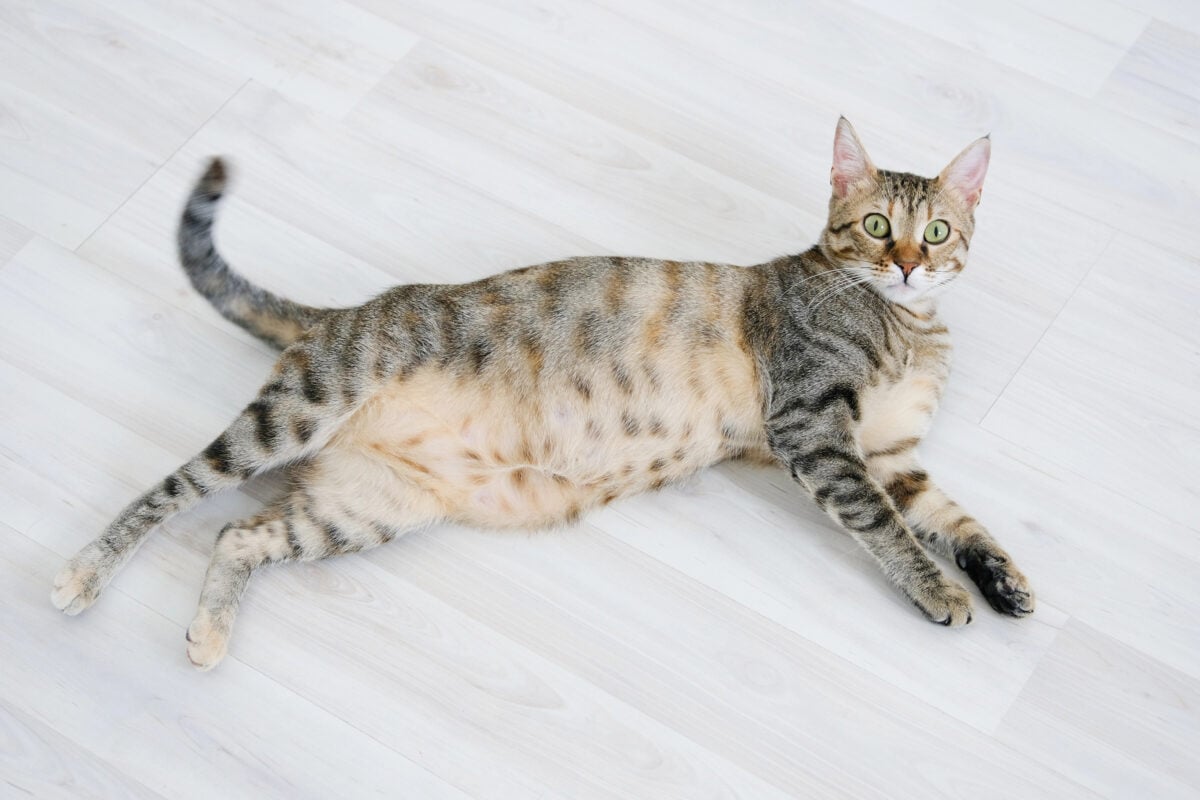
By week five, your cat’s midsection may appear firmer and slightly pear-shaped, especially when viewed from above. Resist the urge to touch or press her abdomen — let a vet handle that part safely. - Gradual weight gain.
Most pregnant cats gain about 1–2 pounds, depending on litter size. The increase is usually steady, not sudden. - A healthy glow (literally).
Many expecting queens develop a shinier coat due to hormonal changes and improved nutrient absorption. - Fetal movement.
Around four to five weeks, you might notice gentle ripples under her belly when she’s lying still — those are tiny kittens moving.
Did You Know?
Cats can ovulate multiple times during a single heat cycle, and egg production can even be induced by mating. This means kittens in the same litter can have different fathers! It’s a process called superfecundation.
5 Behavior Clues You Shouldn’t Ignore
It’s not just her body that changes; her personality might, too. Hormones, instinct, and a dash of feline moodiness can create new behaviors that signal your cat’s preparing for motherhood.

- Nesting behavior.
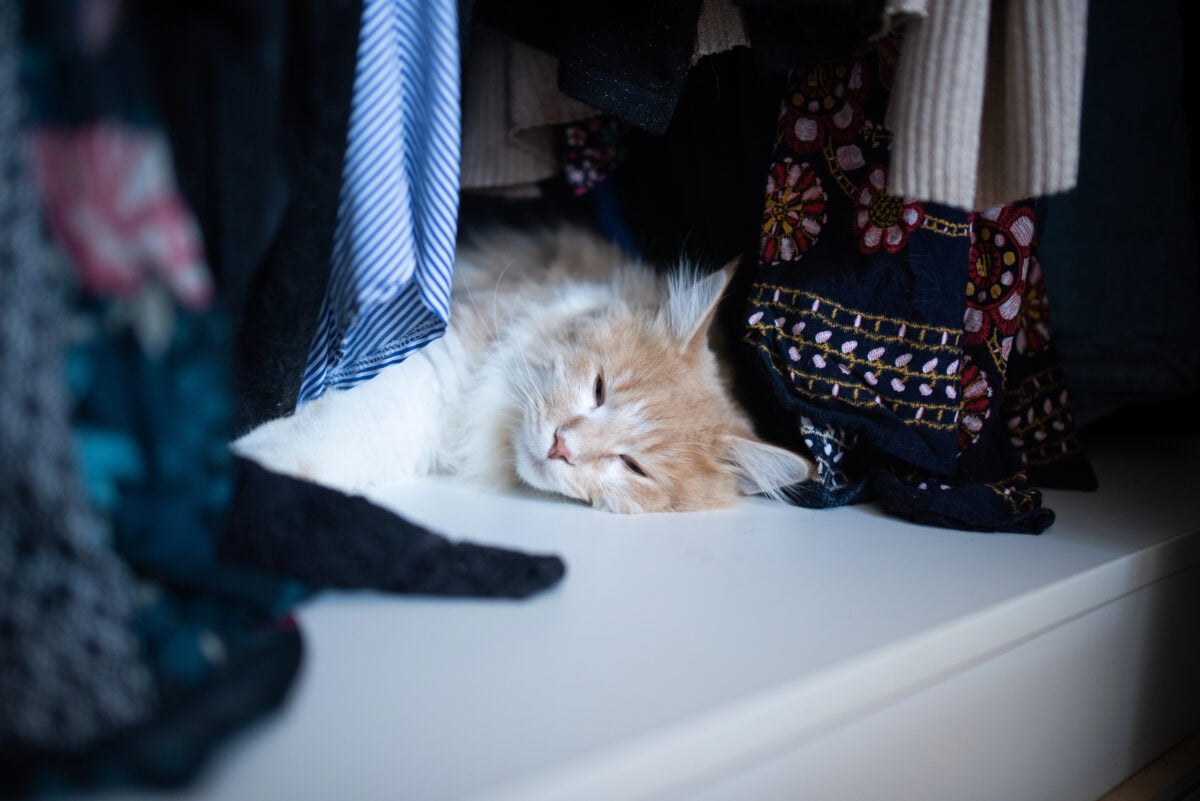
Pregnant cats start searching for quiet, hidden spots, such as closets, under beds, and laundry baskets, and may drag blankets or towels there. She’s building a nursery. - More affection (or less).
Some cats become noticeably clingy, following you everywhere. Others prefer solitude. Either way, any big personality swing could be hormonal. - Increased appetite and naps.
Expect more food breaks and catnaps. Her body is diverting energy to growing kittens. - Change in grooming.
Many cats start cleaning their bellies and the area just under their tail more frequently as their bodies prepare for nursing. - Missed heat cycles.
This is one of the most reliable clues. If her usual heat behaviors (yowling, restlessness, rubbing) stop for two to three weeks, pregnancy is likely.
If you’re unsure how to tell if your cat is pregnant versus just gaining a few ounces from extra treats, a vet visit is the next step. They can confirm what’s really going on and tell you how far along she is.
How Young Is Too Young? When Cats Can Get Pregnant
Brace yourself — cats can get pregnant as early as 4 months old. That means a kitten adopted in spring could be a mom by summer.
Most reach sexual maturity between 4 and 6 months and go into heat every few weeks throughout most of the year. Unlike humans, cats don’t experience menopause, so if unspayed, they remain fertile for life.
That’s why vet experts, like the American Veterinary Medical Association (AVMA) and Feline Veterinary Medical Association (FelineVMA), recommend spaying by 5 months of age. It prevents unwanted litters and reduces cancer risk.
Vet Secrets: How Professionals Confirm Cat Pregnancy (No Guessing Games Needed)
Figuring out how to tell if a cat is pregnant isn’t always easy at home, especially in the early weeks. Luckily, veterinarians have a few reliable ways to confirm pregnancy long before kittens start kicking.
A visit to your vet not only gives you answers but also ensures that your cat and her future litter are healthy and on track. Here’s what happens behind the exam room door.
1. Physical Exam & Gentle Palpation
Around three to four weeks after mating, an experienced vet can sometimes feel the developing embryos in the uterus through gentle palpation. They’ll lightly press the abdomen to detect small, firm, symmetrical bumps (each roughly the size of a grape).
It’s a skill that requires training and is definitely not something to try at home. Pressing too hard can harm the kittens, so always leave the hands-on diagnosis to your vet.
2. Ultrasound (The Earliest, Safest Confirmation)
An ultrasound can confirm pregnancy as early as 16 days after conception. It’s completely safe and allows the vet to visualize the tiny embryos and later, their heartbeats.
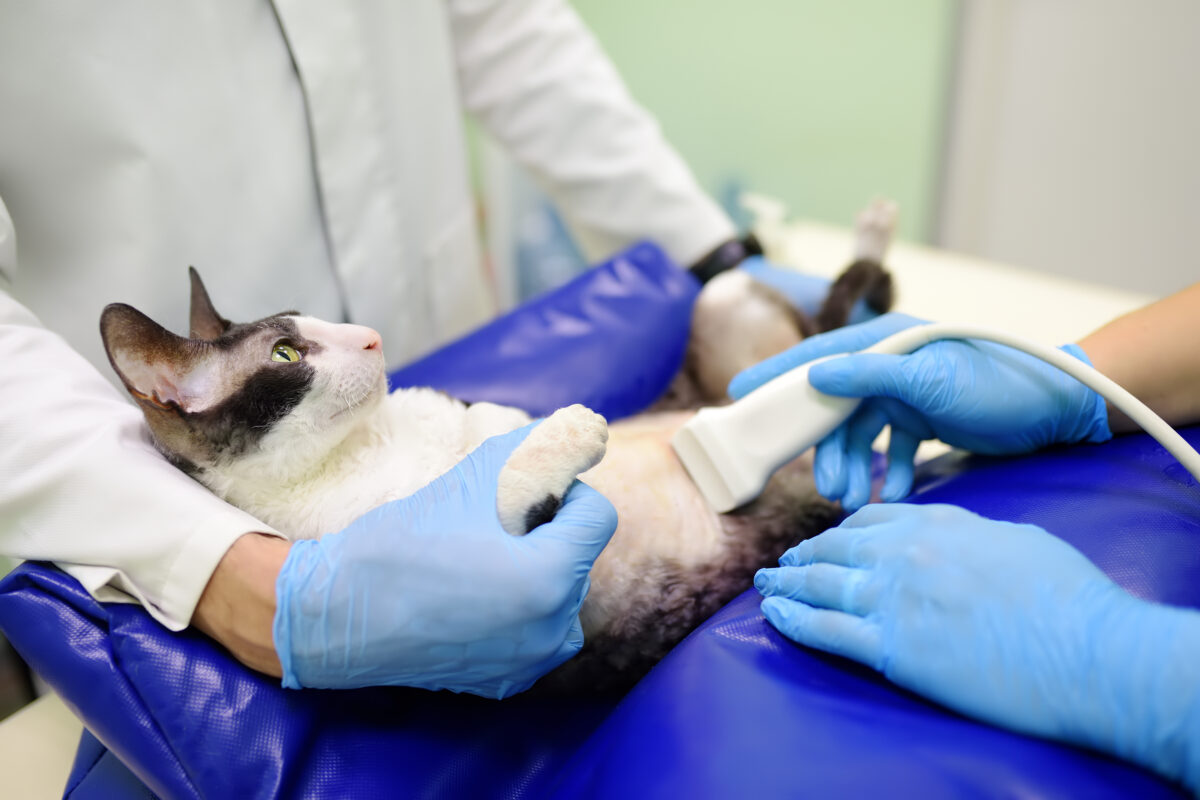
Ultrasound also helps rule out other medical issues (like uterine infections or cysts) that can mimic pregnancy symptoms. Veterinary experts say ultrasound is the most accurate early diagnostic tool for feline pregnancy.
3. X-Rays (Radiographs)
After about 42 days of gestation, fetal skeletons start to calcify, and that’s when an X-ray becomes useful. It helps estimate the number of kittens and their position before birth, so you know what to expect when labor begins.
While X-rays are generally safe in late pregnancy, they’re usually reserved for later visits once the bones are visible.
Did You Know?
An X-ray can show the exact number of kittens a cat is carrying, but only after their tiny skeletons calcify around day 42 of pregnancy. Before that, even pros can’t always tell how many are on the way.
4. Feline Pregnancy Tests
Yes, they exist, though they’re not as simple as an over-the-counter stick. Vets can perform a relaxin hormone test, which measures a pregnancy-specific hormone produced by the placenta. It’s reliable after about 25 days post-mating.
However, this test isn’t as commonly used since ultrasound provides more information for about the same effort and cost.
Why Getting a Vet Confirmation Matters
Even if you’re convinced you’ve spotted every early sign a cat is pregnant, a vet check is vital. It:
- Confirms pregnancy safely (and rules out illnesses that mimic it, like pyometra or false pregnancy).
- Helps estimate due dates and track fetal growth.
- Establishes a care plan for nutrition, supplements, and future checkups.
Myth vs. Fact
Myth: You can tell a cat is pregnant just by feeling her belly.
Fact: Pressing a cat’s abdomen can injure developing kittens. Only a veterinarian can confirm pregnancy safely through palpation, ultrasound, or X-rays.
What To Expect When You’re Expecting: Cat Edition
Once your cat’s pregnancy is confirmed, the real question kicks in: What happens next?
Just like human moms-to-be, pregnant cats (affectionately called queens) go through a wave of changes. Most pregnancies last around 63 to 65 days (a little over two months), but what happens during that short window is nothing short of fascinating.
Hormones surge, appetite shifts, and instincts take over. You’ll notice your cat eating more, sleeping longer, and showing flashes of maternal behavior you’ve never seen before. She may guard certain spaces, purr more often, or suddenly decide your laundry basket is the only acceptable nursery.
It’s a surprisingly efficient process — feline bodies are built for this. In the next section, we’ll break down the stages of cat pregnancy week by week so you’ll know what to watch for, what’s normal, and when to call your vet.
Stages Of Cat Pregnancy (Week-By-Week Guide)
A cat’s pregnancy usually lasts about nine weeks, though some queens deliver a few days early or late. Here’s what’s happening inside that round belly, week by week.
Weeks 1 – 4: The Quiet Beginnings
During the first few weeks, you may not notice much. Fertilized eggs travel to the uterus and implant, and hormones begin shifting fast.
What you might see:
- Mild morning sickness. Occasional vomiting or pickiness about food.
- Slight nipple swelling and pinking. Usually by week three.
- Mood changes. Your cat may nap more, seek gentle attention, or hide out.
By the end of week four, some cats already show a tiny weight gain and firmer abdomen — but don’t try to feel for kittens yourself. This is when a vet palpation or ultrasound gives the clearest early answers.
Fun Fact
Kittens develop their fur color and markings while still in the womb. That tuxedo or tabby pattern starts forming around week five of pregnancy, long before their first meow.
Weeks 5 – 7: The Belly Boom Phase
Now things get obvious. The kittens grow rapidly, and your cat’s body responds.
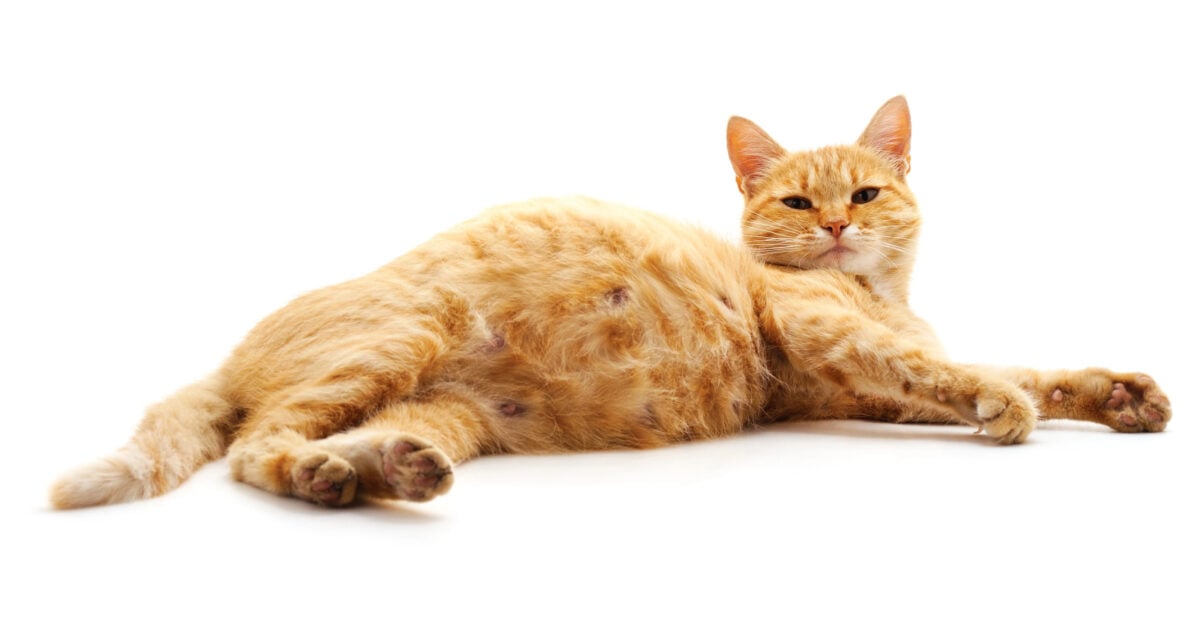
What you’ll notice:
- A rounder, pear-shaped belly. Especially visible from above.
- Increased appetite. She’s officially eating for the whole family.
- Shinier coat and steady weight gain. A healthy glow is normal.
- Nesting behavior begins. She may scout quiet corners or drag blankets around.
Inside, the kittens’ organs and skeletons are forming — soon visible on X-ray if your vet needs to count heads.
Weeks 8 – 9: Countdown To Kittens
This is the home stretch. Your queen’s belly looks full and firm, her movements slower, and those little ripples you feel? That’s kitten kick practice.
Expect:
- Restlessness or pacing. She’s testing nesting spots.
- Decreased appetite. Space is tight; she eats smaller meals.
- Milk production. Nipples enlarge and may leak slightly.
- More grooming and vocalizing. Her instincts are kicking into high gear.
A cat’s temperature often drops below 100°F within 24 hours of labor — a clear sign birth is imminent. Keep her nest calm, warm, and private; she’ll likely handle the delivery herself.
Tip: Most healthy cats give birth without help, but call your vet if she strains for more than 30 minutes without producing a kitten, seems in distress, or passes foul-smelling discharge.
What’s The Average Litter Size For Cats?
You might be surprised — most cats give birth to four to six kittens per litter, but the range can vary widely.
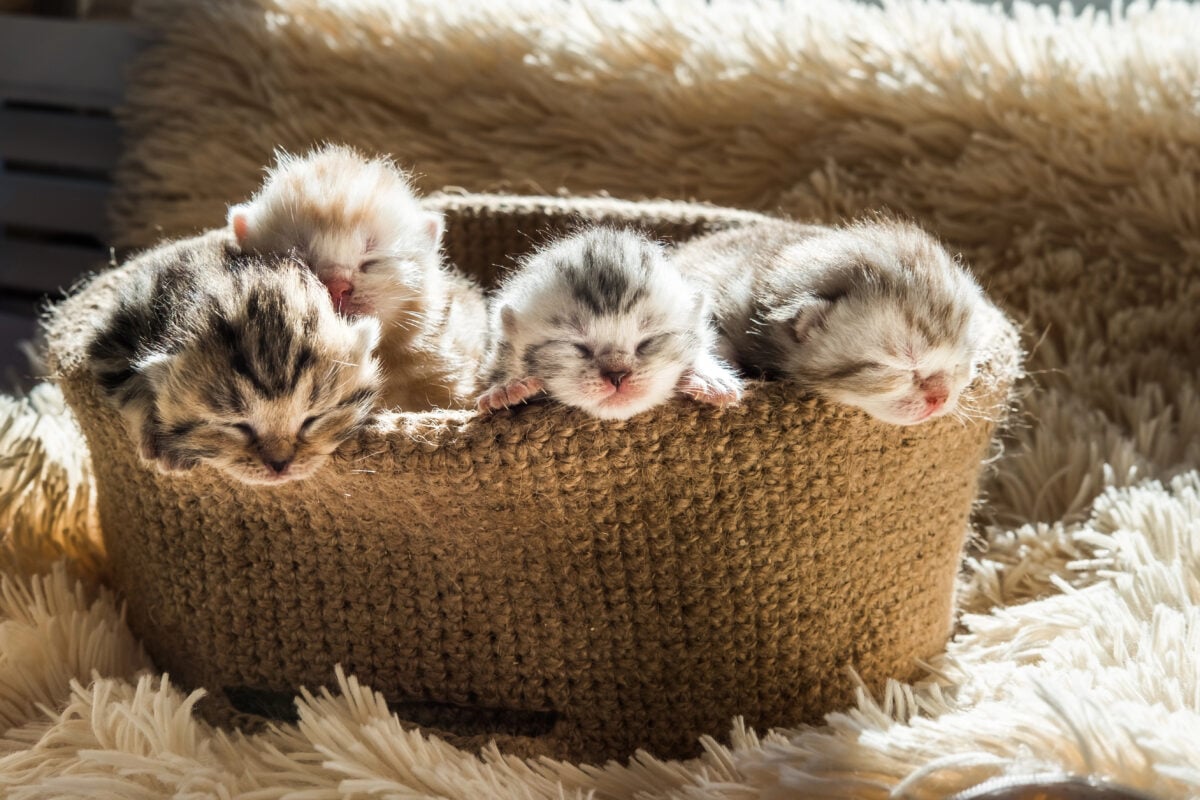
- First-time mothers often have smaller litters (two to four kittens).
- Experienced queens can deliver up to eight or more, depending on genetics, health, and age.
- Breed plays a role too: Siamese and Oriental breeds tend to have larger litters, while Persians and other long-haired cats usually have fewer.
Even within the same litter, kittens may differ slightly in size and development. Don’t worry if one arrives smaller; your vet can confirm everyone’s healthy at the post-birth checkup.
Fun Fact
Cats can become pregnant again while still nursing. A mama kitty’s next heat may occur just a few weeks after her kittens are born.
How To Care For A Pregnant Cat
Now that you know your cat’s expecting, it’s time to make her pregnancy as smooth (and stress-free) as possible. Most queens handle pregnancy like pros, but a few small adjustments can make a huge difference in her comfort, health, and the safety of her kittens.
Veterinary Care: Keep Her on Track
Pregnancy care starts at the vet’s office. Regular checkups and expert advice ensure your queen and her kittens stay healthy through every stage.
- Schedule a prenatal checkup.
Your vet can confirm the pregnancy timeline, estimate a due date, and discuss vaccinations or parasite prevention that are safe during pregnancy. (Never give over-the-counter dewormers or flea meds without veterinary approval.) - Ask about nutrition.
Many vets recommend switching to a high-quality kitten food. It’s higher in protein and calories and supports both mom and growing kittens. Look for AAFCO-approved formulas rich in DHA, omega-3s, and taurine. - Monitor her weight and hydration.
Gradual weight gain is healthy, but rapid gain or swelling could signal a complication. Always keep fresh water available; dehydration can make labor harder later. - Prepare for the big day.
Around week eight, ask your vet what supplies to keep on hand (clean towels, a heating pad, vet’s phone number) in case labor starts suddenly.

At-Home Care: Comfort Is Everything
Once your vet gives the all-clear, it’s your turn to make her environment cozy and calm. A few small changes at home can make pregnancy easier for both mom and her soon-to-arrive kittens.
- Create a nesting zone.
Pick a quiet, dimly lit corner away from busy rooms. Line a shallow box or laundry basket with soft blankets or old T-shirts. She’ll likely test it a few times before fully moving in. - Feed for two (or six).
Small, frequent meals keep her energy stable. Kitten food or a vet-recommended growth formula supports calorie needs through weaning. - Keep her environment calm.
Avoid loud noises, visitors, and overhandling. Stress can delay labor or cause hiding behavior when it’s time to give birth. - Skip vaccines and meds unless cleared by your vet.
Certain treatments (even flea collars) can be risky for pregnant cats. When in doubt, ask first. - Groom gently.
Most cats can groom themselves, but if she’s struggling to reach her back or tail, help with a soft brush. Keep litter boxes clean because pregnancy increases sensitivity to smells.
Pro tip: Don’t change litter types mid-pregnancy. New scents or textures can cause litter box avoidance at a time when you want her to be as comfortable as possible.
Quick Check: Is My Cat’s Pregnancy On Track?
- She’s eating more but is still active.
- Her belly is round, not swollen or painful.
- No vomiting, straining, or unusual discharge.
- She’s nesting calmly in one spot.
If she’s showing these signs, everything’s likely on schedule.
But if you notice lethargy, loss of appetite, or signs of distress, contact your vet right away.
How To Tell When Labor Is Near
Your cat’s belly looks ready to pop, and she’s acting… different. She’s pacing, purring in odd places, maybe ignoring food. Don’t panic — these are all signs your cat is getting ready to give birth.
Most queens go into labor around day 63 to 65, but it can happen a few days early or late. What matters is knowing what’s normal and when to step in.
Pre-Labor Signs To Watch For
1. Nesting activities.
She may start dragging soft materials into her chosen spot (blankets, shirts, towels) or disappear for long stretches to prepare her “delivery suite.”
2. Restlessness.
Expect pacing, digging, or constant repositioning within her nest, which usually occurs 24 to 48 hours before labor.
3. Panting or trembling.
Mild panting is normal as contractions begin. Combine that with purring or low vocalizations, and you’re likely in the early stages.
4. Increased vocalizing.
Some cats meow or chirp more as contractions ramp up. It’s communication, not distress — think of it as her letting you know the kittens are coming.
5. Drop in body temperature.
A healthy cat’s temp is normally 100.5–102.5°F. When it dips below 100°F, labor is likely within 12 to 24 hours. (If you can’t safely check temperature, don’t stress — her behavior will tell you plenty.)
6. Appetite loss.
Even food-obsessed cats may skip meals right before delivery. The kittens have taken up most of the space she normally reserves for lunch.
Did You Know?
Most cats give birth at night or in total privacy. Queens feel safest delivering when it’s quiet and dark, so don’t be surprised if your cat waits until you’re asleep to start labor.
How To Help Your Cat During Labor
In most cases, you don’t need to intervene. Cats are instinctive and private mothers. Your main job is to stay calm, observe from a distance, and make sure her nesting area is:
- Warm (around 80–85°F)
- Dimly lit and quiet
- Close to her water bowl and litter box
Keep clean towels nearby, and note the time each kitten arrives — this helps your vet confirm none were retained.
If you see straining for more than 30 minutes with no kitten, foul-smelling discharge, or extreme lethargy, call your vet or an emergency clinic immediately.
After The Birth: Caring For Newborn Kittens
Once delivery is over, your queen should lick each kitten to stimulate breathing. She may eat the placentas (gross but normal), then rest while nursing begins.
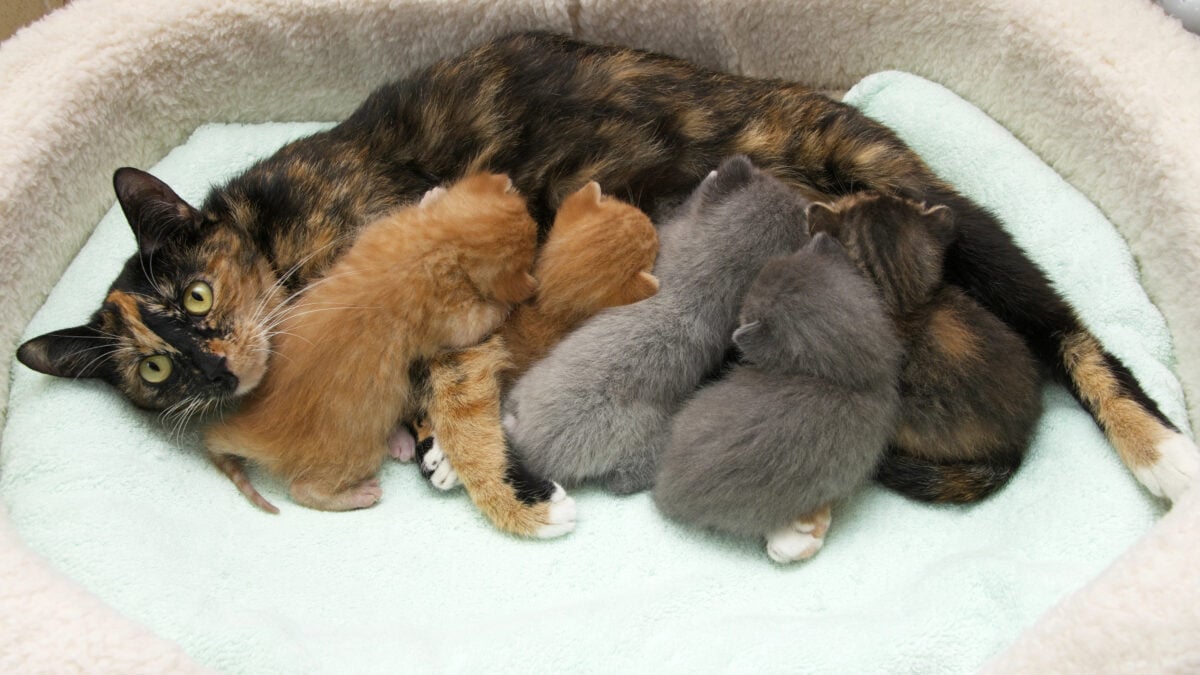
Check that:
- All kittens are breathing, warm, and nursing within the first hour.
- The mother’s appetite and alertness return within a few hours.
- The nest remains clean, warm, and quiet.
Avoid handling the kittens for the first 1 to 2 days unless necessary. The more privacy she has now, the smoother her recovery will be.
Why Spaying (And Neutering) Your Cat Is So Important
If you’ve just gone through the rollercoaster of feline pregnancy or the surprise of realizing your “kitten” was old enough to have kittens, you’re not alone. Every year, animal shelters across the U.S. take in millions of unplanned litters, most from loving pet parents who never meant for it to happen.
The solution is simple, compassionate, and backed by every major animal welfare organization: spaying and neutering.

The Real-World Impact
According to the ASPCA, one unspayed female cat and her offspring can produce more than 400,000 kittens over seven years. Most won’t find homes. Many end up on the streets or in overcrowded shelters. Statistics from Shelter Animal Counts show that 2.9 million cats entered shelters and rescues across the U.S. in 2024. Of those, 2 million were adopted.
By spaying your cat, you’re not just preventing pregnancy; you’re helping break that cycle and reducing the strain on rescue systems and feral populations.
Health Benefits For Your Cat
Spaying isn’t only about population control; it’s also about longevity and quality of life.
- It prevents uterine infections (pyometra) — a life-threatening emergency.
- It significantly reduces mammary cancer risk, especially if done before her first heat cycle.
- It stops those stressful, loud heat behaviors that can make even the calmest cat seem possessed.
Neutering males prevents testicular cancer and reduces marking, roaming, and fights — all good news for indoor harmony.
When To Spay Or Neuter
Most vets and organizations, including the AVMA, recommend surgery by five months of age. Early-age spay/neuter is safe, fast, and recovery is usually a breeze. The American Society for the Prevention of Cruelty to Animals (ASPCA) says that it’s generally considered safe to spay/neuter a cat by the age of eight weeks.
Frequently Asked Questions
Curious about what’s normal during a cat pregnancy or still wondering how to tell if a cat is pregnant for sure? Kitty parents ask these questions all the time. Have a question we missed? Drop it in the comments below! Our team loves hearing your stories and helping decode feline mysteries.
How Can You Tell If A Cat Is Pregnant Or Just Gaining Weight?
A pregnant cat’s weight gain is gradual and centralized, creating that telltale pear shape. Overweight cats gain evenly across the body, while pregnant queens often have a firmer, lower belly and pinked-up nipples within three to four weeks of mating.
If you’re unsure, schedule a quick vet visit — they can confirm it with palpation or ultrasound long before it’s visible.
How Can I Check If My Cat Is Pregnant At Home?
You can’t confirm it 100% without a vet, but you can watch for signs like nipple color changes, nesting behavior, and a missed heat cycle. Avoid touching her abdomen because it’s easy to injure developing kittens. If you suspect pregnancy, treat her gently and assume she is until a vet says otherwise.
How Can You Tell How Far Along Your Cat Is?
The best clue is her belly size and nipple changes:
- Weeks 1–4: Slight swelling, pink nipples
- Weeks 5–7: Round belly, clear movement, bigger appetite
- Weeks 8–9: Restlessness, milk production, nesting
Your vet can narrow it down precisely using an ultrasound or X-ray, which also estimates litter size.
How Often Can Cats Have Litters?
More often than you think. Unspayed females can go into heat every 2–3 weeks, which means multiple litters per year. That’s why veterinarians stress early spaying — it protects her health and prevents back-to-back pregnancies that can deplete her body’s nutrients and energy.
Feeding For A Healthy Pregnancy And Beyond
A well-fed queen is a healthy queen. During pregnancy and nursing, your cat’s body is working overtime, so nutrition matters more than ever. High-quality kitten food provides the extra protein, calories, and DHA she needs to support both herself and her growing kittens.
Once the kittens arrive, continue that diet until they’re weaned — it gives mom the energy to recover and helps her milk stay rich and nourishing.
Want more help choosing the right food and other related information? Check out:
Have you ever discovered your cat was pregnant out of the blue? Tell us how you found out in our comments below. Your story might help another cat parent spot the signs sooner!