When you purchase through links on our site, we may earn a commission at no extra cost to you. Learn more.
It happened so fast, I almost didn’t believe it.
Table of Contents
One minute, my cat Twilight was lounging on the back of the couch, tail flicking with quiet purpose. The next, she sprang into the air, swatted something mid-flight, and landed with a crunch.
My cat ate a fly.
At first, I laughed. Typical Twilight. She’s a silent assassin with zero tolerance for anything that buzzes. But then I paused. Could that fly have been crawling through trash? What if it had been coated in pesticide? Was this just a gross little quirk, or something more serious?
Want our human-written content to rank above AI-generated garbage? Help us out by clicking this button!

If your cat just ate a fly and your brain instantly filled with worst-case scenarios, take a breath.
It’s normal to worry; we care about these tiny weirdos like family. This article will help you figure out what’s safe, what’s serious, and how to protect your cat without panicking.
Caught in the Act: The Fly Didn’t Stand a Chance (Video)
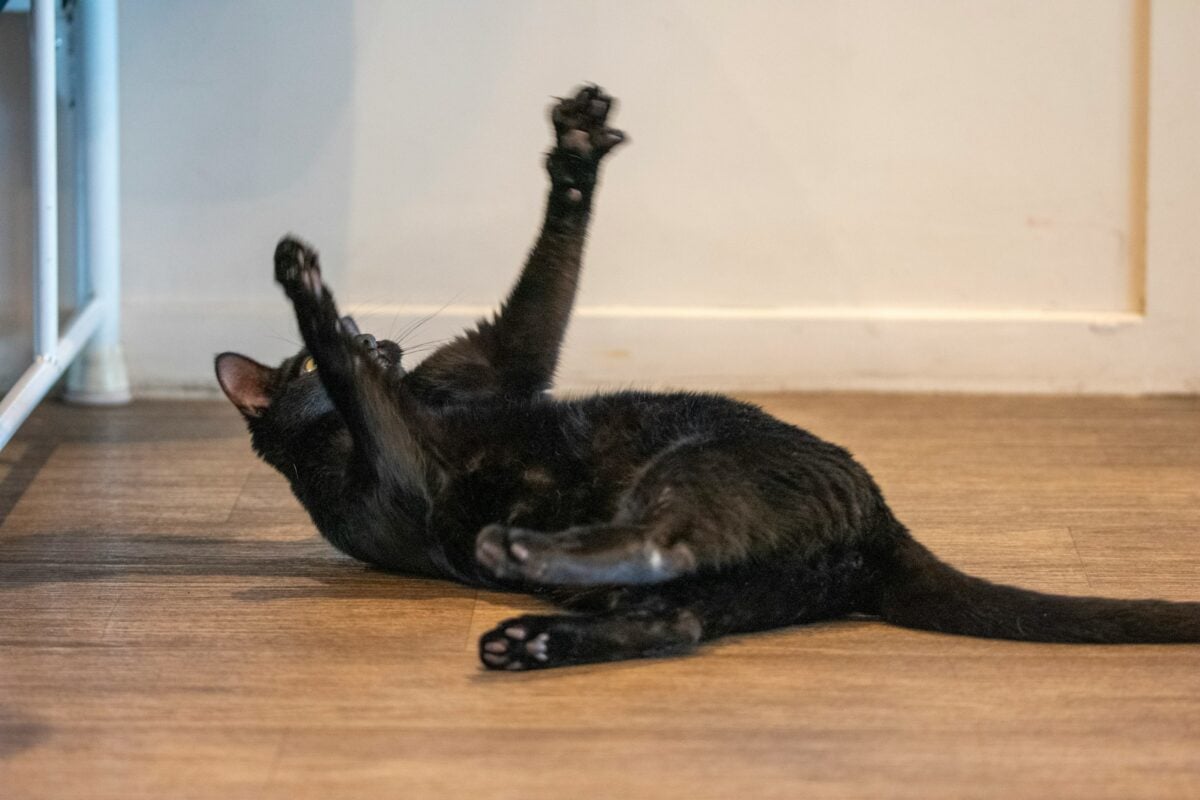
Ever wonder what this cat hunt fly game actually looks like in action? Picture it: a lazy afternoon, sunlight pouring through the window, and then… buzz. In a flash, your cat’s chill vibe vanishes, replaced by full-blown predator mode. Tail twitching. Eyes locked. Aerial acrobatics you didn’t know they were capable of.
For indoor cats, a rogue housefly is the ultimate adrenaline hit. But as funny (and impressive) as these bug battles can be, what happens next isn’t always harmless. Let’s kick things off with a quick real-life moment that captures exactly what we’re talking about
Why Do Cats Go Wild Over Flies?
It’s not about hunger. And it’s not just because flies are annoying.
Cats go after flies because they’re hardwired to hunt. Even the fluffiest indoor lap cat is still a predator at heart. That flick of movement, the high-pitched buzz, the unpredictable flight path—it triggers something deep in their instincts.
To your cat, a fly isn’t just a bug. It’s a challenge.
This is especially true for indoor cats. Without mice, birds, or other real prey to chase, a fly buzzing through the living room becomes the next best thing. It’s fast. It flies. It taunts. And catching it is the ultimate enrichment.
But there’s more to it than instinct. Some cats actually seem to enjoy the taste or smell of bugs. Others may hunt and eat them out of boredom, stress, or just because they can.
So when your cat locks onto a fly and launches into stealth mode, it’s not random; it’s a built-in behavior. But just because it’s natural doesn’t necessarily mean it’s harmless.
And that brings us to the real question…
Can Cats Really Eat Flies?
They can. But that doesn’t mean they should.
Flies, especially the common housefly (Musca domestica), aren’t toxic to cats. In fact, eating one occasionally probably won’t hurt your pet at all. They’re small, they offer a tiny bit of protein, and most cats digest them without any issue.

But that’s not the full story.
Flies are filthy. These bugs spend their time on trash, feces, rotting food, and other surfaces contaminated with bacteria. When your cat eats one, they’re not just getting wings and legs; they’re getting a mouthful of whatever that fly’s been walking through.
That includes:
- Bacteria like Salmonella and E. coli
- Parasites like Giardia or Isospora
- Chemical residues, if the fly came into contact with insecticides or household sprays
One fly probably won’t cause problems. But if your cat eats them often—or if the fly was contaminated, the risks go up.
Bottom line: Yes, cats can eat flies. But depending on the fly, the circumstances, and your cat’s health, it’s not always as innocent as it looks.
Quick Facts About Fly Risks
- Flies are not toxic to cats—but they’re not exactly clean, either.
- They can carry bacteria like Salmonella and E. coli.
- They may transmit intestinal parasites such as Giardia or Isospora.
- Flies exposed to pesticides or insecticides may cause toxicity when ingested.
- Most cats will be fine after eating a single fly, but repeated exposure increases risk.
- If your cat exhibits symptoms such as vomiting, diarrhea, or lethargy, contact your veterinarian.
What Could Happen If Your Cat Eats a Fly?
An occasional fly might slide right through. But that doesn’t make flies harmless; they’re among the sneakiest little vectors for microbes, parasites, and even chemical residues.

Flies habitually walk through garbage, animal waste, decaying matter, and other unsanitary environments. Studies show that they carry a staggering variety of pathogens, bacteria, fungi, protozoa, possibly even viruses, and can transmit them mechanically.
A systematic review published in the journal Clinical Microbiology Reviews found that house flies harbor over 100 different pathogens associated with human and animal disease on their bodies and in their digestive systems. That means when your cat eats a fly, they may be exposed to much more than just an insect snack.
Microbiome studies of Musca domestica have revealed that some flies can carry strains of Escherichia coli and other bacteria for days, on their mouthparts, legs, or in their gut, enabling them to shuttle microbes between distant sites. Flies have even been implicated in moving pathogenic E. coli from farms to restaurants several kilometers away.
Common Risks Backed by Research
Once you understand what flies are capable of carrying, the risks start to make a lot more sense. Here’s what science tells us your cat could be ingesting.
1. Parasites & Protozoa
Some flies may carry cysts or eggs of parasites like Giardia, Isospora, or Toxoplasma. If ingested, these can lead to gastrointestinal distress (diarrhea, vomiting, appetite loss). In more vulnerable animals (kittens, older cats, immunocompromised cats), the impact can be more serious.
2. Bacterial Pathogens
Flies often harbor Salmonella, Shigella, E. coli, and other bacteria. Since flies move between filth and living spaces, they effectively act as bridges for microbial contamination.
3. Chemical / Pesticide Residues
A fly that brushes past insecticide, lawn sprays, or household chemicals can carry trace toxins. Consuming such a fly introduces those toxins internally. While one fly may not carry a lethal dose, repeated exposure or ingestion of multiple contaminated insects raises the risk of poisoning symptoms—drooling, tremors, lethargy, and gastrointestinal upset.
4. Rare But Possible: Myiasis / Larval Infestation
In rare circumstances, particularly if a cat has skin wounds or poor grooming, flies may lay eggs or larvae that can implant in tissue (myiasis). This is uncommon in well-cared-for indoor cats, but it is worth understanding.

What To Do Right After Your Cat Eats A Fly
So your cat just crunched a fly, maybe mid-air, maybe off the windowsill, and now you’re wondering what to do next. The good news? In most cases, a single fly won’t send your cat into crisis mode. But that doesn’t mean you should ignore it completely.
Here’s how to stay calm and take the right steps to protect your cat’s health and comfort.
What to Do
- Observe your cat for the next 12 to 24 hours. Most cats will be completely fine after eating one fly, but you should watch closely for any signs of trouble. Mild digestive upset is possible, especially if the fly was contaminated or recently exposed to chemicals.
- Offer fresh water and stick to a bland diet if your cat shows signs of mild discomfort. Boiled chicken and rice can help settle the stomach. Avoid rich treats or processed foods during this window.
- Keep your cat indoors for a bit. If the fly came from outside—or worse, a recently sprayed area—your cat may have been exposed to toxins. Keeping them indoors limits the risk of further exposure while you monitor their behavior.
What Not to Do
- Don’t try to induce vomiting. Cats are extremely sensitive to methods like hydrogen peroxide or saltwater. These “home remedies” are dangerous and not recommended without direct veterinary supervision.
- Avoid giving any human medications. What works for us can be toxic for cats—even common over-the-counter drugs. Never medicate your cat unless your vet explicitly approves it.
- Don’t ignore symptoms that last more than a few hours. While mild reactions can pass quickly, persistent vomiting, diarrhea, or changes in behavior are worth a call to your vet.
Should You Worry?
If your cat eats a fly now and then and shows no symptoms, most likely their immune and digestive defenses handled it quietly. But you should raise your eyebrows if:
- They begin vomiting or have diarrhea (especially if bloody)
- They become lethargic or stop eating for more than 24 hours
- Drooling, tremors, or neurological signs appear
- You live in a region with heavy pesticide or chemical use
- The fly-eating becomes habitual
- The cat is a kitten, senior, or otherwise immunocompromised
In such cases, a veterinary visit is advisable, especially to consider testing (e.g., fecal parasite screens) or monitoring for infections.
3 Tips to Stop Your Cat’s Bug-Eating Habit
Some cats go after bugs for the thrill. Others? It becomes a full-time obsession. If your cat is constantly chasing and swallowing flies, it’s time to step in. Not only can this habit be risky, but it may also be a sign your cat needs more stimulation or structure in their environment.

The key is a mix of prevention, redirection, and enrichment.
1. Reduce Temptation at the Source
The first step to stopping the bug-eating habit? Cut it off at the source. If your home is attracting flies, your cat won’t stop chasing them, no matter how many toys you offer. Here’s how to make their environment less tempting.
- Seal up access points. Check screens for holes, keep doors shut, and make sure windows are properly sealed. Even small gaps can invite a fly invasion and give your cat a target.
- Manage indoor fly attractants. Trash cans, dirty dishes, and food scraps are magnets for flies. Clean up quickly and store food in sealed containers to reduce the bug population at its source.
- Use pet-safe fly traps. Skip the sprays and opt for UV bug zappers or sticky traps placed out of your cat’s reach. They’re safer and more effective in the long run.
2. Redirect the Behavior
Of course, you can’t remove every single fly from existence. The next best strategy is to redirect your cat’s natural hunting drive into something safer, more productive, and less gross.
- Provide daily playtime. Cats with active hunting instincts need an outlet. Use feather wands, laser pointers, or small prey-like toys to simulate the thrill of a chase.
- Introduce food puzzles and slow feeders. These mentally engaging tools can distract food-driven cats and fulfill their desire to “work” for their meal.
- Create vertical space. Install cat shelves, window perches, or climbing towers. Giving your cat a place to perch and observe helps reduce boredom and satisfy their curiosity.
3. Prevent Boredom Before It Starts
Sometimes, fly-chasing isn’t about the fly at all; it’s about boredom. A mentally and physically enriched cat is far less likely to obsess over every winged invader. These simple strategies can help you keep your cat engaged before boredom sets in.
- Rotate toys weekly. A forgotten toy becomes interesting again if it reappears after a short break. Keep things fresh to maintain your cat’s interest.
- Add wildlife viewing. A bird feeder outside a window can offer hours of enrichment. Just make sure your cat can watch safely from indoors.
- Address anxiety or compulsive behavior. If your cat seems obsessed with chasing bugs or becomes frantic during fly season, it may be worth consulting your vet or a feline behaviorist.
The Bugs You Really Need To Watch Out For
Sure, flies are annoying. But in the insect world, they’re not always the worst offenders. Some bugs your cat might encounter can be far more hazardous if ingested or even touched.

7 High-Risk Insects to Keep Away From Cats
- Bees & Wasps: Can sting inside the mouth or throat, causing swelling or allergic reactions. Swallowed stingers can create internal trauma.
- Fireflies: Their glow comes from a chemical defense that’s toxic to pets. Even a few can cause seizures or vomiting.
- Venomous Spiders: Bites from species like the black widow or brown recluse can cause tissue damage, fever, and pain. Ingestion may still pose a risk.
- Caterpillars & Moths: Certain species can irritate the mouth, throat, or digestive system with barbed hairs or toxins.
- Cockroaches: May carry bacteria or chemical bait. Ingesting a poisoned roach could lead to toxic symptoms.
- Fleas & Ticks: Often swallowed during grooming. These pests can transmit tapeworms or bacterial infections.
- Scorpions, Centipedes & Other Biters: Can bite or sting. Reactions range from mild to painful, depending on the species.
Pro Tip: If it stings, glows, or crawls near chemicals, it’s not a snack. When in doubt, monitor your cat and contact your vet if anything unusual happens after ingestion.
Your Top Cat Fly-Eating Questions, Answered
Yes, we’re talking maggots, meds, and weird behavior. When your cat does something questionable, like eating a fly, it’s totally normal to start asking all the what-ifs. Here are answers to the most common questions about fly-eating cats. If we missed yours, let us know in the comments.

Can my cat get maggots from eating a fly?
The good news is that cats cannot get maggots from eating a fly. Maggots occur after Musca lays eggs on the skin or in open wounds. Maggots are the larval stage of certain insects, such as the house fly, and they can only form in decaying organic matter.
Musca can lay eggs on a cat and on fecal matter. If felines eat these eggs, they may start to feel ill. Because of this, try not to let your kitty eat insect eggs or maggots if you can help it.
Can I give my cat medication after eating a fly?
No, you should not give your cat medication after they eat a fly. If a kitty is showing signs of illness, contact your veterinarian for advice. Do not try to treat your pet with human or canine medication, and do not use old medication either. Also, do not try to make felines vomit. It’s always best to speak with your veterinarian before doing so.
Why is my cat more obsessed with flies at night?
It’s a mix of instinct and lighting. Cats are crepuscular by nature, most active at dawn and dusk. Indoor lighting at night often attracts flies and insects, making them easier targets for your cat to notice and chase.
If your cat goes into “fly-hunter mode” every night, it could simply be instinct at work. Try offering a short play session before bed to redirect that energy.
Can kittens get sick more easily from eating flies?
Absolutely, kittens are more vulnerable. Kittens have developing immune systems and are more susceptible to pathogens and parasites. A contaminated fly can cause diarrhea, vomiting, or even lead to parasitic infections that affect growth and hydration.
If your kitten eats a fly and then shows signs of illness (especially diarrhea or lethargy), don’t wait. Call your vet; young cats can decline faster than adults.
Is there a safe way to get rid of flies without putting my cat at risk?
Yes, use physical traps, not sprays. Most insecticide sprays, foggers, and fly strips contain chemicals that are harmful to cats, even if used in another room. Instead, try:
- UV light fly traps (cat-safe when placed out of reach)
- Fruit fly jars or vinegar traps
- Sticky paper traps that are hidden behind furniture
- Fly-proofing your windows and sealing gaps
Avoid essential oils or scented repellents, which can also be toxic to cats.
When a Fly Is Just the Beginning
Sometimes, a fly is just a fly. Other times, it’s the first sign your cat is a little too curious for their own good. Whether it’s flies, bees, or even accidental weed ingestion, it helps to know what’s normal and when it’s time to act.
If your furry hunter has a habit of chasing and chewing bugs, it’s worth keeping an eye out for bigger issues. We’ve seen it all, from cats vomiting parasites to bee stings that cause allergic reactions and even cats who’ve tangled with snakes. And yes, eating a bee or getting stung by a wasp can turn from a minor drama to danger in minutes.
So if your cat’s love of bug-chasing is starting to feel like a pattern, or worse, a problem, don’t just brush it off. Stay alert, stay informed, and when in doubt, look for the signs. Because knowing what’s normal (and what’s not) is how you keep curiosity from becoming a crisis.
Got a Bug Hunter at Home?
We want to hear about it! Whether your cat’s a fearless fly assassin or had a close call after a bug battle, share your story in the comments. What’s the weirdest thing your cat has ever chased (or eaten)? We read every one, and who knows, your story might help another cat parent sleep a little easier.