When you purchase through links on our site, we may earn a commission at no extra cost to you. Learn more.
Your cat has been staring out the same window for 45 minutes. Suddenly, their ears perk up, their eyes go wide, and their tail starts twitching. Then comes that strange little chirping noise, as if they’re trying to communicate with something in another dimension.
Table of Contents
Naturally, you investigate.
You see a tree. A parked car. Maybe a leaf blowing across the driveway. Meanwhile, your cat is conducting a full-scale surveillance operation on something you can’t even identify.
Your cat is seeing a very different version of the world outside. Their eyes are built to pick up details yours might miss, from tiny movements in the grass to the slightest flicker of activity among the branches.
Want our human-written content to rank above AI-generated garbage? Help us out by clicking this button!
And eyesight is only part of the story. That painfully boring view outside your window might be the most riveting entertainment your cat has ever experienced.
First, Your Cat’s Eyes Play By Different Rules
If you could borrow your cat’s eyes for five minutes, your backyard might look surprisingly different. And you might finally understand why a perfectly ordinary shrub has become the most closely watched piece of real estate in the neighborhood.
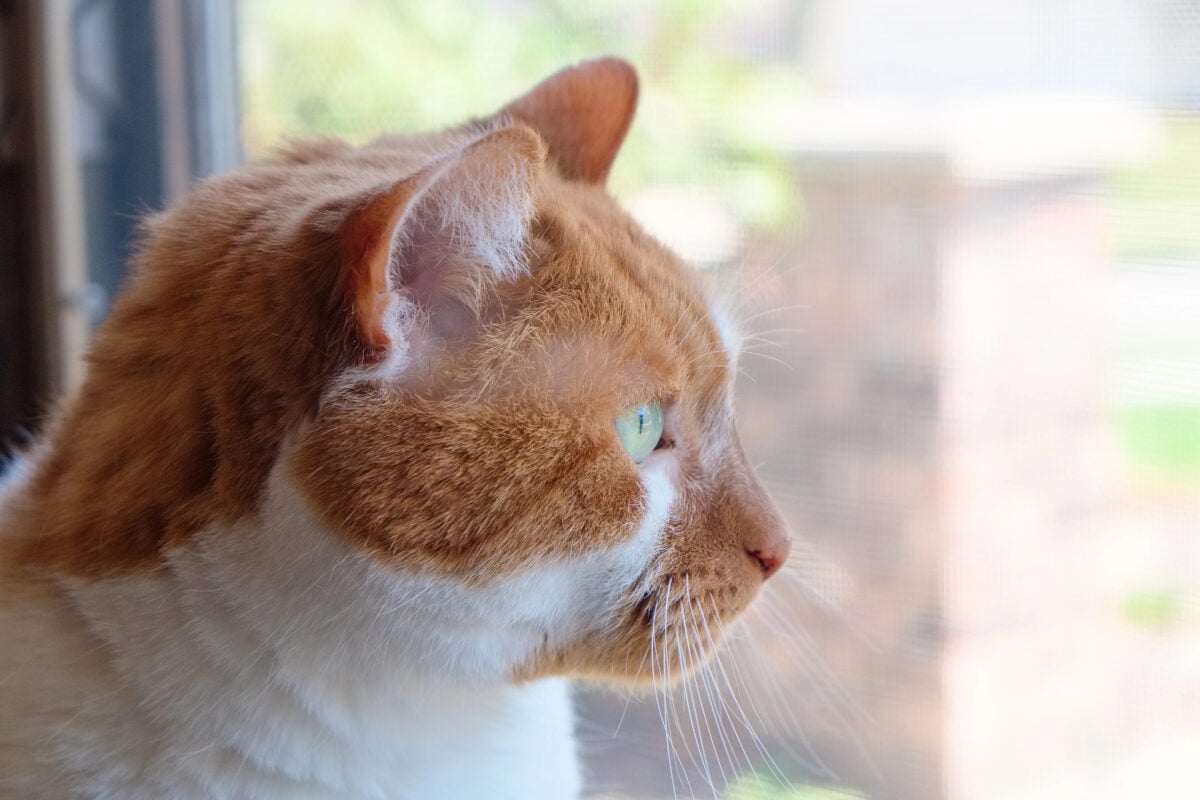
Cats don’t necessarily see better than humans — they see differently. Their eyes evolved to prioritize the visual information that matters most to a small predator, especially movement and the ability to see in dim light.
Much of that difference comes down to two types of light-sensitive cells in the retina:
- Rods help detect light and movement, especially in dim conditions. Cats can have nearly three times the concentration of rods as humans in certain parts of their retinas, helping them pick up subtle activity in low light.
- Cones help distinguish colors in brighter light. Humans have more cones and three types for color vision, compared with two in cats. This contributes to our richer color perception, while other retinal differences help explain our sharper vision.
Cat Vision vs. Human Vision: Who Sees What Better?
| Visual Ability | Humans | Cats |
|---|---|---|
| Fine details | Sharper vision | Generally less sharp |
| Colors | Wider, richer range | More muted colors |
| Movement | Good at spotting motion | Highly sensitive to motion |
| Dim lighting | More limited | Much better adapted |
| Close-up focus | Can focus on nearby objects | Struggle within about 10 inches |
| Field of view | About 180° | About 200° |
So, What Colors Does Your Cat Actually See?
Imagine a bright red cardinal landing in your backyard. To you, it’s a brilliant flash of color against the green grass. To your cat, that same bird may look considerably less impressive in the wardrobe department.
Contrary to the old myth, cats don’t see everything in black and white. They can distinguish colors, but their palette is much more limited than ours.
A 2016 study of feline color vision found that cats have color perception somewhat similar to humans with red-green color blindness. Here’s what that means:
- Blues: Colors cats can distinguish relatively well.
- Yellows and greens: Some shades are distinguishable, although they don’t necessarily look the way they do to us.
- Reds and oranges: Much harder to distinguish from other colors and unlikely to appear as vivid as they do to humans.
Colors that look dramatically different to us may appear surprisingly similar to cats. That bright red bird feeder you carefully selected for the backyard? Your cat probably isn’t admiring your decorating skills.
The Tiny Movement You Barely Notice May Be The Main Event
Ever watched your cat go from half-asleep to completely alert in a split second? One moment, they’re practically melting into the windowsill. The next, their ears are forward, their eyes are locked on something, and they’re tracking it with the intensity of a wildlife documentary crew.
Chances are, your cat spotted movement you never noticed.
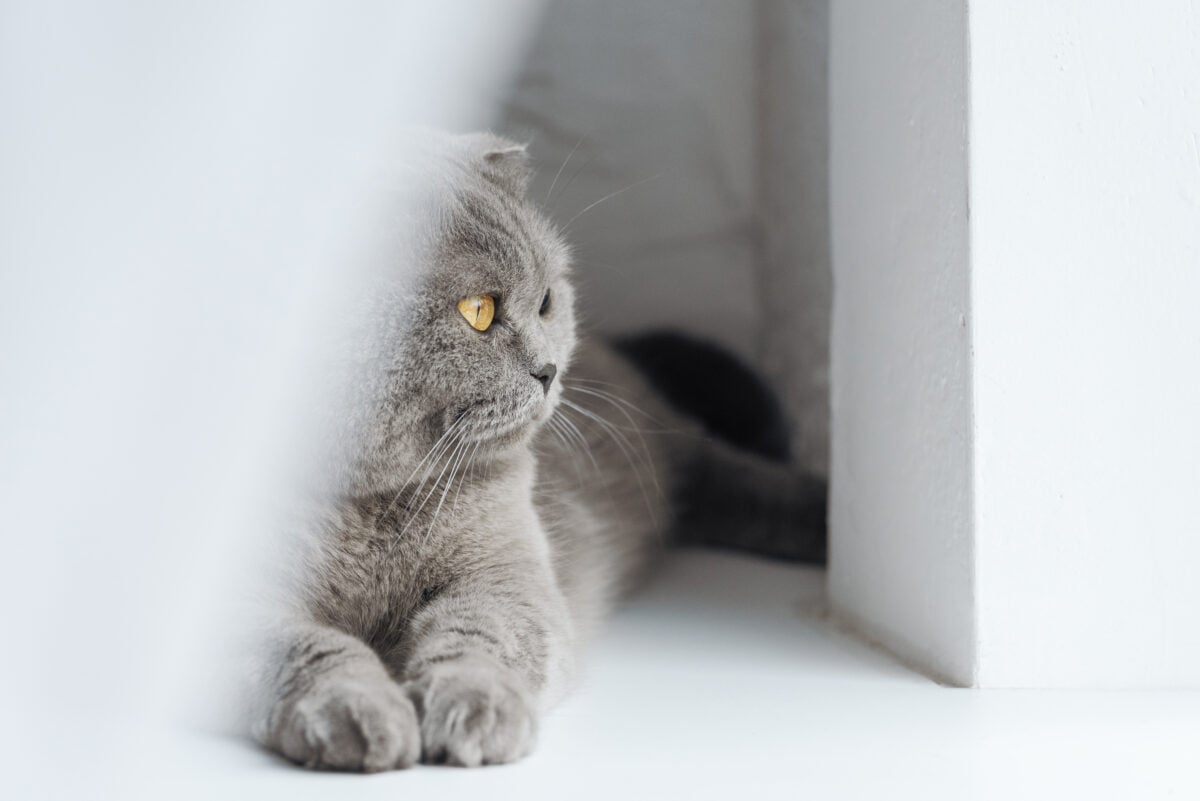
Cats are natural hunters, and their visual systems are especially good at detecting motion. Those rod cells we mentioned earlier help them pick up subtle changes in their surroundings, including movements that might escape our attention.
This sensitivity helps cats detect small prey, even when it’s partially hidden by grass or leaves.
And the things that catch their attention aren’t always particularly impressive:
- A bird hopping between branches: Those quick, unpredictable movements are hard for a watchful cat to ignore.
- A squirrel’s tail flicking behind a tree: Even when most of the squirrel is hidden, that little movement can give it away.
- A bug crawling across the outside of the glass: Barely worth a second glance to you. Potentially the most important event of your cat’s afternoon.
- A leaf skittering across the driveway: It isn’t alive, but its movement can still attract attention.
- Grass shifting in one small patch of the yard: Something may be moving through it, even if neither of you can actually see the culprit.
This also explains that familiar hunting posture. Your cat freezes, lowers their body, and follows something with slow, deliberate head movements. They may be tracking where an animal is going, not just where it happens to be.
Your Cat May Not See That Distant Bird As Clearly As You Think
Here’s something that might surprise you. Your cat can spot a squirrel racing across the far end of the yard before you’ve even noticed it’s there. Yet if you both looked at the same squirrel, you’d probably see a much sharper picture.
That’s because cats have lower visual acuity, the ability to distinguish fine details, than humans.
For perspective, humans with normal eyesight have 20/20 vision. Cats have traditionally been estimated to have somewhere around 20/100 to 20/200 normal vision, although research suggests their actual abilities may vary more than those numbers imply.
What does 20/100 actually mean? Imagine spotting a squirrel sitting on a fence 100 feet away. You might clearly make out its face, ears, and bushy tail. Your cat would need to be roughly 20 feet away to see those same details with comparable sharpness.
Why The Window Gets More Interesting At Dawn And Dusk
Just when you’re starting to lose sight of what’s happening outside, your cat may be settling in for the evening’s entertainment.
Cats are crepuscular, meaning they’re naturally most active around dawn and dusk. These are also times when birds, rodents, and other wildlife may be active, giving your cat plenty of reasons to keep an eye on the yard.
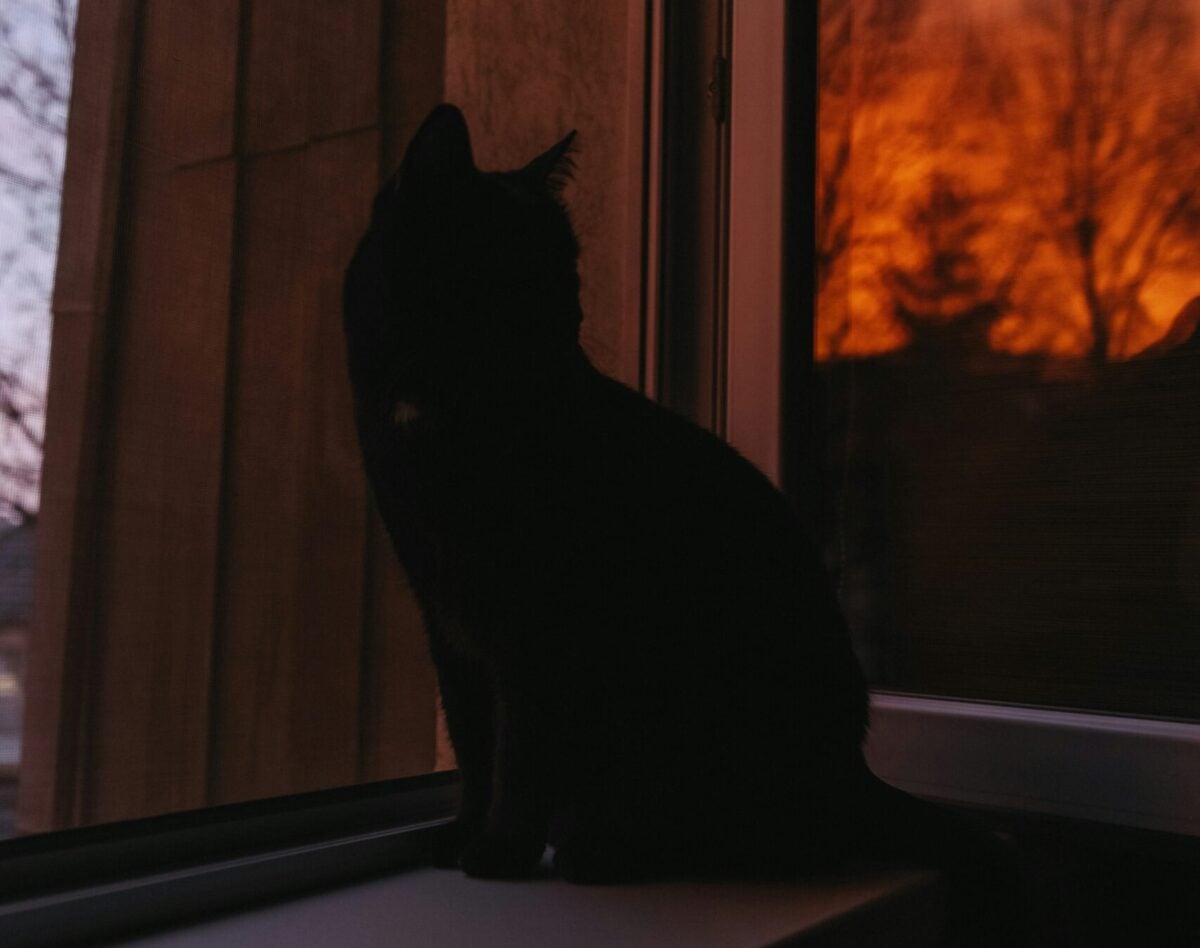
But there’s another advantage. Cats can see much better than humans in dim light, thanks to some remarkable features of their eyes.
- Their pupils can open remarkably wide. This lets more light enter their eyes as daylight fades.
- Their eyes have a built-in reflector. Behind the retina is a special layer called the tapetum lucidum, which reflects light back through the retina, giving light-sensitive cells another chance to detect it.
According to the Merck Veterinary Manual, cats can see approximately six times better than humans in dim lighting.
Imagine looking into your backyard at twilight. The bushes become dark blobs, but your cat may still pick up useful visual information from the fading light.
Of course, cats can’t see in complete darkness. They still need some light to work with, even if it’s only moonlight or a nearby porch light.
Why Do Your Cat’s Eyes Glow In The Dark?
Ever caught your cat looking at you in a dark hallway and suddenly found yourself staring into two glowing green headlights?
That’s the tapetum lucidum at work. The reflected light creates the familiar greenish, yellowish, or bluish eye shine you sometimes see in cats. Their eyes aren’t generating light. They’re reflecting it back toward you.
What Did Your Cat Just Spot?
Your cat’s ears suddenly perk up, their tail starts twitching, or they freeze mid-groom to stare out the window. What’s going on out there? Their body language may offer a few clues, even when you can’t see what has their attention.
| What Your Cat Does | What Might Have Their Attention |
|---|---|
| Ears suddenly perk up | A faint sound or unexpected movement |
| Eyes lock onto one spot | A tiny insect, distant animal, or subtle movement |
| Head slowly follows something | A bird, squirrel, or other moving target |
| Crouches and starts chattering | Potential prey that’s grabbed their attention |
| Tail tip starts twitching | Intense concentration or growing excitement |
| Stares at seemingly nothing | A shadow, reflection, or something too subtle for you to notice |
Of course, this isn’t an exact translation of cat body language. The same reaction can have different meanings depending on the situation.
Your Cat Isn’t Only Watching The Window
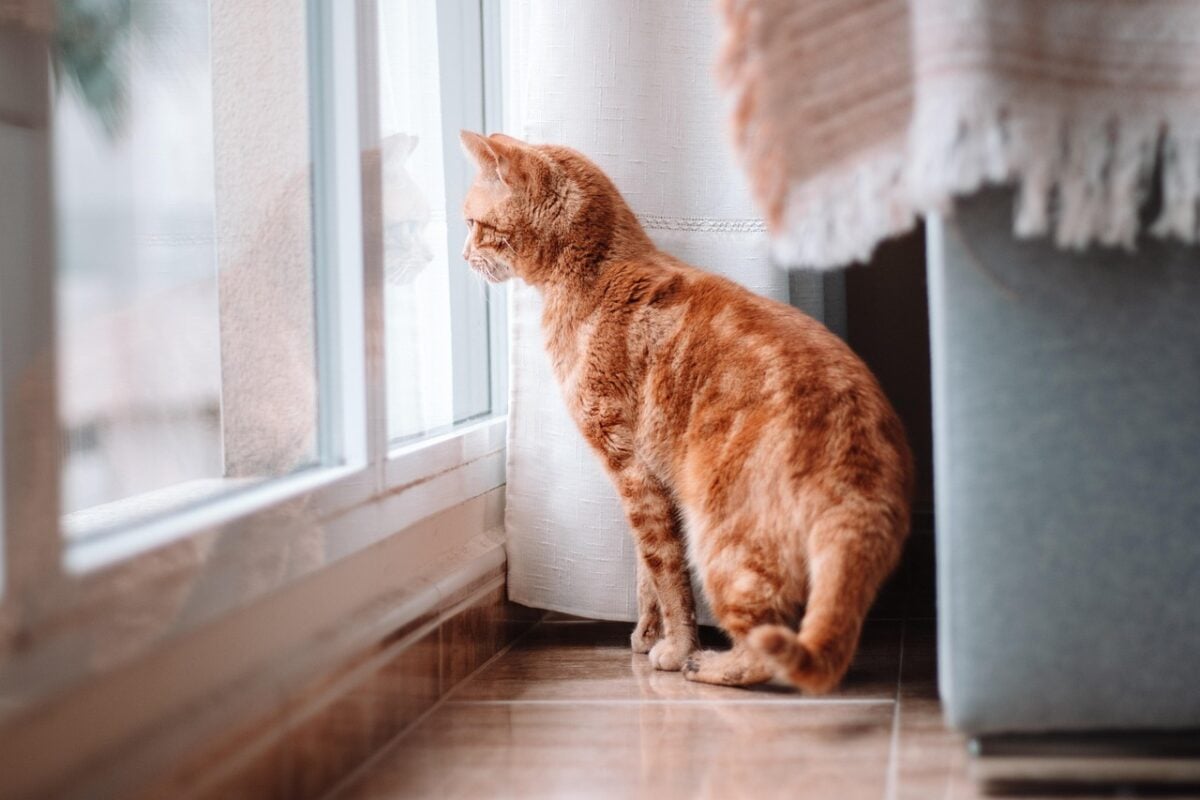
Your cat doesn’t have to see something outside to know it’s there. Their hearing may alert them to activity long before anything comes into view. And if the window is open, they’re gathering another kind of information entirely.
They Can Hear Things You Can’t
Cats have remarkable hearing, particularly at high frequencies. According to VCA Animal Hospitals, cats can hear sounds at frequencies up to about 64,000 hertz, compared with around 20,000 hertz for humans.
That expanded hearing range helps cats detect the high-pitched sounds made by small prey, including some sounds we simply cannot hear.
Outside your window, your cat might pick up:
- A mouse squeaking somewhere in the garden.
- Birds calling from a nearby tree.
- Tiny rustling sounds coming from leaves or undergrowth.
- Another animal moving nearby, even when it’s hidden from view.
Cats can also rotate their ears independently, helping them pinpoint where a sound is coming from.
An Open Window Adds A Whole New World Of Smells
If your cat loves sitting beside an open, screened window, there’s another sense getting a serious workout: smell.
According to the AAFP and ISFM Feline Environmental Needs Guidelines, scent plays an important role in how cats evaluate their environment and communicate with other cats.
When a breeze comes through the window, it may carry traces of:
- Other cats that have visited the yard.
- Dogs or wildlife passing nearby.
- Plants, soil, and changing outdoor conditions.
- Food or other unfamiliar scents.
A closed window offers a visual show with an accompanying soundtrack. An open window can add an entire scent-based storyline.
Of course, any open window needs a sturdy, properly secured screen designed to prevent escapes. An ordinary insect screen may not be strong enough to stop a determined cat.
Birds, Squirrels, Bugs, And Other Stars Of Cat TV
Your cat’s favorite window probably has a better entertainment lineup than most streaming services. There’s action, suspense, occasional romance, and at least one squirrel whose behavior raises serious questions about its judgment.
But not every outdoor visitor offers the same kind of entertainment. Different animals and objects capture your cat’s attention in different ways.
1. Birds: The Main Attraction
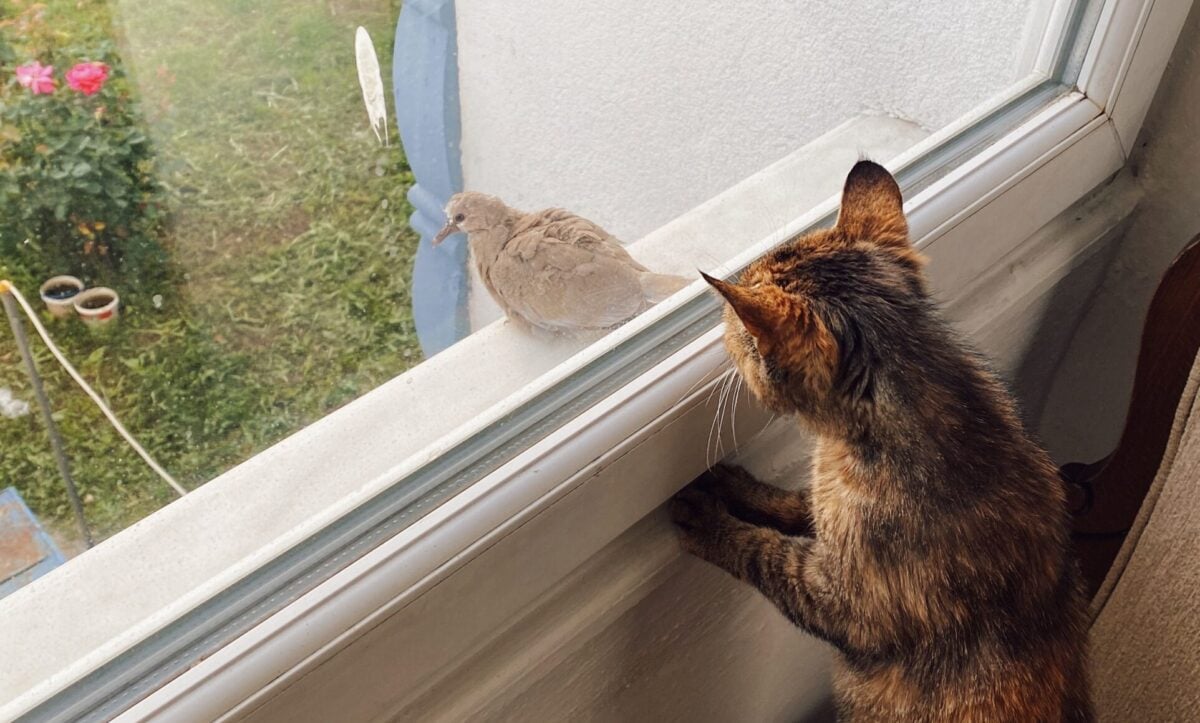
For many cats, birds are the undisputed stars of the show. They hop, flutter, fly, disappear into branches, and occasionally land right outside the window as if personally auditioning for your cat’s attention.
Birds combine several powerful attention-grabbers: sudden movement, changing direction, distinctive sounds, and the possibility of prey.
2. Squirrels: Unpredictable Backyard Acrobats
Squirrels seem almost professionally qualified to drive cats crazy.
They race across fences, stop abruptly, flick their tails, scramble up trees, and disappear just as things get interesting. Five seconds later, they’re back, apparently having forgotten whatever emergency sent them running in the first place.
Unlike a bird flying across the yard, a squirrel often stays within the same general viewing area, giving your cat plenty of opportunities to follow its movements.
3. Insects: Tiny Creatures, Enormous Drama
Never underestimate the entertainment value of a single fly.
An insect crawling along the outside of the glass may be only inches from your cat’s face, making its movements much easier to follow than those of a distant animal.
Flies change direction abruptly. Moths flutter unpredictably. Spiders can move slowly enough to invite an extended staring contest.
And if you’ve ever watched your cat spend 20 minutes monitoring one tiny bug, you know that screen size has absolutely no relationship to entertainment value.
4. Leaves, Shadows, And Other False Alarms
Here’s where things get particularly entertaining: sometimes, no animal is involved at all.
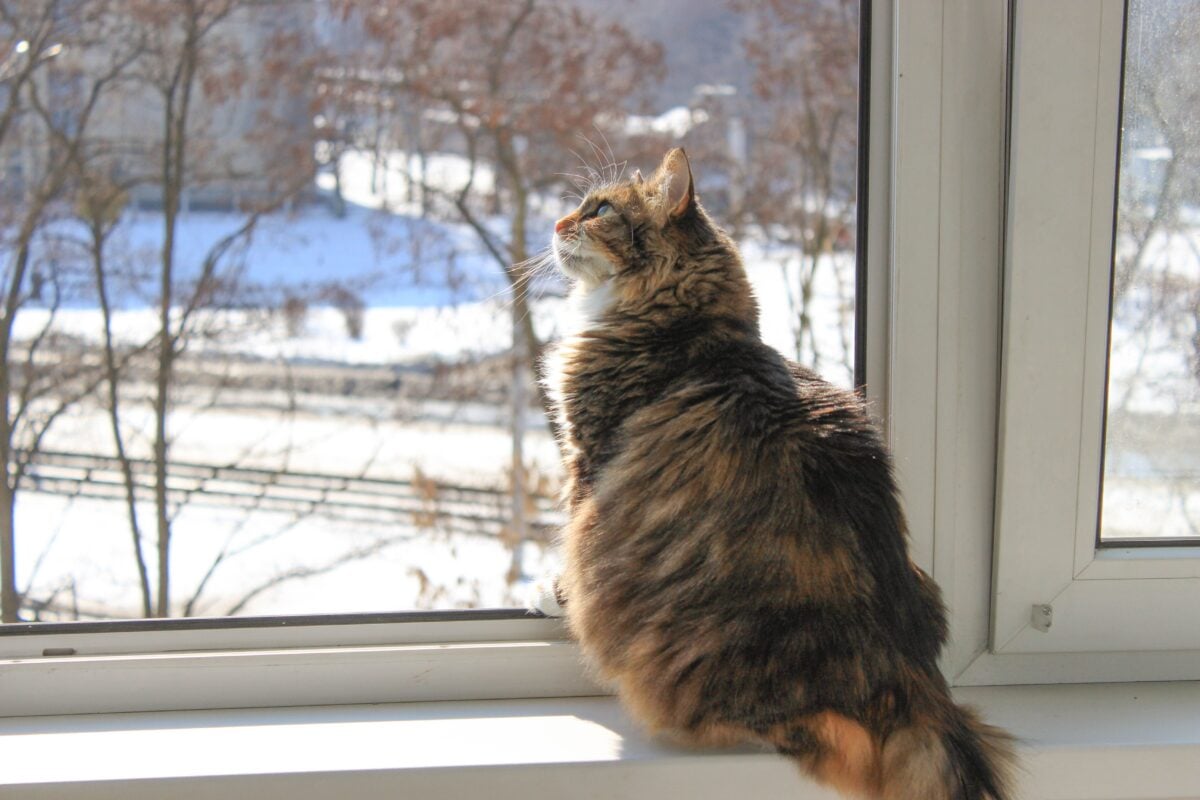
A leaf tumbling across the patio, a branch swaying in the breeze, or a shifting shadow can be enough to trigger your cat’s attention. Reflections on the glass may also catch their interest, especially when indoor and outdoor lighting conditions change.
Your cat doesn’t necessarily know what they’re looking at the instant something moves. Sometimes, the movement itself is enough to justify further investigation.
This may explain why you’ve occasionally found your cat crouched in full hunting mode, preparing to launch an imaginary attack on a perfectly innocent leaf.
Why Does Your Cat Chirp, Chatter, Or Twitch At The Window?
One minute, your cat is watching a bird. The next, they’re making a strange little ek-ek-ek noise while their jaw rapidly moves up and down.
Congratulations. Your cat has activated a sound effect you didn’t know came installed.
This behavior is called chattering, and it’s especially common when cats spot birds, squirrels, or other potential prey they can’t reach.
But why do they do it?
Research shows there’s no single proven explanation for feline chattering. Animal behavior experts have suggested several possibilities:
- Predatory excitement: Spotting potential prey may trigger an intense burst of hunting-related arousal.
- Frustration: Your cat can see that tempting bird but can’t chase or catch it. The glass has effectively canceled their hunting plans.
- Anticipation: Chattering may accompany the excitement of watching prey and preparing for a possible hunting opportunity.
Some even theorize that cats imitate prey sounds, though evidence that ordinary window chattering serves this purpose remains limited.

What About The Tail Twitching And Other Strange Movements?
Chattering isn’t the only thing that happens when your cat becomes completely absorbed in the outdoor action.
You might notice:
- A twitching tail tip: Small, controlled movements often accompany intense focus, while more forceful tail movements can signal agitation.
- Ears pointing forward: Both ears may orient toward the target, helping your cat follow its sounds and movements.
- Wide eyes and enlarged pupils: Can accompany heightened arousal, although lighting also affects pupil size.
- Whiskers angled forward: May indicate heightened interest, particularly when your cat is focused on something nearby.
- A low, motionless crouch: Helps your cat remain relatively inconspicuous while watching potential prey.
The funny thing is that your cat may go through this entire performance without moving an inch from the windowsill. All that preparation, all that concentration, and the bird flies away completely unaware it was the subject of a major tactical operation.
Chattering, twitching, and intense staring don’t automatically mean your cat is upset. What matters more is whether they can settle down afterward or remain agitated long after the outdoor visitor disappears.
Why Window Watching Is More Than Just Entertainment
Your cat may spend hours watching the world outside, but there’s more going on than an extended squirrel-watching session.
Window watching provides valuable enrichment for indoor cats, offering changing sights, sounds, and activities without the risks of roaming outdoors.
In fact, a study involving 577 indoor cats found that owners reported their cats watching 14 different categories of outdoor activity through windows. Apparently, there’s a lot more programming available than the neighborhood squirrel channel.
Window watching can offer several benefits:
- Mental stimulation: Outdoor activity provides variety in an otherwise familiar indoor environment.
- Opportunities to observe prey: Watching birds and other animals can engage a cat’s natural hunting interests.
- Freedom of choice: Cats can decide when to investigate the action and when they’ve had enough.
- A comfortable place to relax: A sunny windowsill can double as a favorite napping spot between wildlife sightings.
How To Make Your Cat’s Favorite Window Even Better

You don’t need to build a feline observation tower overlooking the entire neighborhood. A few simple adjustments can make an ordinary window much more appealing.
- Add a sturdy window perch. This gives your cat a comfortable, dedicated viewing spot without having to balance on a narrow sill.
- Position a cat tree near the window. Cats who enjoy elevated spaces may appreciate watching outdoor activity from above.
- Give them more than one view. A quiet backyard window and a busier street-facing window offer different experiences. In multicat households, additional perches can also reduce competition.
- Keep their viewing spot comfortable. Make sure there’s enough room to stretch out and that your cat can easily climb up and down.
- Consider a bird feeder with care. Watching birds may be entertaining, but feeders can increase the risk of window collisions. Place feeders within three feet of the glass or more than 30 feet away, and use bird-safe window treatments to help prevent collisions.
One thing window watching can’t replace is interactive play. Watching a bird hop around outside may engage your cat’s hunting instincts, but chasing a wand toy lets them stalk, pounce, and physically catch something.
Sometimes The View Outside Is More Stressful Than Entertaining
Not every episode of Cat TV is a feel-good nature documentary. Sometimes, it’s a neighborhood drama featuring an uninvited guest who keeps showing up on your cat’s property.
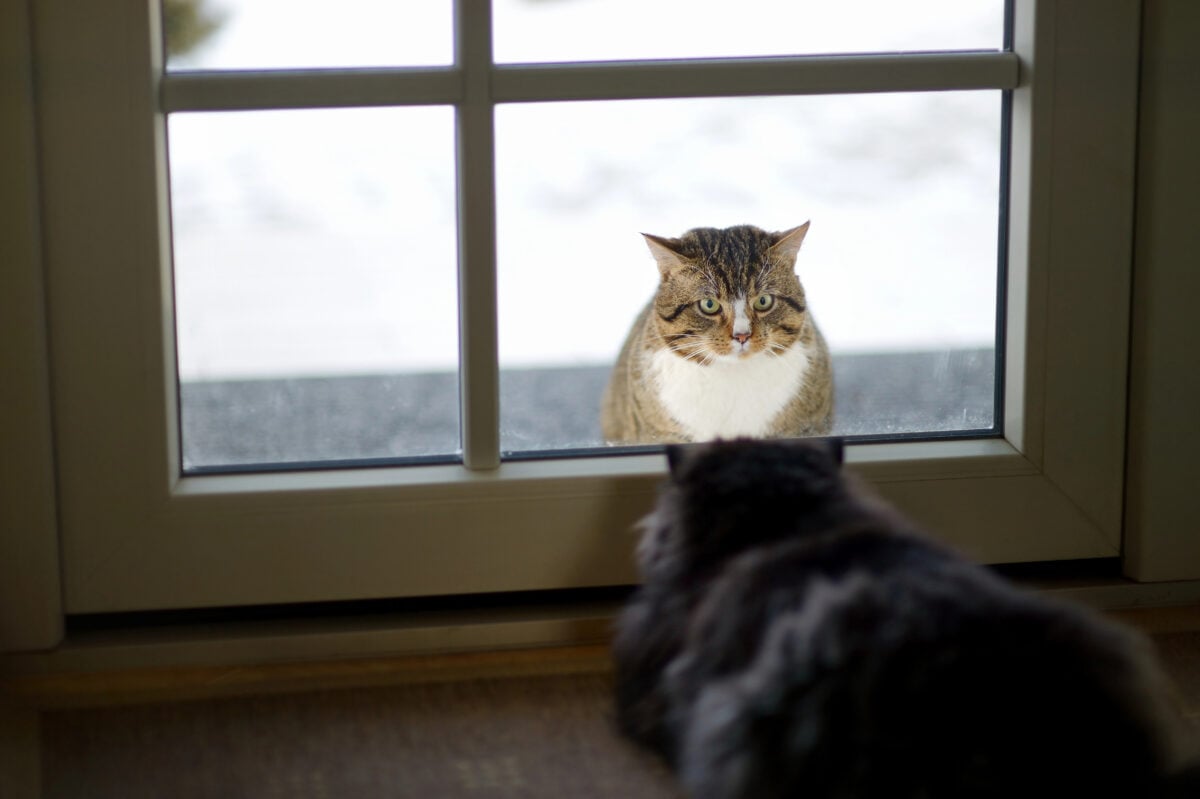
An unfamiliar cat wandering through the yard can provoke a very different reaction than a bird or squirrel.
While birds may trigger hunting instincts, another cat can be perceived as a territorial threat. Your indoor cat may see the visitor approaching their favorite window, marking nearby bushes, or lounging on the patio as if they own the place.
And your cat can’t exactly march outside and file a formal complaint.
Signs Your Cat Isn’t Enjoying The Show
Watch for behaviors that suggest your cat is becoming distressed by something outside:
- Growling, hissing, or yowling at something outside.
- Lunging or repeatedly striking the glass when another animal appears.
- Pacing or remaining visibly agitated after the visitor leaves.
- Spraying near windows or doors, particularly where outdoor cats regularly appear.
- Lashing out at another household cat after becoming upset by something outside.
- Hiding or avoiding a favorite window following an upsetting encounter.
That fifth behavior deserves special attention. It’s called redirected aggression, and it happens when a highly aroused cat directs aggression toward someone other than the original trigger.
For example, your cat sees a neighborhood cat outside, becomes intensely agitated, and can’t reach the intruder. When your other cat walks past, they suddenly get attacked despite having absolutely nothing to do with the situation.
In fact, the Cornell Feline Health Center identifies seeing unfamiliar cats through windows as a common trigger for redirected aggression.
How To Make Window Watching Less Stressful
If a particular window repeatedly upsets your cat, you don’t necessarily have to eliminate their favorite pastime. The goal is to reduce exposure to whatever is triggering the reaction.
A few adjustments may help:
- Close the blinds during predictable visits. If a neighborhood cat makes its rounds every evening, temporarily blocking the view may prevent another confrontation.
- Try frosted privacy film. Covering the lower portion of the glass can prevent your cat from seeing animals approaching close to the house while preserving some of the view above.
- Offer a different window. A perch overlooking a quieter part of the yard may provide enrichment without the territorial drama.
- Discourage outdoor cats from lingering nearby. Remove outdoor food sources that attract visitors and consider humane, non-harmful deterrents.
- Give your cat other activities. Interactive play, puzzle feeders, and comfortable resting spots can provide alternatives to repeatedly monitoring a stressful window.
If your cat is already growling, hissing, or preparing to attack, don’t pick them up or try to soothe them with physical contact. Give them space to settle, and keep other pets away until they’re calm.
Persistent aggression, urine marking, or sudden behavioral changes warrant a veterinary consultation. A qualified feline behavior professional may also help with ongoing problems.
Frequently Asked Questions About Cats Watching Out The Window
Cats have a talent for making even the simplest window-watching session seem mysterious. Here are a few more questions you might have about what they’re seeing, thinking, and doing while keeping tabs on the outside world.
If you don’t see yours here, ask us in the comments.
Can Cats See Their Reflection In A Window?
Yes! Cats can see reflections in glass, especially at night when indoor lights are brighter than the light outside.
Some cats may investigate their reflection, while others ignore it completely. Whether cats recognize the reflection as themselves is another question. Cats generally don’t demonstrate the kind of visual self-recognition humans do, and their reactions can vary considerably.
Why Does My Cat Stare Out The Window At Night?
Your cat may be keeping tabs on nighttime wildlife, insects attracted to porch lights, or movement that’s difficult for you to see. Their sensitive hearing can also alert them to activity outside before anything becomes visible.
And if your cat spends 20 minutes staring into a dark backyard, there’s a decent chance they’re monitoring something more interesting than the pile of patio furniture you see.
Do Cats Get Frustrated Watching Birds They Can’t Catch?
Some cats may become frustrated when they repeatedly watch prey they can’t reach, but chattering, crouching, or tail twitching alone doesn’t prove frustration.
Pay attention to what happens afterward. A cat who watches birds and then settles down may simply enjoy the stimulation. Persistent agitation, frantic behavior, or aggression suggests the experience may be less enjoyable.
Can Window Watching Replace Playtime?
No. Watching potential prey and physically pursuing it are different experiences.
Interactive toys give cats opportunities to stalk, chase, pounce, and catch something, rather than simply observing it through glass.
Even enthusiastic window watchers benefit from regular play sessions that let them exercise those natural hunting behaviors.
Why Does My Cat Suddenly Run To The Window?
Your cat may have heard a bird, spotted unexpected movement, or recognized a familiar sound outside.
Cats can also learn that certain sounds predict interesting activity. If the same delivery truck, neighborhood dog, or backyard visitor appears regularly, your cat may recognize the sound before you even realize what’s coming.
There’s More Going On Behind Those Window Stares
The next time your cat abandons a perfectly good nap to investigate something outside, resist the urge to question their life choices. Whatever’s happening out there, it’s clearly important feline business.
And if you’d like to make life inside just as entertaining as whatever’s happening outside, we’ve got a few more ideas:
- Why Does My Cat Bring Me Gifts? Explore the hunting instincts behind your cat’s obsession with anything that moves.
- 11 Signs Your Cat Needs More Stimulation. Learn to recognize boredom and discover ways to keep your indoor cat entertained.
- Why Your Indoor Cat Is Obsessed With Going Outside. Find out what makes the outdoors so irresistible and how to satisfy that curiosity safely.
Now we’re curious: What’s your cat’s favorite thing to watch outside? Birds, squirrels, neighborhood cats, or something so mysterious you’ve spent an embarrassing amount of time trying to find it? Tell us in the comments!