When you purchase through links on our site, we may earn a commission at no extra cost to you. Learn more.
Every night when I go to sleep, someone is watching me.
Table of Contents
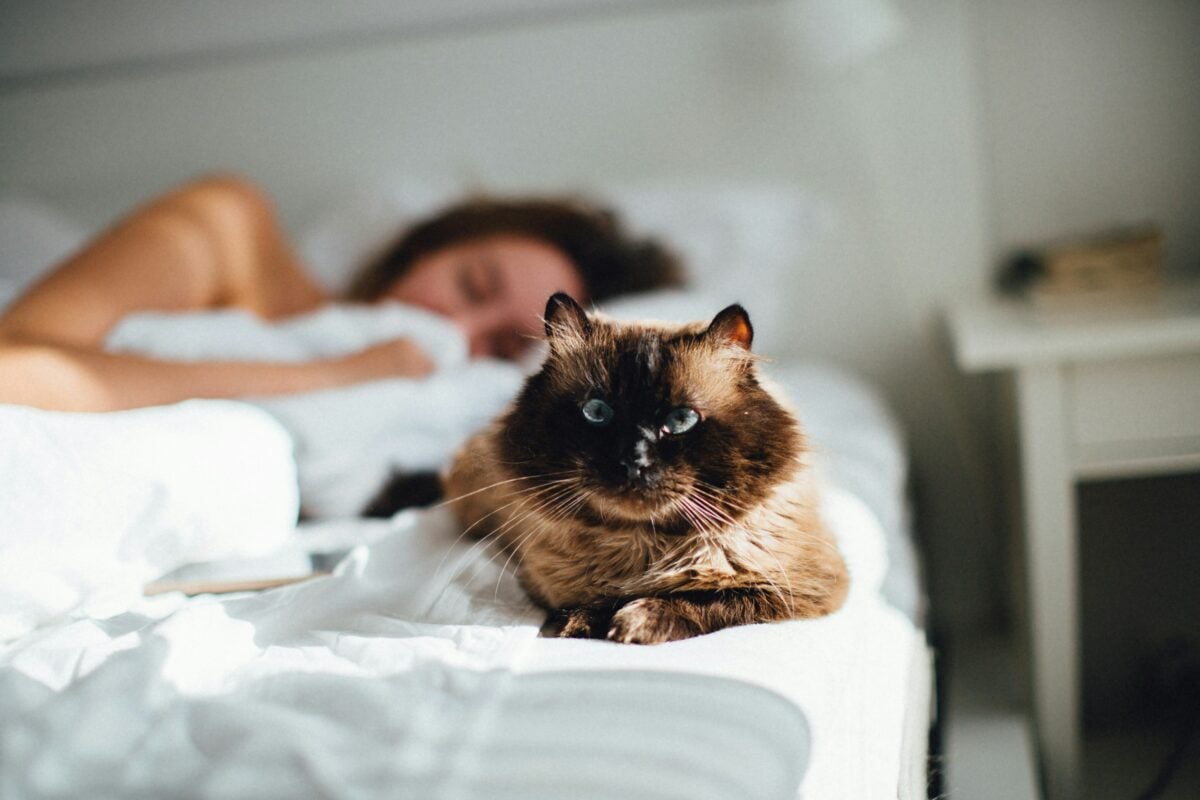
No, this is not the starting line to a horror novel. It is my reality. Every single night when I turn off the lights, a very large cat sits and watches me. Just… staring. Unblinking. Moving only to adjust his weight on my chest or chest-adjacent territory occasionally.
If you are a cat parent, this creepy little midnight standoff probably sounds intimately familiar. Waking up at 3:00 AM to a silent, furry statue conducting a routine performance review is practically a rite of passage. It feels a little threatening, entirely unprompted, and leaves you wondering if they are plotting your demise or just deeply judging your snoring.
Before you start sleeping with one eye open, take a deep breath. While it feels like a plot for world domination, waking up to a midnight standoff is actually a perfectly normal mix of deep affection, hardwired survival instincts, and a very strict adherence to daily routines. If you’ve been losing sleep wondering, “Why does my cat watch me sleep?” the answer usually works like a layered cake, except the cake is made of instinct, habit, affection, and mild weirdness. From floor level, their habits actually make perfect sense.
Want our human-written content to rank above AI-generated garbage? Help us out by clicking this button!
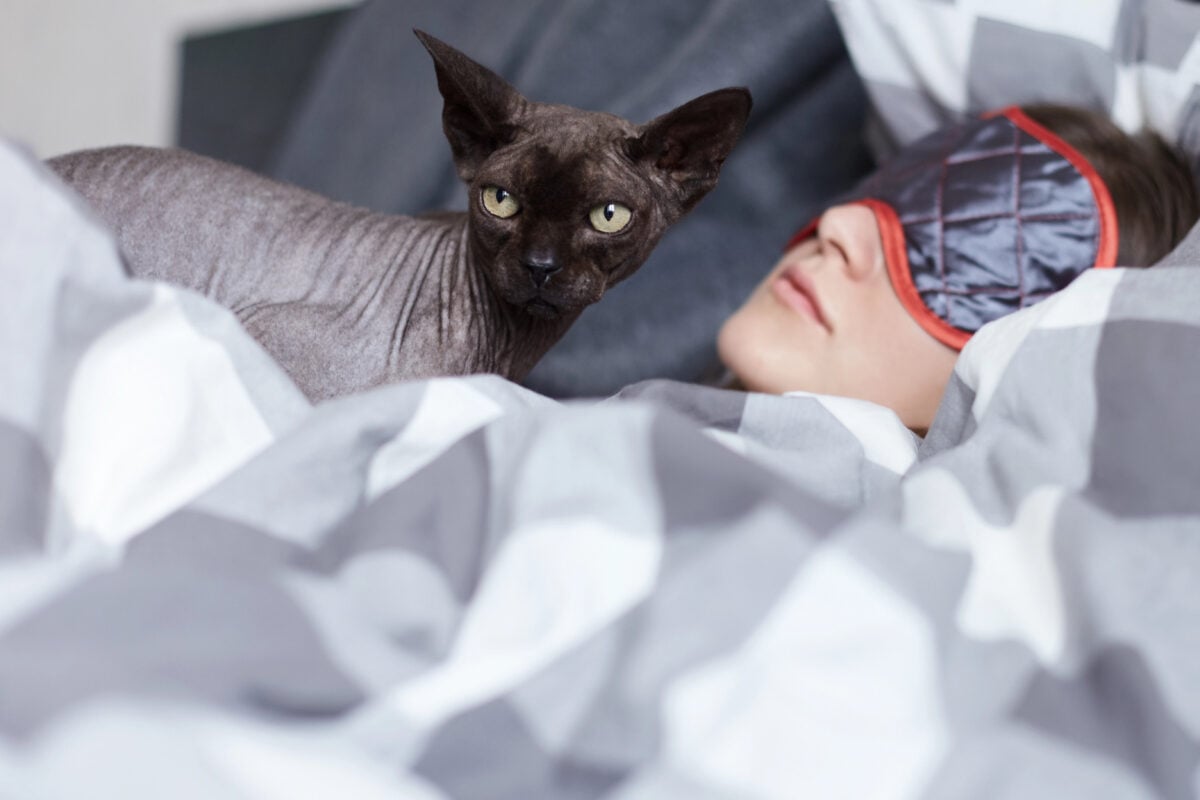
Let’s dive into the fascinating, hilarious reasons why your tiny nighttime supervisor treats your sleeping face like the most riveting reality TV show on Earth.
So, Why Does Your Cat Do This?
Your cat’s midnight watching habit usually isn’t random. It often comes from a mix of instinct, routine, comfort, and the close bond they’ve built with you. Some reasons are practical, some are surprisingly affectionate, and a few can even tell you when something in their world has changed.
To understand what your cat is really doing while you sleep, it helps to start with one simple fact: your sleep schedule and your cat’s sleep schedule are not the same.
The Night Shift: Why Is Your Cat Up Anyway?
One of the main reasons your cat watches you sleep is painfully simple: your cat is awake, and you are not.
While humans treat sleep like a nightly shutdown, disappearing from society for eight hours and expecting everyone to respect the process, cats treat sleep like a laptop with ten browser tabs open. They briefly close the screen, snap it back open when something interesting happens, nap, patrol, investigate imaginary hallway crimes, and nap again.
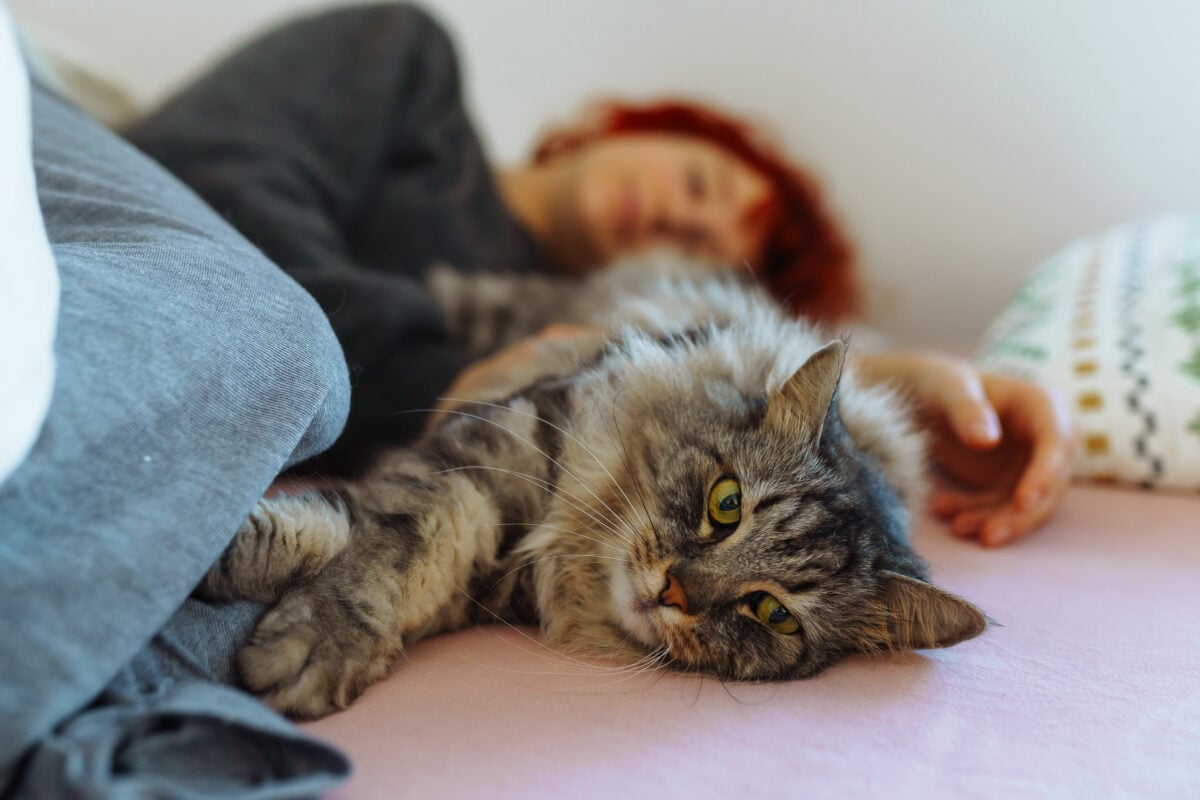
This creates a massive “sleep gap.” You are unconscious for one long stretch, while your cat cycles through several mini-shifts of activity. And during those awake periods, you become the most interesting thing in the room. You are horizontal, vulnerable, and mostly motionless, while your cat is sitting there completely refreshed from a six-hour nap they took while you were out working to maintain their lifestyle.
To a watchful animal, your stillness is riveting. When your breathing changes during different sleep stages, or when you twitch, mumble, or kick the blanket, your cat finds it worth studying. It’s not so different from how we stare at cats when they dream and make tiny paw movements. We call it adorable when we do it; when they do it to us at 3:00 AM, we call it unsettling… mostly because they look like they’re collecting evidence.
The Crepuscular Myth (They Aren’t Actually Nocturnal)
A lot of people think cats are nocturnal, but they are actually crepuscular. This is just a fancy scientific way of saying their internal clocks are hardwired to make them absolute agents of chaos during the twilight hours of dawn and dusk.
This pattern makes perfect evolutionary sense: cats evolved as hunters, and many small prey animals are active during twilight. Dawn and dusk offer the perfect low-light conditions for an ambush.
When your cat starts prowling at 4:30 AM like a furry security guard with unfinished business, they aren’t being rude or trying to annoy you. Their internal clock operates on a schedule set long before mattresses, blackout curtains, and weekday alarms existed. Your cat sees you as a beloved, highly inactive colony member who requires responsible management.
Check out this hilarious (and slightly eerie) look at what midnight monitoring looks like from a cat’s perspective:
5 Real Reasons Your Cat Watches You Sleep
So, what is actually going through that complex, furry little brain while they watch you drool? It turns out your cat isn’t just blankly staring into space; they usually have a very specific feline agenda. If you’ve been searching for answers to why does my cat watch me sleep, it usually boils down to these 5 distinct reasons:
1. Curiosity and Data Collection
Cats are professional observers. They study everything: bugs, dust motes, grocery bags, and especially you. You are the biggest, most important presence in their environment.
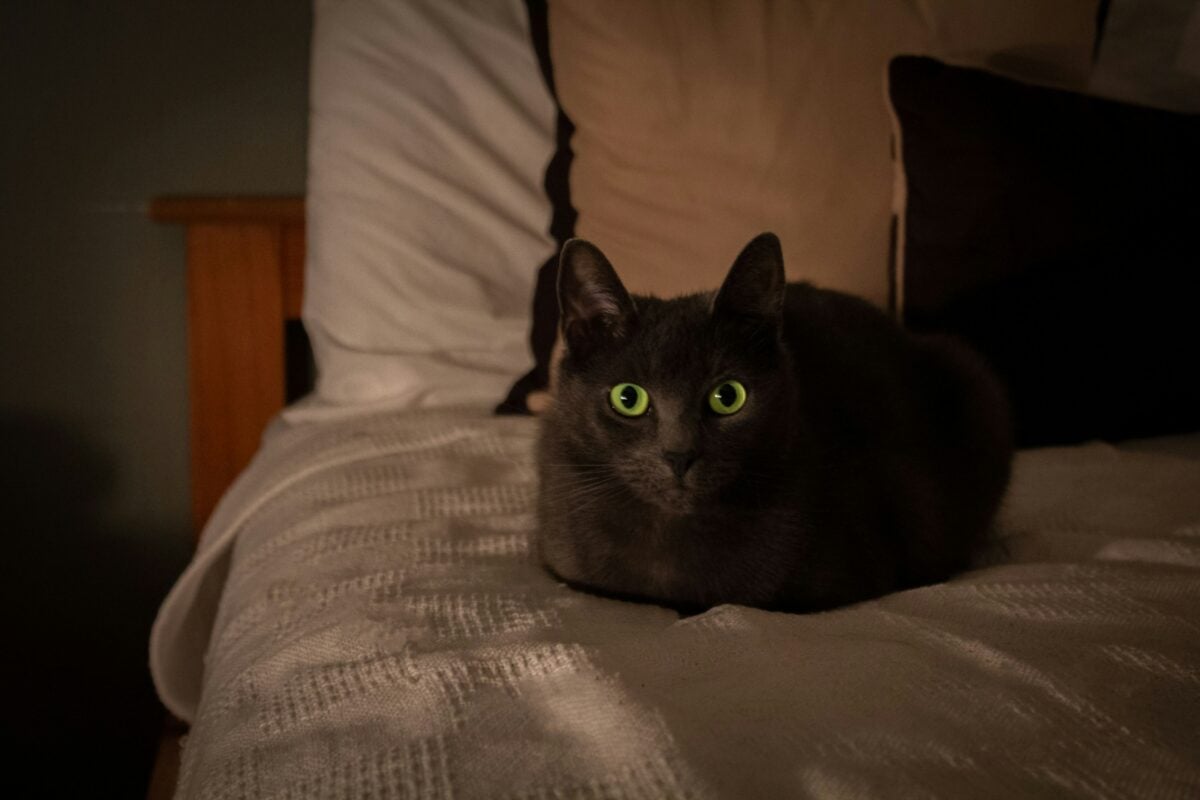
When you sleep, you turn into a warm, breathing hill under the blankets, and to a curious cat, that is fascinating. They are gathering information: Are you waking up? Are you safe? Is your hand about to move into a petting position?
Cats learn through repetition; if you have ever woken up and immediately fed them, your cat may now treat your sleeping face like a high-stakes research project.
2. Breakfast Anticipation (The Locked Vending Machine)
Cats rely heavily on predictable routines and access to key resources like food, resting places, toileting areas, scratching areas, and play opportunities. That is why your wake-up time can become part of your cat’s daily operating system.
They have learned that humans are strange but entirely predictable food-dispensing machines. If breakfast happens after you wake up, your cat will track your “micro-movements”—like a change in your breathing or a deep sigh—to catch the earliest signs of a human reboot.
If your alarm is set for 6:30 AM, the silent staring campaign might begin at 5:52 AM, using pure psychological pressure to make the vending machine drop the wet food.

3. Routine System Monitoring
Your cat knows your daily structure inside and out. Because you are a vital part of their territory, they watch you sleep simply to ensure the household system is running smoothly.
In a multi-cat household, felines constantly monitor each other’s movements and resting places. By keeping tabs on you, your cat is reassuring themselves that the favorite landmark is exactly where it belongs, the room smells right, and nothing unexpected has changed.
4. The Ultimate Sign of Trust (Feline Morse Code)
In the animal kingdom, sleep is the most vulnerable state possible. By choosing to sit right next to you, or directly on your chest, while you are unconscious, your cat is giving you a five-star review as a safe protector.
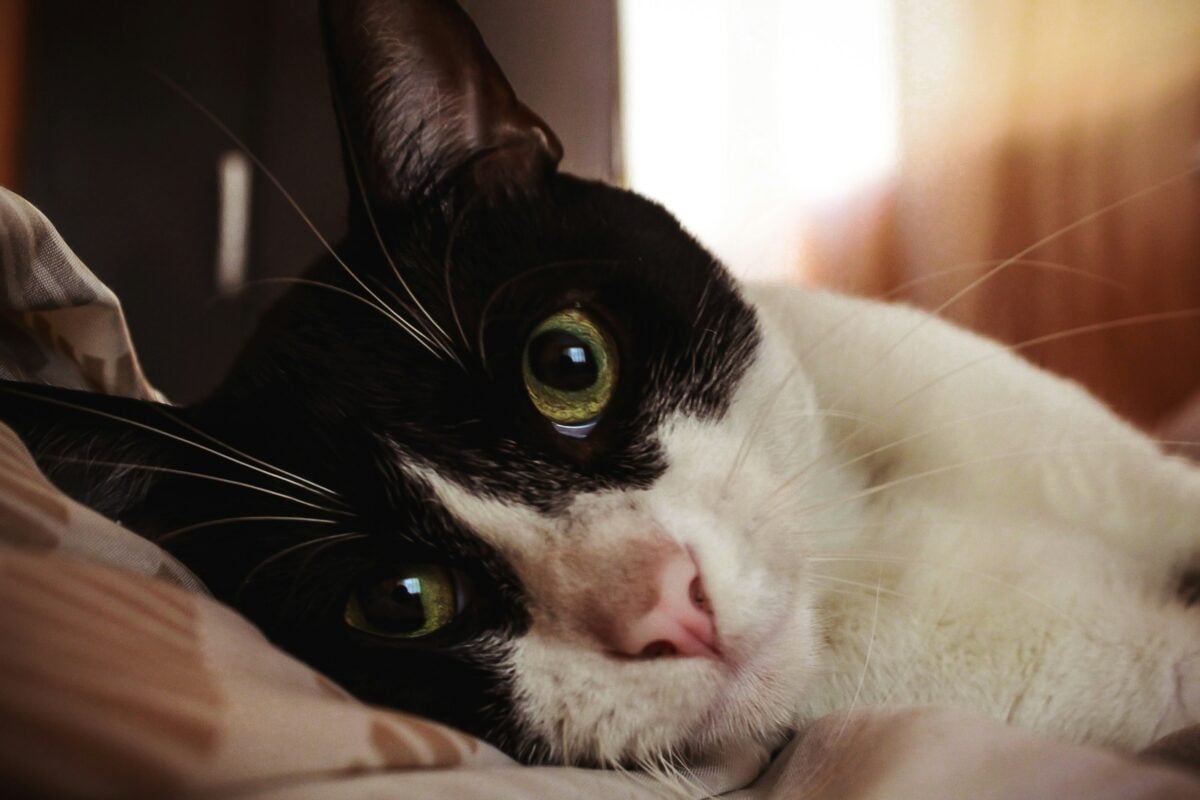
If your cat is watching you with soft, half-closed eyes, that stare may be more affectionate than eerie. Researchers call this the “slow blink sequence,” a pattern of half-blinks and relaxed eye-narrowing that appears to play a role in positive cat-human communication.
In a 2020 Scientific Reports study, cats were more likely to narrow their eyes back at their owners after a slow-blink interaction, and they were also more likely to approach an unfamiliar researcher after that person slow-blinked at them.
So when your cat gives you that sleepy, squinty stare, it may be their subtle way of signaling comfort, trust, or friendly interest. You can “reply” by gently narrowing your eyes, closing them for a second, and slowly opening them again—basically sending a tiny feline text message back.
5. The Tiny Bodyguard Theory (Surveillance Real Estate)
Cats are highly territorial animals, and your bed is prime real estate because it’s warm, elevated, and smells intensely like you. If your cat sits at the foot of the bed or near the door, facing the hallway while occasionally checking on you, they are monitoring the perimeter of the shared nest.
They aren’t necessarily preparing to battle a real-world intruder, but they have chosen the best surveillance point in the room, meaning you are officially loved, guarded, and classified as high-value furniture.
Want to see a tiny home security guard in action? Watch how this dedicated group of kitties keeps a watchful eye on their sleeping humans:
How to Decode the Stare: A Quick Reference Guide
To understand exactly which of the five reasons is driving your cat tonight, you have to look closely at their body language and delivery. Learning to read subtle changes in a cat’s facial expressions—from the tightness of their whiskers to the shape of their eyes—can tell you instantly whether you are dealing with a loving companion or a hungry roommate.
Use this quick-reference guide to translate your cat’s specific midnight look:
| Type of Stare | What It Looks Like | Feline Translation | What You Can Do |
| The Soft Sleepy Stare | Half-closed eyes, relaxed body, slow blinking. | “You are my favorite landmark, and I feel safe.” | Slow blink right back and enjoy the love. |
| The Laser Breakfast Stare | Wide eyes, upright posture, fixed on your eyelids. | “Execute your morning food-giving duties.” | Ignore it. If you crack, they learn psychological warfare works. |
| The Play-Hunter Stare | Dilated pupils tracking the duvet; tail twitching. | “A blanket monster is threatening our ecosystem.” | Add a high-intensity play session right before your bedtime. |
| The Tense Worried Stare | Rigid posture, flattened ears, staring from a distance. | “Something in our environment feels wrong.” | Look for environmental stressors or consult a vet if it persists. |
When the Stare Signals a Health Change
While a midnight stare is usually just a quirky sign of affection or hunger, a sudden and dramatic shift in your cat’s nighttime behavior shouldn’t be ignored.
Sometimes, a hyper-focused glare is a sign of physical or emotional distress, especially in older cats.
- Feline Hyperthyroidism: This common condition kicks a senior cat’s metabolism into permanent overdrive. It creates a state of chronic restlessness and physical agitation. Your cat literally cannot settle down to sleep, leading them to wander the bed, stare at you in frustration, and yowl into the dark.
- Feline Cognitive Dysfunction (FCD): Similar to dementia in humans, cognitive decline can profoundly disorient aging pets. A senior cat might stand on your chest and stare simply because they woke up, forgot where they were in the dark, and are using your familiar face as a lighthouse to guide them through their confusion.
- Nighttime Boredom: If an indoor cat doesn’t get enough mental and physical exercise during the day, that pent-up predatory energy boils over at night. When you want peace, your cat wants a workout. A solid play session before bed helps satisfy their instincts so they don’t have to invent a 3:00 AM hobby called “stare at the human until something happens.”
The Golden Rule
If your cat’s midnight staring routine changes overnight, or if it’s paired with weight loss, excessive thirst, or vocal distress, skip the internet guesswork and make an appointment with your vet.
Bonus Round: Decoding Other Nighttime Behaviors
If the midnight stare isn’t enough, your cat likely has a whole portfolio of bedtime eccentricities.
Take the midnight zoomies, for example, that sudden, Mach 3 sprint across your head is just the release of pent-up predatory energy from a day spent napping. When they finally do snooze, twitching or paddling paws just means they are deep in the REM cycle, likely dreaming of the hunt.

You might also find your kitty engaging in a dedicated, rhythmic nursing motion on your softest blankets right before settling down. While it’s a sweet sign of comfort, tracking obsessive kneading in cats can help you understand when this soothing behavior is a normal bedtime wind-down versus a sign of mild stress or overstimulation.
When they actually settle down to sleep, their posture speaks volumes. Sleeping next to you is a massive declaration of love, while covering their face with a paw is usually just a built-in feline eye mask to block out light. And those physics-defying, spine-twisting positions? Exposing the vulnerable belly area proves they feel 100% safe in their environment, even if they look like an IKEA furniture kit assembled entirely backward.
Have More Questions? We’ve Got Answers! Frequently Asked Questions
Feline bedtime behavior can leave even the most experienced pet parents scratching their heads in the middle of the night. To help you make sense of your tiny nighttime supervisor’s agenda, we’ve rounded up and broken down the most common questions about midnight monitoring.
Read through our quick-reference guide below, and if your cat does something completely unique that isn’t covered here, be sure to leave your specific questions in the comments section at the bottom of the page so we can decode it together!
Is it normal for my cat to stare at me while I sleep?
Yes, it is entirely normal. Cats are naturally observant animals, and they organize their lives around patterns and resources. Because you are the most important person in their environment, they naturally keep tabs on you. It can feel a little intense to wake up to, but in the feline world, it’s just standard household observation.
Does my cat stare at me because they love me?
In many cases, yes! Choosing to sit close to you or rest their eyes while facing you is a massive sign of trust. In the wild, sleep is a vulnerable state, so your cat is essentially giving you a five-star review as a safe protector. If they soften their gaze with a slow blink, it’s the ultimate feline declaration of affection.
Why does my cat stare at me right before my alarm goes off?
Your cat’s internal clock is incredibly sharp, and they are masters at reading your “micro-movements.” They notice when your breathing shifts from deep sleep to a lighter cycle, or when you first toss and turn. If breakfast usually happens after you wake up, they park themselves nearby early to mentally manifest that wet food the second your eyes open.
What should I do if my cat keeps waking me up earlier and earlier for food?
If the morning staring campaign has escalated into your cat actively waking you up at 5:00 AM for an early breakfast, you are likely dealing with a classic gambling behavior. Cats are master negotiators; if you roll out of bed to feed them just to get them to stop staring or pawing at you, they learn that persistence works.
To break the cycle, separate your waking up from their feeding time. Don’t make the kitchen bowl your very first stop when your eyes open. Instead, check your phone, make coffee, or brush your teeth first so they realize that you waking up doesn’t automatically equal them eating. Alternatively, an automatic feeder can completely remove you from the breakfast loop, letting your cat direct their intense morning focus toward a machine instead of your eyelids.
How can I get my cat to stop waking me up to stare?
If the morning staring campaign turns into demanding paw taps or object destruction, the best strategy is to avoid rewarding the behavior. If you get up and feed them immediately, they learn that psychological pressure works. Try a consistent evening play routine to burn off energy, or use an automatic feeder so they associate breakfast with a machine rather than your sleep cycle.
When should I be concerned about my cat’s nighttime staring?
You should pay closer attention if the staring starts suddenly or is paired with tense body language (like flattened ears or a rigid posture). In older cats, a sudden onset of frantic nighttime staring, pacing, or loud yowling can sometimes point to medical changes like feline hyperthyroidism or cognitive decline. When the behavior stops feeling like their usual, happy routine, a quick check-in with your vet is the safest next step.
Embracing Your Supervisor
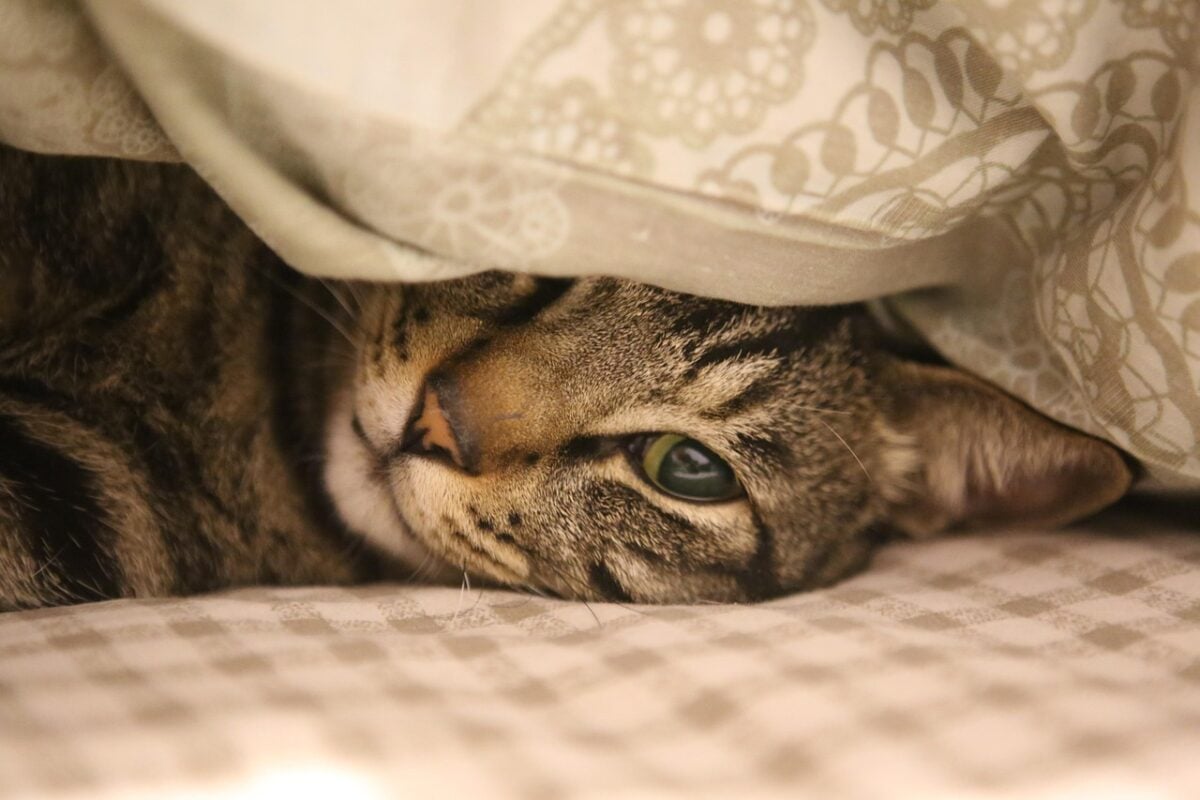
At the end of the day, being watched while you sleep is just part of the beautiful, unique contract we sign when we bring a cat into our lives. From your cat’s point of view, they are not starring in a horror film; they are just performing routine maintenance on the most important, blanket-sharing creature in their life.
Whether they are treating your face like a locked vending machine or sleeping in a twist that defies gravity, cats certainly know how to make bedtime an adventure. In fact, midnight staring is just one of many things every cat owner stops questioning eventually as they get used to the wonderful oddities of feline behavior. More than anything, this intense midnight devotion is often one of the clearest signs your cat has imprinted on you; you have officially become their chosen person, their ultimate comfort zone, and their entire world.
Having a tiny, furry eccentric choose your bed as their ultimate safe haven is a pretty great gig. So the next time you wake up to a pair of glowing eyes, just smile, give them a gentle chin scratch, send them a slow blink, and be glad you have such a dedicated, furry security team.
Share Your Sleep Stalker Stories!
Now it’s your turn! Does your cat treat you like a midnight science experiment? Drop a comment below and share your funniest, most creative, or creepiest “cat sleep stalker” stories with us!