When you purchase through links on our site, we may earn a commission at no extra cost to you. Learn more.
Walk into almost any animal shelter, and you’ll notice a pattern.
Table of Contents
Families stop in front of the orange tabby.
Someone points at the fluffy gray kitten.
The calico gets a chorus of “awws.”
Meanwhile, the sleek black cat in the next enclosure quietly watches the whole thing happen.
Shelter workers even have a name for this strange pattern: black cat syndrome.
Want our human-written content to rank above AI-generated garbage? Help us out by clicking this button!
It describes a situation many shelters say they see again and again — black cats often wait longer for adoption than cats with other coat colors.
And it raises an uncomfortable question: How does something as trivial as fur color influence which cats go home first and which ones keep waiting?
What Is Black Cat Syndrome?
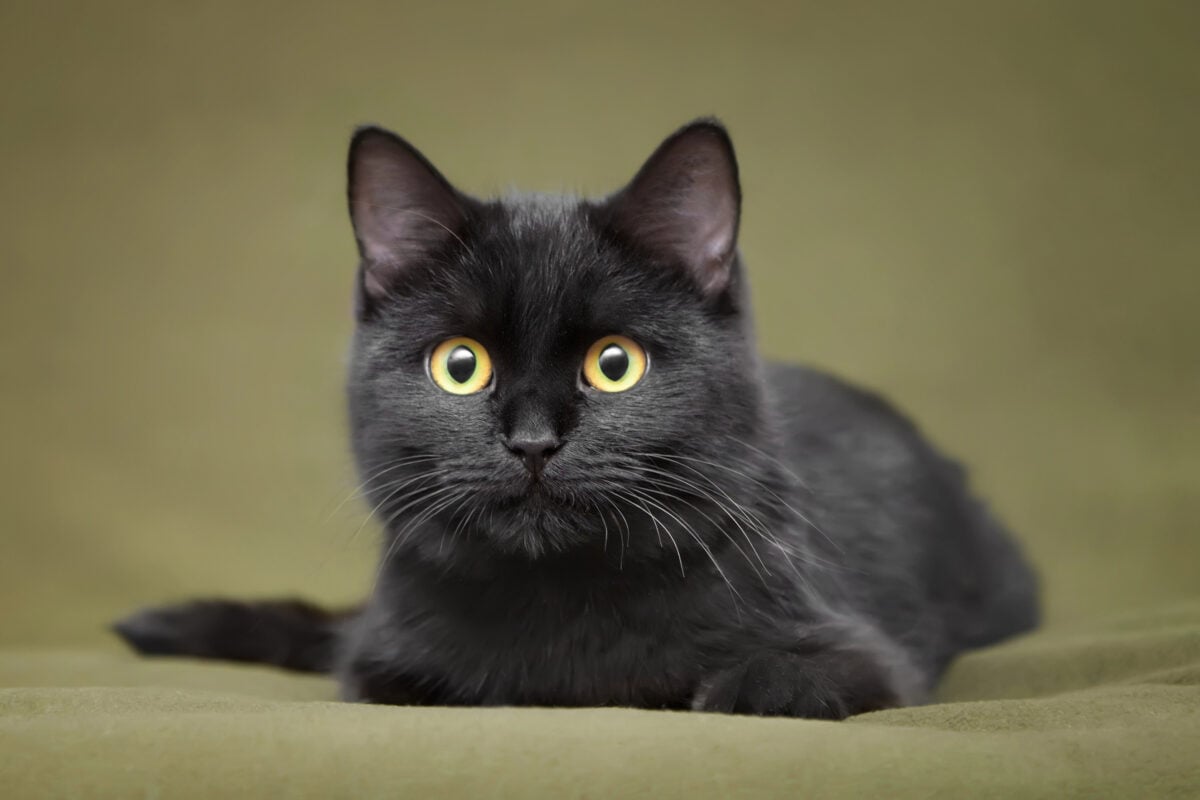
Black cat syndrome is the term shelters use for a pattern many of them notice: black cats often take longer to be adopted than cats with other coat colors.
The bias is rarely deliberate. Most people don’t walk into a shelter intending to avoid black cats. Instead, it shows up in small moments during the browsing process.
When people scan rows of enclosures or scroll through adoption listings, their attention often lands first on cats with stripes, patches, or high-contrast markings.
Solid black coats are simply easier to overlook at a glance.
Over time, that small preference can create a pattern that shelters recognize. Staff frequently report that black cats may:
- Stay in shelters longer than other cats
- Receive fewer initial inquiries from adopters
- Be passed over during busy adoption days
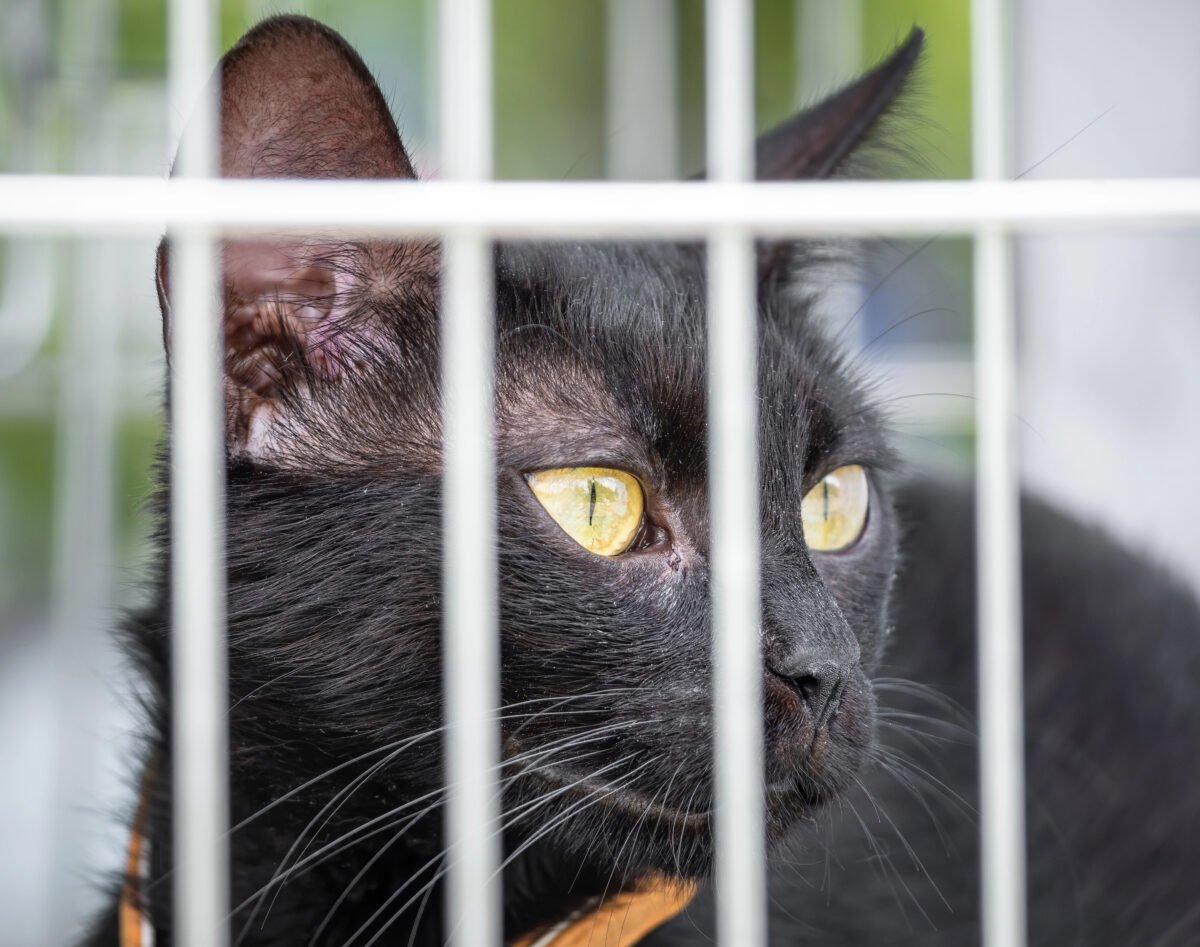
None of this has anything to do with temperament.
Black cats can be playful, affectionate, goofy, independent, cuddly, or delightfully chaotic, just like any other cat. But when adopters make quick first impressions, appearance often gets the first vote.
What Percent Of Cats Are Black?
Black isn’t a rare coat color. In fact, it’s the most common color in domestic cats.
According to ASPCA Vice President Dr. Emily Weiss, black cats make up about one-third (roughly 33%) of cats admitted to shelters and rescue organizations nationwide.
In other words, shelters often have a lot of black cats simply because there are a lot of black cats in the overall population.
Why Black Cats Are So Common
Much of this comes down to genetics.
Black coats are produced by a pigment called eumelanin, and the gene responsible for this color is dominant over many genes that produce lighter coats.
Because dominant traits are more likely to be passed down, black fur appears frequently in mixed-breed domestic cats.
What This Means In Shelters
When a common coat color meets quick visual decision-making, the effect can become noticeable in adoption rooms.

In many shelters:
- Multiple black cats may arrive around the same time
- Several may be housed in the same adoption area
- At a quick glance, they can appear similar to visitors moving through the room
Meanwhile, cats with bold markings or contrasting colors often catch the eye first. That small difference in visibility can subtly influence which cats people stop to meet.
Do Black Cats Actually Get Adopted Less?
This is where the story becomes more complicated.
Many shelter workers say they regularly see black cats waiting longer for homes. It can feel like a familiar pattern: the tabby or spotted kitten is adopted quickly, while the black cat remains a little longer.
But when researchers examined shelter data more closely, the results were less consistent than expected.
What Some Studies Show
Several shelter studies have found differences in black cat adoption rates based on coat color.
In certain datasets, darker-colored cats spent longer periods in shelters before adoption compared to cats with lighter or patterned coats.
Researchers at the University of California, Berkeley, have also warned that humans often make rapid judgments about animals based on visible traits such as coat color, often without realizing it.
What Other Studies Found
Other studies, although limited, paint a more nuanced picture.
Once those researchers accounted for factors like age, temperament, and health, coat color alone didn’t always predict adoption outcomes.
For example:
- Kittens are usually adopted quickly, regardless of color
- Friendly adult cats often find homes at similar rates
- Personality and behavior strongly influence adoption decisions
The Psychology Behind Coat Color Bias
Most people believe they choose a pet based on personality. In reality, first impressions happen quickly, and they’re usually visual.
When someone walks into a shelter or scrolls through adoption photos, their brain begins sorting options almost instantly, noticing which animals stand out and which are easier to remember.
These snap judgments often occur before anyone reads a description or asks about temperament.
How Our Brains Make Quick Choices
Psychologists have found that humans rely heavily on visual shortcuts when making fast decisions.
Bright colors, bold patterns, and strong contrast are simply easier for our brains to notice and remember.
For example:
- A striped tabby creates clear visual patterns
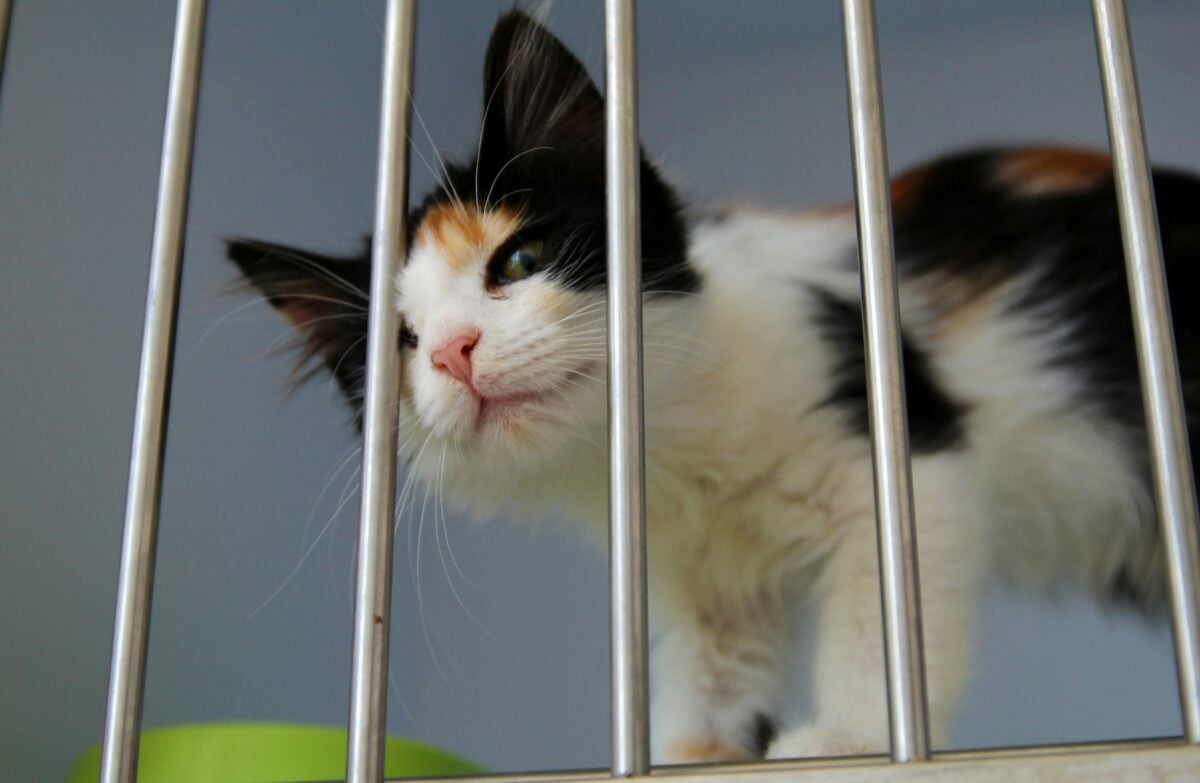
- A calico has high-contrast patches of color
- A white-and-orange cat stands out immediately
Those patterns give the brain visual landmarks to lock onto. A solid black coat, on the other hand, offers fewer of those cues.
Why Black Cats Can Be Harder To Notice
From a distance, especially in shelter lighting or small online photos, a black cat can sometimes appear as a single dark shape.
Facial expressions are harder to distinguish, and subtle differences between cats become less obvious.
When people are scanning quickly, their attention may naturally drift toward animals with more visible detail or contrast.
Psychologists refer to this type of snap decision-making as appearance-based heuristics — mental shortcuts that help us choose quickly without analyzing every option.
Most adopters believe they’re responding to personality. But very often, the process started with something much simpler: Which cat caught their eye first?
The Photography Problem (Why Black Cats Struggle in Shelter Photos)
Today, many adoptions begin online. People scroll through shelter websites or Petfinder listings and click on the animal that catches their attention first.
That’s where black cats encounter a practical challenge: black fur absorbs light.
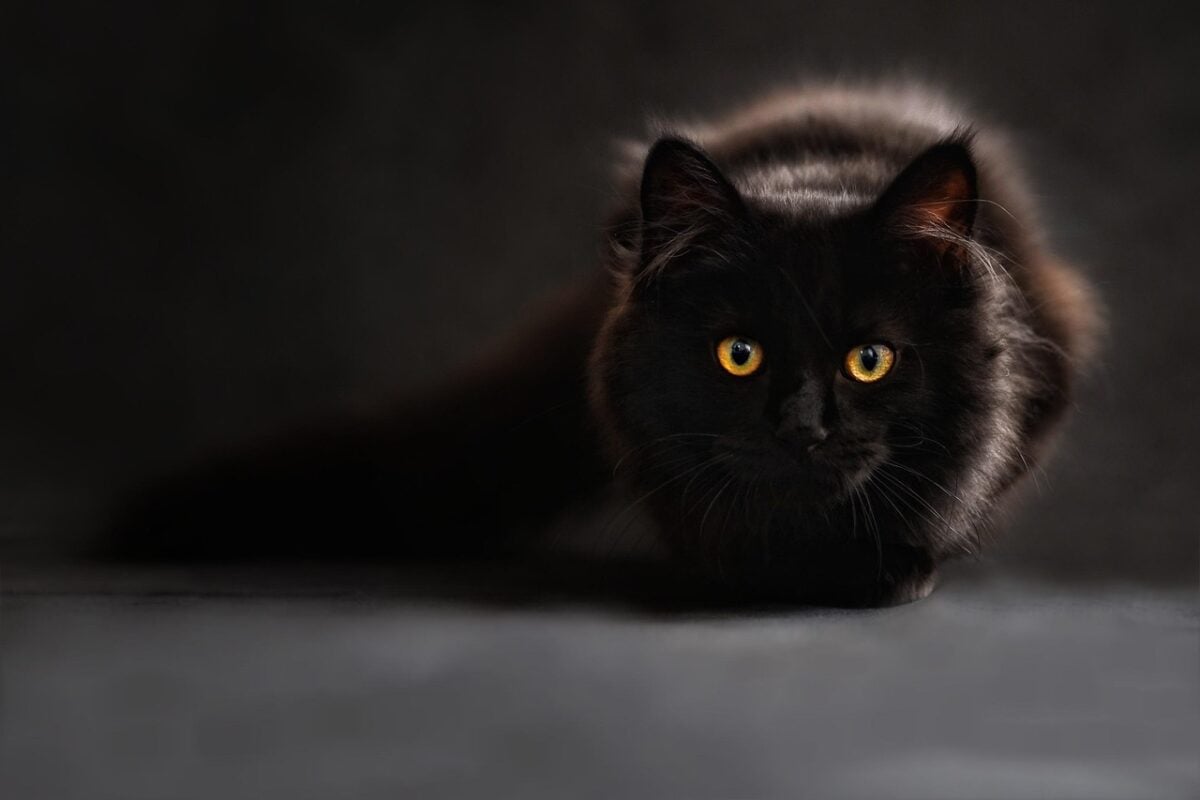
In photography, especially under typical indoor shelter lighting, facial features are softened, and contrast around the eyes, nose, and whiskers is reduced.
The result is that black cats may appear as dark silhouettes, while lighter or patterned cats show more visible detail.
Why Some Cats Stand Out More in Photos
Certain coat patterns naturally create texture and contrast in photos:
- Tabbies show bold stripes
- Calicos display multiple colors
- Bicolor cats have strong color separation
These patterns give the eye something to focus on.
A solid black coat, by comparison, can look flatter in the same lighting, even if the cat is striking in person.
A Challenge Shelters Know Well
Shelter staff are very familiar with this issue.
Many adoption coordinators say black cats (and dogs) can be among the hardest animals to photograph effectively, especially when photos are taken quickly in kennel environments.
In good lighting, their coats can appear sleek, glossy, and almost panther-like.
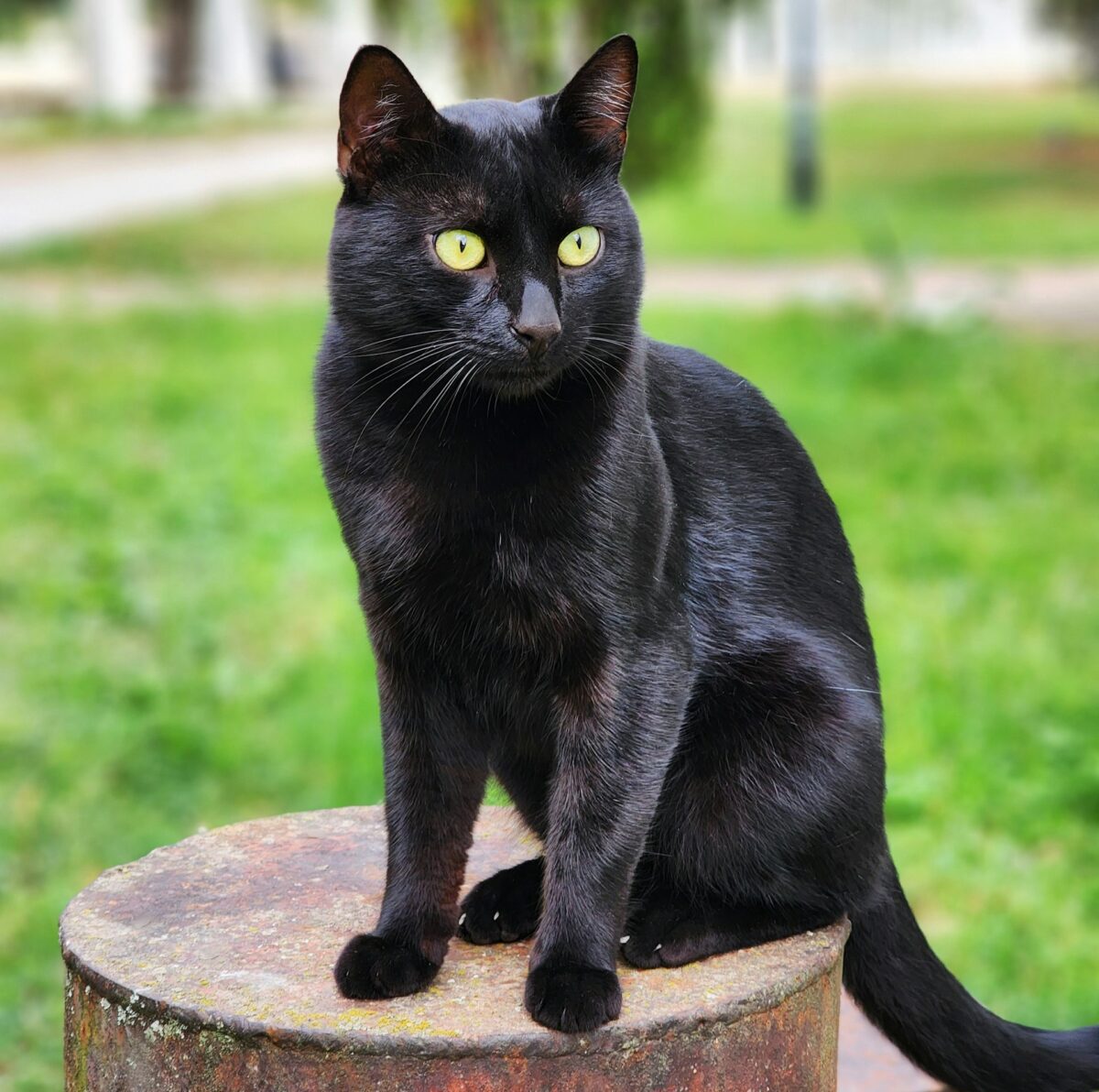
But if someone’s first encounter with the cat happens through a dim adoption photo, that personality may never get the chance to shine.
The Superstition Legacy
Long before shelters tracked adoption data, black cats already carried a strange cultural reputation.
In parts of medieval Europe, black cats became tangled up in folklore about witches and bad luck. Some stories claimed witches could transform into black cats, while others suggested the animals served as supernatural companions.
Over time, those stories helped cement the image of the black cat as something mysterious or even ominous.
Most people today don’t actually believe those legends. But cultural associations have a way of lingering.
You can still see traces of it every October. Black cats appear in Halloween decorations, greeting cards, and costumes, usually alongside crooked hats, pumpkins, and haunted houses.
The imagery is playful now, but it subtly reinforces the idea that black cats belong in the world of spooky symbols rather than everyday pets.
Not Everywhere Sees Black Cats As Bad Luck
Interestingly, black cats don’t have a negative reputation everywhere. In several cultures, they’ve historically been viewed as signs of good fortune:
- United Kingdom & Japan: Black cats are linked to luck and prosperity
- Scotland: A black cat appearing on your doorstep is said to bring money
- France: Black cats have long been associated with financial luck
- Germany: A black cat crossing your path can actually mean good fortune
In other words, the superstition was never really about the cats themselves. It was about the stories humans attached to them.
The October Effect: When Black Cats Suddenly Become Popular
For most of the year, black cats can blend quietly into the background of shelter adoption rooms. Then October arrives.
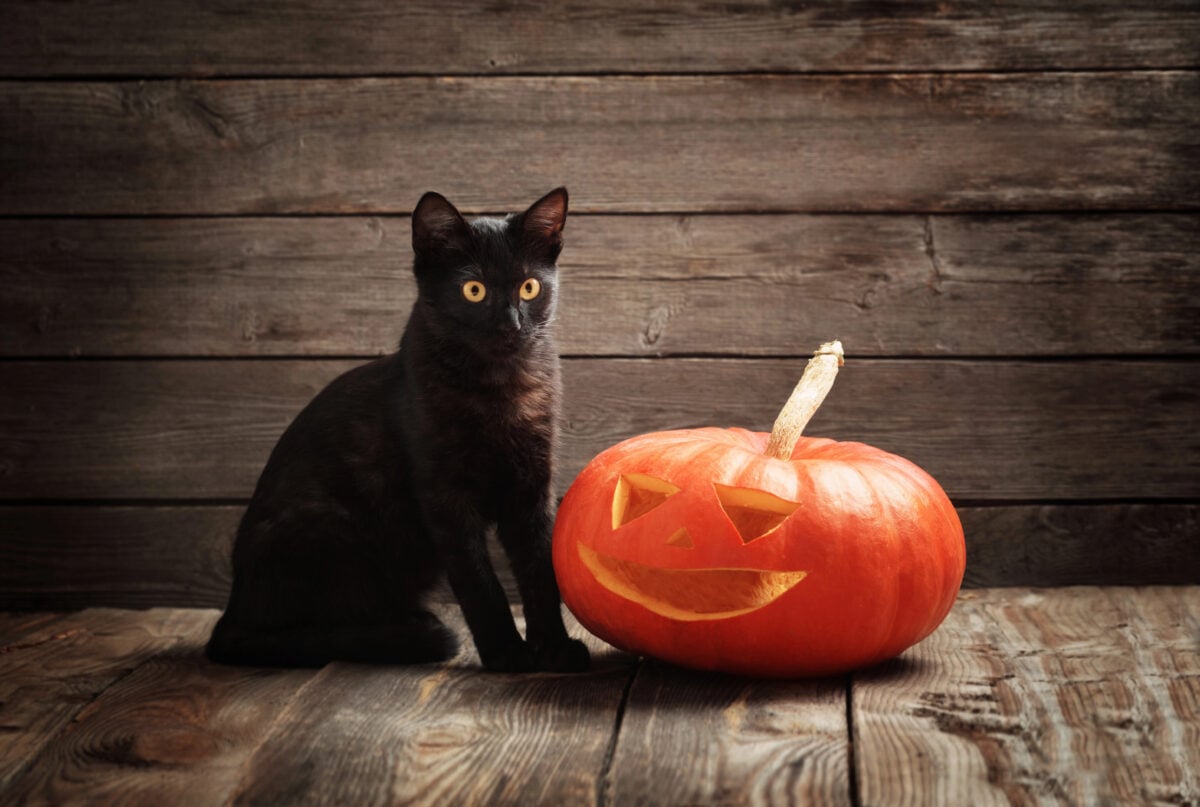
Suddenly, the same animals that were overlooked a few weeks earlier start getting attention. Black cats appear everywhere in Halloween decorations — perched next to pumpkins, arching their backs on greeting cards, or silhouetted against cartoon moons.
The seasonal spotlight often sparks curiosity from potential adopters. Many shelters report a noticeable increase in interest in black cats during the weeks leading up to Halloween.
But that attention also comes with caution.
Animal welfare organizations have long worried about impulse adoptions tied to holiday themes. In the past, some shelters even paused black cat adoptions during October out of concern that people might adopt them as novelty pets.
In reality, there’s little evidence that Halloween leads to widespread harm toward black cats. But the concern became common enough that many shelters now emphasize responsible adoption conversations during the season, focusing on long-term commitment rather than holiday symbolism.
Ironically, Halloween may be the one time each year when black cats get the attention they deserve — just for reasons that have nothing to do with who they actually are.
Black Cat Facts That Make Them Even Cooler
Black cats have been stuck with a spooky reputation for centuries… which is a little ironic, because the real facts are much cooler. Here are a few things many people don’t realize about them.
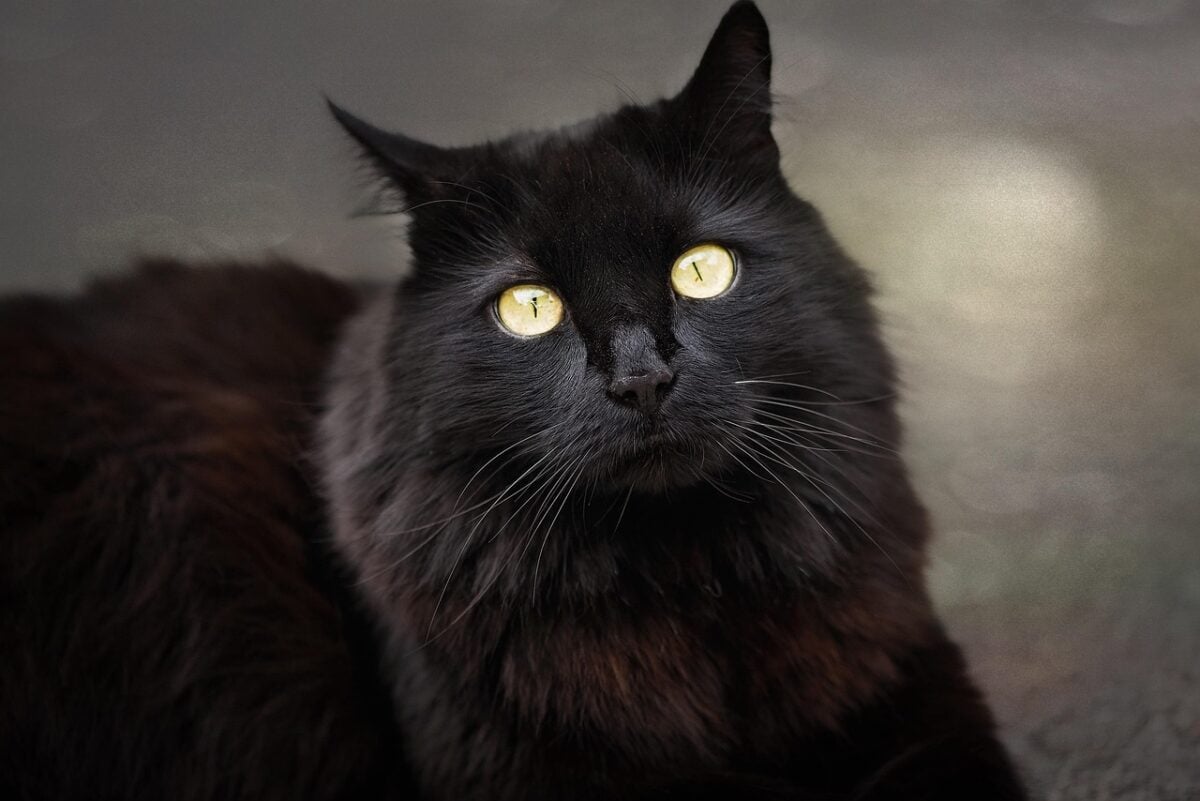
- Black cats almost always have bright yellow, gold, or green eyes.
The contrast between dark fur and bright eyes is one reason they can look so striking in the right lighting. - Some black cats “rust” in the sun.
Their fur can develop reddish or brown highlights after lots of window time—like a tiny goth who accidentally discovered summer. - A truly all-black cat is rarer than people think.
Many “black cats” have a few surprise features, like whiskers with white mixed in, small patches, or lighter areas you only notice up close. - Only one breed is always black.
The Bombay was specifically developed to resemble a miniature panther, with a sleek black coat and copper or gold eyes.
The Many Breeds Behind The Classic Black Cat
Not every black cat is a Bombay, and that’s because black isn’t a breed at all. It’s a coat color.
That color can appear in dozens of different pedigreed cats around the world, as well as the mixed-breed domestic cats that make up most shelter populations.
While the Bombay was bred to capture the “mini panther” look, many other breeds wear the same color in completely different ways, from sleek and shorthaired to fluffy and dramatic.
Shorthaired Black Cats
When people imagine a classic, sleek black cat, they’re usually picturing one of these smooth-coated breeds.

- American Shorthair – A sturdy, easygoing breed with a glossy coat and adaptable personality.
- British Shorthair – Round-faced and teddy-bear sturdy, often with copper eyes that contrast beautifully with a black coat.
- Oriental Shorthair – Sleek, angular, and highly vocal, with a dramatic panther-like silhouette.
- Exotic Shorthair – A shorthaired relative of the Persian with a plush coat and famously calm personality.
Fluffy Black Cats
These longhaired breeds wear black like a dramatic cloak.
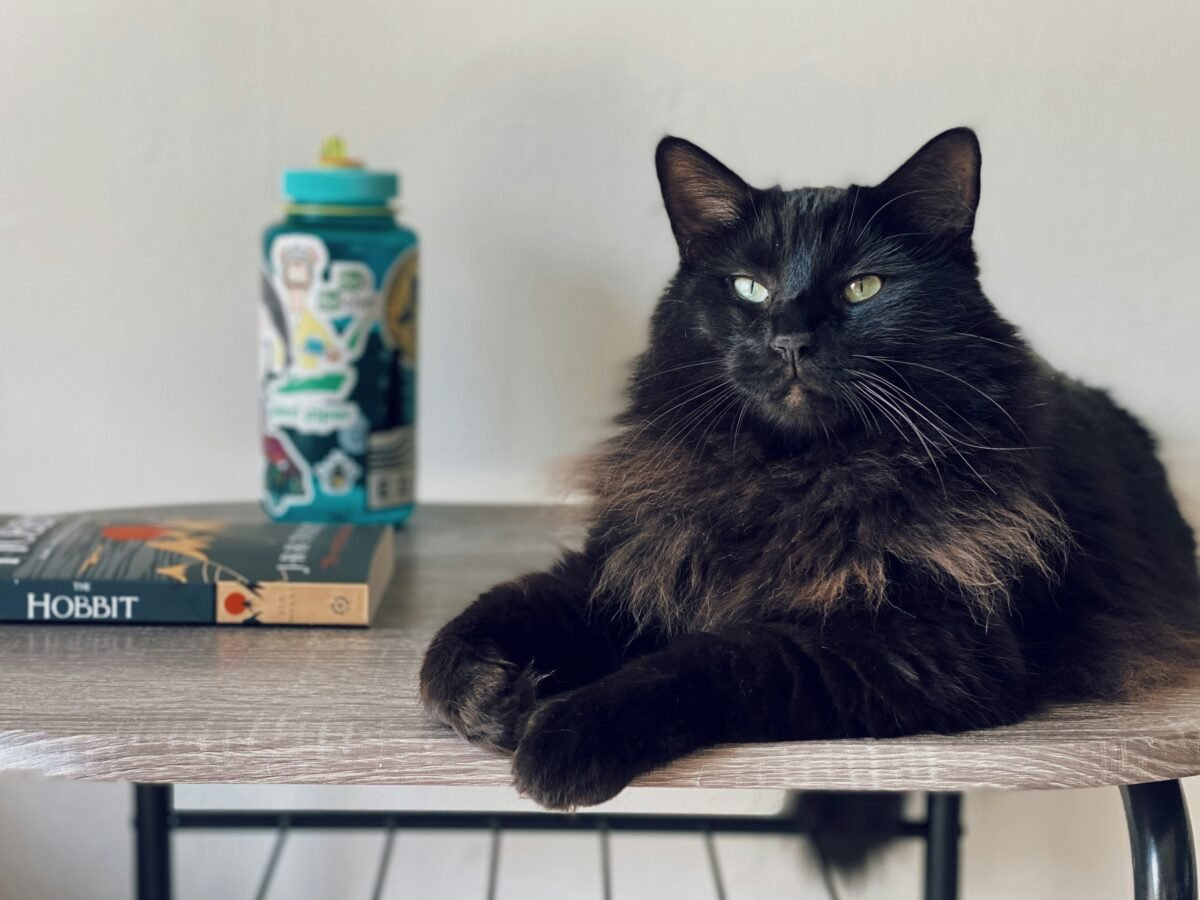
- Maine Coon – Massive, friendly, and unmistakable with tufted ears and a flowing tail.
- Persian – Calm and gentle, with a striking flat face.
- Norwegian Forest Cat – A rugged Nordic breed with a thick mane and strong build.
- Siberian – Powerful and regal, with a dense triple coat built for cold climates.
- Ragamuffin – Silky-coated, affectionate, and famously gentle.
Curly & Wavy-Coated Black Cats
Not all black cats are sleek and smooth. Some wear their coats in rippled curls or soft waves.

- Cornish Rex – Slender and athletic, with tight velvety curls and a playful personality.
- Devon Rex – Mischievous and affectionate, known for their large ears and soft, wavy coat.
- Selkirk Rex – Dense curls give this mellow breed a fluffy, teddy-bear appearance.
- LaPerm – Recognizable by loose ringlets and an especially people-oriented temperament.
Black Cats With Unique Features
Some breeds stand out not just for their color, but for unusual ears, tails, or body shapes.

- Scottish Fold – Known for their distinctive folded ears and calm personality.
- American Curl – Instantly recognizable thanks to ears that curl backward.
- American Bobtail – Muscular and wild-looking, with a naturally short tail.
- Manx – A tailless breed famous for its strong hind legs and bunny-like hop.
Personality Myths About Black Cats
One of the strangest assumptions tied to black cat syndrome is the idea that coat color somehow reflects personality.
It doesn’t.
A cat’s temperament is shaped by genetics, early socialization, and life experience. Breed tendencies can influence behavior, but fur color by itself tells you almost nothing about how a cat will act.
Yet people still make quick guesses based on appearance. Ask shelter staff, and they’ll sometimes hear adopters say things like:
- “Black cats seem more aloof.”
- “They look mysterious.”
- “Orange cats feel friendlier.”
Those impressions usually come from visual storytelling, not real behavior patterns.
Psychologists call this anthropomorphism — the tendency to attribute human traits or personalities to animals based on appearance.
In reality, black cats show the same range of personalities as any other cat:
- Playful and energetic
- Calm observers
- Affectionate lap cats
- Curious household supervisors
The personality comes from the cat. The color is just the wrapping paper.
Why Many Cat Lovers Are Devoted To Black Cats
Spend enough time talking to people who have lived with black cats, and you’ll notice something interesting: many of them become fiercely loyal fans.
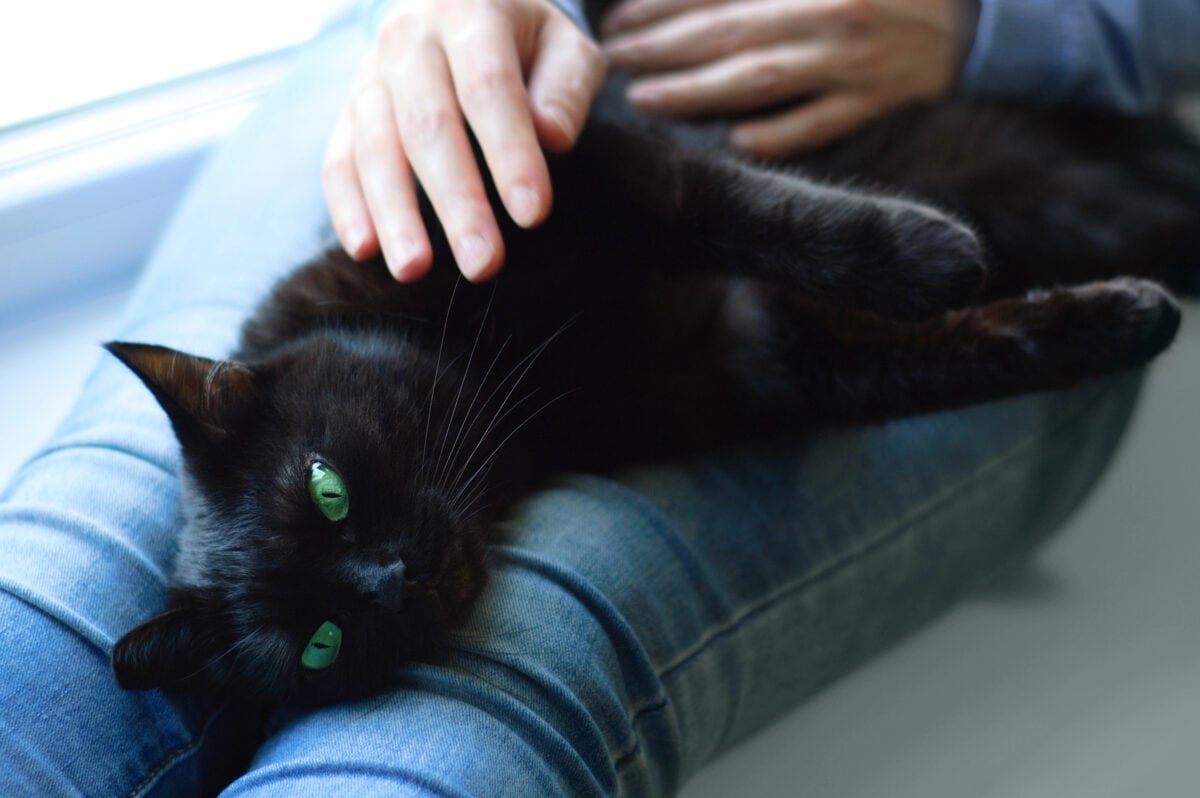
Once the coat color stops being the focus, the cat underneath tends to win people over quickly.
I’ve had two black cats myself, Abby and Charley, and they fit that pattern perfectly. Abby was endlessly affectionate — the kind of cat who seemed happiest curled up next to someone. Charley had a similarly easygoing personality, calm, well-behaved, and always eager for attention.
Their personalities were different, but they shared one trait: they were both incredibly affectionate.
Anyone who believes black cats are distant or mysterious probably just hasn’t spent much time living with one.
Shelter workers say they hear the same thing from adopters over and over. Once someone takes a black cat home, the color quickly becomes the least interesting thing about them.
What people remember instead is the cat that greets them at the door, climbs into their lap, or supervises every activity in the house with quiet confidence.
How Shelters Are Fighting Black Cat Syndrome
Shelters are well aware of the challenges black cats can face during the adoption process. Over time, many organizations have started experimenting with creative ways to help these cats stand out.
Some of the most effective strategies focus on visibility and storytelling. For example:
1. Improved Photography
Some shelters stage brighter, professional-style photos for darker-coated cats, using better lighting and contrasting backgrounds to highlight facial features and glossy coats.
2. Special Adoption Campaigns
Events like Black Cat Appreciation Day (August 17) and themed promotions like “Black Cat Fridays” encourage adopters to take a second look.
3. Social Media Storytelling
Shelters often share videos of black cats playing, cuddling, and interacting with staff — moments that reveal personality in ways a single adoption photo can’t.
4. Reduced Adoption Fees Or Promotions
Some organizations offer incentives to encourage visitors to meet black cats in person.
The goal isn’t to pressure anyone into choosing a particular animal. It’s simply to make sure every cat gets a fair chance to be noticed. Because once someone actually meets the cat behind the color, the rest often takes care of itself.
Bringing Home A Black Cat? Plan For Their Future, Too
Whether you adopt a black cat or one of any other color, preparing for their long-term health is just as important as finding the right companion. Unexpected illnesses and accidents can happen to any cat, and veterinary care can become expensive without warning.
Pet insurance can help cover the cost of diagnostics, treatments, surgeries, medications, and emergency care, giving you greater peace of mind throughout your cat’s life.
Learn more about the best pet insurance for cats and get a free quote using the form below.

Frequently Asked Questions
Below are answers to some of the most common questions people ask about black cats and black cat syndrome.
If you have a question we didn’t cover, feel free to drop it in the comments. We read them all, and your question might help shape a future update to this guide.
Are Black Cats Really Less Likely To Be Adopted?
The answer depends on the shelter and the study you look at. Some shelter research has found that darker-colored cats may stay in shelters slightly longer before adoption. Other studies have found that once factors like age, health, and temperament are taken into account, coat color alone doesn’t strongly predict adoption outcomes.
What many shelters do agree on is that first impressions can influence which cats people notice first, and solid black coats may be easier to overlook when visitors are scanning quickly.
Are Black Cats Rare?
Not at all. In fact, they’re quite the opposite.
Because the genetics behind black fur are widespread, solid black coats appear frequently in domestic cat populations around the world. When shelters take in large numbers of mixed-breed cats, it’s common for several black cats to arrive around the same time.
That’s one reason shelters often have multiple black cats available for adoption simultaneously.
What Percent Of Cats Are Black?
Black is one of the most common coat colors in domestic cats.
Black cats make up around one-third (about 33%) of the cats admitted to shelters and rescue facilities nationwide. The color comes from a pigment called eumelanin, and the gene responsible for producing it is dominant over many gene combinations that create lighter coats.
Because dominant genes are more likely to be passed down, black coats appear frequently in mixed-breed domestic cat populations.
Are Black Cats More Affectionate?
Coat color doesn’t determine personality.
A cat’s temperament is shaped by factors like genetics, early socialization, environment, and individual personality. Black cats can be playful, quiet, social, independent, affectionate, or mischievous—just like cats of any other color.
Why Do Shelters Seem To Have So Many Black Cats?
Two factors tend to combine here.
First, black coats are genetically common, so shelters naturally receive a large number of black cats through normal intake.
Second, if even a small visual bias causes some adopters to overlook them initially, those cats may remain in shelters slightly longer. Over time, that can create the impression that black cats are everywhere in adoption rooms.
Want To Go Deeper Into The World Of Black Cats?
Black cats have carried their share of myths, but in the end, they’re simply cats — playful, affectionate, and full of personality. The story of black cat syndrome says far more about human perception than it does about the cats themselves.
If you’re curious about one of the breeds most closely associated with the classic “mini panther” look, you might enjoy learning more about the differences between a Bombay and other black-coated cats in our guide: Bombay Cat vs Black Cat: What’s the Difference?
Have you ever owned a black cat? What was their personality like? If you’ve shared your life with a black cat, tell us about them in the comments. We’d love to hear your stories.