When you purchase through links on our site, we may earn a commission at no extra cost to you. Learn more.
One of your cats is sitting outside the litter box. Again. Meanwhile, your other cat is peeing on the rug or acting like the bathroom is suddenly off-limits.
Table of Contents
Coincidence? Maybe not.
Your cat could be guarding the litter box, and you might not even realize it.
There’s no hissing or fighting. Sometimes one cat simply blocks the doorway or stares until the other gives up.
Want our human-written content to rank above AI-generated garbage? Help us out by clicking this button!
To you, it looks like lounging. To your other cat, it’s a bathroom with a bouncer.
And it’s more than an annoying little power struggle. Ongoing tension can make cats afraid to use their litter boxes and may contribute to stress-related urinary problems.
You don’t have to referee every bathroom trip, though. Here’s how to spot litter box guarding, understand what’s behind it, and make a few changes that help both cats feel safe again.
What Is Litter Box Guarding?
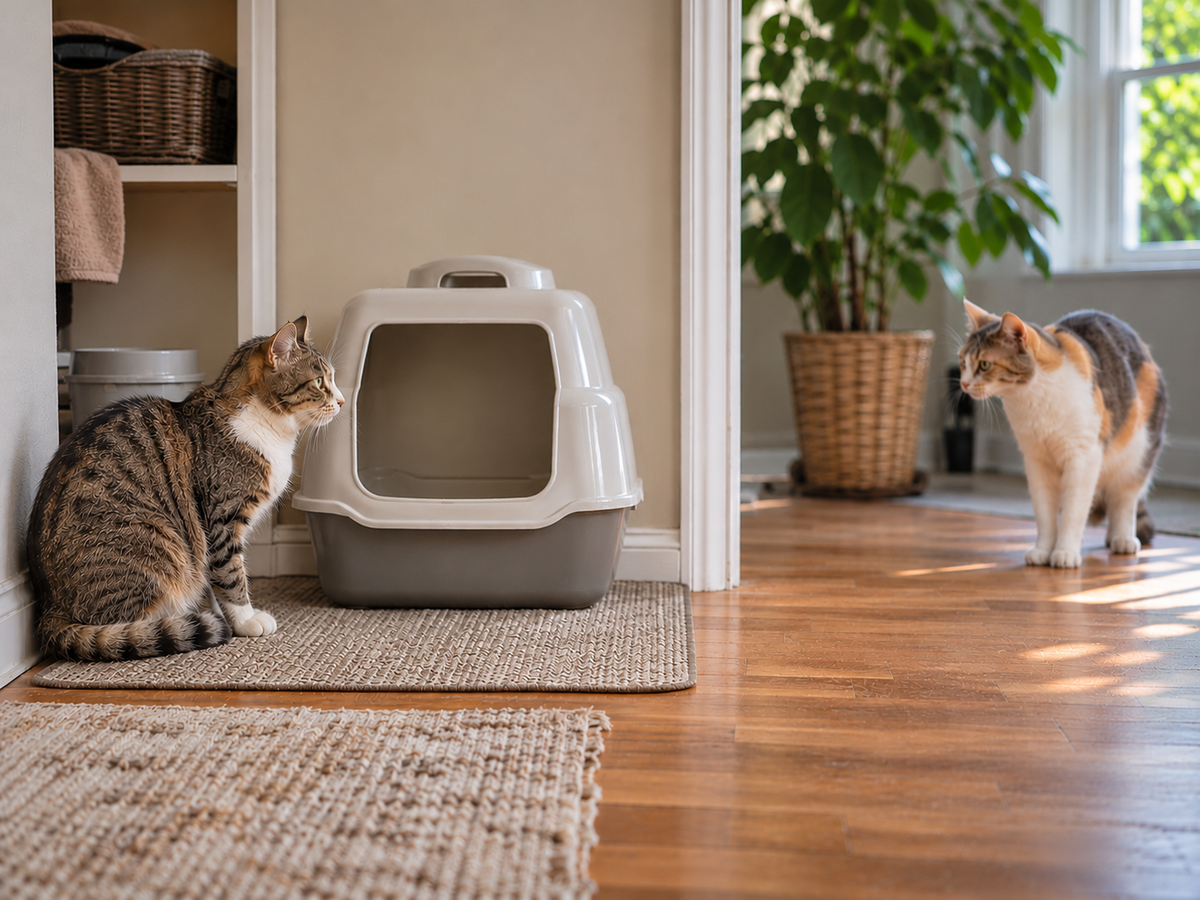
Litter box guarding happens when one cat makes it difficult for another cat to use the litter box, whether by blocking the doorway, staring, chasing, or waiting nearby.
And here’s what makes it so easy to miss: the guarding cat doesn’t have to hiss, growl, or swat to get the message across.
Sometimes all it takes is sitting in the right doorway.
Imagine needing to use the bathroom, but someone you don’t particularly trust is sitting outside, watching your every move. You might decide to come back later, too.
That’s what can happen in a multi-cat household.
The 2024 AAFP Intercat Tension Guidelines explain that conflict between household cats can be surprisingly subtle. Staring, blocking access to resources, and controlling pathways can all signal tension.
But not every cat lounging near a litter box is guarding it. The real clue is how the other cat responds.
Does it stop at the doorway? Turn around? Wait until the other cat leaves before venturing inside?
Those little moments can tell you a lot about how comfortable your cats really feel around each other.
Why Do Cats Guard the Litter Box?
Two cats can be curled up together on the couch one minute and having a silent standoff in the hallway the next.
And we’re left wondering what on earth just happened.
Cats have their own complicated relationships, and living under the same roof doesn’t necessarily mean they’re comfortable sharing everything.
Sometimes the problem is the litter box setup itself. If every box is tucked into the same laundry room, one cat can sit in the doorway and make it difficult for everyone else to get past.
Other times, the problem isn’t really the litter box at all.
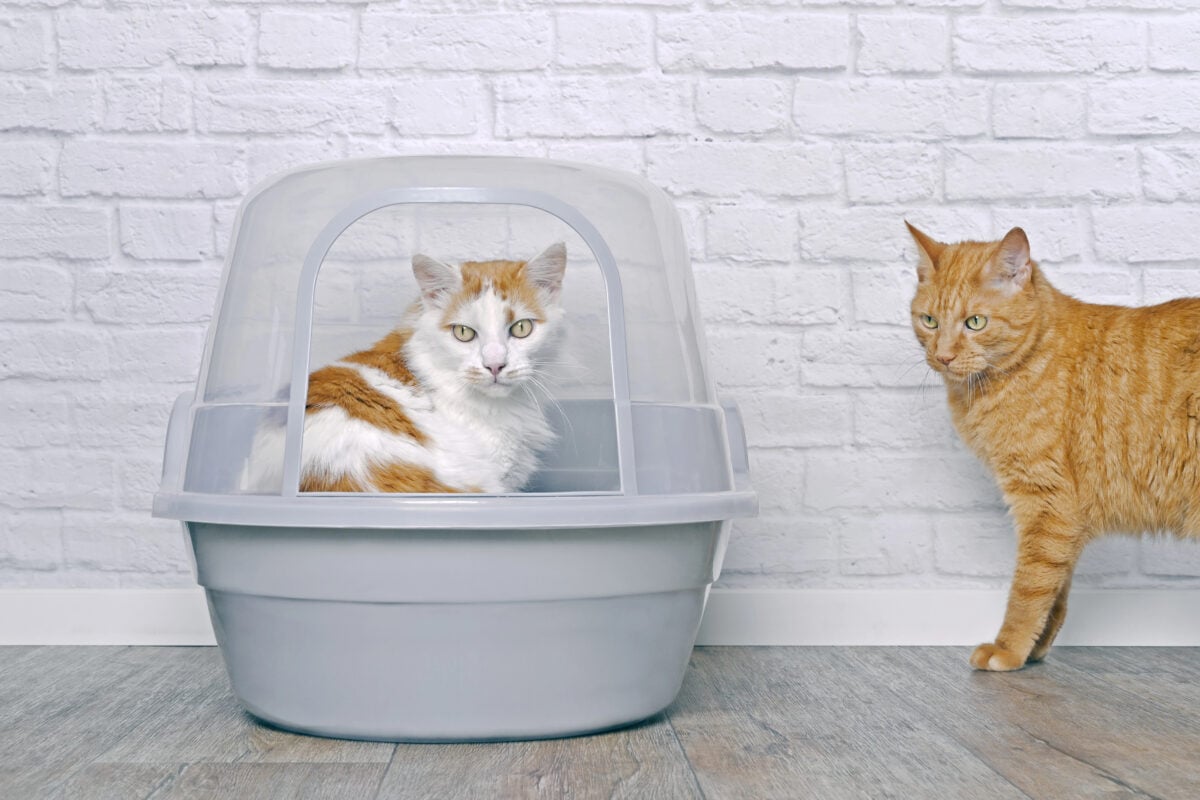
Maybe your cats have never been particularly close. One always claims the sunny window spot while the other waits for it to become available. One eats first while the other hangs back. Then you start noticing that same tension around the litter box.
Changes at home can stir things up, too. A new pet, a move, or even a trip to the vet can leave cats feeling unsettled. And don’t underestimate the neighborhood cat who strolls past the window like it owns the place. That unwelcome visitor can create tension between cats that normally get along.
There’s also something you don’t want to overlook: one of your cats may not be feeling well.
Pain or illness can make a cat less tolerant of its housemates. And a cat that’s uncomfortable using the litter box may start hesitating, rushing through bathroom trips, or avoiding it altogether.
That’s why sudden changes in litter box habits or relationships between cats deserve a veterinary check.
Litter box guarding isn’t necessarily about one cat trying to be the boss. One cat may be feeling insecure or defensive, while the other has learned that keeping its distance is the easiest way to avoid trouble.
Neither cat is trying to make your life difficult. And neither should have to feel uncomfortable in its own home.
5 Signs One Cat Is Guarding the Litter Box
The cat blocking the litter box might look perfectly content. The cat trying to get past usually tells a different story.
Meanwhile, the cat on the receiving end may be getting more anxious every time it needs to use the bathroom. Imagine feeling like you have to sneak past someone just to pee. Eventually, some cats stop trying, and that’s when accidents, stress, and even health problems can enter the picture.
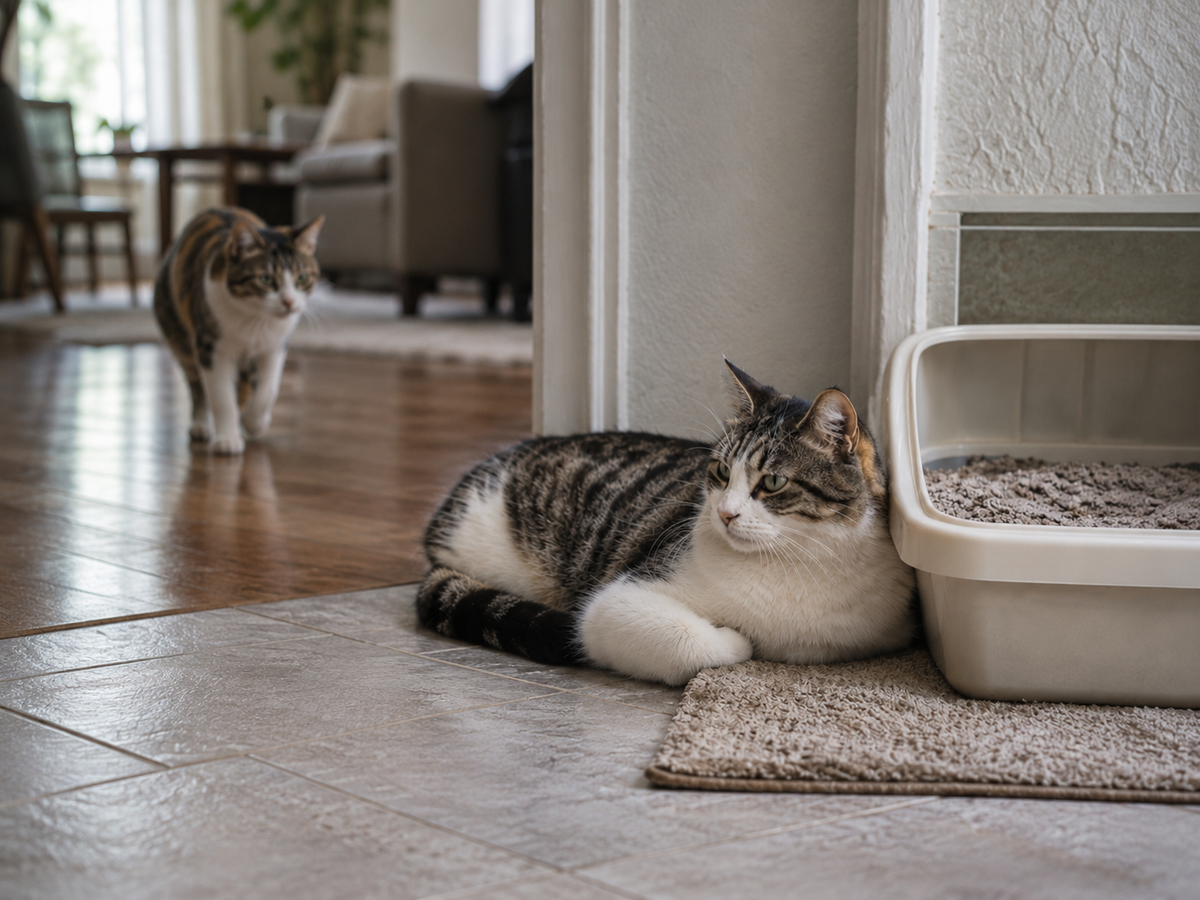
The heartbreaking part? Your cat may be struggling right under your nose, without a single hiss or swat to give it away.
Here are five subtle signs that one of your cats might be playing bathroom security guard.
1. Blocking the Doorway
You might notice one cat stretched out in the hallway, sitting at the entrance to the laundry room, or lounging at the top of the stairs where the litter box is kept.
Nothing about it looks particularly threatening. The cat may even appear half asleep.
But watch what happens when your other cat approaches.
Does it stop walking? Turn around? Sit at a distance as though it’s waiting for permission to pass?
A cat doesn’t have to attack its housemate to keep it out of a room. Sometimes, sitting in the doorway is enough.
What to watch for: If the same cat regularly positions itself along the route to the litter box and your other cat consistently avoids passing, that pattern is worth investigating.
2. Staring at the Other Cat
A prolonged, fixed stare can be surprisingly intimidating between cats, particularly when there’s already tension in their relationship.
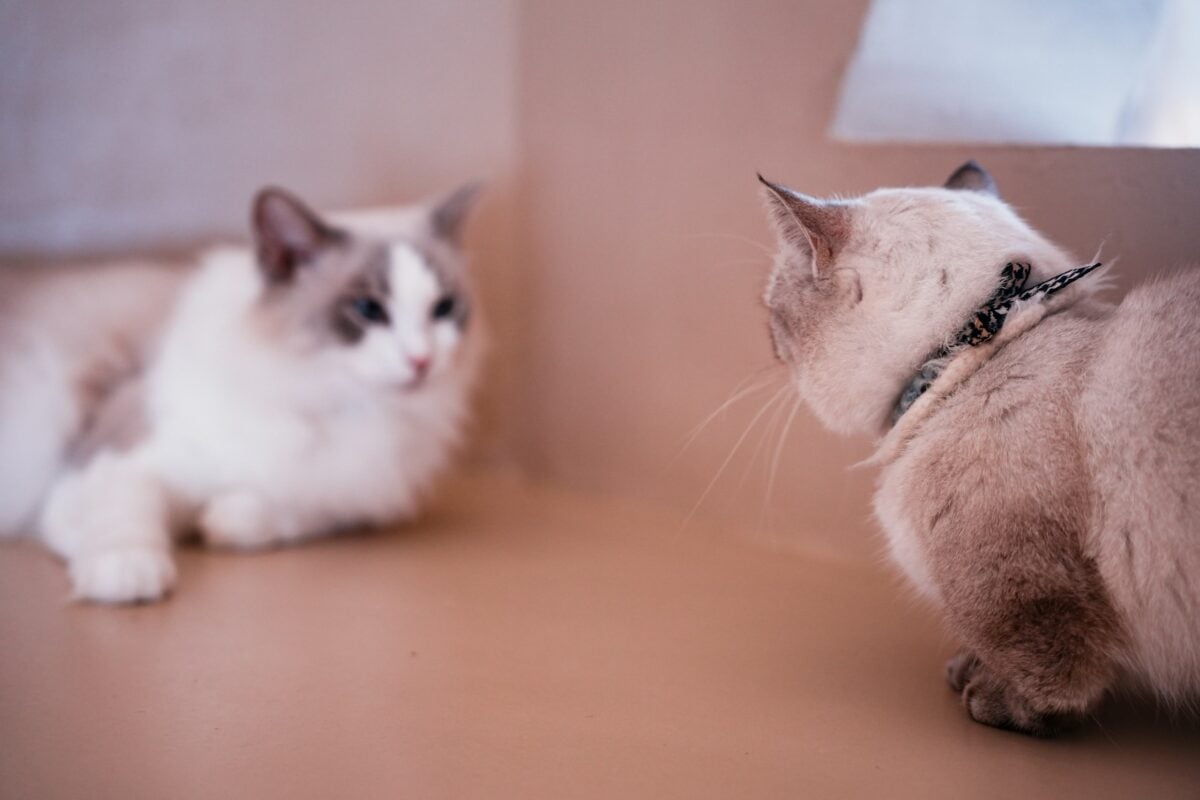
You might see one cat sitting near the litter box, watching intently as the other approaches. The approaching cat may freeze, lower its body, look away, or quietly retreat.
To us, it can look like two cats simply noticing each other.
But for the cat trying to get to the bathroom, that stare may be enough to make it reconsider.
Pay attention to whether the staring happens repeatedly around the litter box or other important resources, like food bowls and favorite resting spots.
What to watch for: One cat consistently backing away, taking a longer route, or waiting until the other cat leaves before approaching the litter box.
3. Ambushing After Bathroom Trips
Some cats don’t interfere with their housemate going into the litter box. They wait until the cat comes out.
Imagine your cat finishing its business, stepping out of the box, and suddenly being chased or pounced on by another cat.
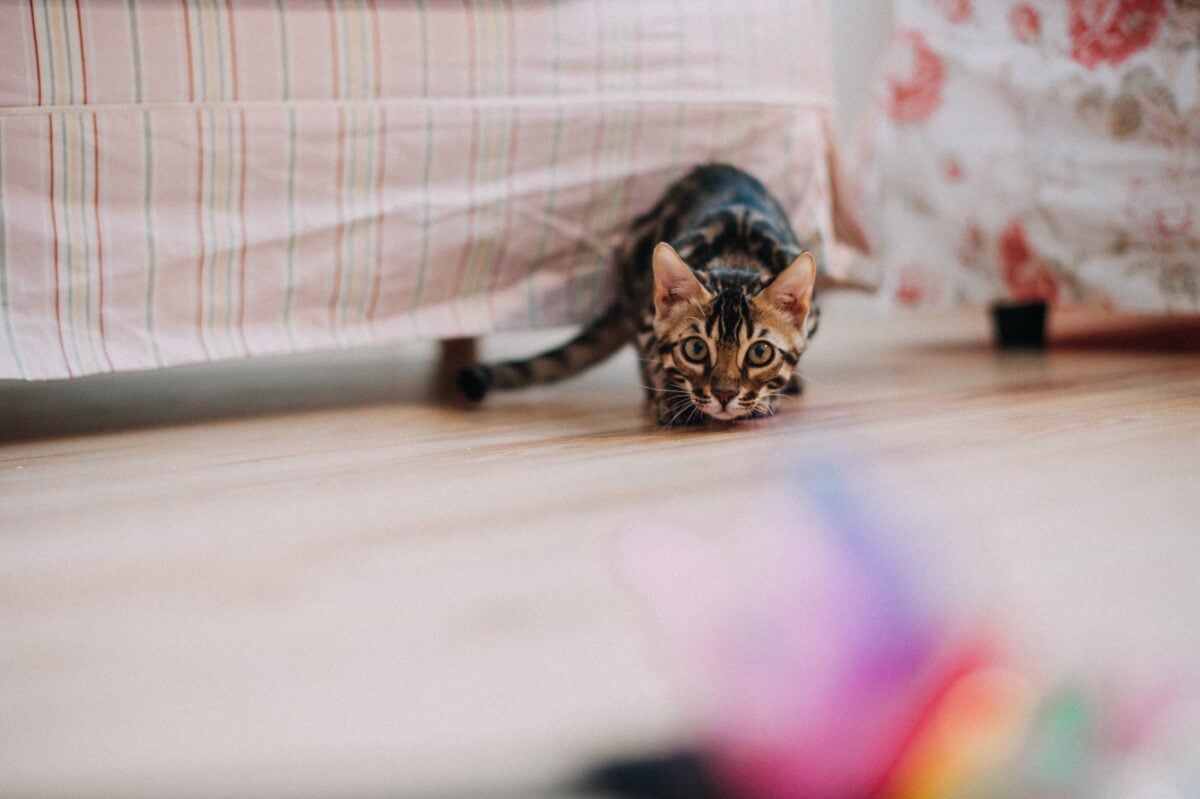
Even if the encounter lasts only a few seconds, it can make the entire litter box area feel unsafe.
And if it happens repeatedly, the targeted cat may begin anticipating trouble before it even enters the room.
It’s important to distinguish playful chasing from an interaction that’s frightening one of your cats. If one cat repeatedly tries to escape, hides afterward, or avoids the area, it isn’t a game both cats are enjoying.
What to watch for: A cat waiting near the litter box and repeatedly chasing the other cat as it leaves, especially if the targeted cat runs away or hides afterward.
4. Rushing Through Litter Box Visits
Most cats have their own little bathroom routines. Some dig enthusiastically, some spend ages finding the perfect spot, and others carefully cover everything when they’re finished.
When a cat suddenly changes those habits, it’s worth noticing.
A cat that feels vulnerable may rush into the box, eliminate quickly, and leave without its usual digging or covering. You might also notice it pausing at the doorway, looking around repeatedly, or waiting until the other cat is elsewhere before using the box.
Not every quick bathroom trip indicates guarding. Some cats are naturally fastidious, while others don’t spend much time covering their waste.
The important clue is a change from what’s normal for your cat, especially when that change seems connected to another cat’s presence.
Also, don’t overlook medical causes. Urinary discomfort, constipation, or other health issues can change how a cat behaves in the litter box.
5. Avoiding the Litter Box Entirely
This is often when cat parents realize something is wrong.
A cat that has reliably used the litter box for years suddenly starts peeing on the bathroom rug, leaving poop behind the couch, or choosing a pile of laundry instead.
It’s frustrating, especially when you’re cleaning up another accident and wondering what changed.
But consider what the situation might feel like for your cat.
If every trip to the litter box involves being watched, blocked, or chased, that bathroom may no longer feel safe.
Your cat still needs somewhere to go. It may start choosing locations where it feels less exposed or threatened.
That doesn’t mean every accident is caused by litter box guarding. Urinary tract problems, constipation, arthritis, litter preferences, and other medical or environmental issues can also lead to house soiling.
If your cat suddenly starts eliminating outside the litter box, make a veterinary appointment rather than assuming the problem is behavioral. If your cat repeatedly strains to urinate but produces little or no urine, seek emergency veterinary care immediately.
A cat shouldn’t have to work up the courage to use its own litter box. If you’re noticing these behaviors at home, here’s how to make bathroom trips feel safer for both cats.
How to Stop Litter Box Guarding: 8 Practical Fixes
When one cat starts guarding the litter box, it’s tempting to focus all your attention on stopping that cat’s behavior. But don’t forget about the cat who’s been avoiding the bathroom.
One may be feeling territorial or insecure, while the other has learned that keeping its distance is the safest option.
Both cats need a little help.
The goal is to give every cat a place to use the bathroom without having to watch its back. Here’s where I’d start.
1. Rule Out Medical Problems First
Before assuming your cats are having a disagreement over the litter box, make sure neither one is hurting.
Cats are remarkably good at hiding discomfort. An older cat with arthritis may struggle to climb into a high-sided box. Constipation can make bathroom trips painful, while urinary problems may cause a cat to associate the litter box with discomfort.

And don’t overlook the cat doing the guarding. Pain or illness can make a normally easygoing cat less tolerant of its housemates.
What you can do: Schedule a veterinary appointment if your cat’s litter box habits or relationships with other cats suddenly change. Mention any differences in appetite, grooming, energy, or behavior, too.
If your cat repeatedly tries to urinate but produces little or no urine, seek emergency veterinary care immediately. A urinary blockage can be life-threatening, particularly in male cats.
Our guide to signs your cat may be sick covers some of the less obvious changes worth watching for.
2. Give Your Nervous Cat Another Place to Go
Imagine needing to use the bathroom but having to walk past someone who’s already chased you away a few times.
You’d probably look for another option.
That’s what we’re trying to give the cat who’s being guarded.
Start by adding a litter box somewhere your nervous cat already feels comfortable. Maybe that’s the bedroom where it spends its afternoons or a quiet guest room away from the other cat’s favorite hangout.
What you can do: Put an additional box in a separate area where the guarding cat can’t easily watch or block access. Leave the existing boxes available while you see which locations your cats prefer.
And don’t worry if the arrangement isn’t particularly attractive. A litter box in the corner of your bedroom may not be your favorite decorating decision, but it’s worth it if your cat can finally pee in peace.
We’ll talk more about how many boxes you need in the next section.
3. Make Sure Your Cat Doesn’t Feel Trapped
Take a look at your litter box from your cat’s perspective.
Can it see another cat approaching? Is there enough room to move away? Or is the box tucked into a cramped closet where a housemate could block the only exit?
Cats are vulnerable when they’re eliminating. For one that’s already been ambushed or chased, a litter box with limited visibility may feel especially uncomfortable.
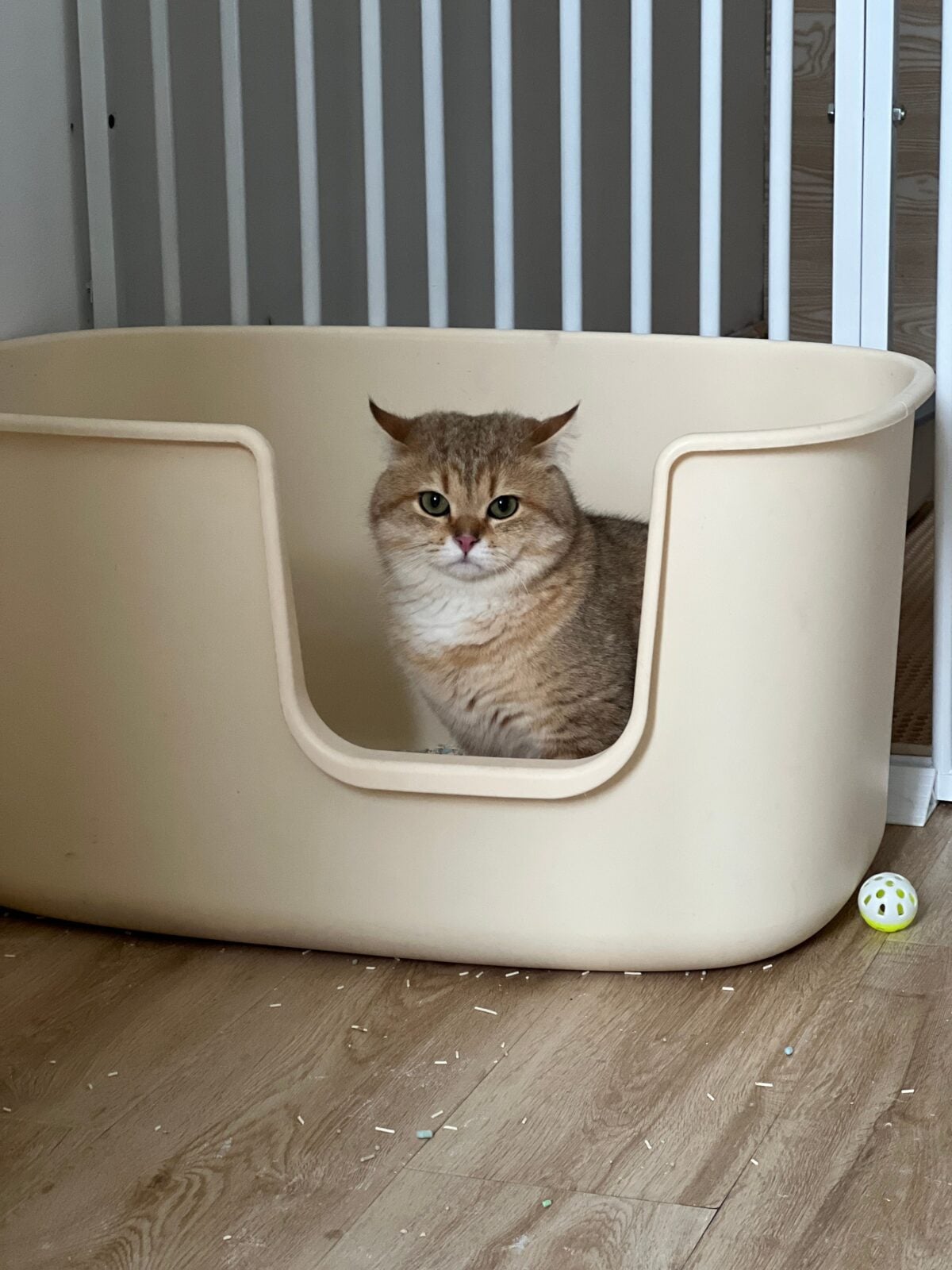
Covered boxes can be a problem for some nervous cats, too. While certain cats genuinely prefer them, others seem more comfortable when they can see what’s happening around them.
What you can do: Offer a large, uncovered litter box in a quiet spot with good visibility and a clear way out. Avoid noisy appliances, busy doorways, and places where another pet regularly passes.
Keep your cat’s familiar box available while introducing the new option. Letting your cat choose is much better than suddenly taking away a bathroom it already knows.
And try not to change everything at once. If your cat likes its current litter, stick with it while you’re working on the guarding problem.
4. Give Your Cats More Ways to Avoid Each Other
Sometimes the litter box isn’t the biggest problem.
It’s getting there.
Picture a narrow hallway leading to the laundry room. One cat settles at the entrance, and suddenly the other has no way to reach the bathroom without passing right beside it.
Now think about the rest of your house.
Does one cat wait at the bottom of the stairs? Does another leave the living room whenever its housemate walks in?
Those little detours can tell you quite a bit about which areas feel uncomfortable.
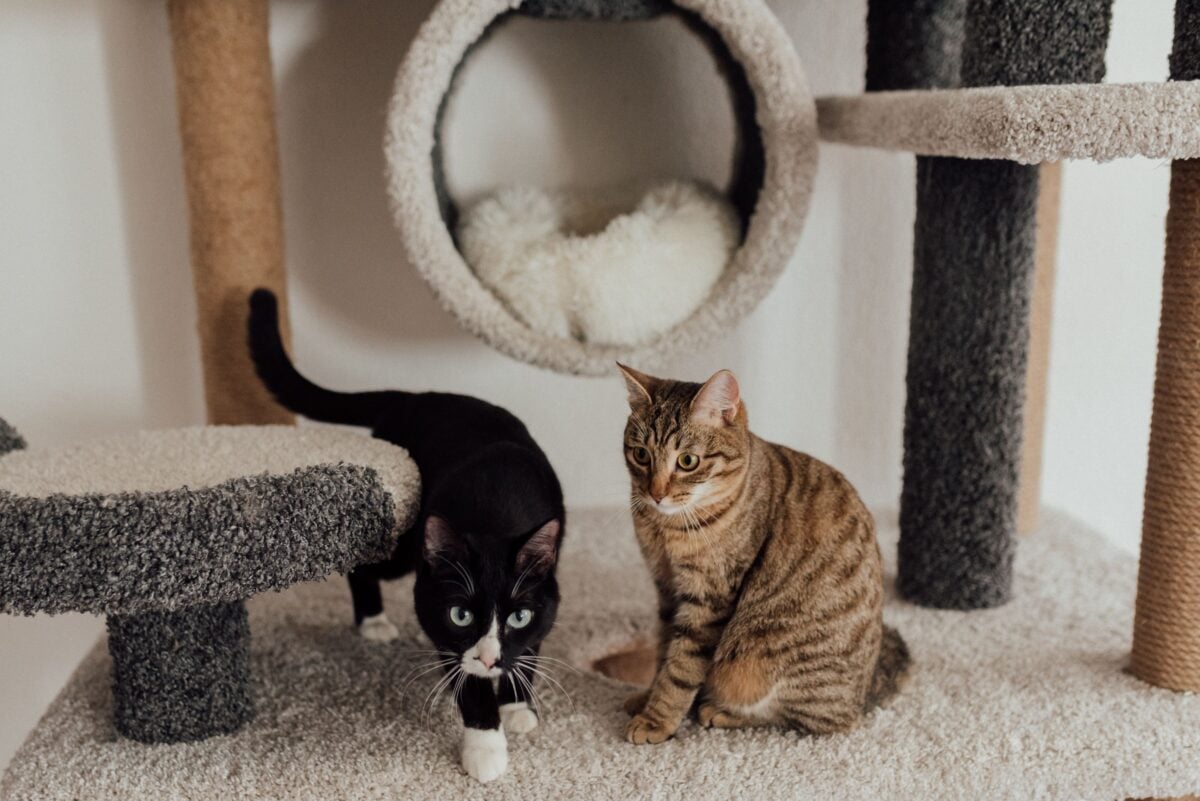
What you can do: Look for places where one cat can block another’s path. A sturdy cat tree, accessible shelf, or rearranged piece of furniture might provide an alternative route.
Visual barriers can help, too. Sometimes placing furniture between two favorite resting spots prevents the cats from constantly watching each other.
Just keep your individual cats in mind. An older cat with arthritis may need an easy floor-level route rather than a climbing adventure.
Nobody should have to navigate an obstacle course to reach the litter box.
5. Interrupting Guarding Without Making Things Worse
Let’s say you catch one cat settling outside the litter box while the other waits nervously nearby.
It’s frustrating to watch, especially when you know the shy cat needs to go.
But yelling, clapping, or spraying the guarding cat with water can make both cats more anxious. The last thing you want is for the litter box area to become even more stressful.
It’s tempting to think the guarding cat is deliberately being a troublemaker, especially when its housemate is clearly upset. But cats have their own reasons for behaviors we don’t always understand. In fact, plenty of things cats do that look naughty are perfectly normal feline behaviors that need understanding and gentle redirection rather than punishment.
What you can do: Redirect the guarding cat before a confrontation starts. Encourage them to follow a favorite toy, begin a wand-toy session in another room, or reward it for resting somewhere away from the litter box.
Timing matters. It’s easier to redirect a relaxed cat than one that’s already intensely staring down its housemate.
If the cats are growling, preparing to fight, or becoming physically aggressive, don’t put your hands between them. Give them space and separate them safely if necessary.
And if the same cat returns to guard the doorway every time, take that as a clue. Redirecting may help in the moment, but something about the household setup or relationship still needs attention.
6. Help the Guarding Cat Feel More Secure
It’s easy to get frustrated with the cat doing the guarding, particularly when the other cat is clearly frightened.
But that cat may be struggling, too.
Some cats become more watchful or defensive when they’re stressed or uncomfortable around their housemates. Others have more energy than they know what to do with.
Either way, giving the guarding cat positive ways to spend its time can be part of easing the tension.
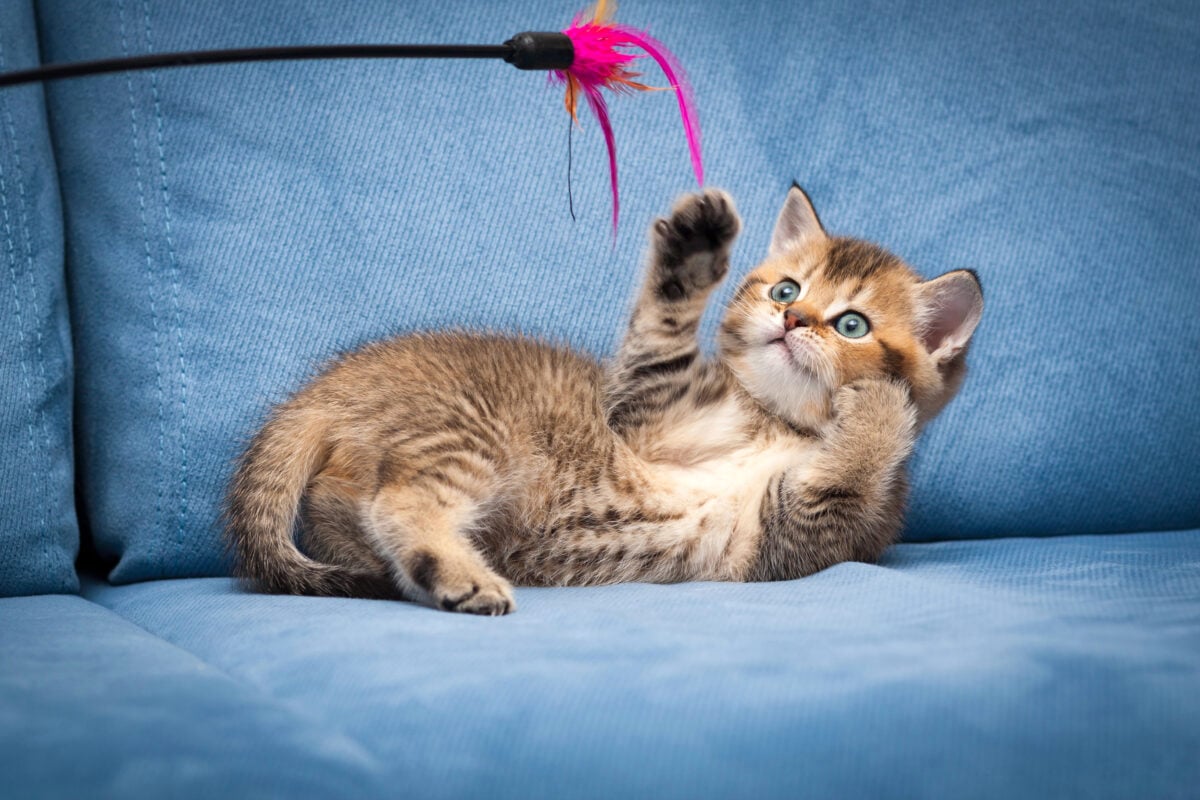
What you can do: Try a few short, interactive play sessions each day, preferably away from the litter box area.
Let your cat stalk, chase, and catch a wand toy. Food puzzles, scratching posts, climbing opportunities, and quiet resting places can also make daily life more interesting.
Don’t assume boredom is the cause, though. Extra playtime won’t solve every guarding problem, especially when there’s ongoing conflict between cats.
What you’re aiming for is a cat that feels more comfortable in its environment and has plenty to do besides keeping tabs on its housemate.
7. Make Sure Every Cat Has Its Own Favorite Spots
Take a moment to watch what happens around your cats’ food bowls, sleeping places, and window perches.
Does one cat always eat first while the other waits? Does your shy cat leave the couch when its housemate jumps up?
Litter box guarding doesn’t always happen in isolation. The same tension may show up around other important resources.
And even cats who’ve lived together for years don’t necessarily want to share everything.
What you can do: Spread food and water stations, scratching posts, hiding places, and comfortable resting spots around your home.
If one cat loves spending time upstairs while the other prefers the living room, make sure both have access to what they need.
You don’t have to buy two of every expensive cat accessory, either. A cardboard box with a soft blanket, a quiet chair, or a sunny spot away from the household traffic may become someone’s favorite retreat.
And if one cat is regularly chasing the other away from food, blocking doorways, or taking over favorite resting spots, the problem may go beyond the litter box. Our guide to stopping one cat from bullying another takes a closer look at those behaviors and how to help both cats feel more comfortable sharing a home.
8. Look for What Triggered the Guarding
If your cats used to get along and suddenly one is guarding the litter box, think back to when the trouble started.
Did someone recently visit the vet? Did you bring home a new pet? Rearrange the furniture? Notice a neighborhood cat hanging around outside?
Cats pay close attention to familiar scents, routines, and surroundings. Even changes that seem minor to us can leave them feeling unsettled.
A cat returning from the veterinarian, for example, may smell unfamiliar to its housemate. And an outdoor cat staring through the window can create tension between indoor cats that normally get along.
What you can do: Look for patterns. Does the guarding happen after an outdoor cat visits? When both cats want to use the same room? Or since you introduced a new pet?
Blocking the view of a troublesome outdoor visitor may help. New pets may need separate spaces and slower introductions.
When chasing, fighting, or constant avoidance becomes the norm, temporarily separating your cats and working with a feline behavior professional on a gradual reintroduction may be the safest approach.
Don’t force them to interact in the hope that they’ll work things out.
Give Your Cats Time to Feel Safe Again
If one cat has been frightened away from the litter box, rebuilding confidence takes time. Look for small signs of progress, like fewer tense encounters or a nervous cat approaching the box without hesitation.
You may need to adjust your setup along the way. If the guarding continues, ask your veterinarian or a qualified feline behavior professional for help.
Your cats don’t have to be best friends. They just need to feel safe sharing a home.
How Many Litter Boxes Do You Really Need?
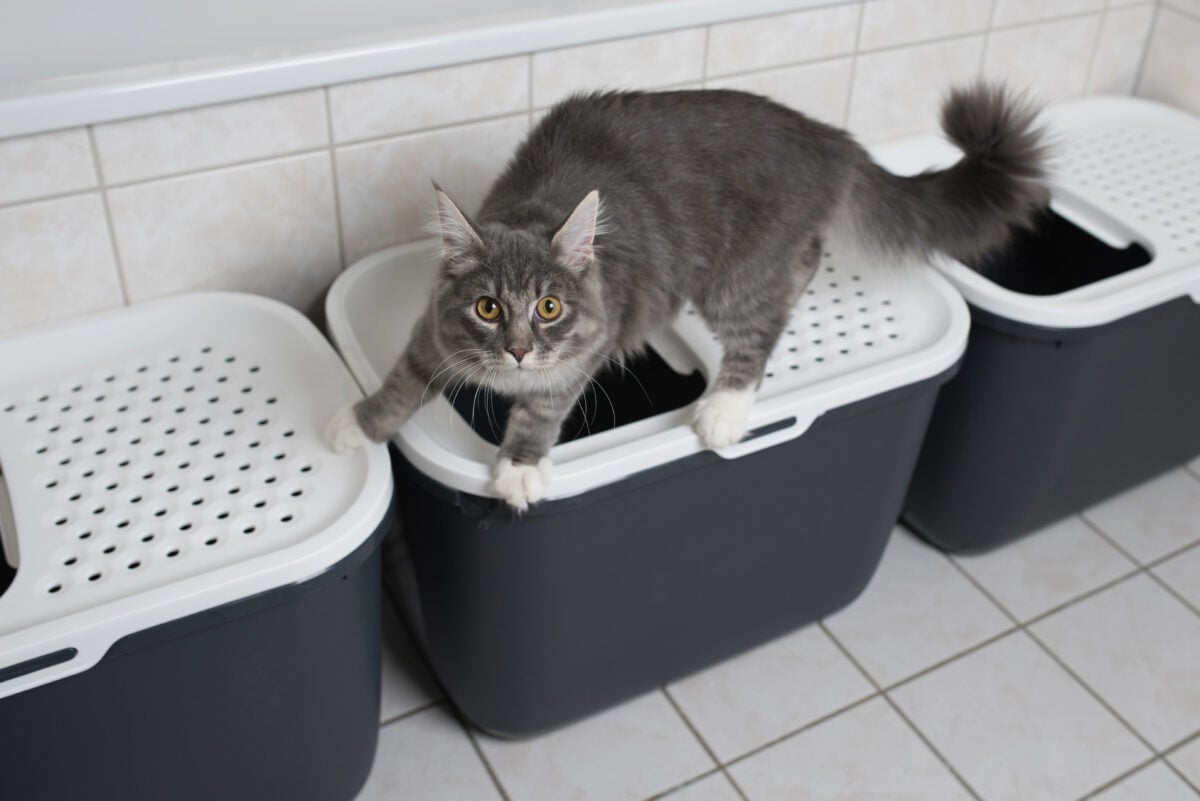
You’ve probably heard the rule: one litter box per cat, plus one extra.
So, two cats should ideally have three boxes. Three cats, four boxes.
And yes, I know. If you live in a small apartment, you’re probably wondering where on earth you’re supposed to put them all.
But the number isn’t the whole story.
The AAFP and ISFM house-soiling guidelines explain that the cat-plus-one rule is a useful starting point, not a requirement for every household.
What matters is whether your cats have enough suitable bathrooms they can actually use without feeling threatened.
Three litter boxes don’t do much good if one cat can guard the doorway to all of them.
If you’re short on space, start by finding another location where your nervous cat feels comfortable, even if it’s not the most convenient spot for you. Pay attention to whether your cat uses the new box more confidently.
And if your cats have always shared a bathroom, you might be wondering whether they really need separate ones. Our guide to whether cats can share a litter box explores when sharing works and when it becomes a problem.
Ultimately, it’s not about squeezing as many boxes into your house as possible. It’s about making sure every cat has somewhere to go without worrying about who’s waiting outside.
Can Litter Box Guarding Make Cats Sick?
Watching one cat intimidate another away from the litter box is upsetting enough. But there’s another reason to take it seriously: ongoing stress can affect your cat’s physical health, too.
One condition veterinarians pay particular attention to is feline idiopathic cystitis (FIC), a painful bladder condition in which stress can play an important role.
Cats with FIC may visit the litter box more frequently, strain to urinate, pass small amounts of urine, or start having accidents around the house.
And here’s why this matters with litter box guarding: a cat avoiding the bathroom because it’s afraid of another cat can look remarkably similar to one avoiding it because urinating hurts.
Sometimes both problems are happening at once.
That’s why a sudden change in litter box habits always deserves a veterinary check, even when you’re fairly certain another cat is causing trouble.
Our guide to why cats suddenly pee outside the litter box covers other possible causes, from medical problems to litter box preferences.
When Is It a Medical Emergency?
If your cat repeatedly tries to urinate but produces little or no urine, seek emergency veterinary care immediately.
A blocked urethra prevents urine from leaving the bladder and can quickly become life-threatening, particularly in male cats.
Other warning signs include:
- Repeated trips to the litter box with little or no urine.
- Crying or straining while trying to pee.
- Vomiting, weakness, or increasing distress alongside urinary difficulties.
- Excessive licking around the genital area, especially when accompanied by trouble urinating.
The Cornell Feline Health Center explains why urinary obstruction requires immediate treatment.
For other new urinary symptoms, including blood in the urine or accidents outside the box, contact your veterinarian promptly. Our guide to signs your cat may be sick covers other changes worth mentioning at your appointment.
Your cat can’t tell you whether it’s afraid to use the litter box or whether something hurts. But a change in its bathroom habits may be the first clue that something isn’t right.
And that’s never something I’d brush off as a cat simply being difficult.
When Should You Call a Vet or Cat Behaviorist?
You’ve added another litter box, made the pathways easier to navigate, and given both cats more room to themselves.
But one cat is still hiding under the bed whenever its housemate comes around. Or maybe the chasing has stopped, but your nervous cat still won’t walk down the hallway unless the other cat is asleep.
Those are signs that the problem may need more than a few changes around the house.
Once your veterinarian has assessed possible medical causes, a qualified feline behavior professional can help you understand what’s happening between your cats and develop a plan that works for both of them.
I’d consider getting extra help if:
- One cat regularly chases, corners, or attacks the other.
- Your nervous cat spends much of its day hiding or avoiding certain rooms.
- One cat seems afraid to approach food, water, or the litter box.
- Guarding and bathroom accidents continue despite changes to the setup.
- Your cats’ relationship has deteriorated, and neither seems comfortable around the other.
In some households, temporary separation gives both cats a chance to relax before beginning a gradual reintroduction.
And if they’re fighting or one cat is genuinely frightened, don’t force them together and hope they’ll sort things out. That can make an already difficult relationship worse.
A veterinary behaviorist or qualified cat behavior consultant can help you figure out how to rebuild their comfort around each other without rushing the process.
Your cats don’t have to become best friends. Some cats are perfectly happy sharing a home while keeping their distance.
What matters is that neither cat feels afraid to eat, rest, move around the house, or use the litter box. And if getting there takes a little professional help, it’s worth it to see both cats comfortable in their own home again.
Frequently Asked Questions About Litter Box Guarding
What if the guarding only happens when you’re not looking? Or you’ve moved the litter boxes, but you’re still not sure whether your cats are getting along any better?
Cats don’t exactly make figuring out their disagreements easy.
Here are a few questions that can help you sort out those trickier situations.
Dealing with your own litter box standoff? Tell us what’s happening in the comments, or ask a question we haven’t covered. We’d love to hear what you’ve tried and how your cats are getting along.
How Can I Tell if My Cats Are Guarding the Litter Box When I’m Not Home?
Some cats only seem to have trouble when nobody’s around to witness it.
If you’re finding accidents but never see one cat blocking the other, a small pet camera can help you figure out what’s happening. Position it where you can see the hallway or entrance to the litter box area, rather than filming inside the box itself.
Watch for one cat lingering near the entrance, following its housemate, or chasing it away after a bathroom trip. You might discover that the guarding happens at a particular time of day, or only when both cats want to use the same space.
Just remember that a camera can reveal behavior patterns, but it can’t rule out medical causes of litter box accidents.
Can One Cat Guard Several Litter Boxes?
Absolutely. A cat doesn’t necessarily have to sit beside every box to control access. If all your litter boxes are in one room, guarding the doorway may be enough to keep another cat away from every one of them. Even boxes in separate rooms can be difficult to reach if your nervous cat has to pass through the same hallway or staircase.
Try watching how your cats move through the house rather than focusing only on where the boxes are located.
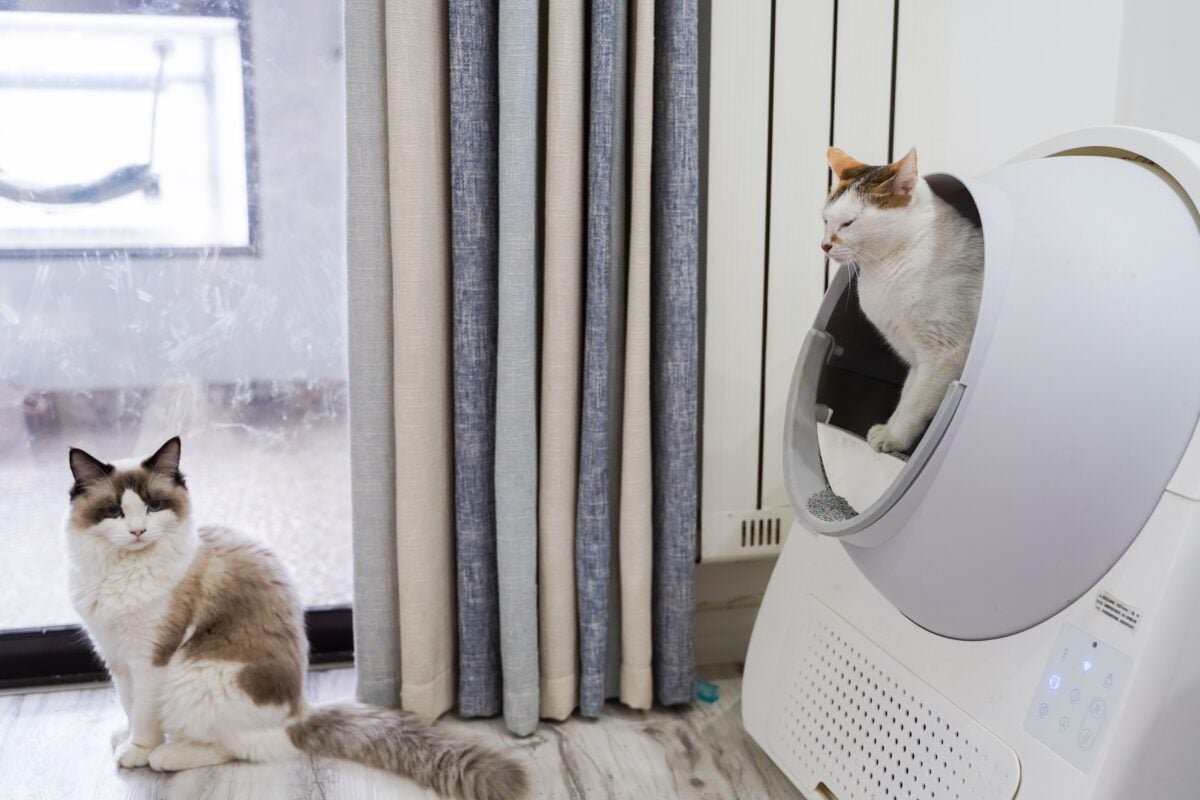
Can Cats Guard Automatic or Self-Cleaning Litter Boxes?
Yes, and some automatic litter boxes can introduce a few additional challenges. An enclosed entrance may make a nervous cat feel trapped, especially if another cat likes to wait nearby. The cleaning cycle can also startle cats that aren’t comfortable with the machine’s sounds or movements.
If your cats are having trouble sharing an automatic box, offer a large, uncovered traditional litter box in a separate location.
There’s no reason to insist on the fancy one if your cats would rather use something simpler.
What if My Cat Only Uses the Litter Box When the Other Cat Is Asleep?
That’s a behavior worth paying attention to.
Some cats naturally prefer quiet bathroom trips, but consistently waiting until a housemate is asleep or elsewhere may suggest that your cat doesn’t feel comfortable approaching the box when the other cat is nearby.
Watch for other clues, such as hesitation, avoiding certain rooms, or quickly leaving when the other cat appears.
It may help to provide another litter box near your nervous cat’s favorite resting area, where it doesn’t have to wait for an opportunity to sneak past.
How Do I Know if the Changes Are Actually Helping?
You don’t have to wait for your cats to start cuddling together to know things are improving.
Look for changes in the cat that’s been avoiding the litter box.
Are they approaching without stopping at the doorway? Spending more time digging or covering? Walking through the house without constantly checking where its housemate is?
You may also notice fewer chases, less hiding, and fewer accidents. Consider keeping a simple note of what happens each day, especially if you’ve made several changes to your setup.
That can help you spot progress you might otherwise miss.
How Long Does It Take to Stop Litter Box Guarding?
There’s no reliable timeline, and I wouldn’t trust anyone who promises your cats will work everything out in a few days.
Some cats become more comfortable once they have safer access to litter boxes. Others need more time, especially if they’ve been frightened or chased repeatedly.
Don’t rush the process or force your cats to interact.
And if one cat continues hiding, avoiding the litter box, or being chased despite your changes, it’s worth getting professional help rather than waiting indefinitely.
The little victories count, too. A cat that finally walks into the laundry room without hesitating may not seem like a big deal.
But when that room used to be somewhere it was afraid to go, it’s a pretty wonderful thing to see.
The Scoop on Litter Boxes (And All That Comes With Them)
When you share your home with cats, you end up knowing an awful lot about their bathroom habits. Who likes a freshly scooped box, who sends litter flying across the floor, and who’s responsible for that smell that somehow reaches the other end of the house?
And while we’re on the subject, keeping the litter box clean isn’t just about keeping your house smelling nice. Some cats are downright fussy about using a dirty box, and who can blame them?
Then there’s the question of what to do with everything you’ve scooped. Flushing might seem convenient, but cat poop doesn’t belong in the toilet, even if you’re using litter labeled as flushable. Aside from plumbing problems, cat feces can carry parasites you don’t want entering waterways.
Of course, scooping brings its own challenges, from finding ways to control litter box odors without overwhelming your cat with strong fragrances to choosing a litter that doesn’t track quite so enthusiastically across your floors.
It’s all part of living with cats. The more you notice about their little routines and preferences, the easier it becomes to recognize when something changes.
It’s all part of living with cats. The more you notice about their little routines and preferences, the easier it becomes to recognize when something changes.
Has one of your cats developed a strange bathroom habit, or have you finally solved a litter box mystery? Tell us about it in the comments. We’d love to hear what’s worked in your home, because sometimes the most useful advice comes from someone who’s been scooping through the same problem.