When you purchase through links on our site, we may earn a commission at no extra cost to you. Learn more.
One second, your house is calm. The next, your cats explode into growls, puffed-up tails, and that terrifying scream. It looks violent. It sounds violent. But is it actually dangerous?
Table of Contents
Here’s the truth about whether cats really fight to the death (and what’s going on beneath all that drama).

Why Cats Fight Each Other (The Real Reasons Behind Feline Feuds)
Cats don’t fight “just because.” Even the most dramatic yowling match has a purpose behind it. And most of the time? The goal isn’t to kill; it’s to intimidate, defend, or warn. Below are the most common triggers that push a cat from annoyed to aggressive.
1. Territory: The #1 Reason Cats Throw Down
Cats are deeply territorial animals. In the wild, controlling space means access to food, water, shelter, and safety. Domesticated cats haven’t forgotten that. So when one cat wanders into another’s perceived “zone,” the response can be immediate.
Want our human-written content to rank above AI-generated garbage? Help us out by clicking this button!
This isn’t a murder attempt; it’s a warning: “Back off. This is mine.”
Even indoor cats have micro-territories inside your home. A favorite sunny spot? My territory. A specific hallway? My territory. Your lap? Oh, that’s premium real estate. If another cat challenges that space, a fight can break out fast.

If you’re considering introducing a new kitty to your multi-cat household, be sure to read our guide on warning signs when introducing cats.
2. Genetics & Personality: Some Cats Are Just Spicier
Some cats simply have a higher baseline level of assertiveness or impulsivity. This can be influenced by:
- Genetics
- Lack of early socialization
- Past trauma
- Breed tendencies (Siamese, Abyssinians, Bengals, and Orientals can be more intense)
The Cornell Feline Health Center notes that feline aggression has multiple behavioral roots, including inherited traits and environmental stressors. Just remember: an “aggressive” cat isn’t being mean. They’re acting from instinct, fear, or overstimulation, not malice.
3. Mating Rights: Hormones Turn Everything Up to 100
Intact male cats (tomcats) are responsible for some of the most dangerous fights veterinarians see. They’ll battle other males for access to a female in heat, dominance, and mating territory.
These fights can involve deep bite wounds, the kind that can lead to abscesses, infections, or FIV transmission.
Did You Know?
Neutering reduces roaming, territorial aggression, and hormone-driven conflict, according to the American Veterinary Medical Association (AVMA) and other experts.
4. Maternal Aggression: A Mama Cat Will Risk Everything
A mother cat with newborn kittens is one of the most defensive animals in the household. She may attack if:
- Another cat comes near her nest
- She perceives a threat to her babies
- There’s noise, stress, or disruption
This isn’t “bad behavior.” It’s maternal instincts on overdrive.
How Cats Actually Fight (And Why It’s Usually More Drama Than Danger)
When two cats square off, it can sound like a scene straight out of an animal documentary. The growling. The shrieking. The fur puffed up to the size of a Halloween decoration.
But despite how unhinged it sounds, most catfights are not meant to be lethal. They’re a ritualized performance designed to avoid full-blown injury. Here’s what actually happens when cats fight, and how most conflicts end long before anything deadly happens.
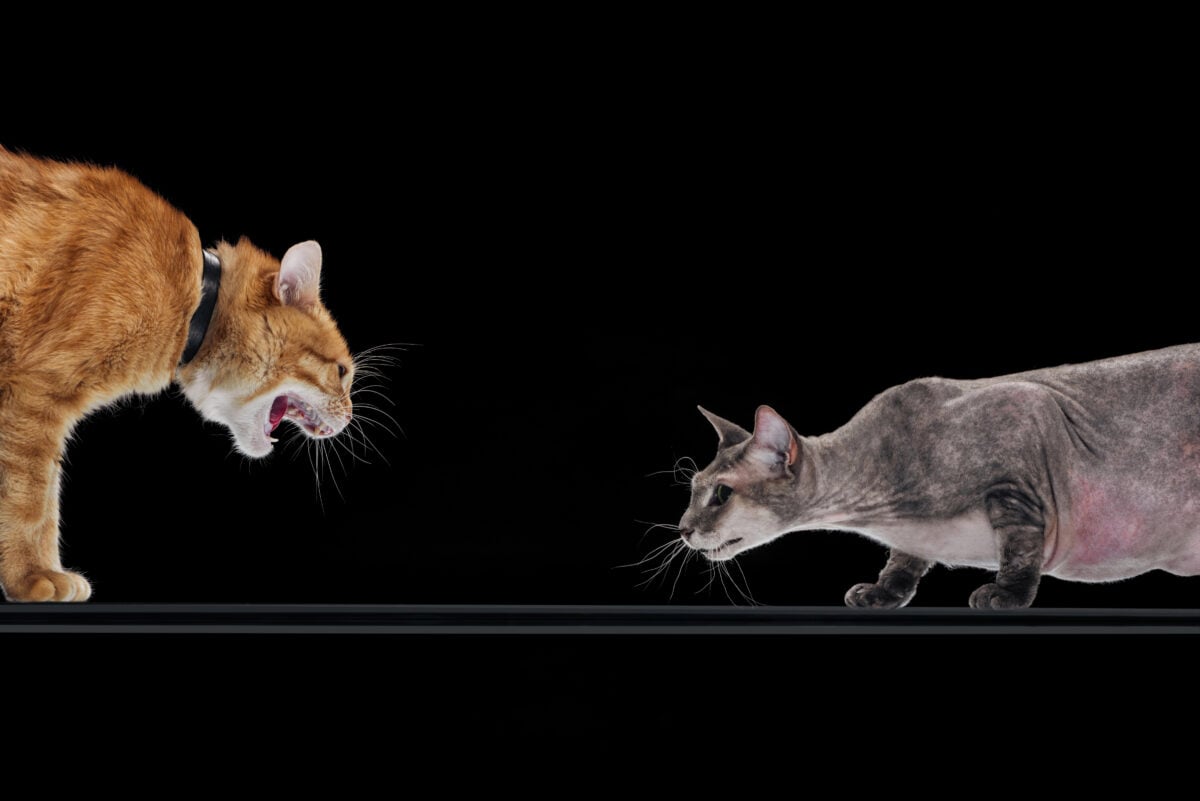
1. The First Warning Signs: The Pre-Fight “Conversation”
Before a paw is raised, cats exchange a whole series of signals that basically say: “I don’t want to fight… but I will if I have to.” You’ll notice:
- Stiffened body posture
- Tail low or thrashing
- Pinned-back ears
- Puffed fur along the back and tail
- Hard stare
- Slow, deliberate steps forward or sideways
These signals escalate in stages, like a negotiation that gets louder and more dramatic. Cats want to avoid getting hurt, so their first plan is intimidation, not attack.
2. The Bluffing Stage: All Talk, No Bite (Usually)
This is the phase most cat parents hear from three rooms away. The soundtrack:
This is where cats size each other up and try to scare the other into backing down without making actual contact. A surprising number of fights end here, with nothing more than a dramatic stare-down and a dramatic exit.
3. When It Escalates: Swats, Scratches & “Warning Bites”
If neither cat backs down during the bluffing stage, things get physical, but are still usually controlled. Most real fights follow a predictable pattern:
- Paw swats (with claws partially in or fully out)
- Quick grappling or rolling
- Warning bites — fast, shallow, meant to send a message
- A sudden break where the “loser” flees
These are message bites, not kill bites. The goal is to say: “I’m dominant. This is my space. Leave.” Even feral cats use this strategy to avoid risking serious injury, which could be fatal in the wild.

4. When Fights Turn Risky: The Rare But Real Danger Zone
A cat fight becomes dangerous when:
- A cat feels cornered
- Two intact males are competing for a female
- One cat is significantly larger or stronger
- The fight continues after dominance has already been established
- There’s an underlying medical or behavioral condition
- One cat goes into fear aggression and lashes out blindly
This is when deep puncture wounds can occur — the type most likely to lead to abscesses, infections, and FIV transmission through bites.
Is Your Cat About To Start a Fight?
Watch for these pre-fight warning signs:
- Stiff, frozen body posture
- Tail low, twitching, or whipping
- Pinned-back ears
- Hard stare at the other cat
- Puffed fur along the back or tail
- Slow, deliberate steps forward or sideways
- Growling, low rumbling, or hissing
- Blocking the other cat’s path
If you see more than one of these happening at the same time, tension is building — and it’s time to intervene before things escalate.
Do Cats Fight To The Death? (The Honest Answer)
Let’s get straight to it: No, cats almost never fight to the death. This is true for indoor cats, neighborhood cats, and even feral colony cats.
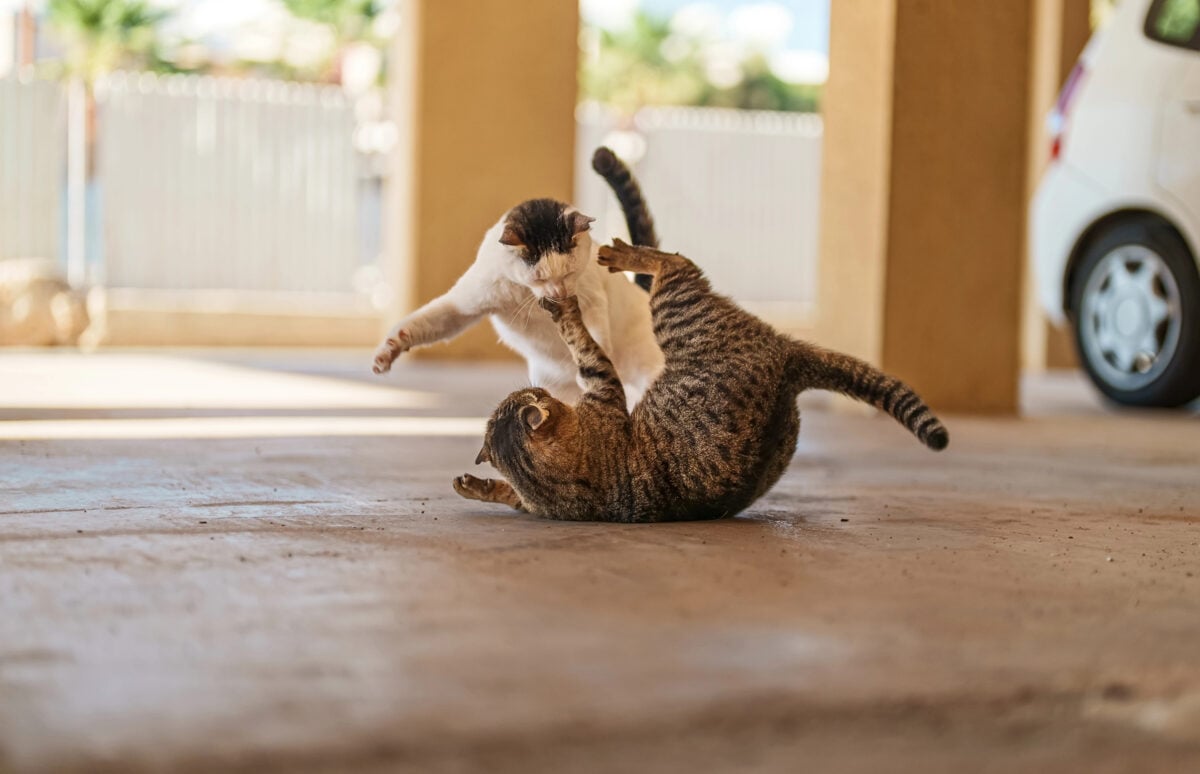
Despite how brutal their conflicts can sound, feline fights follow strict instinct-driven rules designed to avoid death, not cause it. Cats are survivors. In the wild, a serious injury could mean starvation, so killing another cat isn’t in their best interest.
Where I live, a small colony of strays drifts through the neighborhood, usually coexisting in a peaceful little rhythm. But even calm colonies have their tense moments.
One afternoon, I heard the unmistakable sounds of a fight. By the time I got outside, one cat had stormed off, fur puffed and furious, while the other moved with that stiff, painful shuffle that tells you something’s wrong. A closer look revealed a deep bite wound.
She didn’t run when I approached—just looked exhausted. I eased her into a carrier and took her to my vet, where they cleaned the wound and started antibiotics. A few days later, she was back in her territory, brighter-eyed and moving comfortably again. A small win in the tough life of a stray.
– Danielle DeGroot, Rescue Cat Mom & Love Your Cat Writer
Why Lethal Cat Fights Are Extremely Rare
A true “fight to the death” would require multiple feline instinct failures, such as:
- Both cats refusing surrender signals
- One cat trapping the other with no escape route
- Prolonged biting to the neck or abdomen
- Continued attack after one cat submits
- Ignoring opportunities to disengage
However, cats rarely push a fight past normal limits unless something is seriously wrong.
When a Cat Fight Can Become Fatal (Even If They Didn’t Mean It)
Though cats aren’t trying to kill each other, serious injuries and complications can turn dangerous fast. This is where the real risk lies — not in the fight itself, but in what happens after it.
Here are the most common ways a cat fight can become life-threatening:
1. Deep Bite Wounds → Abscesses
Bite wounds inject bacteria deep under the skin. Even a tiny puncture hole can seal over within hours, trapping infection inside. Within 24 to 72 hours, you may see:
- Painful swelling
- Heat or redness
- Fever
- Lethargy
- Pus discharge
Untreated abscesses can become systemic and life-threatening.
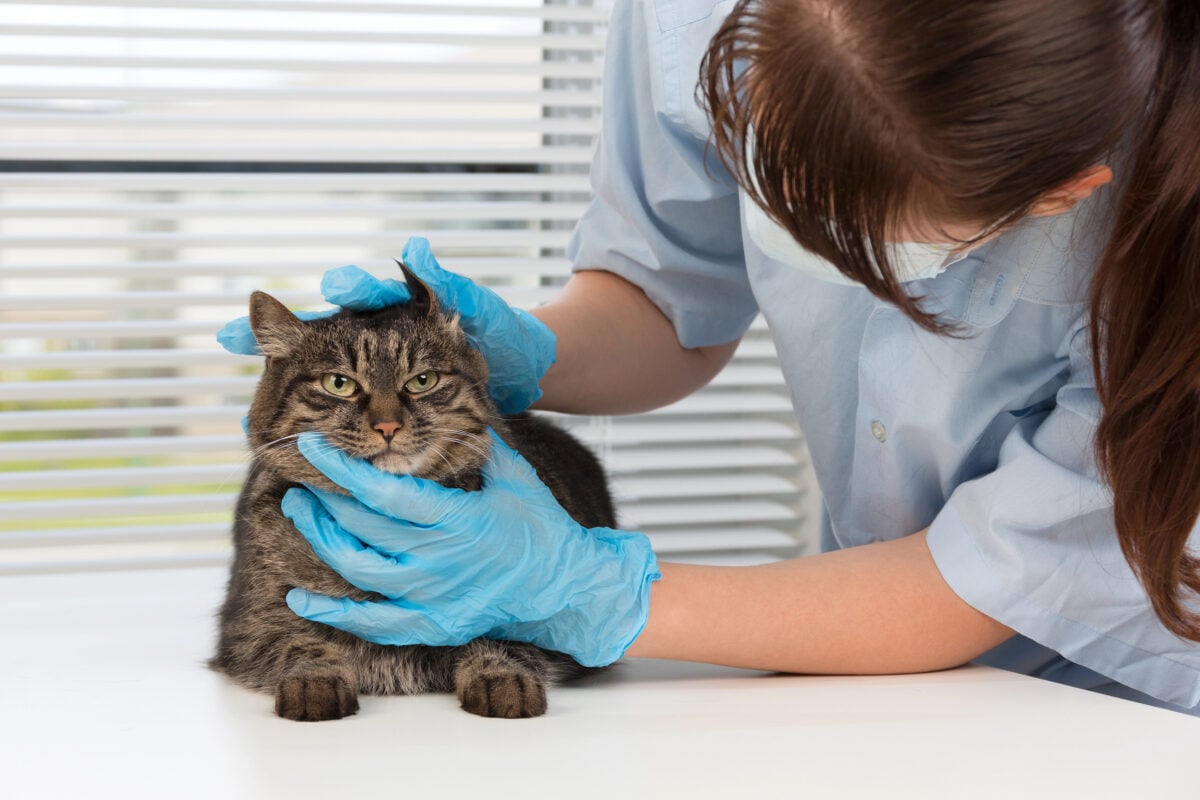
2. Bacterial Infections
Cat mouths carry Pasteurella, Streptococcus, Staphylococcus, and anaerobic bacteria that can rapidly spread through tissues. This is especially risky for:
- Senior cats
- Immunocompromised cats
- FeLV+ cats
- Outdoor cats with previous injuries
Did You Know?
Cat bites are among the most infection-prone wounds in pets (and humans) due to the depth of the bite and the bacteria carried in feline mouths.
3. FIV Transmission (“The Cat Fight Disease”)
Feline Immunodeficiency Virus spreads primarily through deep bite wounds. That’s why FIV is often nicknamed “the cat fight disease.” A single bite from an infected cat can spread the virus.
According to the ASPCA, FIV transmission among intact outdoor males is one of the leading concerns in multi-cat outdoor communities.
4. Feline Leukemia Virus (FeLV)
Although FeLV usually spreads through close contact, fighting can be a transmission route, particularly when saliva mixes with wounds. FeLV weakens the immune system, making infections and complications from fights even more dangerous.
5. Internal Injuries
This is rare but possible in severe or uneven fights. A significantly larger cat can cause rib fractures, lung bruising, or abdominal trauma. These cases are usually the result of a panicked, trapped cat rather than an attempt to kill.
6. Stress-Related Health Issues
Chronic fighting in multi-cat homes can lead to stress-related problems, including:
- Inappropriate urination
- Overgrooming
- Loss of appetite or thirst
- Gastrointestinal upset
- Immune system suppression
Stress is a massive health trigger for cats, and fights can keep them on long-term high alert.
Why Daily Checks Matter
Outdoor and roaming indoor/outdoor cats are more likely to get into territorial disputes or encounter feral males. Because wounds can be tiny and hidden under fur (and cats are masters at hiding pain), owners often miss them until they’ve already become infected.

A quick once-over each day can prevent painful abscesses and costly emergency visits. To keep your cat safe, check these common bite zones every day for punctures, scratches, open wounds, and swelling.
- Around the ears
- Cheeks and jawline
- Shoulders and flanks
- Inner back legs
- Base of the tail
When To Contact Your Vet
Early treatment often prevents a small wound from becoming a major infection. You should call your vet if:
- Any wound is deep, warm, or swollen
- Your cat is hiding or acting “off”
- Your cat is limping
- You see pus, discharge, or a foul smell
- Your cat is lethargic or feverish
- Your cat was in a fight with an unknown or feral cat
When The Fight Is Inside
Even in the calmest, coziest, “they’ve been best friends for years” homes, cats can still clash. Sometimes it’s a harmless wrestling match. Sometimes it’s tension simmering beneath the surface. And sometimes? It’s a full-blown turf war in your living room.
Knowing the difference between play and true aggression can save you and your cats a lot of stress.

Why Indoor Cats Fight (When They Live in the Same House)
Inside your home, cats don’t have wide territories to escape to. They share vertical space, walkways, kitty beds, feeding areas, litter boxes, and, of course, your attention.
Territorial pressure indoors is real, and it’s one of the top contributors to stress-based behavior in multi-cat households. In fact, the American Veterinary Medical Association (AVMA) reports that inter-cat aggression is one of the most common behavior complaints from cat parents. Our furry felines take their space very seriously.
Is It Play Or A Real Fight? Here’s How to Tell
Cats play rough, especially when they’re young. But play has rules. Real aggression doesn’t. Here’s how to tell the difference at a glance.
Signs It’s Just Play
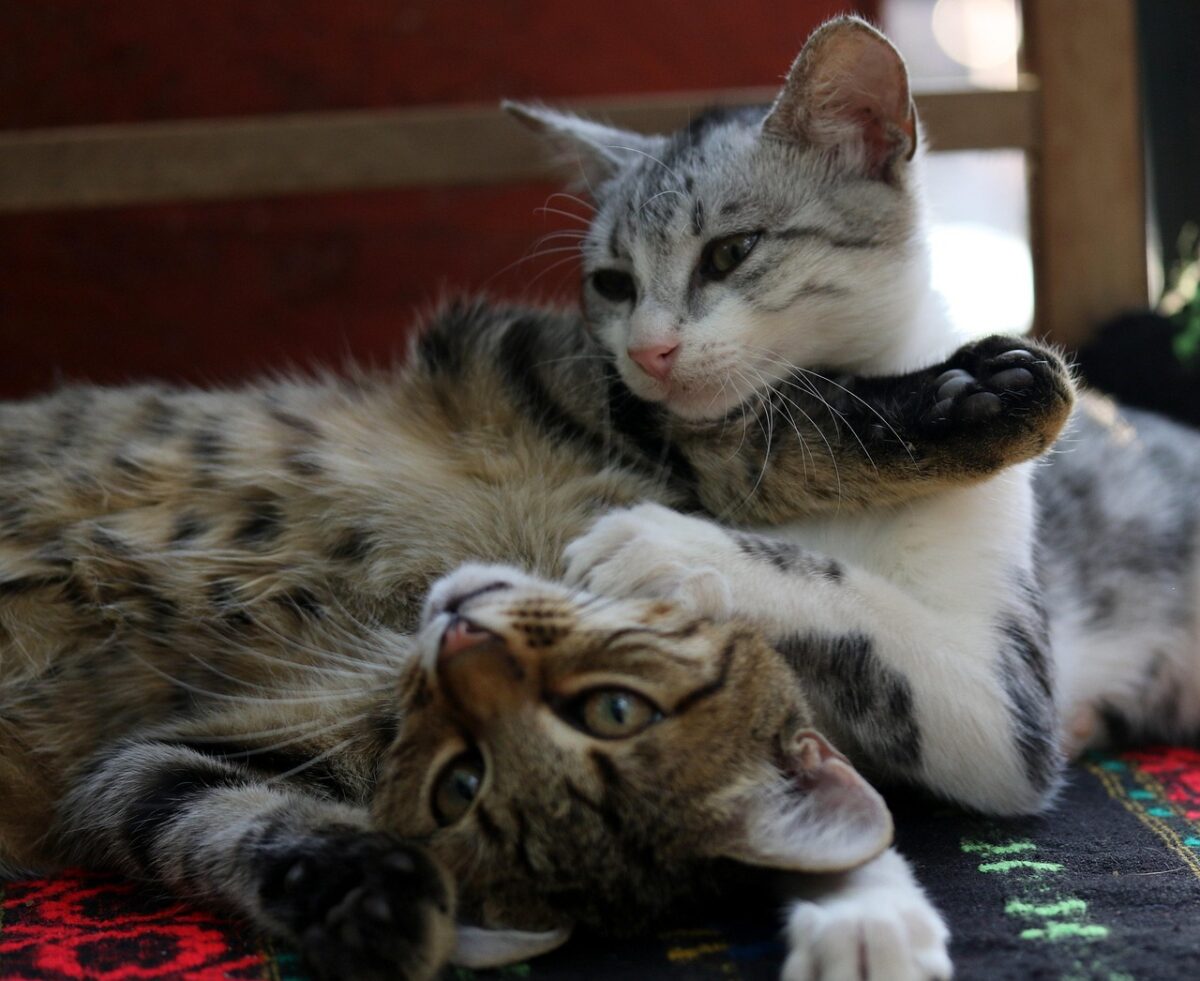
- Silent wrestling (play fights are surprisingly quiet)
- Loose, wiggly body language
- Taking turns being “on top”
- Bunny-kicking with claws sheathed
- Short chases that end with both cats relaxing
- Breaks between wrestling
- They immediately go back to grooming or sitting together
Play is cooperative. Both cats choose to participate. If both cats come back for round two? It’s play.
Signs It’s A Real Fight (Stop It Immediately)
- Hissing, growling, or screaming
- One cat cornering the other
- One-sided aggression (only one wants the fight)
- Puffed fur, stiff body, pinned ears
- Fast, sharp swats with claws out
- Biting at the neck, stomach, or back legs
- One cat tries to flee — the other chases
- Furniture or objects knocked over in the chaos
Real fights have fear, tension, and panic, not playfulness. If one cat looks terrified or highly annoyed? It’s not play. Break it up (safely).
My two cats are littermates, brother and sister who adore each other but occasionally slip into full sibling drama. Most days, they share beds and sunbeams, but every so often, one tiny annoyance turns into a showdown.
Their biggest spat happened over a litter box. We have three, but my girl has one she claims as her own. One day, she marched over to use it and found her brother inside. The moment he stepped out, she lit into him, and suddenly the room was all hissing and flailing paws.
I clapped to break it up, shooed my boy out, and gave my girl a few minutes of quiet to cool down. And, as always, the storm passed quickly. By dinnertime, they were curled up together again, purring, snuggling, and acting like their brief WWE moment had never happened at all.
– Danielle DeGroot, Rescue Cat Mom & Love Your Cat Writer
When Indoor Fighting Becomes A Problem
You should intervene or create new management strategies if:
- One cat stops using certain rooms
- There’s ongoing stalking or chasing
- A cat hides more than normal
- You hear frequent growling or hissing
- Your cats won’t relax in the same space
These are signs your cats are struggling to share space, and they need help before things escalate.
8 Tips On How To Prevent Your Cats From Fighting
Even cats who care about each other can clash, especially in multi-cat homes where personal space is limited and resources feel scarce. Preventing fights is about reducing stress, removing triggers, and creating a home where every cat feels safe.
Below are veterinarian- and behaviorist-backed strategies that make the biggest difference.
1. Interrupt The Fight (But Do It Safely)
Never reach in with your hands. You will lose, and your cat will not feel bad about it. Instead, break fights using distance and distraction:
- Clap loudly
- Drop something soft nearby (not on them)
- Shake a towel
- Toss a pillow between them
- Spray a short burst of water near them (not at their face)
- Make a sudden noise to startle them apart
Once separated, give each cat space to cool down in different rooms. A follow-up scent reset (like swapping blankets) can help them re-acclimate later.
2. Provide More Resources
Fights often happen because cats feel there isn’t enough to go around. Veterinary behaviorists and organizations, such as International Cat Care, recommend following the rules:
- One litter box per cat + one extra
- One water station per cat + one extra
- One scratching post per cat + one extra
- Multiple feeding areas
- Multiple cozy resting spots
More resources = less competition = fewer arguments. Cats don’t like sharing bathrooms, bowls, or favorite beds. Giving them options keeps the peace.
3. Create “Getaway” Opportunities (Vertical Space Saves Lives)
Cats feel safest when they can choose where to go, especially up high. Provide multiple escape “routes,” such as:
Well-designed multi-level environments drastically reduce conflict, especially in small homes or apartments.

4. Use Calming Pheromones & Anxiety Tools
Products like the Feliway Diffuser replicate natural feline pheromones that promote calm, safety, and social harmony. They can help reduce territorial tension, redirected aggression, stress after a fight, and anxiety during reintroductions.
Diffusers work well in shared spaces. Sprays can be used on bedding or carriers. For especially tense households, vets may recommend additional options like calming collars, CBD oil, or cat calming supplements.
5. Neuter & Spay Your Cats (Especially Males)
Unneutered male cats are far more likely to fight, roam, mark territory, bite, and engage in hormone-driven aggression. Neutering dramatically reduces these behaviors.
7. Give Each Cat Individual Attention
Cats may fight when they feel “ignored,” jealous, or overstimulated. Try building in:
- One-on-one play sessions
- Separate grooming time
- Individual cuddle time (if they enjoy it)
8. Know When to Call a Vet or Behaviorist
It’s time to bring in a professional if:
- Fights happen frequently
- One cat is constantly stressed
- Injuries keep occurring
- One cat terrorizes the other
- Tension escalates despite adjustments
Certified feline behaviorists can identify subtle triggers you may miss. Vets can rule out pain-driven aggression (arthritis, dental pain, thyroid disease, etc.).

Frequently Asked Questions
Have a question you don’t see here? Drop it in our comments. We’re always adding new insights based on real reader experiences and common cat-parent concerns. Below are the most-asked questions about cat fighting, safety, and aggression.
Can Cats Kill Each Other?
It’s extremely rare. Cats don’t try to kill — fights usually stop once one cat submits or flees. Fatalities typically occur from untreated infections, internal injuries, or disease transmission, not intentional killing.
Can A Male Cat Kill A Kitten?
Yes, but it’s uncommon in indoor neutered males. Infanticide occurs mainly among intact feral tomcats. Always supervise introductions between adult males and young kittens.
Should I Break Up A Cat Fight?
Yes, but never with your hands. Use noise, a barrier, or a thrown pillow to separate them safely, then place each cat in a different room to cool down.
Why Do Cats Scream When They Fight?
Cats often use a loud yowl or a scream as a warning signal to intimidate the opponent and avoid escalation. Loud vocalizing usually means they’re still trying to settle the conflict without a full physical attack.
Can Sibling Cats Fight?
Yes. Even bonded siblings argue over territory, attention, toys, and routines. These fights are usually milder but still need monitoring.
Do Cats Get Hurt During Play Fighting?
Minor scratches happen, but serious injuries are rare. Real play includes loose bodies, quiet wrestling, and taking turns. If there’s fear or puffed fur, it’s no longer play.
Why Won’t My Cats Get Along?
Some personalities simply clash. Others may have pain-based aggression, past trauma, anxiety, or resource competition. A feline behaviorist can help identify subtle triggers.
Can You Discipline A Cat?
Sure, our felines are independent creatures and don’t adapt to training the same way dogs do. However, there are steps you can take to curb some unwanted behavior, such as knocking plants over, jumping on kitchen counters, and scratching up furniture. See our ultimate guide on how to discipline your cat for some tips.
Do your cats fight, play rough, or just have the occasional stare-down? Share your experience in the comments so other cat parents can learn from it.