When you purchase through links on our site, we may earn a commission at no extra cost to you. Learn more.
At first glance, many black cats look like miniature panthers. But while some are true Bombay cats, most black cats are simply domestic cats with black coats.
Table of Contents
So how can you tell if your mysterious midnight companion is a pedigreed Bombay or just looks the part? This guide breaks down the real difference between the Bombay cat vs black cat.
Quick Signs Your Black Cat Might Be A Bombay
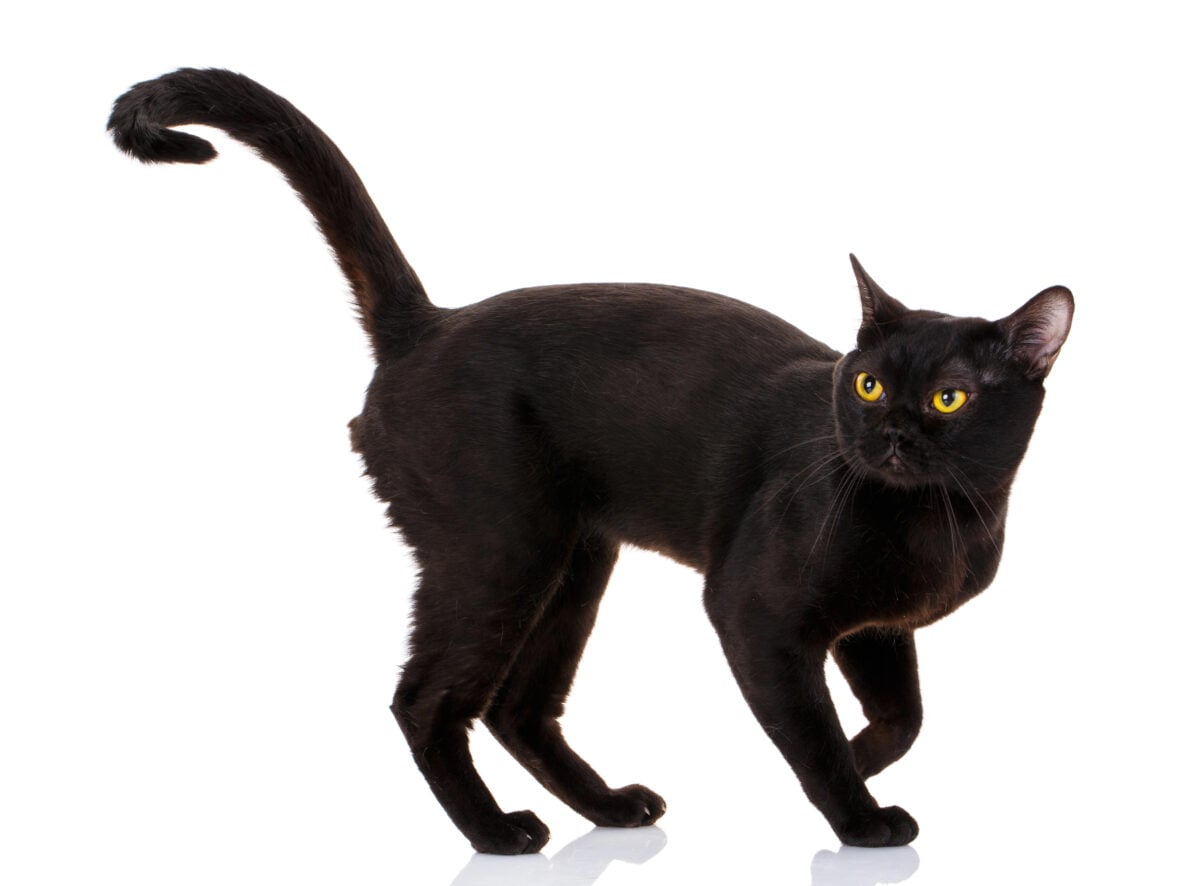
Wondering whether your black cat could actually be a Bombay? Look for these telltale traits:
- Copper or gold eyes (not green) that are big and round
- A round head and short muzzle
- A compact, cobby body with a sturdy frame and heavy feel
- A short, glossy coat with a patent-leather shine (solid black without white markings)
- A highly social personality that follows people from room to room
- A strong desire for attention and interaction
One important caveat: many black cats share one or two of these traits. The only way to confirm a true Bombay is through pedigree documentation or verified breeding records.
Spot The Difference: Bombay vs Black Domestic Shorthair
At first glance, the Bombay and the average black cat look nearly identical. Both have sleek coats, mysterious auras, and a talent for sneaking into your heart (and onto your clean laundry). But a closer look reveals key traits that set them apart.

While the Bombay is a carefully bred “mini panther,” the domestic shorthair is a genetic melting pot — America’s most common cat, with endless variations in looks and personality. Here’s how the mini panther and the everyday black beauty compare side by side.
Want our human-written content to rank above AI-generated garbage? Help us out by clicking this button!
Breed Comparison
- Weight10-15 pounds
- Weight8-12 pounds
- Body ShapeCompact and muscular
- Body ShapeLean to average build, highly variable
- Facial FeaturesLarge eyes, short muzzle, rounded head
- Facial FeaturesEye and muzzle shape vary widely
- Eye ColorCopper or gold
- Eye ColorGreen, blue, gold, brown
- Coat TextureShort, tight, “patent-leather” shine
- Coat TextureShort to medium, sleek or slightly coarse
While both cats can have shiny black coats, Bombays tend to have a deeper, patent-leather sheen that looks almost wet under bright light. Their copper or gold eyes are another giveaway, glowing like tiny embers against their dark fur.
Domestic black cats, on the other hand, come in all shapes, sizes, and coat lengths. Most shorthaired domestics have soft or slightly matte fur that can appear charcoal or brownish in sunlight.

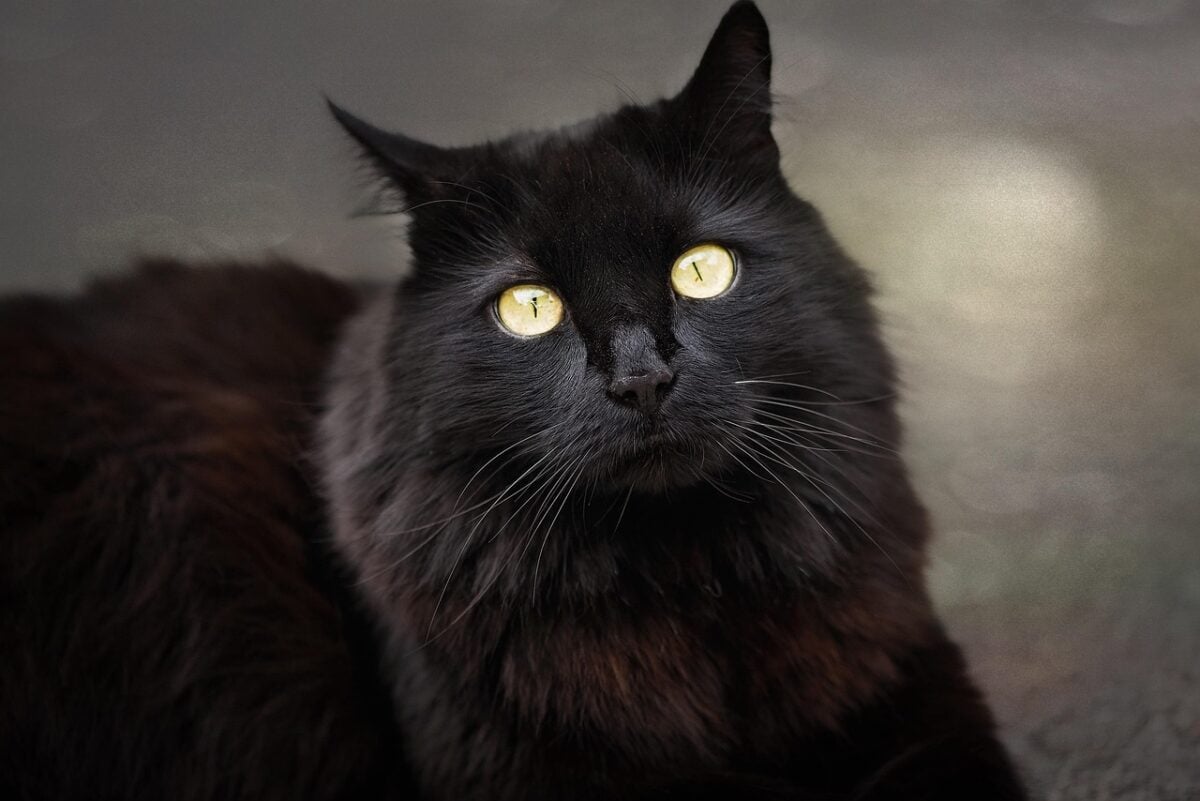
Longhaired black cats look entirely different — their fluff diffuses light instead of reflecting it, giving their coats a smoky or velvety finish.
Think of black domestic cats as the freestyle version of the Bombay. When it comes to Bombay cat vs black cat, the distinction is all in the shine, shape, and attitude.
Not A Bombay? Still Special
If your cat doesn’t check every Bombay box, don’t worry. Most black cats aren’t Bombays.
Black domestic cats are some of the most unique cats you’ll ever meet. Their personalities, body types, eye colors, and coat textures vary far more than any pedigreed breed. While they may not come with pedigree papers, they often bring just as much personality and charm.
Whether your cat is a Bombay or a mixed-breed black cat, what matters most is their individual personality, health, and the bond you share. Breed can tell you the basics about a cat, but it never tells the whole story.
The Making Of A Mini Panther
The Bombay wasn’t an accident. In the 1950s, American breeder Nikki Horner set out to create a domestic cat that looked just like a miniature black panther.
Her inspiration came from the Burmese and sleek American Shorthair, two breeds that when combined, produced the glossy black coat and striking copper eyes that define the Bombay today.
Unlike random-bred black cats, every Bombay is the result of intentional pairing. Their silky, patent-leather coat and rounded “panther” face aren’t just lucky genetics—they’re the result of years of careful selection.
Despite their exotic looks, Bombays are pure homebodies. They thrive on human attention, follow their people from room to room, and even learn tricks when properly motivated. In other words, they’re panthers in appearance, but lap cats at heart.
Head To Tail: What Sets Them Apart
Once you know what to look for, Bombay cat vs black cat differences become clear — from their eyes and body structure to the way their coats catch the light.
Reality Check: If you’re wondering whether your black cat might be a Bombay, it’s probably not. Bombays are a distinct breed with specific lineage and traits, not just any black cat with golden eyes.
Watch a real Bombay being judged at a cat show — the judge is nearly moved to tears, commenting on the cat’s rarity, Burmese heritage, and beautiful condition.
Eyes That Demand Attention
A Bombay’s big eyes are its showpiece. Ranging from copper to deep gold, they seem to glow from within, framed by that glossy black fur for maximum contrast.
This fiery eye color is a hallmark of the breed, carefully selected over generations to make the cat’s gaze almost hypnotic. When light hits just right, those eyes appear molten — one of the clearest clues that you’re looking at a true Bombay.
Black domestic cats have a much wider variety of eye colors, from cool greens and hazels to bright yellows or even pale blue. Because these cats come from a mix of genetic backgrounds, their eye shades and shapes vary just as much as their personalities.
Their eyes may lack the deliberate “panther” intensity of the Bombay, but they have their own kind of charm — expressive, unpredictable, and full of character.

Face Shape & Expression
A Bombay’s face is round, with a short muzzle and large, expressive eyes that dominate its features. Their heads are often described as “sweetly sculpted,” and their faces convey an alert, affectionate intelligence.
This kitten-like roundness gives the breed an approachable, almost human expression that people instantly connect with.

Domestic black cats have a wide variety of head shapes, from wedge-like and angular to softly oval. Their expressions range from wide-eyed innocence to sly mischief.
Because they aren’t bred for uniformity, each black domestic shorthair wears a unique look — sometimes refined, sometimes rugged, but always unmistakably individual.

Body Built For Grace
The Bombay’s body is compact, muscular, and surprisingly heavy for its size. They’re built like small athletes — dense and solid, with a graceful stride that’s been compared to a panther’s prowl.
Their movement is smooth and balanced, and they tend to carry themselves with quiet confidence, often stretching or lounging with deliberate poise.
Black cats come in every shape imaginable. Some are lean and agile, while others are rounder or more softly built. Their body type depends on whatever mix of genes they inherited, which means there’s no “standard” silhouette.
A black cat might move with the same feline elegance as a Bombay or with the clumsy charm of a couch-loving house cat.
The Signature Coat
The Bombay’s coat is what makes it unforgettable. It’s short, tight, and so glossy it looks like it’s been polished. Each hair is jet black from root to tip, creating that famous “patent-leather” effect breeders aimed for.

Even under dim light, a true Bombay gleams. The coat feels like velvet to the touch and requires little grooming to maintain its sleek shine.
Black domestic shorthairs also wear their coats beautifully, but there’s more variation in texture and tone. Some have soft, plush fur that absorbs light, while others have a coarser, matte finish.

Many show faint tabby striping or brown undertones in sunlight, a reminder of their mixed ancestry. It’s less uniform than the Bombay’s, but every bit as beautiful.
Longhaired black domestics have a completely different kind of beauty. Their coats diffuse light instead of reflecting it, creating a softer, smoky sheen.
In the right lighting, you might see silvery highlights or warm brown undertones that give their fur a velvety depth.
Bombay Cat vs Black Cat: Personality Check
The Bombay cat vs black cat comparison doesn’t stop at looks. Their personalities can be just as distinct.
Sociability & Attention Needs
The Bombay is the extrovert of the cat world. They crave human interaction and often follow their owners from room to room like tiny shadows with opinions.
Many Bombays are known to “talk back,” chirping or trilling for attention, and they don’t like being ignored. Left alone too long, they may sulk or act out in small, mischievous ways.

Domestic shorthairs are usually more independent. Some are cuddly lap cats, others prefer their own quiet corners, and most land somewhere in between.
Because their personalities vary by lineage, it’s impossible to generalize, but black domestics tend to be adaptable, mellow, and less demanding than their pedigreed counterparts.

Playfulness & Energy Levels
Energetic and athletic, Bombays love games that make them the center of attention. They excel at fetch, chase toys with laser focus, and enjoy being part of household activity. If you give them a perch or climbing tree, they’ll likely make it their stage.
Domestic shorthairs can be playful too, but their energy levels depend entirely on the cat. Some are lightning-fast hunters; others are couch connoisseurs. Because they weren’t selectively bred for specific behaviors, they’re a bit more unpredictable, which is part of their charm.
Affection & Bonding
Bombays bond deeply with their humans and often pick a favorite person. They love being near you — on your lap, your keyboard, or the exact spot you’re trying to read a book. Their affectionate nature makes them ideal for families or singles who want a social, people-oriented cat.
Domestic shorthairs show affection on their own terms. Some are velcro cats, others are polite roommates who prefer to keep personal space.
Their loyalty can run deep, but they’re less likely to demand constant contact. Once they trust you, though, they’ll curl up beside you like it’s the most natural thing in the world.
Intelligence & Trainability
The Bombay’s intelligence often surprises people. They can learn tricks, play fetch, and respond to their names, sometimes better than dogs. Their curiosity keeps them busy, so mental stimulation (like puzzle toys or clicker training) helps prevent boredom.
Domestic shorthairs are smart, too, but their intelligence expresses itself in practical ways. They’re problem solvers, explorers, and masters of routine. They may not seek structured training, but they quickly learn your habits, like when you open the treat jar or head toward the fridge.
Which Cat Fits Your Household Better?
The right choice often comes down to what kind of relationship you want with your cat.
Bombays tend to thrive in homes where someone is around frequently. They’re highly social, often follow their owners from room to room, and generally prefer being involved in whatever is happening. Many owners describe them as dog-like because they enjoy interaction, play, and attention throughout the day.
That doesn’t mean Bombays can’t spend time alone, but they typically do best when they receive plenty of companionship and mental stimulation. Puzzle toys, interactive play sessions, and climbing spaces can help prevent boredom.
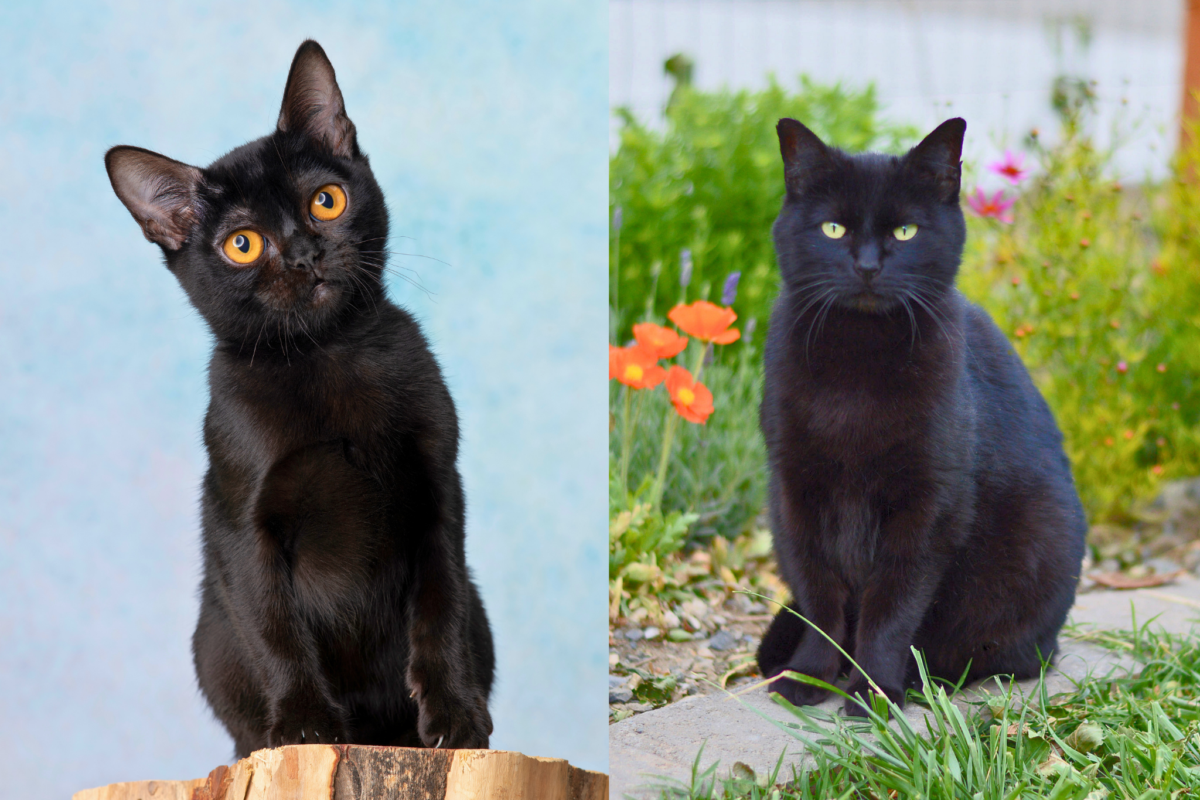
Black domestic cats are harder to generalize because they aren’t a single breed. Some are outgoing and clingy, while others are independent and content to entertain themselves. This variety can make it easier to find a black cat whose personality matches your lifestyle.
When it comes to children, other pets, and busy households, individual temperament usually matters more than coat color. A well-socialized domestic black cat may be more outgoing than a shy Bombay, while an especially social Bombay may become the center of family life.
Bottom Line: If you want a highly interactive companion that craves attention, the Bombay often has the edge. If you want more personality variety and flexibility, a black domestic cat offers endless possibilities.
Bombay Cat vs Black Cat Cost
When looking at Bombay cat vs black cat price difference, it’s clear one is a pedigreed investment while the other is a common shelter treasure.
Bombay Cat Cost
Because Bombay cats are pedigreed and relatively rare, kittens typically cost $500 to $2,000, depending on lineage, breeder reputation, and region. Reputable breeders focus on maintaining the breed’s copper eyes and glossy coat, which takes selective pairing and proper care.
Black Domestic Cat Cost
Black domestic cats, on the other hand, are some of the most common — and most overlooked — cats in shelters.
Because black cats don’t photograph as easily and have lingering superstitions attached to them, they’re often the last to be adopted. Adoption fees usually range from $50 to $150, often including vaccinations and spay or neuter surgery.
Choosing a black domestic shorthair means giving a home to a cat who might otherwise be overlooked. They may not have a pedigree, but they make up for it in gratitude, personality, and charm.
What About Ongoing Ownership Costs?
The purchase price is only part of the equation. Whether you choose a Bombay or a domestic black cat, the long-term costs of ownership are often much greater than the initial adoption fee.
Routine veterinary care typically includes annual wellness exams, vaccinations, parasite prevention, and dental care. As cats age, bloodwork and additional screenings may become part of their regular healthcare routine.
Many owners also choose pet insurance to help offset unexpected veterinary expenses. Monthly premiums vary based on coverage, age, and location, but insurance can provide financial peace of mind if your cat develops a chronic condition or experiences an emergency and you face a large, yet unexpected, vet bill.
Want to explore coverage options? Learn more about the best pet insurance for cats and get a free quote using the form below.

Bombays are highly social and intelligent cats, so many benefit from interactive toys, climbing structures, puzzle feeders, and regular play sessions. While black domestic cats can be just as playful, their activity and enrichment needs vary more from cat to cat.
Grooming costs are typically minimal for both. Their short coats require little maintenance beyond occasional brushing, which helps distribute natural oils and keep black fur looking glossy and healthy.
No matter which cat you bring home, budgeting for preventative care, enrichment, quality nutrition, and emergency medical expenses will have a much bigger impact on your experience than the initial purchase price alone.
Beyond The Basics: Black Isn’t A Breed
Of course, not every black cat fits neatly into the Bombay or domestic shorthair category. Black isn’t a breed; it’s a color, and it can appear in dozens of pedigreed cats around the world.
The genetics behind a black coat are fascinating. The dense pigmentation is caused by a dominant gene that masks tabby or patterned markings. That’s why some black cats reveal faint stripes or reddish undertones when they stretch out in the sun.
While the Bombay was bred to embody the “perfect” black cat look, many other breeds wear the same color with their own unique flair.
Shorthaired Black Cats
When most people picture a Bombay cat vs black cat, they’re imagining one of these shorthaired beauties. Smooth, glossy, and perfectly panther-like, these breeds represent the sleek side of the color spectrum.

- Exotic Shorthair: Essentially a shorthaired Persian—plush, peaceful, and irresistibly cuddly.
- British Shorthair: Plush and round with a thick double coat and copper eyes that add a regal touch. Calm, affectionate, and built like a teddy bear.
- Oriental Shorthair: Sleek, talkative, and angular, with large ears and a dramatic, panther-like appearance.
- American Shorthair: A classic, all-American breed with a sturdy frame and a gleaming black coat.
Curly & Wavy-Coated Cats
Not all black cats are sleek and straight-furred. These breeds add texture to the mix with rippled, springy curls that make their dark coats even more eye-catching.

- Cornish Rex: Slender, athletic, and wrapped in tight, velvety curls. Their playful personalities and huge ears make them unforgettable.
- Devon Rex: Mischievous, people-oriented, and covered in soft waves. They love warmth and attention in equal measure.
- Selkirk Rex: Fluffy and teddy-like, with dense curls and a mellow personality to match.
- LaPerm: Gentle, loyal, and easily recognized by their tousled ringlets and affectionate nature.
Fluffy-Coated Cats
These longhaired breeds wear black like a royal robe. Their thick double coats were built for cold climates and make them look powerful yet elegant.

- Maine Coon: Massive, friendly, and unmistakable with their tufted paws and long, flowing tails. They wear black with impressive drama.
- Siberian: Regal and rugged, with a full triple coat that can handle snowstorms and photo shoots alike.
- Norwegian Forest Cat: A Nordic native with a strong build, tufted ears, and a glossy black mane that gleams in sunlight.
- Ragamuffin: Silky, soft, and famously cuddly, these cats combine gentle personalities with show-stopping fur.
Cats With Distinctive Features
These breeds stand out not just for their color, but for their unique silhouettes, tails, and ears that make them instantly recognizable.

- Scottish Fold: Instantly recognizable for their folded ears and calm, round-faced charm.
- American Curl: Friendly and curious, best known for their backward-curled ears.
- Manx: Tailless and strong, with a bunny-like hop that adds to their quirky appeal.
- American Bobtail: Muscular and wild-looking, sporting a natural bobbed tail and confident personality.
4 Common Myths About Black Cats & Bombays
Black cats have always been surrounded by mystery, from their connection to superstition to the common belief that they’re all the same breed. But when it comes to fact versus fiction, these myths deserve a closer look.
1. All Black Cats Have The Same Coat Color
Not exactly. The gene responsible for black fur can express differently depending on the cat’s background. Some coats appear jet black, others have a brown or gray undertone, and many reveal faint tabby stripes in sunlight.
2. Black Cats Are Unlucky
This old superstition refuses to die. In many cultures, black cats are actually symbols of luck and prosperity.
In Japan and the United Kingdom, they’re considered signs of protection, wealth, and positive energy. The “bad luck” reputation likely started in Europe during the Middle Ages, when they were unfairly linked to witchcraft.
3. Bombay Is Just A Fancy Name For Black Cats
Bombays are a recognized breed with strict physical standards, not simply a color. They must have copper or gold eyes, a short glossy coat, and a compact, muscular frame.
While black domestic cats can look similar, their genetics are far more varied.
4. All Black Cats Have The Same Personality
Color doesn’t determine temperament. Bombays were selectively bred to be social, talkative, and confident.
Black domestic cats, by contrast, have personalities shaped by their unique mix of ancestry and environment. Some are outgoing; others are more reserved or independent.
Despite popular beliefs that gray cats are shy, tortoiseshells are stubborn, and orange cats are “sharing a brain cell,” research shows there’s no proven link between coat color and personality. Every cat is an individual, no matter what shade of fur they wear.
Frequently Asked Questions
If you’ve ever wondered whether your black cat is secretly a Bombay or what makes this breed stand out, you’re not alone. These are some of the most common questions cat lovers ask when trying to spot the difference between Bombays, black domestics, and other dark-coated felines.
Don’t see your question? Respond in the comments!
How Do I Know If My Black Cat Is A Bombay?
Look for copper or gold eyes, a short glossy coat that shines like patent leather, and a rounded head with a short muzzle. Bombays also tend to be heavier and more muscular than most domestic cats.
However, the only way to be certain is through pedigree papers or genetic testing.
Are Bombays Rare?
Yes. Bombays are considered a relatively rare breed, especially outside of the United States.
Their distinct appearance and selective breeding make them less common than domestic black cats, which are found in shelters everywhere.
How Long Do Bombays And Black Cats Live?
Bombays typically live 12 to 18 years, while domestic black cats often reach 15 to 20 years. With good care, proper diet, and regular vet visits, both can live long, healthy lives.
Can Bombays Have Green Eyes?
No. True Bombays always have copper or gold eyes.
If a black cat has green eyes, it’s most likely a domestic shorthair or another breed with black coloring, not a purebred Bombay.
Why Are Black Cats Harder To Adopt?
Unfortunately, black cats are often overlooked in shelters due to outdated superstitions and because they’re harder to photograph. Many rescues now highlight their personalities to help them stand out.
More Cat Comparisons
Enjoyed reading about the Bombay cat vs black cat? Check out these other side-by-side matchups.
- Birman vs Ragdoll – Two blue-eyed beauties that seem identical at first glance
- Siberian vs Maine Coon – Big, fluffy, and affectionate, but not quite the same
- Birman vs Siamese – Elegant, vocal, and strikingly similar until you look closer
- Ragamuffin vs Maine Coon – Two giant softies with luxurious fur and gentle souls