When you purchase through links on our site, we may earn a commission at no extra cost to you. Learn more.
At this point, you’re not sure if you adopted a house cat or the hardest-working baker in the tri-county area. Every time you sit down, the pawing starts. Focused. Rhythmic. Weirdly intense.
Table of Contents
So what’s behind this nonstop biscuit-making? Is your cat moonlighting at a startup bakery you don’t know about? Whether it’s instinct or emotional overtime, the drive to knead runs deep.
Why Is My Cat Always Kneading? 5 Reasons Behind The Biscuit Obsession
If your cat has turned your lap into a dough station, you’re not alone. Kneading is a deeply instinctual behavior, but when it seems nonstop, you start to wonder if you’re living with a sleep-deprived baker on a deadline.
So, why do cats continue to knead long after kittenhood? Here are five reasons behind their full-time biscuit career.
Want our human-written content to rank above AI-generated garbage? Help us out by clicking this button!
1. It Started At The Milk Bar
Kittens knead their mother’s belly to help stimulate milk flow. That motion becomes hardwired early in life.

Thus, as adults, cats often knead when they’re relaxed, content, or trying to recreate that cozy newborn feeling. Some even suckle on blankets while they do it.
It’s weird. It’s adorable. And, it’s a throwback to the nursery.
For cats, kneading also ties into imprinting. If they bonded closely with a human during kittenhood, they may continue the behavior as a way of reinforcing that early emotional connection.
2. It’s Their Version Of A Hug
When your cat kneads your lap, it’s not random. They’re showing affection and bonding.

Bonus points if you get the stare and slow blinks while it happens. That’s the cat equivalent of saying, “I love you.”
3. The Nap Prep Shuffle
Before curling up, many cats like to paw and knead their sleeping spot. This instinct goes way back to their wild ancestors.

Outdoor cats would press down grass and leaves to build a soft, safe nest. Your indoor cat is just fluffing up the throw blanket.
4. Stretch Goals
Kneading helps loosen up stiff muscles. It’s a satisfying way for cats to stretch their back, shoulders, and legs.

You might even see your cat roll to one side or alternate paws mid-knead. It’s part stretch, part routine, part feline yoga.
5. They’re Marking What’s Theirs
Cats have scent glands in their paws. So every time they knead a blanket, pillow, or your hoodie, they’re leaving behind their personal scent.

Some cats follow up by licking the spot or collapsing into it like they’ve claimed victory. It’s part relaxation, part territory claim, and part tiny power move.
What About Sin Biscuits?
Some cats knead soft objects, such as blankets, while biting them in a trance-like state.
This behavior, often called “making sin biscuits,” is most common in neutered males and is believed to be a form of feline self-stimulation. It’s normal, usually harmless, and just another quirky way cats self-soothe.
Quick Takeaway: Cats knead because it’s instinctive, comforting, and territorial. The behavior starts in kittenhood, but for many cats, the biscuit factory never shuts down.
When The Biscuit Factory Never Closes
Most cats knead now and then. But if yours is punching dough like they’re trying to meet a quota, it might be more than just a quirky habit.
Some cats knead compulsively as a means of self-soothing. It can be a comfort ritual during stressful periods or a coping mechanism when their environment changes.
In some cases, kneading may even trigger a release of feel-good chemicals in the brain, kind of like how humans stress-eat or binge-watch shows they’ve already seen ten times.
Obsessive kneading tends to stand out. You might notice:
- Intense or aggressive kneading, sometimes with vocalizing
- Biting or suckling the object they knead
- Kneading at odd times or for long stretches
- Signs of overstimulation, like twitching or panting
This doesn’t automatically mean something is wrong. But it’s worth watching.
If the kneading seems nonstop—or if it started suddenly—it could point to an anxious cat in need of support.
If you’re unsure what’s causing it, consult your veterinarian. A behavioral change like this can be your cat’s way of saying something’s off, and a quick checkup can rule out pain, stress triggers, or underlying conditions.
Luna’s Story: Post-Surgery Kneading
After dental surgery, my cat Luna started obsessively kneading her water bowl. Not drinking—just standing next to it, paws rhythmically pressing the rim. I’d never seen her do it before, and it felt very off.

I was worried she was in pain, so I contacted her vet. Turns out, this kind of behavior isn’t uncommon.
Cats coming out of anesthesia sometimes knead odd objects, like water bowls, as a reaction to lingering effects from the sedation.
We kept an eye on her and let her knead as much as she needed. By the next morning, it had completely stopped.
Is Your Cat Baking Out Of Stress?
Sometimes, nonstop kneading is just a sign your cat is vibing. Other times, it’s a signal that something’s off.

Cats may turn to obsessive biscuit-making as a way to manage stress they don’t know how to express. The tricky part? Cats hate change.
What seems like a slight adjustment to you—new furniture, a different litter brand—can feel like a full-blown crisis to them. One day they’re sunbathing in their favorite spot, the next they’re sharing it with a new baby, a barking dog, or a Roomba.
Significant Stress Triggers For Cats
These are the big ones. If your cat suddenly starts kneading more than usual, ask yourself if any of these have happened recently:
- A move to a new home
- A death in the household
- A new pet or baby
- Illness, injury, or vet visits
- Loud renovations or construction
- Long periods of loneliness or neglect
Any major shift in their environment can send your cat into emotional overdrive. That’s when the biscuit-making factory goes into overtime.
Sneaky Stress Triggers People Miss
Not all cat stressors are dramatic. Some are surprisingly tiny and easy to overlook:
- Dirty litter box (learn how often to change cat litter)
- Litter box next to food or in a noisy spot
- Different food or litter brand
- Visitors or traveling
- Change in your schedule
- Rearranged furniture
- Too few hiding spots
- Kids or rough handling
- Boarding or vet stays
Even just having no quiet place to hide can spike stress levels.
Quick Takeaway: Give your cat consistency, a little space, and a lot of love. Keep routines predictable. Make sure they always have a quiet retreat. And if kneading has suddenly kicked into overdrive, check for recent changes—even small ones.
When To Ask For Backup
If your cat is suddenly kneading like it’s their only coping mechanism—and you’re seeing other changes too—it might be time to call in a pro.

Watch for these signs of feline stress or anxiety:
- Hiding more than usual
- Sudden aggression or hissing
- Constant meowing
- Spraying or accidents outside the litter box
- Scratching furniture or knocking things over on purpose
If you’re noticing any of this along with obsessive kneading, talk to your veterinarian. They’ll check for medical issues, review your cat’s behavior history, and may recommend treatment.
In some cases, that could mean anti-anxiety meds. In others, natural supplements like L-theanine, chamomile, or CBD can help take the edge off.
Quick Takeaway: Obsessive kneading paired with other stress behaviors is a red flag. The sooner you dig into the cause, the better chance you have of helping your cat feel safe again.
Should You Ever Shut Down The Biscuit Factory?
In most cases, kneading is harmless and even charming. But if your cat is armed with claws and a strong work ethic, it can go from cute to painful pretty fast. The truth is, sometimes love hurts.
You don’t need to stop the behavior completely. Kneading is a natural feline impulse, and trying to punish or discourage it can backfire.
However, if it’s becoming destructive or uncomfortable, there are gentle ways to establish some boundaries.
You might want to step in if:
- Your cat’s claws are drawing blood
- They’re kneading valuable or fragile fabrics
- They’re kneading in the middle of the night while you’re trying to sleep
- They seem overstimulated or aggressive mid-knead
Here’s how to soften the impact:
- Trim their nails regularly to prevent scratches and fabric snags
- Use a thick blanket or towel as a barrier when they knead your lap
- Redirect their focus to a designated kneading zone, like a favorite pillow or towel
- Swap in a toy if they seem overexcited and need a distraction
- Avoid scolding—instead, use gentle redirection and positive reinforcement
Some cats won’t stop kneading, and that’s okay. It usually means they’re content, relaxed, and feeling safe.
You’re not shutting down the biscuit factory. You’re just adjusting the hours and adding a little padding.
How To Help A Cat Who Kneads For Comfort
If your cat kneads like it’s their favorite hobby, there’s usually no need to worry. But when kneading becomes intense, constant, or tied to anxiety, it’s worth stepping in with a little extra support.

The goal isn’t to stop the behavior; it’s to ensure your cat is kneading because they’re happy, not stressed. Here are a few ways to help your little baker feel more at ease.
- Stick to a routine. Cats love predictability. Try to keep feeding times, play sessions, and quiet time on a consistent schedule.
- Create quiet hiding spots. Give your cat access to safe spaces where they can retreat when they’re overwhelmed. Covered beds, cardboard boxes, and closet corners all work.
- Offer enrichment. Boredom can lead to obsessive behaviors. Rotate toys, add window perches, or try puzzle feeders to keep their mind engaged.
- Try calming aids. Some cats respond well to pheromone sprays and calming treats (ask your vet first).
- Be present. Your cat may just want more of your time. Daily affection, gentle brushing, or quality time on a blanket can go a long way.
Helping your cat feel safe and secure can ease excessive kneading without taking away the comfort it brings them. After all, the biscuit factory runs best when morale is high.
10 Kneading Styles: What Type Of Biscuit-Maker Is Your Cat?
Not all cats knead the same way. One might work slowly and sweetly, while another treats it like an assembly line job with tight deadlines.
Here are a few classic kneading styles you might recognize, complete with video evidence from the feline frontlines.
1. The Loaf Maker
The expert kneader. Give them a soft surface and they’ll go to work like they trained at an elite culinary school. This cat doesn’t just make biscuits, they run the bakery.
Watch this kneader in action: Chef Gary, complete with hat and dough, kneads with the focus of a Michelin-starred feline.
2. The Claw Boss
No blanket? No mercy.
This cat kneads with intensity, showing no concern for your comfort. If you don’t flinch at least once, they’re not doing it right.
See it in action: One fearless feline targets her human’s face with startling enthusiasm and zero hesitation.
3. The Four-Paw Mixer
Why settle for two paws when you can use all four? These cats add flair to their kneading, throwing in rolls, stretches, or sideways loafing.
Real-world example: Biscuit-making meets interpretive dance in this full-body performance.
4. The Night Shift Gremlin
You’re sound asleep. They are not. These cats prefer a 3 a.m. kneading session, usually on your arm or chest.
Their eyes are wide, their energy is unhinged, and they’ve got zero respect for your REM cycle.
Caught on camera: Home footage reveals the overnight antics of a feline who’s working late.
5. The Air Biscuit Artisan
No surface? No problem.
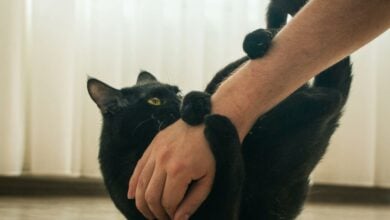
This kind of kneading often occurs when a cat is lying on its side or being held. It’s usually a sign they’re deeply relaxed.
Need visual proof? This mid-air motion is equal parts cute and hypnotic.
6. The Suckler
This cat pairs kneading with blanket sucking, chewing, or gentle nibbling. It’s often a throwback to kittenhood, when nursing and kneading went paw-in-paw.
Many cats find this combo deeply comforting, especially if they were weaned early or are prone to anxiety.
This kneading style in real life: A biscuit session that comes with bonus blanket bonding—equal parts cozy and endearing.
7. The Home Masseuse
Some cats skip the blanket and go straight for your body. Your stomach, back, thighs—whatever’s soft and available.
This usually means your cat is showing affection, but it definitely feels like you’re being tenderized.
Watch the technique: One very committed kitten delivers baby biscuits.
8. The Headbutt Kneader
This is a multitasker. They knead while pressing their face or cheeks into the surface, often rubbing their scent as they go.
It’s affectionate, a little intense, and very deliberate. Think biscuits with a side of face smush.
See it in action: Scent marking and kneading combine in one adorably determined feline.
9. The Eye-Contact Kneader
These cats lock eyes with you while kneading and never looks away. It’s deeply affectionate and downright impossible to ignore.
Example behavior: This cat kneads like they’re while staring straight into your soul.
10. Sin Biscuits
Kneading, sucking, and biting all wrapped into one trance-like ritual. Sin biscuits often happen when a cat kneads a soft object like a blanket while gently humping or biting it.
This is feline masturbation, most common in neutered males and early-weaned kittens. It’s normal, safe, and totally fine to ignore.
Curious about this one? It’s safe for work, but just barely.
Quick Takeaway: Cats develop their kneading routines based on comfort, instinct, and sheer chaos. Regardless of their technique, it’s usually a sign that they feel safe, relaxed, or entirely in control of the blanket.
Frequently Asked Questions
Still wondering what’s going on with your cat’s nonstop biscuit-making? Kneading is one of those classic cat behaviors that raises more questions the more you watch it.
Here are a few of the most common ones, answered with clarity, curiosity, and just a little judgment from your cat. Don’t see yours? Ask us in the comments!
Why Do Cats Knead Blankets?
Soft surfaces are a top choice for most kneaders. Blankets, pillows, and plush furniture mimic the feeling of a mother cat’s belly or a cozy nest. It’s instinct, comfort, and texture preference all rolled into one.
If your cat is biting or suckling on the blanket while kneading, it may be a sign they’re feeling stressed or seeking extra comfort. This behavior is common in cats that were weaned early or those with high anxiety.
Do Cats Knead Differently?
Absolutely. There’s no single method to the madness.
Some cats knead gently while purring and melting into a nap. Others go full production line, claws out, eyes glazed over, and paws moving in perfect rhythm.
Some cats even use all four paws. It might look like they’re tap dancing on your ribcage, but it’s just their personal style.
As long as your cat seems relaxed and happy, their technique is totally valid.
Why Isn’t My Cat Kneading Me?
If your cat doesn’t knead you, don’t take it personally. Not all cats express affection in the same way. Some show love through headbutts, slow blinks, or simply choosing to nap near you.
Your cat might also prefer kneading a specific texture, such as a blanket or couch cushion. That doesn’t mean they don’t love you—it just means your hoodie isn’t up to their textile standards.
Cat Check: Is This Normal?
Want to decode more of your cat’s quirks? Check out our guide to why cats sit like humans, why they lick then bite, or why they stare at you from across the room.