When you purchase through links on our site, we may earn a commission at no extra cost to you. Learn more.
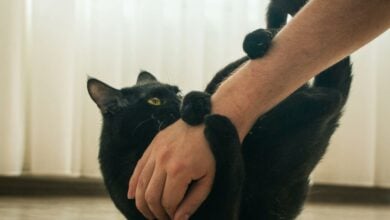
If you’ve ever woken up to a cat snuggled into your beard like it’s their personal velvet hammock, you’re not alone. For some felines, facial hair is less “grooming choice” and more “furry obsession.”
Table of Contents
But why are cats drawn to beards like moths to a very scratchy flame? Whether they’re sniffing it, rubbing on it, or gently nibbling your chin like it’s a snack, cats have their reasons—and no, it’s not just because you forgot to wash out the soup.
Why Is My Cat Treating My Beard Like A Cat Toy?
There’s no shortage of strange cat behavior out there, but beard obsession might just take the (fish-shaped) cake. Some cats rub against facial hair like it’s their job, others go in for a full-face snuggle, and a few aren’t shy about biting or licking.
So, what’s really going on? Below, we break down each of these behaviors to help you understand what your cat is really trying to say with all that beard time.
Want our human-written content to rank above AI-generated garbage? Help us out by clicking this button!
They’re Just Being Affectionate
Your beard is more than just a grooming choice; it’s a scent sponge, warmth magnet, and curiosity piñata all in one.
Cats have scent glands on their cheeks and forehead, and when they rub their face on you, they’re claiming you as part of their inner circle. Beards just happen to be the closest available surface when you’re holding them close.

It also doesn’t hurt that your beard probably smells familiar and feels inviting. Your cat may associate the texture with fur or soft bedding, making your chin seem like the perfect place to nuzzle.
Top 3 Beard Behaviors, Decoded
- Rubbing = “Mine. I own this human.”
- Licking = Grooming, comfort, or bonding
- Biting = Play, overstimulation, or irritation
Some cats even use facial hair to gauge their own comfort zones. The beard is part of your face, which is often right in their line of snuggles. It may simply be their way of interacting with a part of you that feels cozy and familiar.
The Grooming Theory
Cats are compulsive groomers, and this extends to people they like.
If your cat is licking or nibbling at your beard, they may be offering a form of social grooming, known as allogrooming. It’s a sign of trust and affection.
This behavior starts in kittenhood. Mother cats clean their kittens constantly, and that nurturing behavior often continues into adulthood.
In multi-cat households, you’ll often see cats grooming each other as a way to bond or establish dominance. If your cat is licking your beard, it could be them saying, “You’re part of my family. Let me take care of you.”

The grooming theory also explains gentler behaviors, like licking or resting their face near your beard. Cats often do this when relaxed and see you as a safe space. You may even notice your cat begins to purr during beard grooming sessions.
Also, let’s be honest—some cats are convinced your beard harbors crumbs from lunch. It’s love, sure. But also snacks.
Getting Attention
Not every beard interaction is sweet. Some cats are smart enough to learn that messing with your face is a guaranteed way to get your attention.
This behavior can stem from boredom, anxiety, or simply a desire to interact.
Cats are clever. If they bite your chin and you immediately respond—even negatively—they’ve achieved their goal. It becomes a game. The beard is the toy, and your reaction is the prize.

Stress or changes in routine can also lead to clingier behavior. If your cat is suddenly all over your face fuzz, ask yourself: Has anything changed in the home? Have you been less available?
Sometimes, beard antics are their way of coping with emotional shifts.
Signs Your Cat Is Using Your Beard To Create Drama
- Sneak attacks during Zoom calls
- Intense face licking while maintaining eye contact
- Beard obsession only when they want food or play
Try not to reinforce this behavior by laughing or responding too much when they act out. Consistency is key if you want to protect your facial hair from becoming a feline attention magnet.
Do Cats Prefer Certain Beards? A Very Unscientific Investigation
So, does beard style matter? Maybe.
There’s no scientific research (yet) that confirms whether cats prefer short stubble or wizard-level beards. Anecdotally, though, many cat owners report their feline prefers one look over another.
Some cats nuzzle short beards without a second thought, while others get clingy with longer, softer facial hair.
It likely comes down to two things: texture and familiarity.
A fluffy, well-maintained beard might feel more like the soft fur of another cat. In contrast, a coarse or scratchy beard might be less appealing.
If you’re using scented beard oils, that might attract (or repel) feline attention, too.
Beard preferences may also change with the seasons or your cat’s mood. What they love in winter might be totally different in summer.
Biting Beards: Play Or Problem?
Sometimes, beard contact goes from sweet to ouch. If your cat starts biting, it could be playful or mean something deeper.

Petting-induced aggression is a common behavior in cats. They might enjoy your attention one second, then lash out the next.
Sensitive areas like the chin or whisker pads can be overstimulated quickly. When that happens, biting is their way of saying, “Enough.”
Another possibility is feline hyperesthesia syndrome, a neurological condition where certain types of touch feel irritating or painful. If your cat seems overly reactive to your beard or any grooming behavior, it may be worth mentioning to your vet.
Is It Beard Play Or Beard Rage?
- Soft nibble + purring = playful
- Sudden snap after petting = overstimulated
- Growling or stiff posture = stop immediately
Learn to read your cat’s body language. If they’re pulling back, twitching their tail, or flattening their ears, it’s best to give them some space—beard and all.
Is Your Beard A Snack?
Believe it or not, some cats try to eat beards. As weird as it sounds, it can actually be dangerous.
Ingesting human hair (especially facial hair) can lead to digestive issues. If your beard sheds and your cat eats a strand, it might pass without issue or cause a blockage. And if you use scented oils or balms, your cat might be ingesting ingredients that aren’t safe for felines.
Also, there’s the choking risk. Beards, particularly long ones, can be just the right length to wrap around a cat’s tongue or teeth. It’s rare, but it can happen.
When in doubt, keep your beard out of reach. Or, at the very least, don’t let your cat treat it like a midnight snack.
How To Set Healthy Beard Boundaries
It’s cute until it isn’t. If your cat is fixated on your beard, it’s okay to set limits.
First, assess any grooming products you use. Scented beard balms, oils, and lotions might be attracting unwanted attention. Try switching to unscented options and see if your cat backs off.
Next, redirect. Stand up, move away, or distract them with a toy. Keep a stash of feline favorites nearby: catnip mice, feather wands, puzzle feeders.
You want to make your cat associate beard-chomping with boredom and toys with fun.
Beard Distraction Toolkit
- Freeze-dried chicken treats
- Faux-fur stuffed animals
- Catnip toys with a beard-like feel
- Wand toys or play tunnels for active engagement
If the obsession is new or extreme, consult a vet or behaviorist. Your cat might be dealing with stress, illness, or sensory overload.
Quick Tip: When To Call The Vet
- They show other signs of stress like hiding, overgrooming, or bathroom changes
- Your cat’s beard obsession is escalating fast
- They’re biting, hissing, or swatting frequently
Can Cats Grow Beards? (Asking For A Friend.)
Technically, no. But some breeds come pretty close.

Fluffy cats like Maine Coons, Persians, and Norwegian Forest Cats often have thick ruffs of fur around their necks that look suspiciously like beards. Combine that with long cheek fur and a majestic stare, and you might start wondering who wore it better.
Of course, cats don’t grow beards for style. Their whiskers, on the other hand, serve real biological purposes.
These long, stiff hairs help them navigate, sense movement, and even determine if they can fit through tight spaces.
Trimming whiskers is never a good idea. It causes confusion, disorientation, and distress.
So while your cat may look like they’re rocking facial hair, their “beard” is strictly for function—and feline fashion.
Frequently Asked Questions
Cats and beards can be a hilarious mix, but they can also leave owners with a few head-scratching concerns.
Below are some of the most common questions beard-wearing cat parents tend to ask, along with the answers you didn’t know you needed. Don’t see yours? Ask us in the comments!
Is It Dangerous If My Cat Eats Beard Hair?
Yes. Hair can lead to stomach upset, intestinal blockage, or even choking.
While a single strand may pass through without issue, repeated ingestion increases the risk of complications. It becomes especially concerning if you use scented oils or balms in your beard.
Many grooming products contain ingredients that are harmful to cats if licked or swallowed. If your cat regularly tries to snack on your facial hair, it’s best to break the habit early before it becomes a hazard.
How Can I Stop My Cat From Licking My Beard?
Use distraction techniques to break the beard-licking cycle. Offer your cat a favorite toy or a treat when they begin fixating on your face. A feather wand, puzzle feeder, or catnip-stuffed toy can refocus their energy in a more productive direction.
Consistency is key. Calmly and firmly say “no” each time your cat tries to lick your beard, then redirect. Over time, they’ll associate beard behavior with boredom and playtime with something much more fun and rewarding.
Should I Ever Trim My Cat’s Whiskers?
Never. A cat’s whiskers are deeply embedded sensory tools that help them understand and navigate their environment. They can detect subtle air movements, measure openings, and even sense nearby objects in the dark.
Trimming whiskers can cause your cat to become disoriented and stressed. You may notice changes in their balance, confidence, or willingness to explore.
Even if the whiskers appear long or uneven, they should be left completely untouched.
More Fuzzy Face Facts
If your cat is obsessed with your beard, take it as a weird little compliment. They trust you. They love you. And apparently, your chin smells amazing.
But if it gets too intense, know when to pull back and set some boundaries. Your beard deserves respect, too.
Curious why your cat’s affection doesn’t stop at your beard? Some felines take things a step further—licking faces, eyelids, noses, and ears with surprising enthusiasm. Find out what’s behind this quirky behavior (and how much is too much) in our full guide: Why Does My Cat Lick My Face?