When you purchase through links on our site, we may earn a commission at no extra cost to you. Learn more.
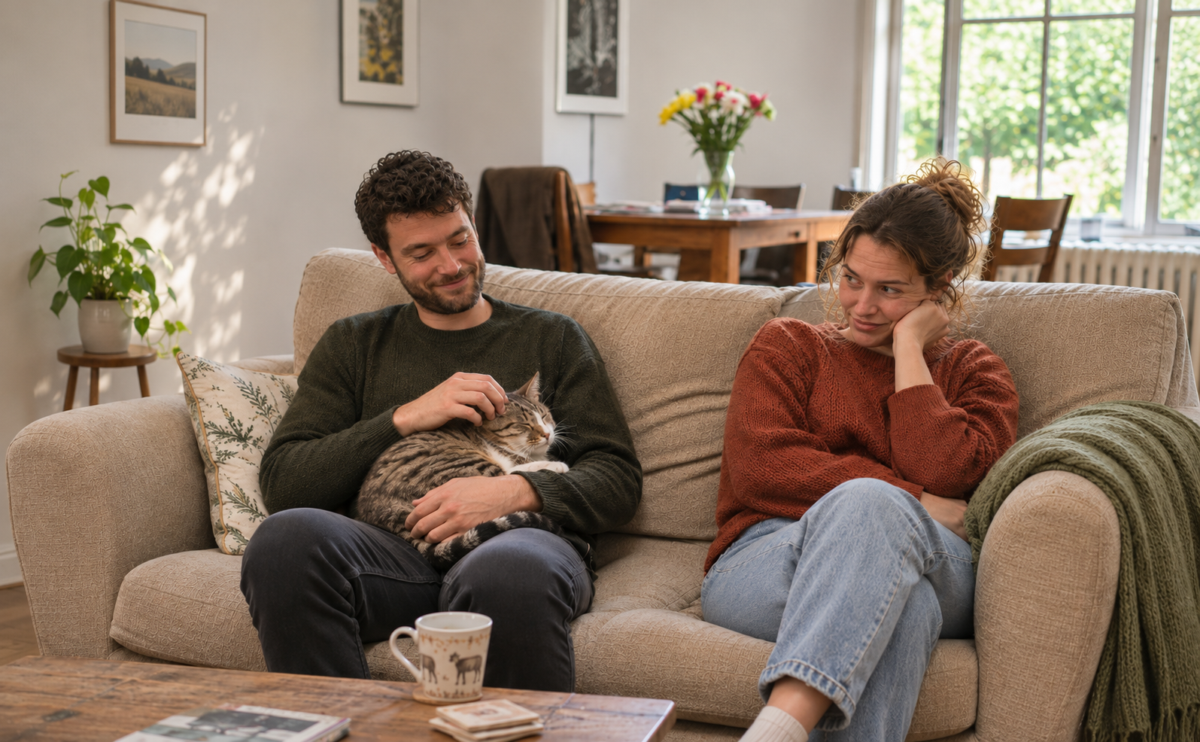
You buy the food. You clean the litter box. You schedule the vet appointments and make sure your cat has everything their little heart desires. And who gets all the cuddles? Your spouse, who occasionally remembers the cat lives there.
Table of Contents
It’s a special kind of betrayal when your cat walks right past your perfectly available lap to curl up with someone who’s done absolutely nothing to earn the privilege.
So why do cats prefer one person over another, especially when that person isn’t the one doing all the work?
As it turns out, cats notice some surprisingly specific things about the people they live with. And your household’s favorite human might have an unfair advantage they don’t even know about.
Want our human-written content to rank above AI-generated garbage? Help us out by clicking this button!
Your Cat Isn’t Keeping Score (Even Though It Feels Like It)
Humans have a fairly straightforward idea of how relationships should work. You put in the effort, you earn the affection. Your cat, unfortunately, has not agreed to these terms.
Cats don’t necessarily choose their favorite person based on who does the most for them. Feeding, grooming, and daily care can build positive associations, but they’re only part of the relationship.
Your cat doesn’t know how much you spent on their latest vet visit or that you rearranged your entire morning because they refused to eat yesterday’s perfectly acceptable breakfast. They’re responding to the experiences they have with you, not the effort you put in behind the scenes.
And those experiences aren’t all about food and affection. Cats pay attention to how each person behaves, how interactions feel, and what happens when they approach. Small differences that barely register with us can mean a great deal to them.
One person might be their go-to for dinner, another for a game of chase, and someone else for an uninterrupted afternoon nap. The person your cat chooses for cuddles isn’t necessarily the person they trust most in every situation.
8 Reasons Cats Prefer One Person Over Another
What does your cat see in that other person? Sometimes, it’s something surprisingly small that gives one household member the edge. Here are eight reasons your cat might be playing favorites, whether they’ve earned it or not.
1. They Let The Cat Make The First Move
There’s a particular injustice familiar to cat owners. You call your cat over, offer your lap, and practically roll out a welcome mat. They ignore you. Meanwhile, your teenager, who barely looks up from their phone, suddenly has a cat climbing into their lap.
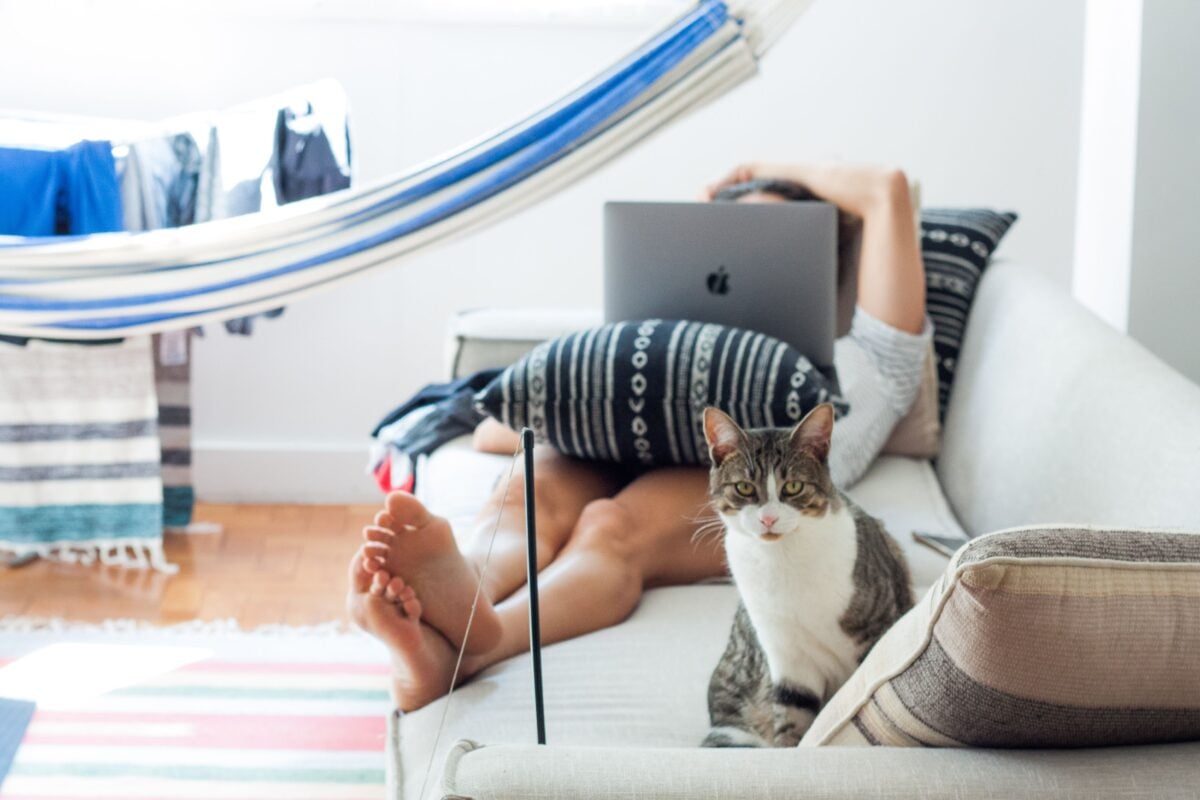
Cats often prefer interactions they get to initiate and control. When someone constantly reaches for them, picks them up, or insists on another cuddle, even with the best intentions, the attention can become overwhelming.
The person who seems to be ignoring the cat may actually be doing something very appealing: giving them the freedom to decide when, how, and whether to interact.
Research on human-cat interactions has found that positive interactions tend to last longer when cats initiate them, rather than when humans do.
That doesn’t mean you should pretend your cat doesn’t exist. A few small changes can make your attention more inviting:
- Let your cat approach first instead of following them around looking for affection.
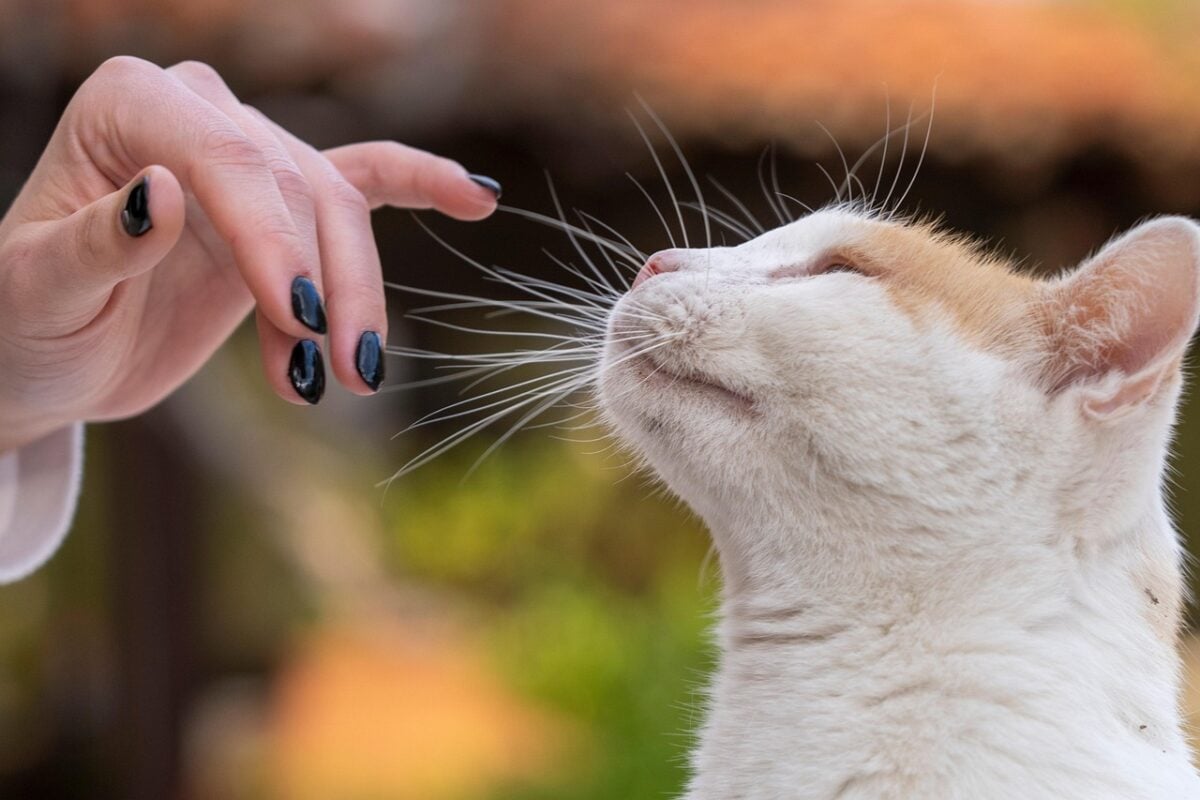
- Offer a hand to sniff before reaching in for a scratch.
- Watch for signs they’ve had enough, such as a swishing tail, turning away, or moving off.
Unfortunately, this gives the household member who claims not to like cats a completely undeserved competitive advantage.
2. Their Voice, Movements, And Energy Are Easier To Read
Some people enter a room like they’re announcing the start of a parade. Others settle onto the couch without much fuss. Your cat notices the difference, even if you’ve stopped noticing that your “competing” family member somehow manages to slam every cabinet in the kitchen.
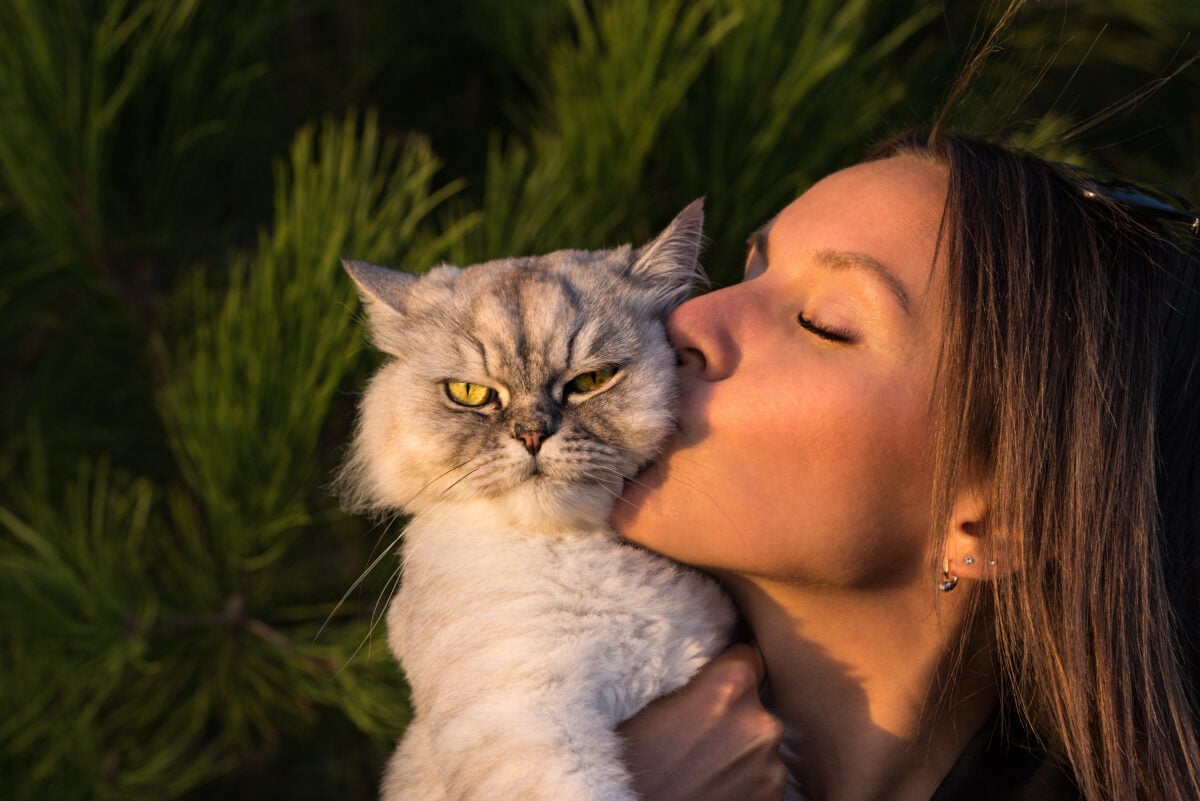
Cats pay attention to how people move, speak, and approach them. A person who feels predictable and easy to read may be more appealing than someone whose enthusiasm comes with sudden movements and surprise hugs.
Small differences can matter:
- Voice: A softer, familiar voice may be more inviting than loud talking or excited squealing.
- Movement: Someone who approaches slowly and avoids looming over the cat may seem less intimidating.
- Body language: Someone who crouches or sits at the cat’s level may seem less intimidating than someone standing directly over them.
- Energy: A cautious cat may gravitate toward someone who spends more time sitting still, while a confident, playful cat might love the household’s resident chaos coordinator.
This doesn’t mean cats automatically prefer introverts or people who barely move. It depends on the individual cat and what they’ve learned to expect from each person.
Your cat might adore the family member who bursts through the door ready to play but avoid that same person’s attempts to scoop them up for a cuddle.
3. They Play And Pet Your Cat Exactly The Way They Like
You spend 20 minutes waving an expensive wand toy around like you’re auditioning for Cirque du Soleil. Your spouse drags a shoelace across the floor, and suddenly your cat is having the time of their life.
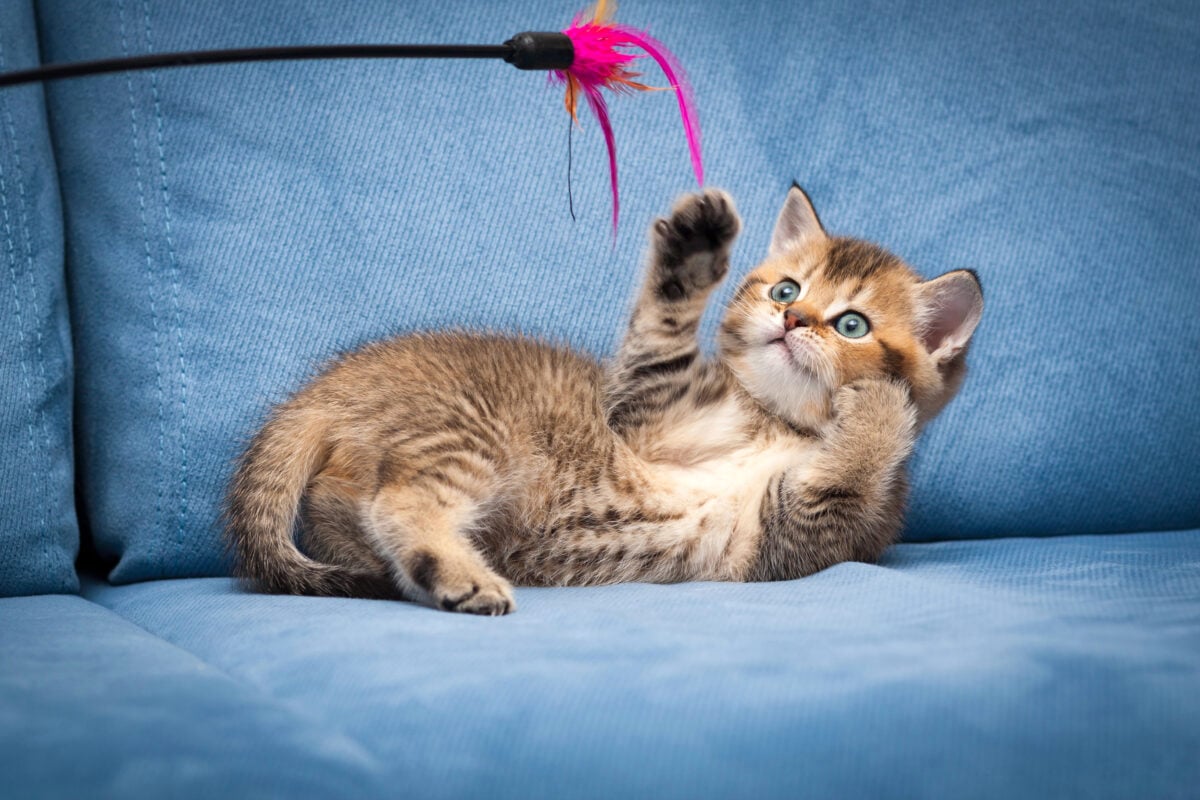
Cats have surprisingly specific preferences about how they like to play and receive affection. Two people can give the same cat plenty of attention, but one might be much better at delivering the particular kind that cat enjoys.
Take playtime, for example. Some cats love chasing fast-moving toys, while others prefer stalking something that disappears around a corner. The person who makes a toy behave like believable prey may be far more entertaining than someone who simply waves it in front of the cat’s face.
Physical affection can be just as particular:
- Where they’re touched: Many cats enjoy scratches around their cheeks, chin, and head but dislike having their belly or lower back handled.
- How long it lasts: Some cats love extended cuddles. Others prefer three good head scratches before they’re done.
- How they’re held: A cat who hates being scooped up may happily snuggle beside someone who lets them keep their paws on solid ground.
- When affection happens: A playful cat might welcome petting after a satisfying game but have absolutely no interest when they’re busy watching birds.
Your cat may associate one family member with especially enjoyable interactions, making them more likely to seek that person out again.
And sometimes, the difference between being the favorite and being tolerated is knowing that the fourth belly rub was three belly rubs too many.
4. You’re The Responsible Adult, And Someone Else Gets To Be The Fun One
You fill the food bowl, scoop the litter, schedule the vet appointments, and keep track of flea prevention. Meanwhile, your teenager occasionally tosses the cat a treat and receives the kind of adoration usually reserved for royalty.
Being your cat’s primary caregiver doesn’t automatically make you their preferred cuddle companion. And there’s a particularly unfair reason for that.
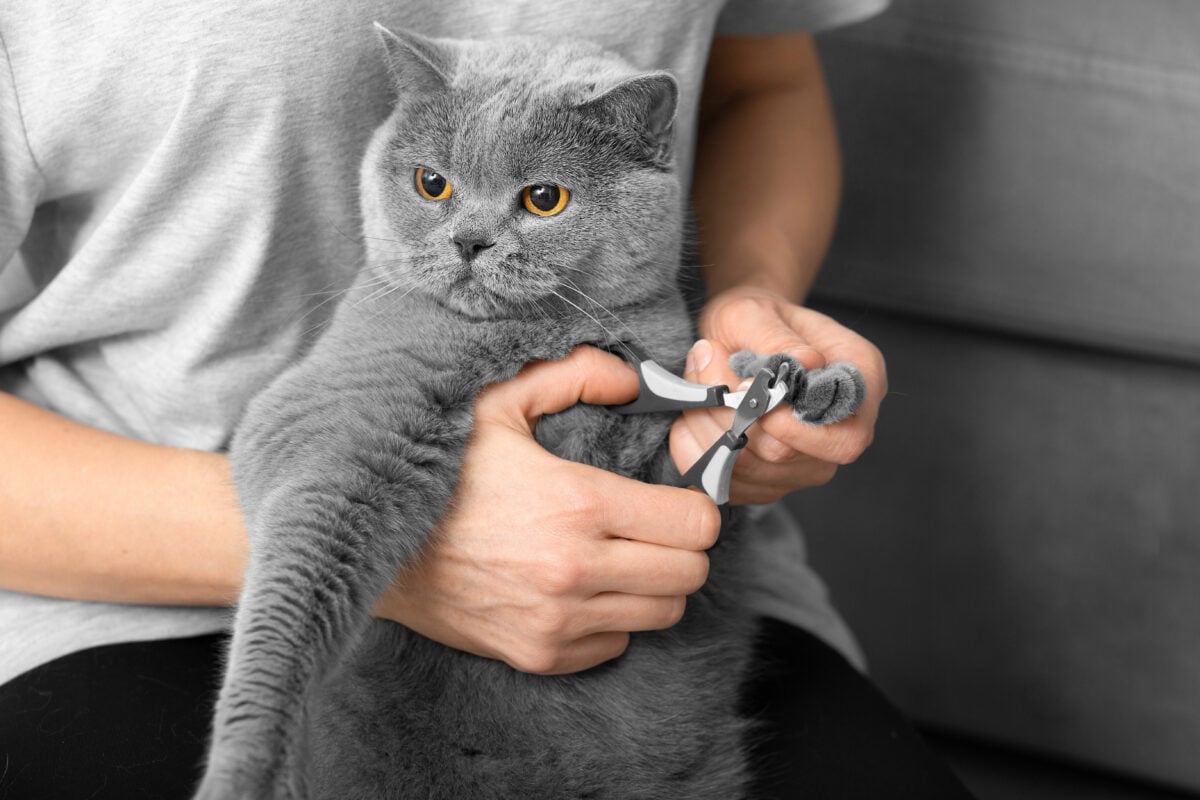
The person handling most of the daily care may also be responsible for things the cat finds unpleasant:
- Nail trims: You’re the one who approaches with the dreaded clippers.
- Medication: You administer the pills, eye drops, or other treatments your cat would rather skip.
- Vet visits: You’re the person who brings out the carrier and ends their peaceful afternoon.
- Necessary boundaries: You’re the one who removes them from the kitchen counter or interrupts their latest attempt to eat a houseplant.
Your cat can learn to associate different people with different experiences. One person might predict dinner and necessary handling, while another predicts relaxed company and enjoyable attention.
Of course, feeding and caring for your cat can build a strong, positive relationship. Plenty of cats are deeply attached to the people who handle their daily needs. It’s not as though they’re keeping a detailed record of every nail trim and plotting revenge.
But when you handle the less glamorous parts of cat ownership and someone else gets to play the fun aunt or uncle, it’s easy to see how your cat might develop different expectations of each of you.
5. Your Cat Knows Everyone By Their Scent
You might recognize your roommate by the sound of their footsteps or your partner by the way they leave every kitchen cabinet open. Your cat has another way of keeping track of who’s who: their nose.
Cats rely heavily on scent to explore their surroundings, recognize familiar things, and gather information about the people and animals around them.
Even if everyone in your household smells more or less the same to you, your cat can detect differences you’d never notice.
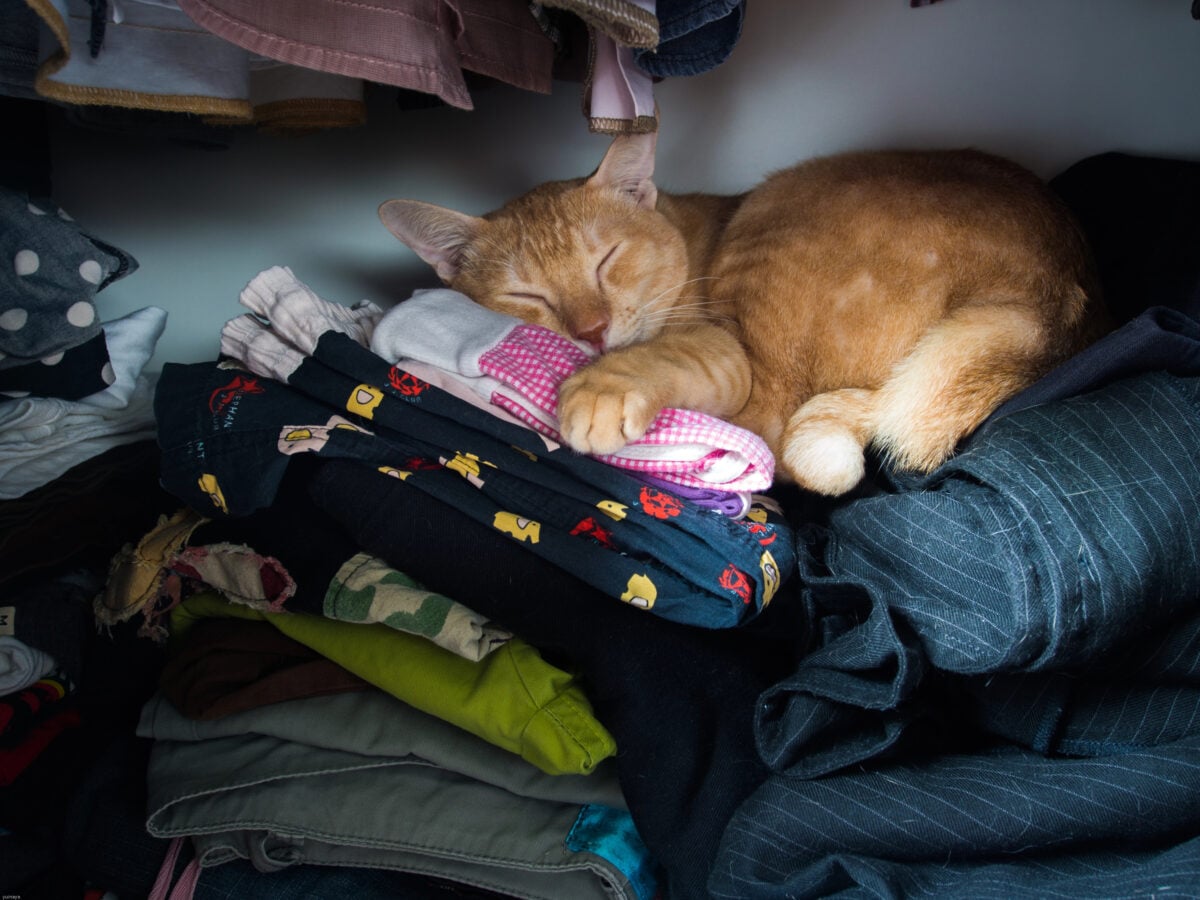
Each person carries a distinctive combination of scents, including:
- Natural body odor: Everyone has an individual scent influenced by factors such as skin chemistry.
- Clothing and bedding: Familiar fabrics can carry a person’s scent long after they’ve left the room.
- Personal products: Perfume, lotion, laundry detergent, and other scented products can change how someone smells.
- Outside odors: Workplaces, other pets, and everyday activities introduce additional scents your cat may investigate.
Some fascinating science explains this. A 2025 study found that cats spent longer sniffing an unfamiliar person’s odor than their owner’s odor, suggesting they can distinguish familiar from unfamiliar humans through scent.
But does that mean your cat prefers your teenager because their sweatshirt smells better than yours? Not necessarily. Researchers haven’t established that particular human scents automatically make someone more lovable to cats.
What we do know is that scent contributes to how cats experience their world. A familiar person, along with their clothing and favorite resting spots, can become part of a cat’s everyday sensory environment.
This might help explain why your cat has claimed your roommate’s unwashed hoodie as premium sleeping real estate, despite the perfectly respectable cat bed you bought them.
6. Their Schedule Matches Your Cat’s Favorite Times Of Day
You spend all day at home with your cat, but the moment your roommate gets home from work, they’re suddenly the most fascinating person in the house. You could practically hear the cat announcing, “Finally, someone worth spending time with.”
Sometimes, being your cat’s favorite has less to do with how much time you spend together and more to do with when you’re available.
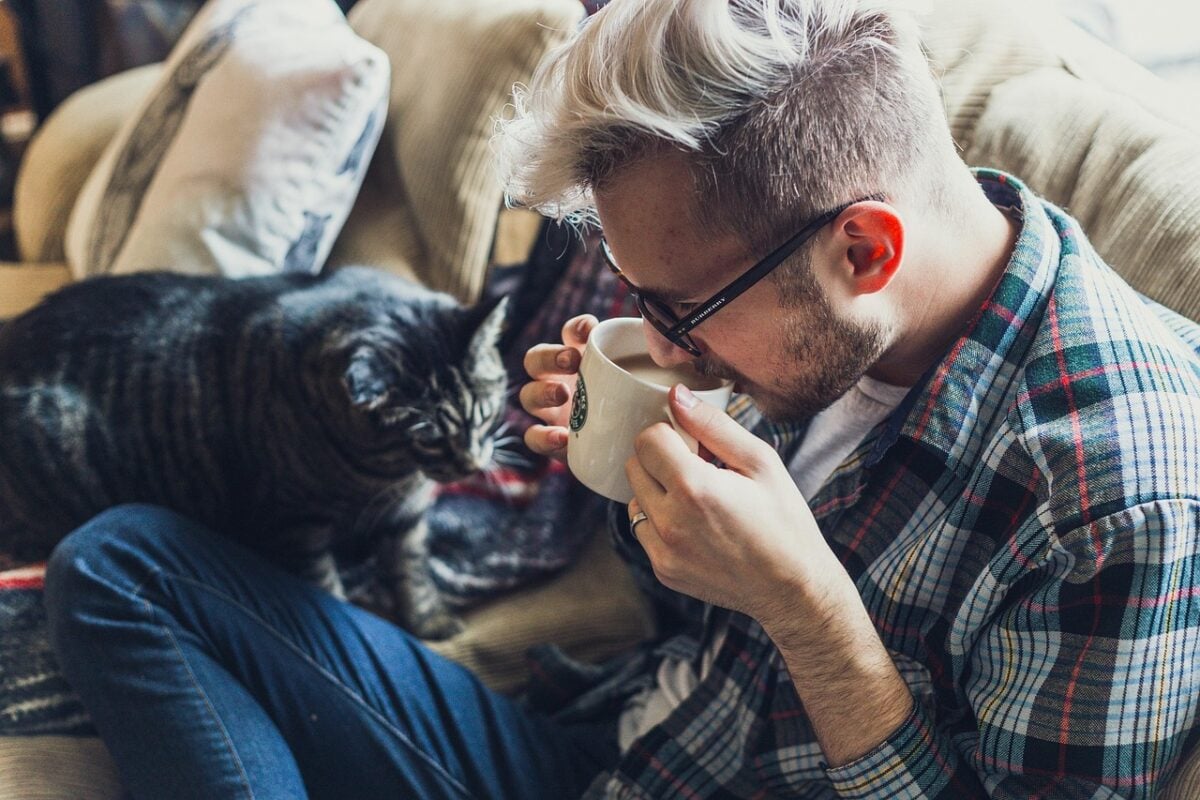
Cats develop daily routines, and many become especially active around dawn and dusk. They also learn when their favorite opportunities for attention, play, and relaxation tend to happen.
That can give certain household members an unexpected advantage:
- The early riser might get the morning greetings, head bumps, and breakfast-time affection.
- The person who works from home may become the preferred afternoon nap companion.
- The night owl might be available just when the cat wants an evening play session or a warm lap.
- The family member who comes home at the same time every day may become part of an eagerly anticipated greeting ritual.
Cats learn household routines remarkably well. If one person is consistently around when your cat feels sociable, that repeated experience can strengthen their connection.
And if your cat spends the entire afternoon ignoring you, only to become a purring lap ornament the second your teenager settles in to watch TV, you may simply have lost the scheduling lottery.
7. They Know Exactly What To Expect From That Person
Your cat jumps onto your lap, and you immediately start petting them. But your partner barely looks up from their book, and your cat settles in for a two-hour nap.
Same cat. Same couch. Two completely different experiences.
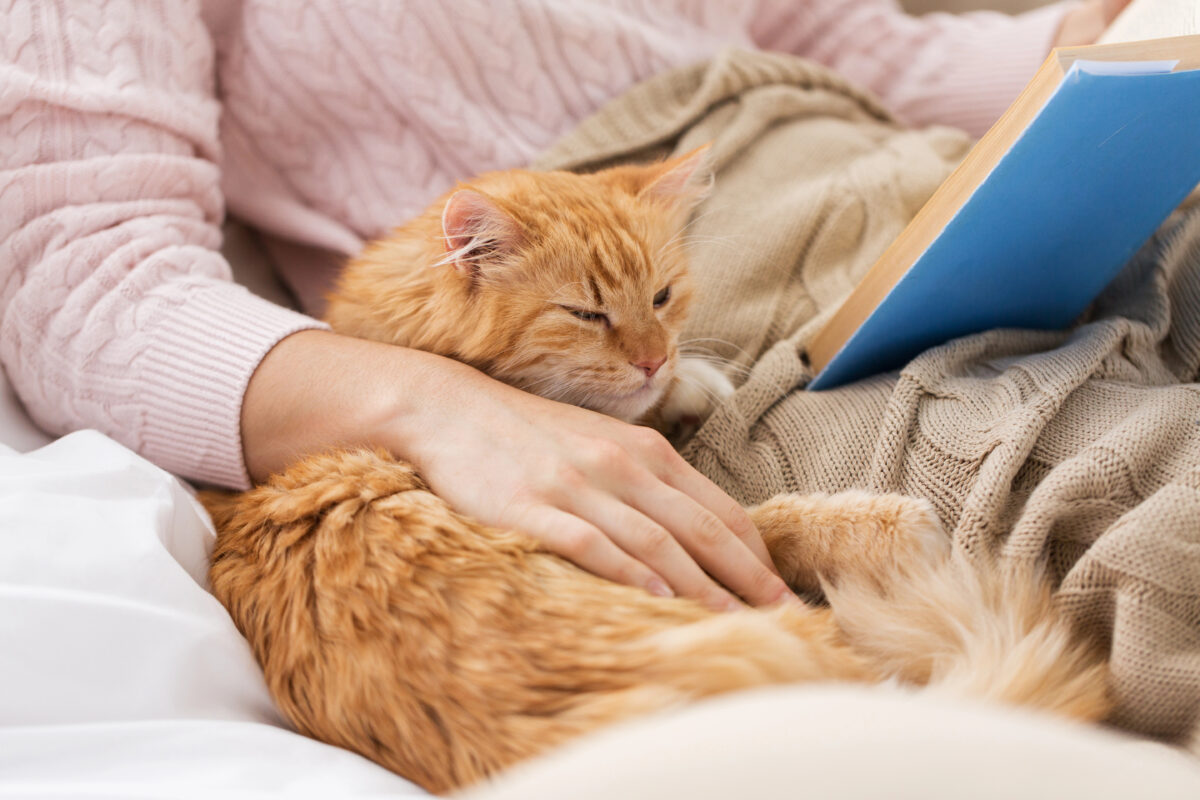
Cats learn what happens when they interact with specific people. Over time, they pick up on which humans respond to their requests and what kind of response they’re likely to get.
For example:
- The reliable playmate: Your cat drops a toy at your roommate’s feet because they’ve learned that this person usually starts a game.
- The dependable door opener: Your cat follows your dad around because he always seems to understand when they want access to another room.
- The perfect nap companion: Your cat curls up beside your teenager because they’ve learned that nobody will disturb them for the next three hours.
- The enthusiastic cuddler: Your cat approaches you for attention because you’ve consistently responded with their favorite chin scratches.
The funny part? The person your cat favors may have no idea they’ve been trained. They just think it’s sweet that the cat visits every evening, completely unaware they’re participating in a meticulously established routine.
8. Their Personalities Just Click
Sometimes, you can do everything right, and your cat will still gravitate toward someone else. You offer the same treats, play with the same toys, and respect the same boundaries. Yet your cat has decided your college-age daughter is the greatest thing to happen to the household since someone invented heated blankets.

Cats have individual personalities, just like people. Some are outgoing and affectionate; others are cautious and selective, and plenty seem to change their social preferences from day to day.
A cat’s temperament is influenced by several factors:
- Genetics: Some cats are naturally more sociable, confident, or cautious than others.
- Early socialization: Positive experiences with different people during kittenhood can influence how comfortable a cat feels around humans later.
- Past experiences: A cat who has had frightening or unpleasant interactions with certain types of handling or human behavior may be more wary in similar situations.
Your cat’s history matters, too. A rescue cat who previously lived with an older adult might initially feel more comfortable around someone with a familiar voice or mannerisms. Another cat raised around energetic children might be completely unfazed by a household full of noise and activity.
But these aren’t hard-and-fast rules. Cats can form strong relationships with people who are nothing like those they’ve known before, and their preferences can evolve with new experiences.
However, this is a deeply unsatisfying explanation when you’ve spent $200 on cat toys, and your roommate has somehow won lifelong devotion by sitting in a chair.
Your Cat May Have Different Favorite People For Different Things
Before you officially declare someone else the winner of your household’s cat popularity contest, consider this: your cat might not have just one favorite person.
The person who gets all the bedtime cuddles might not be the one your cat runs to when they hear a toy rattling. And some of these preferences have surprisingly practical explanations.
| What Your Cat Does | What Might Be Behind It |
|---|---|
| Sleeps beside one person | They offer warmth, a comfortable sleeping position, or fewer nighttime disturbances. |
| Follows another everywhere | That person has an interesting routine, moves around frequently, or provides access to favorite activities. |
| Brings toys to one person | They’ve learned that this person is especially good at starting games. |
| Seeks someone when frightened | That person has become a familiar, reassuring presence during stressful moments. |
| Always chooses one lap | That person’s sitting position, body warmth, or willingness to remain still makes them an ideal resting spot. |
| Greets one person at the door | Their arrival has become associated with attention, food, play, or another anticipated event. |
Sleeping with someone isn’t necessarily the same as preferring them for everything else. A cat might spend every night pressed against your legs but spend the afternoon trailing your partner from room to room.
That doesn’t automatically mean one relationship is stronger. The cat may simply enjoy different things about each of you.
Do Cats Really Prefer Women Over Men?
Maybe your cat adores every woman who walks through the door but treats the men in your household like suspicious strangers. Or perhaps your male cat is completely obsessed with your husband and barely acknowledges anyone else.
So, do cats actually have a preference for men or women?
Research has found differences in how cats interact with male and female humans, but there’s no convincing evidence that cats are naturally programmed to prefer one gender over the other.
An Experiment Revealed Something Surprising
One experiment revealed something particularly interesting. Researchers introduced cats to unfamiliar men, women, boys, and girls. For the first five minutes, the people were instructed not to interact with the cats.
The cats showed no preference for approaching one gender over another.
But when the people were allowed to interact, differences emerged:
- Women and girls were more likely to get down on the floor at the cats’ level and talk to them.
- Men tended to remain seated during the interactions.
- Children, especially boys, were more likely to approach the cats directly, which often caused the cats to retreat.
Other observational research found that women tended to talk to and interact with cats more frequently than men. These are group-level findings, not rules about how individual men or women behave.
The interesting takeaway? Your cat may be responding more to how someone approaches and interacts with them than whether that person is male or female.
Individual experiences matter, too. A cat raised around gentle, attentive men may be especially comfortable with them, while another cat may gravitate toward women because of familiar voices or previous positive experiences.
And the cat’s own sex doesn’t establish a simple preference, either. Male cats don’t automatically prefer women, and female cats don’t automatically prefer men.
Of course, some cats are equal-opportunity attention seekers. They’ll happily climb onto anyone who sits down long enough, regardless of gender, age, or whether that person actually wanted a cat in their lap.
Can Your Cat’s Favorite Person Change?
Absolutely. Your cat’s favorite person today might not be their favorite six months from now. And sometimes, the change happens without anyone realizing the household rankings are being rearranged.
Maybe your partner starts working from home, giving the cat a new afternoon companion. Your teenager leaves for college, and the cat begins spending more time with you. Or an older cat who once lived for energetic play sessions discovers the considerable appeal of someone who enjoys sitting on the couch for hours.

Cats’ relationships with people can evolve as their routines, needs, and experiences change.
Some common reasons include:
- Household changes: Someone moves in, moves out, or starts spending more time at home.
- Changing routines: A different person takes over feeding, playtime, or other daily activities.
- Age and personality: A cat’s activity level, confidence, and preferred ways of interacting may change as they mature.
- New experiences: Positive interactions with someone they previously avoided can gradually build familiarity and trust.
- Stressful events: Moving, introducing another pet, or changes in the household can influence which people a cat seeks out.
But there’s a difference between a gradual shift in preference and a sudden change in behavior.
If your normally affectionate cat abruptly avoids someone they’ve always loved, starts hiding, or becomes unusually clingy, pay attention to what else has changed.
Pain, illness, sensory changes, and stress can all affect a cat’s social behavior. If the change is sudden, persistent, or accompanied by differences in appetite, activity, litter box habits, or grooming, contact your veterinarian.
And if your cat simply starts spending more evenings with your roommate because they’ve discovered the heated blanket on their bed? That’s probably less of a relationship crisis and more of a successful real estate investment.
How To Strengthen Your Bond Without Competing For Your Cat
So, your cat has chosen someone else as their favorite lap, sleeping companion, or personal entertainment director. Does that mean you’re destined to remain the household’s unpaid litter box technician?
Not at all. You can strengthen your relationship with your cat without trying to steal someone else’s spot on the popularity leaderboard.
The trick isn’t to shower your cat with even more attention. It’s to make the time you spend together more enjoyable from your cat’s perspective.
Small Changes That Can Make You More Appealing To Your Cat
- Let your cat come to you.
Instead of repeatedly picking them up or inviting them onto your lap, sit nearby and give them opportunities to approach. When they do, let them decide how much contact they want. - Pay attention to their preferences.
Does your cat love cheek scratches but pull away when you stroke their back? Do they prefer sitting beside you rather than on you? Those little details can make a big difference. - Create a ritual that’s just yours.
Try a short wand-toy session before dinner, a few minutes of reward-based trick training, or a morning brushing routine if your cat enjoys being groomed. Consistency helps your cat learn to anticipate enjoyable time with you. - Make playtime more satisfying.
Move toys like prey, letting them hide, dart away, and occasionally get caught. A cat who ignores a toy dangling in their face might become completely fascinated when it disappears behind the couch. - Reward interactions without demanding more.
If your cat approaches, offer something they enjoy, whether that’s a gentle scratch, a little play, or an occasional treat. Don’t immediately turn every friendly visit into a full-body cuddle session. - Respect their decisions.
If your cat walks away, let them. Repeatedly pulling them back or insisting on more attention can make future interactions less appealing.
And don’t overlook the value of simply spending time together. Sharing a room while you read, work, or watch television can give your cat opportunities to enjoy your company without being the center of attention.
One thing we wouldn’t recommend? Trying to make the other person less appealing by withholding attention, restricting access to them, or turning affection into a competition. Your cat doesn’t need to lose one good relationship to develop another.
Does It Mean Your Cat Loves Them More?
Watching your cat shower someone else with affection can sting a little, especially when you’re the one who’s spent years taking care of them. But being the preferred lap isn’t necessarily the same as having the strongest bond.
Cats don’t express affection in just one way, and some of their most meaningful social behaviors are surprisingly easy to overlook.
Your cat might be showing you affection when they:
- Slow blink at you during a relaxed moment.
- Rub their face against you when you come home.
- Choose to spend time nearby, even without physical contact.
- Approach you for reassurance when something unfamiliar happens.
If you’re wondering where you stand, there are plenty of other signs your cat loves you that have nothing to do with winning the lap competition.
And remember, the person getting all those cuddles may also be the one who’s been trapped under a sleeping cat for three hours, desperately needing to use the bathroom. Every position in the household hierarchy comes with responsibilities.
Frequently Asked Questions
Still trying to figure out your cat’s household favorites? You’re not alone. Here are answers to some common questions about why cats choose certain people.
Have a question we haven’t covered? Drop it in the comments below! We’d love to hear about your cat’s mysterious preferences.
Why Does My Cat Prefer My Husband When I’m The One Who Feeds Them?
Feeding your cat helps build positive associations, but it doesn’t guarantee you’ll be their favorite cuddle companion. Your husband might have a different play style, offer the kind of physical affection your cat prefers, or simply be available when your cat wants attention. Cats form relationships through many everyday interactions, not just mealtimes.
Why Does My Cat Like The Person Who Ignores Them?
Cats often appreciate having control over when interactions begin and end. Someone who isn’t constantly reaching for them or trying to initiate cuddles may feel less demanding. That gives the cat freedom to approach on their own terms.
Of course, there’s something particularly insulting about watching your cat fall madly in love with a houseguest who just announced they’re not a cat person.
Can A Cat Have Two Favorite People?
Absolutely! Cats can form strong bonds with multiple people, and those relationships don’t have to look identical. One person might be the preferred playmate, another the favorite sleeping companion, and someone else the first person the cat approaches when they want attention.
Some cats also spread their affection fairly evenly across the household, refusing to participate in the competition at all.
Why Does My Cat Sleep With Me But Cuddle Someone Else During The Day?
Your cat may be choosing different people for different reasons. Nighttime sleeping preferences can depend on warmth, comfort, movement, and routine, while daytime cuddling may happen when someone is particularly available or responsive.
For example, your cat might love sleeping beside you because you barely move at night but prefer your roommate’s lap during the afternoon because they’re usually sitting in the sunniest chair.
Why Did My Cat Suddenly Start Preferring Someone Else?
A change in routine, availability, or household relationships could explain the shift. Perhaps another family member has started spending more time at home or introduced a new activity your cat enjoys.
However, an abrupt change in social behavior deserves attention, especially if your cat also seems withdrawn, unusually clingy, less active, or different in other ways. Stress, pain, and illness can affect how cats interact with familiar people, so contact your veterinarian if the change is unexplained or accompanied by other symptoms.
More Clues About Your Cat’s Favorite Human
Cats have some wonderfully strange ways of showing affection, and being someone’s favorite lap is only part of the story. If you’re still trying to figure out where you stand in your cat’s social circle, these articles might reveal a few things you’ve been missing.
- 15 Signs Your Cat Has Imprinted On You – From following you everywhere to some surprisingly peculiar habits, discover the behaviors that can reveal a particularly strong attachment.
- How To Tell If Your Cat Loves You – Your cat might be showing you affection in ways you’ve never thought to notice.
- Why Your Cat Sleeps Pressed Up Against You – Find out what your cat’s favorite sleeping position might reveal about comfort, trust, and your unofficial job as a heated mattress.
Who’s your cat’s favorite person? Are you doing all the work while someone else gets the cuddles, or are you the lucky one? Tell us about your household’s cat favoritism in the comments, especially the ridiculous ways your cat makes their preferences known!