When you purchase through links on our site, we may earn a commission at no extra cost to you. Learn more.
You’re finally drifting off to sleep when suddenly there’s a crash in the other room. You bolt upright, imagining the worst, and tiptoe off to inspect the noise.
Table of Contents
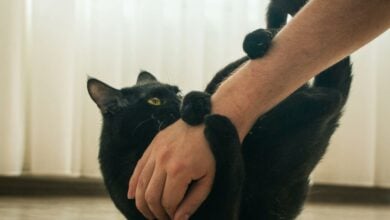
Standing there, looking as innocent as can be, is your cat. They blink at you, flick the tip of their tail, and sprint full speed into the darkness.

Let’s break down why your cat turns into a tiny goblin after dark and what, if anything, you can do about it.
Day Creatures, Night Crawlers & Everything In Between
Across the animal kingdom, activity patterns fall into four main categories:
Want our human-written content to rank above AI-generated garbage? Help us out by clicking this button!
- Diurnal animals are active during the day and sleep at night. This includes squirrels, lizards, butterflies, and most humans.
- Nocturnal animals are the opposite. Owls, bats, and raccoons sleep through daylight and come alive at night.
- Crepuscular species are most active during dawn and dusk. Think rabbits, deer, mice, and a surprising number of snakes.
- Cathemeral animals have no fixed schedule. They’re awake or asleep whenever it suits them. This group includes bobcats, cougars, coyotes, mountain goats, black bears, and frogs.
Some animals, like humans, take advantage of daylight hours; however, according to National Geographic, approximately 70 percent of mammals are active during the day and sleep at night. While most species adhere to a general rhythm, many adjust their behavior in response to factors such as light, temperature, food availability, or safety.
Why Cats Get The Zoomies At 3 A.M.
You hear the first thud around 2:47 a.m. By 3:00, your cat is ricocheting off the furniture.
These late-night sprints are what the internet has dubbed “the zoomies,” and they are as confusing as they are common.

There are a few reasons behind the chaos:
- Stored-up energy. Cats sleep up to 16 hours a day, which leaves them with plenty of fuel for a midnight sprint.
- Natural hunting instinct. In the wild, cats would be on the prowl during low-light hours when prey is most active. Indoor cats keep the instinct, even if their “prey” is a dust bunny.
- Attention seeking. Some cats figure out that nothing gets a human out of bed faster than a vase hitting the floor.
- Spontaneous chaos. Sometimes zoomies just happen. No reason, no warning, just vibes.
If your cat is tearing down the hallway, climbing the curtains, or launching directly off your chest while you sleep, you are in good company.
Quick Takeaway: Zoomies are normal. They are not a sign of bad behavior or illness. They are simply your cat’s way of burning energy and practicing hunting skills in the least convenient way possible.
Meet The Internet’s Favorite Night Goblin
Famous on TikTok for hallway sprints, unearthly yowls, and gravity-defying leaps, Nimbus has become the unofficial mascot of nighttime chaos. His midnight marathons rack up millions of views because every cat owner recognizes that look in his eyes.
The Evolution Of Cat Sleep Habits
Your housecat didn’t invent the zoomies. Their ancestors did.
Domestic cats evolved from wild cats, which hunted small prey during dawn and dusk. These were the best times to avoid larger predators while still catching a meal.
That twilight hunting schedule is still built into your cat today. Even though kibble is served in a bowl and predators are nowhere to be found, the instinct to stay alert when the light changes hasn’t gone away.
Okay, So… Are Cats Nocturnal?
Not quite. Cats get labeled nocturnal because they love sprinting across the house the second you close your eyes.
Most experts classify them as crepuscular, meaning they’re wired to be most active at dawn and dusk. This explains why your cat seems eager to play at sunrise and again after sunset.
Of course, cats don’t like being put in boxes (unless it’s a cardboard one). Some researchers argue they’re cathemeral, meaning they nap and wake in shorter bursts around the clock.
One study found cats were just as likely to be awake during the day as at night, depending on their age, sex, and whether they lived indoors or outdoors.

And then there’s the “domestic cat variable.” Many cats sync their routines with their humans, whether that means shadowing you while you work from home or waiting until your alarm goes off to start meowing for breakfast.
Quick Takeaway: Cats are not nocturnal. Most are crepuscular, but they bend the rules as it suits them. Think of them less as night owls and more as tiny freelancers who refuse to share a calendar.
3 Cat Sleep Myths, Busted
Cats’ behaviors are often misunderstood, and their sleep habits are one of the most significant sources of confusion. Here are five common myths about feline sleep and the facts that prove otherwise.
Myth 1: Cats Are Nocturnal
Fact: Most cats are crepuscular, meaning they’re most active at dawn and dusk. They may seem nocturnal because many decide midnight is the perfect time for chaos.
Myth 2: Cats Sleep All Day
Fact: Cats nap a lot, often 12 to 16 hours daily, but they do it in short cycles. Those quick wake-ups are what fuel 3 a.m. parkour sessions.
Myth 3: A Restless Cat At Night Is Just Being Naughty
Fact: While some antics are normal, sudden or extreme nighttime restlessness can signal issues like hyperthyroidism, anxiety, or cognitive decline. If your cat’s behavior changes sharply, it is time to talk to a vet.
Spooky Cats & The Witching Hour
Cats have been tied to superstition for centuries. In medieval Europe, black cats were often linked to witches and thought to bring bad luck, which is why they still appear in Halloween imagery today. Their glowing eyes, silent movements, and habit of appearing at night made them an easy symbol of the unknown.
Not every culture saw them as ominous. In parts of Japan and Great Britain, black cats were viewed as good luck and protectors. The contrast shows how cats have always carried an air of mystery, inspiring fear in some places and affection in others.

Even now, when your cat bolts down the hallway at midnight or stares into the darkness like they see something you don’t, it is easy to see why people once thought they kept company with spirits.
Whether seen as good luck or bad, cats have always owned the witching hour. They don’t need Halloween to act spooky.
How Age Affects Cat Sleep
Not all cats keep the same routine throughout their lives. A kitten’s schedule looks very different from that of a senior.

- Kittens often sprint through the night in short bursts, then crash just as suddenly.
- Adult cats settle into a more crepuscular rhythm, with clear activity peaks at dawn and dusk.
- Senior cats nap longer and more often. They may sleep deeply but can also wake more frequently due to health issues.
If your cat’s sleep seems unusual, check their age first. What feels like a problem may just be part of a normal life stage.
5 Ways To Survive Life With A Midnight Menace
If your cat thinks 3 a.m. is party time, here are five survival strategies that may save your sleep (and your sanity).
1. Tire Them Out With Playtime
Just before bed, guide your cat through a fifteen-minute interactive play session. The goal is to burn energy and satisfy their hunting instincts so they don’t decide your hallway is a racetrack at midnight.

Ideas to try:
- Blow catnip bubbles. Two-thirds of cats respond to catnip, and the effects last around ten minutes. Some cats mellow out, but about 20 percent go wild with hyperactivity and rolling. Either way, catnip bubbles are cheap entertainment and a way to get your cat moving before bed.
- Wave a wand toy. Feather wands like Da Bird by GoCat move and sound like real prey. Most cats can’t resist the chase.
- Use teaser toys. Classic options like the Cat Dancer give cats the thrill of stalking mice, snakes, or insects without leaving your living room.
- Laser toy finale. Point a laser around the room to get them sprinting, but end the session with a real toy or treat they can “catch” so they feel like victorious hunters.
- Play fetch. Yes, some cats fetch. If yours does, lucky you.
The key is to treat it like a real hunt: warm up, full chase, and cool down with a catch. Don’t just dangle the toy in front of them. Make it run, hide, and finally surrender.
Bonus Tip: Rotate which toys you use at night. A “new” toy is often more exciting than the same one they saw all day.
2. Feed Them On A Schedule
Cats love routines, especially when food is involved. Rather than free-feeding, save the final meal of the day for bedtime.
After a good play session, this last portion mimics the hunt-eat-sleep cycle cats follow in the wild. With any luck, a full belly will encourage your cat to snooze instead of zoom.

Bonus Tip: For cats who demand breakfast at sunrise, try an automatic feeder that dispenses food in the morning so you can stay in bed.
3. Break Out The Puzzle Feeders
For cats who still have gas in the tank, puzzle feeders or treat-dispensing toys can keep them occupied when you’re trying to wind down.
Place them around the house—ideally far from your bedroom—so the noise doesn’t disturb you. Store these toys during the day to make them a special nighttime activity.

Bonus Tip: Keep puzzle feeders hidden during the day so they feel like a special nighttime event. Cats are more engaged when the challenge feels new.
4. Give Them Night TV
Leave the curtains open and set up a cat tree or hammock near a window. To you it’s the same streetlight you’ve seen for years.
To your cat, it’s a late-night nature documentary with bonus bug cameos. A little window-watching can keep them entertained long enough for you to fall asleep.

Bonus Tip: Add a nightlight or soft background sound (like a white noise machine or TV on low volume) to make your cat feel less restless in the dark.
5. Shut The Bedroom Door
If nothing else works, reclaim your space. Close the door, stick to the routine, and be consistent.
Your cat may protest at first, but eventually they’ll learn that your bed is not part of the arena. Sometimes boundaries are the best form of self-care.

Quick Takeaway: A tired, well-fed, and entertained cat is less likely to turn into a midnight menace. And if all else fails, there’s always the bedroom door.
More Nighttime Cat Enrichment Ideas
Some cats will always be more active after dark, but you can redirect that energy into activities that don’t involve wrecking your sleep schedule. These enrichment ideas keep cats entertained while you get some rest.
- Set up a bird feeder outside a window. During warmer months, nocturnal insects and late-feeding birds can provide endless “cat TV.”
- Play cat videos on your TV or tablet. YouTube has entire playlists of birds, squirrels, and fish designed to grab feline attention.
- Try motion-activated toys. Some toys will spring to life if your cat walks past them. A little surprise enrichment may distract them from pawing at your door.
- Use window hammocks and cat trees. Elevated spots give your cat a better view of nighttime activity outside, and the perch itself feels like enrichment.
Think of it as programming for your cat’s late-night channel. The more options they have, the less likely they are to invent new ways to wake you up.

Nighttime Behavior Red Flags
Some nighttime antics are funny. Others can signal something more serious.
If your cat is suddenly louder, more restless, or changing patterns overnight, it may point to an underlying health issue. Hyperthyroidism, high blood pressure, anxiety, and cognitive dysfunction in older cats can all cause increased night activity.
Call your veterinarian if your cat’s behavior is new, extreme, or paired with other changes like weight loss or appetite shifts. Not all goblin behavior is harmless chaos. Sometimes it is a cry for help.
Frequently Asked Questions
Cats can be unpredictable, especially when the sun goes down. Here are answers to the most common questions about their late-night habits.
Don’t see your question? Ask us in the comments!
Why Are Cats More Active At Night?
If your cat started as a stray or spends time outdoors, they are more likely to be active after dark. Many small prey animals are active at night, and cats have adapted to hunt during this time.
Even indoor cats keep some of these instincts. The zoomies are a reminder that the hunter is still in there, even if the only prey in sight is a sock.
Why Is My Indoor Cat Displaying Nocturnal Behavior?
Zoomies are normal for indoor cats, but boredom, hunger, health issues, and aging can exacerbate them. A bedtime routine that includes play and food can help keep the chaos at bay.
If the behavior is sudden or extreme, a vet check is a good idea. Sometimes, a new nighttime activity can be a sign of pain or illness.
Can I Train My Cat To Sleep At Night?
You cannot erase instinct, but you can shape habits. Play sessions, a late meal, and ignoring 2 a.m. meows all send the right signals.
Over time, many cats adapt at least partially to their humans’ schedule. Think of it as a compromise between species.
Is It Okay To Lock My Cat Out Of The Bedroom?
Yes, as long as your cat has food, water, and a safe space elsewhere. The first nights will likely come with meows and pawing at the door.
Sticking to your boundary is essential. If you give in once, your cat learns that persistence wins. If your cat hates being alone, review our tips for supporting an anxious or lonely cat.
Should I Worry If My Cat Sleeps All Day?
Cats often sleep 12 to 16 hours a day, and some even nap longer. This is normal and not usually a cause for concern.
Pay attention to what happens when they are awake. If your cat is alert, playful, and eating normally, their naps are nothing to worry about.
Why Does My Cat Stare At Me at Night?
To you, it feels unsettling. To your cat, staring is just another way of communicating.
Sometimes it means they want food or attention. Other times, they may enjoy the drama of locking eyes in the dark.
Ready For More Weird Cat Sleep Habits?
If your tiny goblin keeps you awake at night, you might also wonder what they get up to while snoozing. Cats have some truly strange sleep quirks, and we’ve got the answers. To start, learn why cats twitch in their sleep or sleep with their face covered.