High Times, Low Morals: The Day Mr. Fluff Got Baked — What To Do When Your Cat Eats Weed

When you purchase through links on our site, we may earn a commission at no extra cost to you. Learn more.
Your stomach drops before you can even process what just happened. One moment, your cat was curious, and the next, you realize they may have eaten your weed.
Table of Contents
You’re not a bad pet parent. Accidents happen.
What matters now is how you respond in the next few minutes. This guide walks you through exactly what to do, how to determine if your cat is in real danger, and how to keep them safe once the crisis has passed.

Oops — My Cat Ate Weed! What Now?
Your heart just dropped. Your cat is stumbling, glassy-eyed, or acting like the room won’t stop spinning.
Want our human-written content to rank above AI-generated garbage? Help us out by clicking this button!
Then it hits you. The edible. The rolled joint. The curious paw that never misses anything.
THC, the psychoactive chemical in weed, overwhelms a cat’s nervous system. It can slow their heart rate, affect balance, and cause severe disorientation.
Cats can get seriously ill from marijuana, but most recover if treated quickly. So, take another breath before the panic fully kicks in and follow our 60-second action plan.
Watch: What THC exposure can look like in cats — disorientation, wide eyes, and loss of balance. If you see similar signs, call your vet immediately.
60-Second Action Plan: What To Do Right Now
If your cat just ate weed, follow these steps immediately.
1. Move your cat to a safe, quiet space. Keep them off stairs and furniture where they could fall. Lower lights and cut out noise to help them stay calm.
2. Check their breathing and coordination. If they’re panting, drooling, twitching, or can’t stand, it’s an emergency.
3. Call your vet or an emergency animal hospital. Explain what your cat may have eaten, how much, and when it happened. Be honest about the form of cannabis, whether bud, oil, vape, or edible.
4. Do not make your cat vomit. Inducing vomiting without professional guidance can cause aspiration or other complications.
5. Monitor while preparing to leave. If your cat is stable, line the carrier with a towel and keep them warm. If they appear unresponsive or limp, take them to the vet immediately.
Emergency Contacts
- Pet Poison Helpline: (855) 764-7661
- ASPCA Poison Control Center: (888) 426-4435
Why Weed Isn’t A Quirky Catnip Substitute
It’s easy to see why people mix them up. Both can make cats act funny, but what’s happening inside their bodies is entirely different.
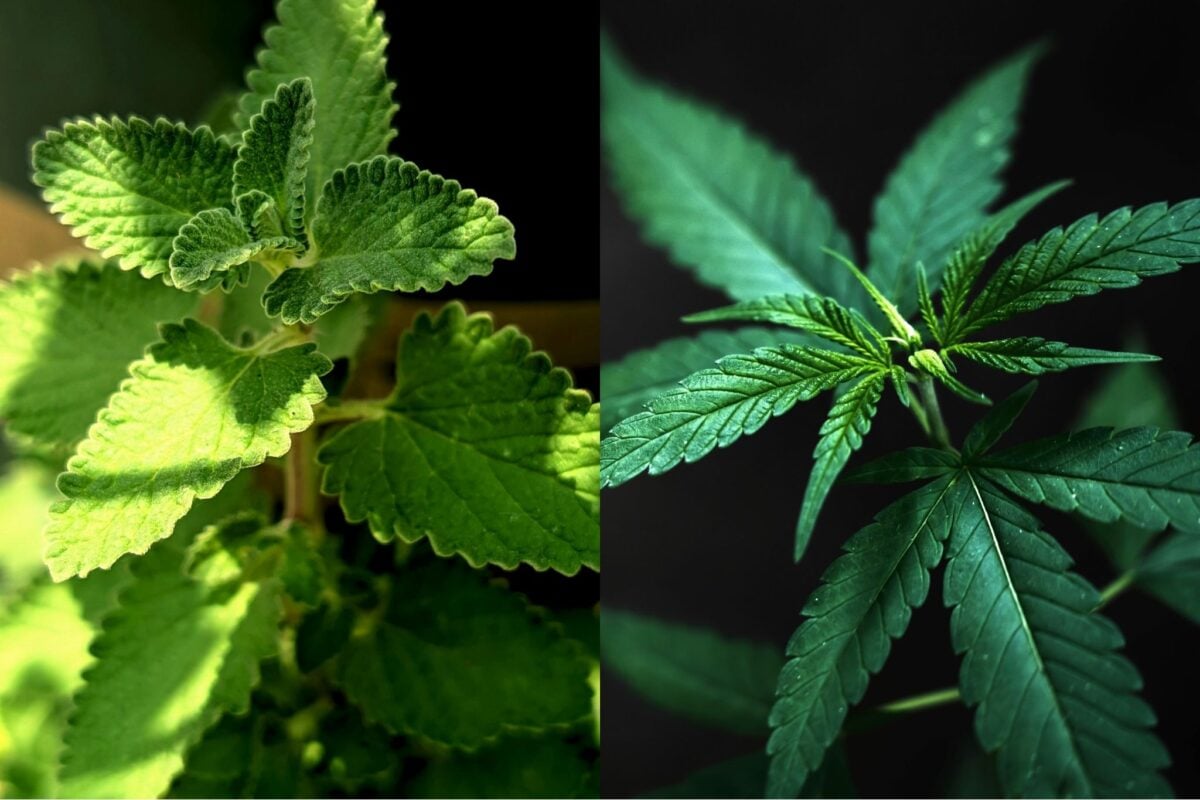
Catnip contains a compound called nepetalactone that activates feel-good chemicals in the brain. It’s similar to mild euphoria and wears off in about 10 minutes without harming your cat.
Marijuana, on the other hand, contains THC, which overstimulates the nervous system. It can cause dizziness, disorientation, slowed reflexes, and in severe cases, tremors or hypothermia.
CBD is different from THC but often comes from the same plant. If a product isn’t clearly labeled or contains trace THC, it can still make your cat sick.
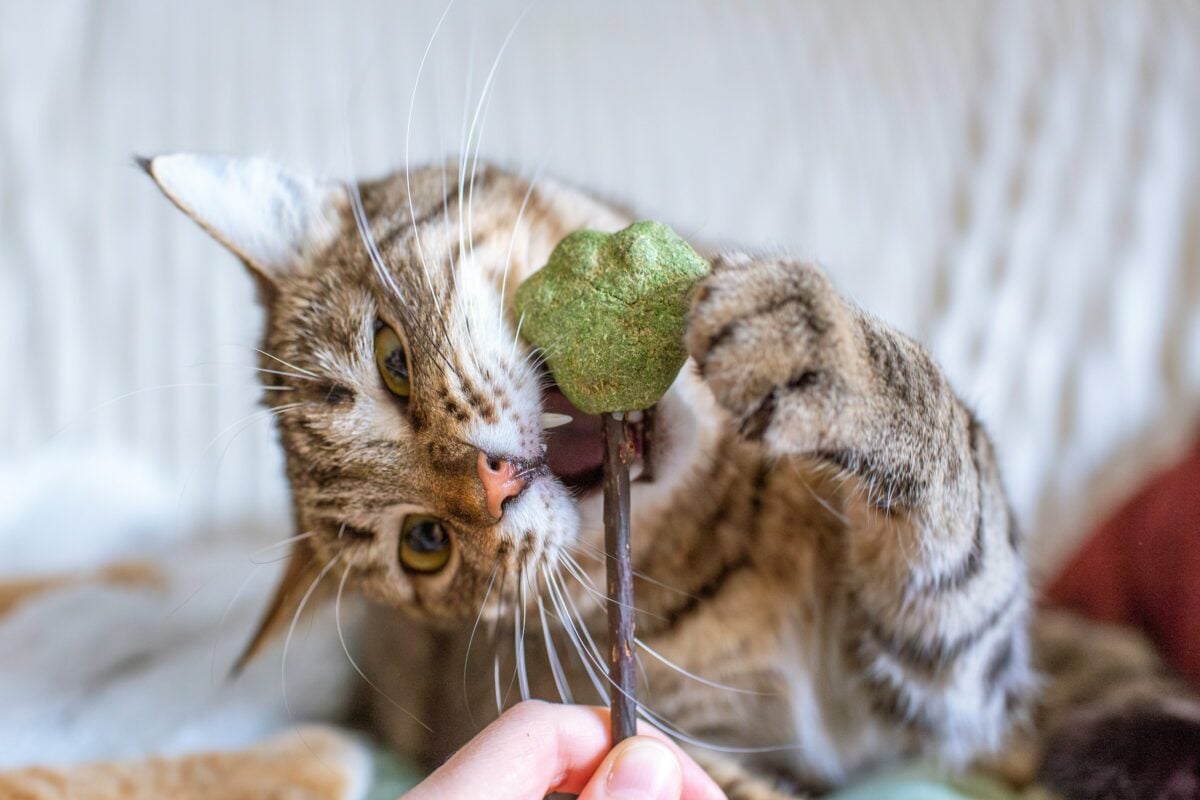
So while catnip gives your cat a safe, silly buzz, weed does the opposite. THC is toxic to cats and can leave them scared, disoriented, or sick until the effects wear off.
Myth vs Fact: Can Cats Actually Get High?
Here’s what’s really true when it comes to marijuana and your cat.
Myth 1: Weed Is Basically Catnip For Cats
- Catnip safely triggers natural feel-good chemicals that wear off within minutes.
- THC overwhelms brain pathways and causes confusion, loss of balance, and physical distress.
Myth 2: A Little Bit Won’t Hurt
- Modern cannabis products are far more potent than they used to be.
- Even a crumb of an edible or a tiny lick of oil can make a cat very sick.
Myth 3: My Cat Will Just Sleep It Off
- THC is toxic and can linger in a cat’s body for up to three days.
- What appears to be deep sleep may actually be sedation or slowed breathing.
Myth 4: Only Eating Weed Is Dangerous
- Cats can absorb THC from secondhand smoke or oils that cling to their fur.
- Even passive exposure can trigger symptoms like wobbling, drooling, or tremors.
Quick Takeaway: Cats can absorb THC through ingestion or secondhand smoke — even “a puff” can make them sick.
Signs Your Cat Is Having A THC Reaction
Symptoms usually start within 30 to 90 minutes after exposure, but timing can vary depending on how much your cat ingested and in what form. Edibles and oils often take longer to show effects but can last much longer once they start.

At first, your cat may just seem “off.” As THC levels rise, symptoms become more obvious and can range from mild wobbling to severe lethargy or collapse.
Common signs of marijuana toxicity in cats include:
- Loss of balance or coordination
- Dilated pupils
- Slow or unsteady movements
- Drooling or vomiting
- Tremors or twitching
- Loud and excessive vocalization
- Low body temperature
- Slow heart rate
- Slow breathing
- Incontinence (loss of bladder control)
- Extreme sleepiness or unresponsiveness
If your cat shows any combination of these signs, it’s time to call your vet or a poison control hotline. Even if symptoms seem mild, cats can worsen quickly once THC takes effect.
Case Study: Marijuana Intoxication In A Cat
In one documented case, a six-year-old Persian cat exposed to marijuana smoke developed cycles of agitation and apathy, followed by neurological signs like dilated pupils and disorientation. Blood tests confirmed measurable THC and its metabolites in the cat’s system.
After two weeks of hospitalization with IV fluids and close monitoring, the cat made a full recovery, but symptoms returned when it was re-exposed to smoke.
This case demonstrates that even secondhand exposure can cause measurable toxicity and severe neurological symptoms in cats.
THC Toxicity Scale
Not all cases of marijuana exposure look the same. This quick guide can help you gauge how serious your cat’s reaction might be while you prepare to contact a vet.
| Severity Level | What You Might See | What To Do |
|---|---|---|
| Mild | Slight wobbling, dilated pupils, mild sleepiness | Monitor closely and call your vet for guidance |
| Moderate | Tremors, drooling, vomiting, loss of coordination | Visit your vet as soon as possible |
| Severe | Collapse, unresponsiveness, seizures, very low temperature | Go to an emergency vet immediately |
How Long THC Stays In A Cat’s System (And Why It Matters)
THC doesn’t pass through a cat’s body as quickly as it does in humans. Because cats are smaller and metabolize differently, the effects can last anywhere from 24 to 72 hours.
That means a cat who seems to be improving could still be at risk for a relapse in symptoms. Lethargy, unsteady movement, or low body temperature can return even a day later.
This is why monitoring at home isn’t always enough. A vet can check your cat’s vital signs and stabilize them if needed.
What the Vet Will Do — And What You Can Do In The Meantime
Once you’ve reached your vet, they’ll ask what your cat may have eaten, how long ago it happened, and what symptoms you’re seeing. Try to be as specific as possible about the form of cannabis involved.
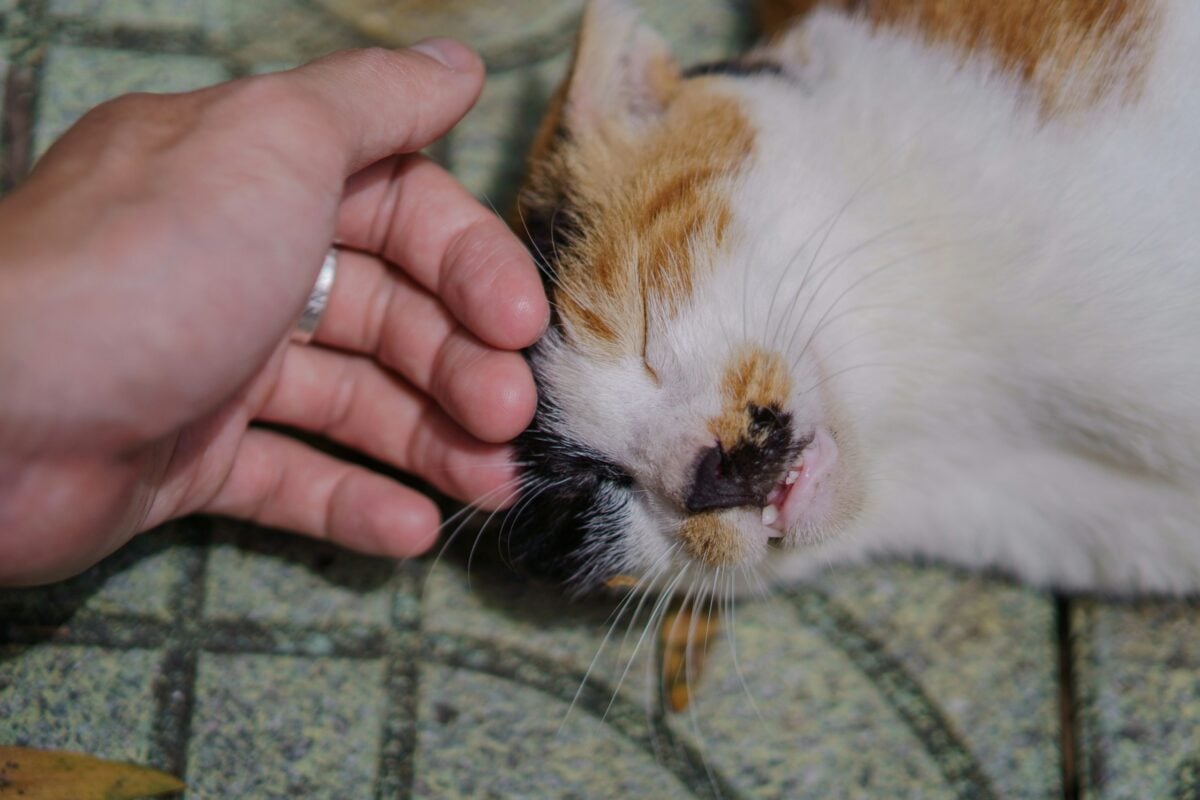
The vet may induce vomiting if the ingestion was recent and your cat is still alert. In other cases, they may use activated charcoal to absorb remaining THC before it fully enters the bloodstream.
For cats exhibiting severe symptoms, supportive care is crucial. This can include IV fluids, warming blankets, and medications to control tremors or nausea.
If your cat inhaled smoke rather than eating cannabis, they’ll likely receive oxygen support and close monitoring. Most cats recover well within one to two days once the toxin is processed.
If your vet advises you to monitor your cat at home, check on their breathing and temperature every few hours.
Offer small sips of water, but skip food until they appear to be coordinated again.
Extra Danger Zones: Edibles, Oils & Secondhand Smoke
Not all cannabis products affect cats the same way. Some forms are far more dangerous than others because they contain higher concentrations of THC or added ingredients that are toxic on their own.

Edibles
Edibles are one of the most significant risks because they mix THC with other harmful substances. Chocolate, caffeine, or xylitol can make these treats doubly dangerous for cats.
Even a small piece of a brownie or gummy can cause severe reactions. Edibles also take longer to digest, which means symptoms may appear hours later but last much longer.
Oils & Concentrates
Oils, waxes, and vape liquids contain highly concentrated THC. A single drop can deliver a much higher dose than a small amount of dried flower.
Because oils are sticky, cats can ingest them by licking their fur or paws after coming into contact with them. This often happens when products are left out on tables or countertops.
Secondhand Smoke
Smoke exposure can be just as harmful as ingestion. Cats have smaller lungs and faster respiratory rates, which makes them more sensitive to airborne toxins.
Even light exposure can lead to coughing, lethargy, or coordination problems. Residue from smoke can also cling to fur, increasing the risk of later ingestion during grooming.
Is CBD Safe For Cats?
Research into CBD use in cats is still limited. Most of what we know comes from small studies or comparisons with dogs.

Early data suggests CBD is generally well-tolerated in felines, but side effects can still occur.
In one short-term trial, cats given a CBD and CBDA paste showed no adverse effects, while another study found cats absorbed CBD less efficiently than dogs and were more likely to show mild reactions such as excessive licking or head shaking.
What Research Reveals About Different Cannabinoids
A placebo-controlled study in 2021 tested escalating doses of CBD and THC oils in healthy adult cats. Even at high doses, side effects were mild and temporary, mainly including lethargy, slight ataxia, or digestive upset.
Oils containing THC caused more neurological changes than CBD-only oils.
Researchers concluded that CBD appears safe in short-term use but that THC exposure, even in small amounts, increases risk.
In 2024, another trial tested a 1:20 THC-to-CBD extract to better understand how cats metabolize cannabinoids. Both compounds were absorbed within about three hours, and no serious side effects like vomiting or neurological changes were observed at any dose.
However, two cats in the higher-dose group began salivating shortly after treatment, and individual blood concentrations varied significantly.
This means it’s difficult to predict how much CBD a cat actually absorbs or how much is needed to produce a consistent benefit.
What Cat Owners Report
A survey from Colorado State University found that about 12% of cat owners have tried CBD for their pets. Reported benefits included pain relief, reduced inflammation, better sleep, and less anxiety.

The most common side effect was mild sedation, and most owners who stopped using CBD did so due to cost or lack of results rather than safety issues.
So yes, you can give CBD to your cat, but research on its long-term effects is still developing. Always choose a product labeled “broad-spectrum” or “THC-free”, and consult your veterinarian for dosing and product guidance.
To learn more, view our article How Much CBD Oil Can I Give My Cat?
Prevention: How To Keep Your Cat Out Of Your Stash
Once your cat is safe, the best next step is prevention. Cats are curious by nature, and the smell of cannabis can easily catch their attention.
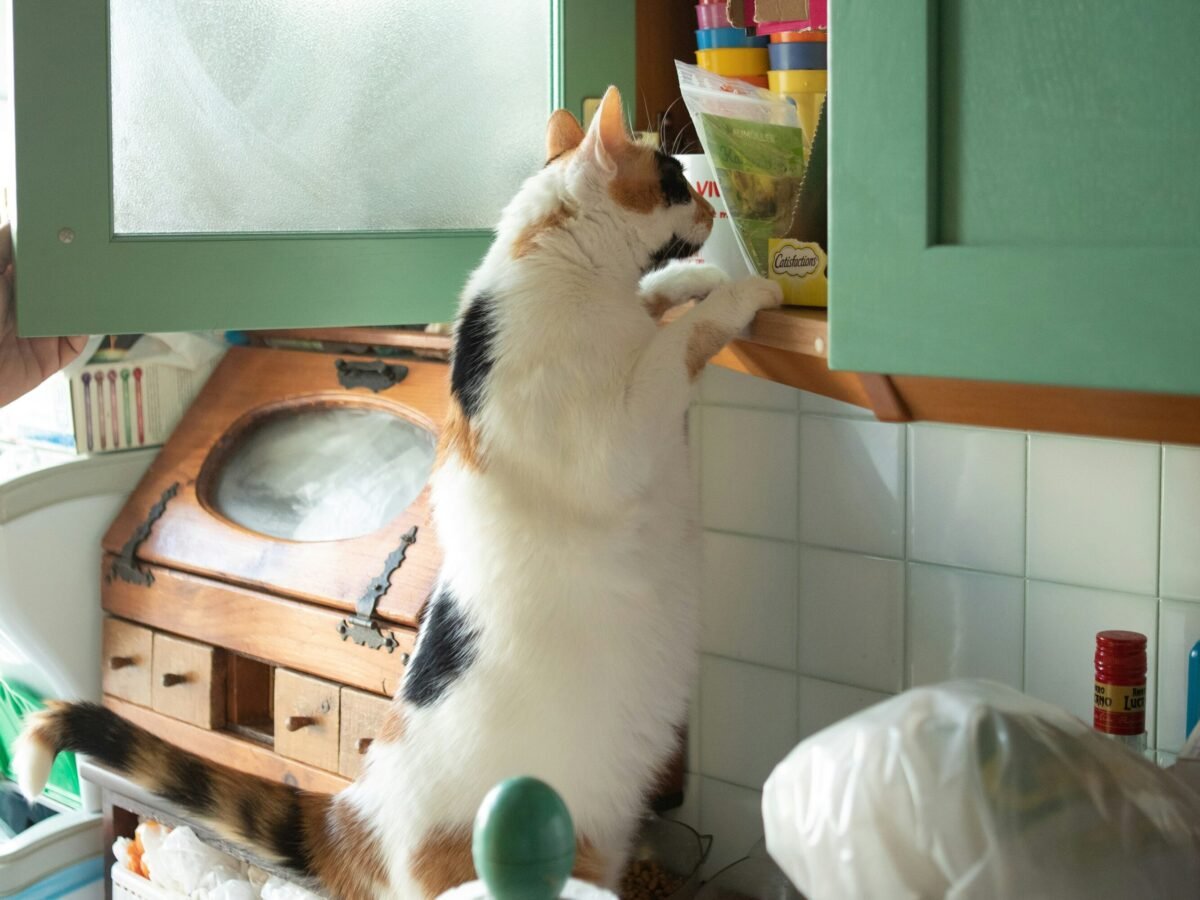
Store all marijuana products in sealed containers that your cat can’t chew through or open. Keep them inside a drawer or cabinet, rather than on counters or tables.
Remember that cats can jump high and pry open loose lids. Even residue left on a countertop or vape pen can expose them to THC.
If you smoke or use cannabis at home, choose a well-ventilated area and keep your cat in another room. Always wash your hands before touching their toys or food.
Safe Storage Checklist
Use this quick guide to keep curious paws away from your stash.
- Store edibles, buds, and oils in airtight glass containers.
- Keep products locked in a cabinet or drawer.
- Avoid leaving joints, ashtrays, or vape pens on tables.
- Wipe down counters after use to remove residue.
- Never toss used products into open trash bins.
- Wash your hands before feeding or petting your cat.
A few small changes can significantly enhance the safety of your home. With cannabis more common in households, a little prevention goes a long way toward keeping your cat healthy.
Frequently Asked Questions
Even with growing awareness, marijuana exposure in pets still causes confusion and worry for many cat parents. Here are answers to some of the most common questions about cannabis and cats.
If you have additional questions, respond in the comments, and we’ll get back to you!
Will My Cat Be Okay After Eating Weed?
Most cats recover fully with prompt veterinary care. The key is getting professional help quickly before THC levels peak in their system.
Some cats may act sedated or unsteady for a day or two, but symptoms usually fade as the body clears the toxin. If your cat ate an edible or shows severe signs like tremors or vomiting, go to an emergency vet right away.
Even if your cat seems to be improving, follow up with your veterinarian. They can make sure your cat’s heart rate, temperature, and hydration stay stable during recovery.
What Should I Do If I’m Not Sure How Much My Cat Ate?
Call your veterinarian or a poison control hotline immediately. Provide as much detail as possible about the product type, the amount missing, and when the incident occurred.
They may ask you to monitor specific signs or come in for observation. It’s always safer to get professional guidance than to wait and see if symptoms develop.
How Long Does THC Stay In A Cat’s System?
THC can stay in your cat’s body for 24 to 72 hours, depending on how much they ingested and in what form. Oils and edibles tend to linger longer because they’re absorbed more slowly.
Cats who eat cannabis may show improvement within a day but can relapse if residual THC continues circulating in their system. Always consult your veterinarian before assuming your cat is in the clear.
Are Hemp Products Safe For Cats?
Labeling can be confusing because some CBD products are marketed as “hemp oil.”
However, hemp seed oil and hemp seeds do not contain any cannabinoids such as CBD or THC.
Hemp seed oil comes from the seeds, not the leaves or flowers, and is completely safe for cats. It contains omega fatty acids and nutrients that can support skin and coat health.
If you prefer an animal-based option, fish oil offers similar benefits and aligns more closely with a carnivorous diet.
CBD oil (sometimes labeled “hemp oil”), on the other hand, comes from the leaves, stems, or flowers and may contain varying levels of THC.
Always buy a product labeled “broad spectrum” or “THC-free,” and consult your veterinarian before use to ensure safety and correct dosing.
Can Weed Kill A Cat?
It’s rare, but it can happen. Death is most often linked to high doses, multiple toxins in edibles, or untreated respiratory distress.
Cats with underlying health conditions or very small body sizes are more vulnerable. Even if your cat seems stable, it’s essential to contact a veterinarian, as symptoms can worsen quickly.
More Ways To Keep Your Cat Safe And Healthy
Learning what to do when your cat eats weed is only part of being a prepared pet parent. Understanding symptoms, exploring safe wellness options, and knowing what’s truly harmless can help you prevent future scares.
Check out these helpful guides next:
Disclaimer: This article is for informational purposes only and is not a substitute for professional veterinary care. If you believe your cat has ingested marijuana, contact your veterinarian or an emergency animal hospital immediately.