When you purchase through links on our site, we may earn a commission at no extra cost to you. Learn more.
I didn’t think much of it when Bammy threw up after breakfast one morning. She was playful, eating well, and otherwise healthy. But when it happened again the next morning, and again at dinner the following day, I knew it wasn’t just a fluke.
Table of Contents
Soon, my precious white and gray Tabby was throwing up after every meal, and I didn’t know why. I was worried, confused, and tired of scrubbing the rug. After way too much Googling, vet visits, diet changes, and more trial and error, I finally found a solution.
If your cat throws up after every meal, I know exactly how frustrating and scary it feels. The good news? There are answers, and many causes are treatable once you figure out what’s going on.
Is It Vomiting Or Regurgitation? Why It Matters
This was the first thing my vet asked: “Is she vomiting or regurgitating?” I had no idea there was a difference until I conducted extensive Google research, but there is, and it’s a significant one.
Want our human-written content to rank above AI-generated garbage? Help us out by clicking this button!
Cats who regurgitate tend to do so quickly after eating, with no warning or heaving. It just spills out. Cats who vomit often gag or retch first, and the food is partially digested, sometimes with bile or foam.
Here’s how to tell the difference:
Regurgitation
- Usually occurs within minutes of eating
- Happens suddenly
- Food is whole and undigested (might have a film over it)
- No noise or warning beforehand
Vomiting
- Can begin with warning signs, such as lip licking, drooling, pacing, or restlessness.
- Looks violent (gagging, heaving)
- Food is mushy or partially digested
- May include yellow bile or clear foam
- Can happen 20 minutes to hours after eating
Knowing which one you’re dealing with will help your vet pinpoint whether it’s a stomach issue, a food reaction, or something more serious.

The Clock Can Offer Some Clues
When your cat throws up after eating, timing isn’t just a detail; it’s a diagnostic clue. The time it takes from eating to puking may help you and your vet determine whether it’s a mechanical problem, an allergic response, or digestive inflammation. Start tracking it. Patterns will help your vet help you.
| Timing | What It Might Mean |
|---|---|
| 0–10 minutes after eating | Eating too fast, overeating, megaesophagus |
| 20–60 minutes after eating | Hairballs, food allergy, gastritis, IBD, GI obstruction |
| Hours later | Parasites, kidney or liver disease, cancer |
Initial Things To Try
Of course, every cat is different, but here are some common “quick” fixes many vets recommend (and kitty owners on Reddit, too).
- Slow down mealtime: Use a slow feeder.
- Elevate the food bowl: Helps cats with esophageal issues.
- Feed smaller meals: Multiple small meals a day may help.
- Hydration is key: Cats don’t always drink enough water, especially if they eat dry food only.
Call your veterinarian if the puking doesn’t improve quickly. A thorough exam, blood work, X-rays, or ultrasounds may be necessary.
Why Your Cat Throws Up After Every Meal: 12 Possible Causes

Now, let’s explore the most significant question: Why is my cat doing this every single time they eat?
I spoke with Dr. Rebecca MacMillan, BVetMed BSAVA PGCertSAM MRCVS, a small animal veterinarian in the United Kingdom, to help give you some advice from a practicing vet. She says some causes stem from the way a cat eats, such as eating too fast or too much.
“However, many health conditions could cause frequent vomiting, including inflammatory bowel disease, constipation, and gastrointestinal blockages,” she shares. “It’s important to get your pet checked over by a vet to rule out any underlying health issues if they are vomiting regularly.”
I’ve broken down the most common causes, starting with easy-to-fix issues and working up to more serious concerns.
1. Speed Eating: When It’s A Race To Empty The Bowl
If you’ve ever seen your cat inhale food like it’s a competition, you’re not alone. Bammy would go from licking the bowl clean to puking in under five minutes.
Fast eaters barely chew. They also swallow air, which can expand the stomach and trigger regurgitation —especially with dry food.
How to slow them down:
- Use a slow-feeder bowl or puzzle feeder
- Break meals into 3–4 smaller servings
- Add some moisture to soften dry food
- Separate cats to reduce food anxiety and competition
2. Overeating: Because Some Cats Just Don’t Know When to Stop
Overeating is a surprisingly common reason why a cat throws up after every meal. Especially in multi-cat homes, cats may scarf down food to “claim” their share, even when they’re already full.
Why the puking? After all, cats have a short digestive tract, and your cat’s stomach is only about the size of a ping-pong ball.
Signs your cat is overeating:
- Regurgitating immediately after large meals
- No other health symptoms
- Normal energy and poop
Tips to avoid overfeeding:
- Measure meals precisely
- Use a timed or automatic feeder
- Offer smaller portions more often
- Don’t free-feed unless your cat self-regulates
3. Hairballs: The Classic Culprit
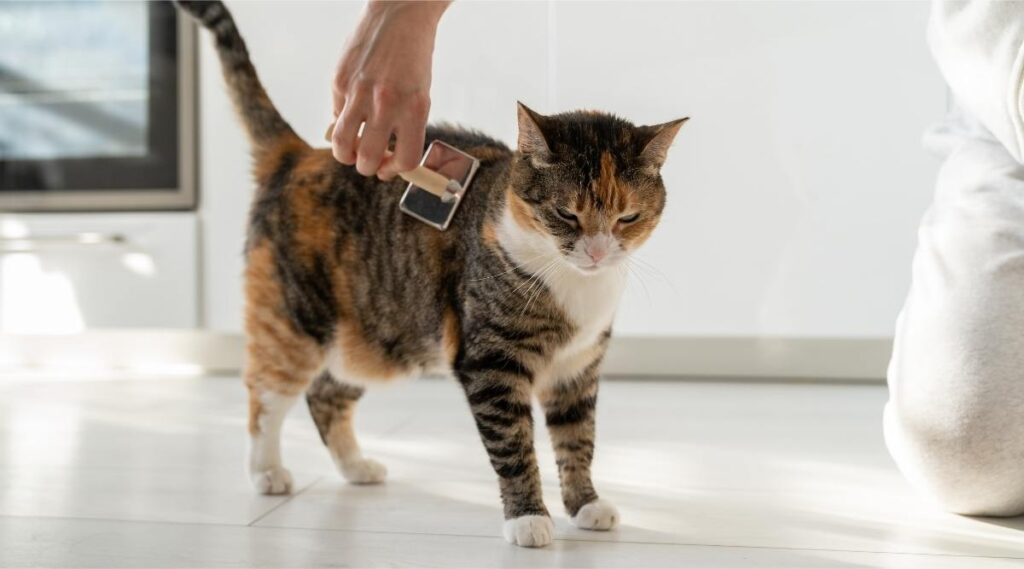
Hairballs are more than a nuisance. They can cause your cat to puke after eating if they’re blocking the stomach or small intestine. If you’ve noticed fur in the throw-up, or your cat gags before meals, hairballs might be the issue.
“If your cat is regularly bringing up hairballs as well as partially digested food, then you should try upping their brushing regime to reduce the amount of loose fur they ingest,” Dr. MacMillan recommends. “You could also give your cat a paste or food designed to help hair pass through the digestive tract more easily, reducing hairballs.”
Reduce hairballs with:
- Daily brushing (especially during shedding season)
- Hairball control foods with added fiber
- Hairball gel (I recommend Nutri-Vet Hairball Paw Gel)
- Hairball control supplements (I use Pet Honesty Hairball Support for one of my cats and find it very effective)
- Adding a teaspoon of pumpkin or psyllium to food for extra fiber
- Indoor cat grass
Even short-haired cats need grooming! The more fur you remove with a brush, the less ends up in their belly.
4. Food Sensitivities Or Allergies
Sometimes the food that’s supposed to nourish your cat is what’s making them sick. If your cat throws up after eating the same meal over and over, a food allergy or intolerance could be to blame.
“Allergies or dietary intolerances are very common in cats and could cause them to vomit or have diarrhea,” says Dr. MacMillan. “Your vet may suggest a change in diet in this instance.”
Cats most commonly react to proteins like chicken, beef, dairy, or eggs, but they can also be sensitive to grains, additives, or preservatives.
Signs of a food reaction:
- Vomiting 30–60 minutes after meals
- Soft stools or diarrhea
- Scratching, face rubbing, or ear infections
What to try:
- Limited-ingredient diets
- Novel proteins (e.g., rabbit, duck, venison)
- Hydrolyzed prescription diet
- Grain-free, preservative-free options
- Work with your vet on a food trial
You may want to consider testing your cat for food sensitivities. See my reviews of the best at-home cat allergy tests to learn more. When you get results, you can share them with your veterinarian to help rule out offending ingreadients.
One cat I saw recently in practice often vomited after mealtimes. Her physical exam was unremarkable, so the next step was to run some blood tests to check that there were no underlying metabolic causes for her vomiting. These were also normal.
Given that she seemed otherwise healthy, I recommended changing her diet to an appropriate sensitivity food. I advised the owner that her cat would need to be fed solely on this food for at least 6 weeks before being able to say whether or not it was helpful. The diet was a success, and the vomiting reduced significantly.
– Dr. Rebecca MacMillan, small animal veterinarian
5. Sudden Food Changes: Why That New Food Might Be the Problem
We all want the best for our pets, and switching to a better food seems like the right thing to do. However, cats have sensitive digestive systems, and changing their diets too quickly can have adverse effects.
Common signs of transition trouble:
- Vomiting or loose stool
- Appetite changes
- Unusual lethargy
How to transition food properly:
Slow and steady wins the race (and protects your carpet).
- Days 1–3: 75% old, 25% new
- Days 4–6: 50/50
- Days 7–9: 25% old, 75% new
- Day 10: 100% new food
6. Stress & Anxiety: When Emotions Hit the Stomach
Cats are stoic, but stress takes a significant toll on their bodies. A new pet, a loud household, or a change in routine can all disrupt them.
If your cat keeps throwing up after eating, especially in a new environment, consider their emotional state.

Signs your cat might be stressed:
- Vomiting around the same time each day
- Hiding or becoming suddenly clingy
- Skipping meals or eating too quickly
How to help:
- Feed in a quiet, low-traffic room
- Stick to a predictable routine
- Give your cat CBD oil or CBD treats (with your vet’s okay)
- Use calming diffusers or sprays (like FELIWAY Cat Calming Plug)
- Create high perches or hiding spots
- Give your kitty engaging toys like the floppy fish and cat tunnels to ease anxiety
7. Esophageal Disorders: When Food Doesn’t Reach the Stomach
In some cases, the problem isn’t in the stomach at all — it’s the esophagus. Esophageal problems can include esophagitis (inflammation of the esophagus) or structural issues within the esophagus.
When the esophagus becomes inflamed, it loses its ability to move food smoothly into the stomach. Regurgitation can happen due to spasms or irritation. Common triggers for esophagitis include frequent vomiting, acid reflux, or injuries to the throat.
Esophageal abnormalities include:
These conditions can be present at birth or, in some cases, develop later in life. They can interfere with normal swallowing and cause lifelong regurgitation.
- Megaesophagus (enlarged, weakened esophagus).
- Esophageal strictures (narrowing from scarring or birth defects).
- Esophageal dysmotility disorder (the esophagus doesn’t contract properly)
- Vascular ring entrapment (physical constriction of the esophagus by blood vessels)
- Cricopharyngeal achalasia (failure of the cricopharyngeal muscle in the throat to relax during swallowing).
Watch for:
- Regurgitation right after meals
- Undigested food in a pile
- Weight loss despite a good appetite
Diagnosis for many conditions requires imaging, but it’s manageable with:
- Specialized diets with soft or blended foods.
- Medications to manage symptoms.
- Feeding upright (seriously—look up “Bailey chair” for cats)
- Elevated feeding bowls
- Liquefied meals
- Surgical intervention in severe cases.

8. Parasites: Invisible But Powerful
Even indoor cats can contract worms, and they can wreak havoc on their digestion. If your cat throws up after eating and also has diarrhea or a bloated belly, parasites could be to blame.
Signs of internal parasites:
- Vomiting
- Diarrhea
- Worms in stool or around the anus
- Weight loss
Your vet can diagnose the issue with a fecal exam and prescribe a dewormer. It’s easy, fast, and often solves the problem within days.
9. Gastritis or Sensitive Stomach
Just like some people can’t handle spicy food, some cats can’t handle certain proteins or textures. Chronic mild stomach inflammation (gastritis) or an overly sensitive stomach may explain why your cat vomits after eating, even if they appear healthy otherwise.
What helps:
- Gentle, digestible foods
- Warming up food slightly
- Trying hydrolyzed protein prescription diets (with your vet’s recommendation)
- Avoiding rich treats or table scraps
10. Inflammatory Bowel Disease: When the Gut Is Always Angry
If your cat is vomiting, losing weight, or experiencing inconsistent stool, inflammatory bowel disease (IBD) may be the underlying cause. This chronic inflammation can make even normal food feel irritating to your cat’s gut.
Look for:
- Vomiting after eating
- Diarrhea or constipation
- Lethargy
- Dull coat or weight loss
Treatment may include:
- Prescription diets
- Corticosteroids or immunosuppressants
- Probiotics or B12 injections
11. Liver, Kidney, Or Pancreatic Issues
As cats age, vomiting after meals can indicate more serious underlying issues. If your cat throws up after eating and also shows signs of lethargy or poor appetite, it could be chronic kidney disease, liver disease, pancreatitis, or cancer.
Warning signs include:
- Vomiting
- Bad breath
- Increased thirst
- Sudden behavior changes
12. GI Obstruction: When Something Gets Stuck
Some cats are curious chewers and can swallow items such as string, ribbon, plastic, hair ties, and bones. If one of those objects makes it past their tongue and into the digestive tract, it can cause an esophageal or intestinal obstruction, blocking food from moving through the system.

An obstruction isn’t just uncomfortable. It can be life-threatening if not treated quickly.
Red flags of an obstruction:
- Vomiting after every meal or even water
- Straining in the litter box
- No poop or tiny, dry stool
- Hunched posture or belly sensitivity
- Restlessness, crying, or sudden hiding
- Dehydration or rapid decline in energy
What to do:
Don’t try to “wait it out.” If you suspect an obstruction, especially if your cat suddenly starts vomiting consistently and appears distressed, visit the vet or an emergency clinic immediately. X-rays or an ultrasound can help confirm the blockage, and surgery may be needed.
When Should I Take My Cat To The Vet For Vomiting Or Regurgitation?

Many cats throw up occasionally, but vomiting or regurgitating after every meal is a huge red flag. According to Cornell University’s College of Veterinary Medicine, a trip to the vet is necessary if your kitty is vomiting more than once a week. They also recommend a vet visit for these other signs, with or without vomiting.
- Lethargy or weakness
- Decreased appetite
- Blood in the vomit
- Increased thirst
- Increased or decreased urination
- Simultaneous diarrhea
Even if your cat seems okay otherwise, chronic vomiting or regurgitation can lead to dehydration and/or nutrient loss over time.
What To Bring To Your Appointment
The more info you provide, the easier it is for your vet to spot patterns and avoid guesswork.
- A log of vomiting episodes (dates, times, appearance)
- Pictures or videos of the vomit
- A list of foods, treats, and supplements your cat gets
- Recent changes in food, environment, or routine
- Your cat’s vaccination and medical history (if switching vets)
What Helped My Cat Stop Puking?
Bammy had always been a great eater (maybe a little too enthusiastic). But when she started vomiting after every single meal, I knew something had to change. I tried switching her to wet food and then tried feeding her less at each mealtime. I even tried ignoring it for a few days, hoping it would stop on its own. (It didn’t.)

So I got serious. After talking to our vet and testing out a few different strategies, what finally worked was a combination of several new adjustments.
First, I swapped her usual chicken-based food for a limited-ingredient duck formula: Blue Buffalo Basics Grain-Free Dry Cat Food, Skin & Stomach Care. Chicken is a common allergen for cats, and sure enough, the new protein seemed to sit better with her.
Next, I ditched her deep ceramic bowl and started feeding her on an elevated shallow bowl. That small change made a big difference — it slowed her down and helped her chew instead of inhale.
Instead of two big meals, I started giving her four small portions throughout the day. No more belly overload. Just enough to keep her satisfied and her stomach calm.
Finally, I moved her food setup out of the noisy kitchen and into a quiet corner of the house. No more dogs hovering nearby. No more human foot traffic. Just a calm, stress-free place to eat.
And the result? Within a week, no more puking after every meal. Just a happy, hungry cat and a very relieved cat mom.
Frequently Asked Questions
Still have questions? You’re not the only one. Here are some of the most common ones cat parents ask when mealtime turns into mop time. If you don’t see yours here, ask us in our comments.

Should I Be Worried If My Cat Pukes Right After Eating?
If it happens once or twice and your cat is acting normal, it may not be serious. But if it becomes a daily routine, that’s a red flag. Especially if the vomit is consistent in timing, color, or contains blood or bile. Trust your gut (and your cat’s!).
Can Dry Food Cause My Cat To Throw Up?
Yes, especially if your cat eats too fast, doesn’t chew kibble, or struggles to digest certain ingredients. Dry food can expand in the stomach after swallowing, which may trigger vomiting or regurgitation. Try adding a little water or switching to a wet or lightly moistened diet to see if it helps.
Why Does My Cat Only Throw Up In The Morning?
Morning vomiting could be due to an empty stomach. Some cats produce more stomach acid overnight, leading to irritation by breakfast time. If the vomit is yellow or foamy, that’s a sign of bile. Feeding a small bedtime snack or splitting meals more evenly throughout the day can reduce this.
Do Cats Vomit More As They Get Older?
Not necessarily, but older cats are more prone to conditions like kidney disease, hyperthyroidism, or pancreatitis, all of which can cause vomiting after meals. If your senior cat has started throwing up consistently, it’s best to get some lab work done.
Is It Okay To Give My Cat Something For Nausea At Home?
It’s always safest to check with your vet first. Some human medications are toxic to cats. If needed, your vet may prescribe anti-nausea meds like Cerenia or suggest a diet change to soothe the stomach.
Should You Consider Pet Insurance?
Recurring vomiting can lead to costly exams, diagnostics, and treatments. Pet insurance can help cover vet bills for newly diagnosed conditions. Learn more about the best pet insurance for cats.
Drop a comment below if your cat used to puke after eating and you found a solution. Let’s help other cat parents!