When you purchase through links on our site, we may earn a commission at no extra cost to you. Learn more.
Your cat just stole a bite from your plate. Now you’re staring at them, wondering: Was that harmless… or is this a vet call?
Table of Contents
Some human foods are safe for cats in tiny amounts, including plain cooked chicken, turkey, eggs, shrimp, and a few fruits or vegetables. Others can be dangerous fast, including chocolate, grapes, raisins, onions, garlic, caffeine, alcohol, xylitol, and raw dough.
Cats are obligate carnivores, which means they need animal-based nutrition to thrive. Human food should only be an occasional treat, not a replacement for complete and balanced cat food. The FDA explains that “complete and balanced” pet foods are formulated to meet established nutrient profiles or pass feeding trials, which is why even healthy people’s food cannot replace a cat’s main diet.
Use this guide to check what’s safe, what’s risky, and what should never go near your cat’s bowl.
Want our human-written content to rank above AI-generated garbage? Help us out by clicking this button!

Did Your Cat Already Eat Something Dangerous?
Call your veterinarian or animal poison control right away if your cat ate chocolate, grapes, raisins, onions, garlic, xylitol, caffeine, alcohol, raw dough, cooked bones, or a large amount of salty, fatty, or seasoned food.
Do not wait for symptoms. Some toxins can cause serious damage before your cat looks sick.
Can Cats Eat Human Food?
Yes, cats can eat some human foods, but only as occasional treats. Plain cooked meat, certain cooked vegetables, and a few fruits are generally safe in small amounts. The key words are plain, small, and occasional.
Cats are obligate carnivores, so they rely on animal-based nutrients that human snacks usually do not provide. Even safe foods can cause vomiting, diarrhea, weight gain, or pancreatitis if your cat eats too much or if the food is fatty, salty, sugary, or seasoned.
Before sharing human food with your cat, keep these three rules in mind:
- Keep it plain. No salt, butter, oil, garlic, onion, sauces, spices, or sweeteners.
- Keep it tiny. A pea-sized bite is enough for a first taste.
- Keep it occasional. Human food should not replace a complete and balanced cat diet.
A good rule of thumb: treats should make up no more than 10% of your cat’s daily calories. For many cats, that means just a few small bites.
Common Myth: It’s natural! My cat would eat this in the wild.
Truth: While your cat might have the instincts of a wild hunter, modern domestic cats have very different diets from their wild ancestors. Processed foods, cooked bones, and heavily seasoned items don’t exist in nature, and they can be dangerous in your kitchen. “Natural” doesn’t always mean safe.
Top 10 Human Foods Cats Should Never Eat: Printable Fridge List
Print this out and stick it on your fridge today!
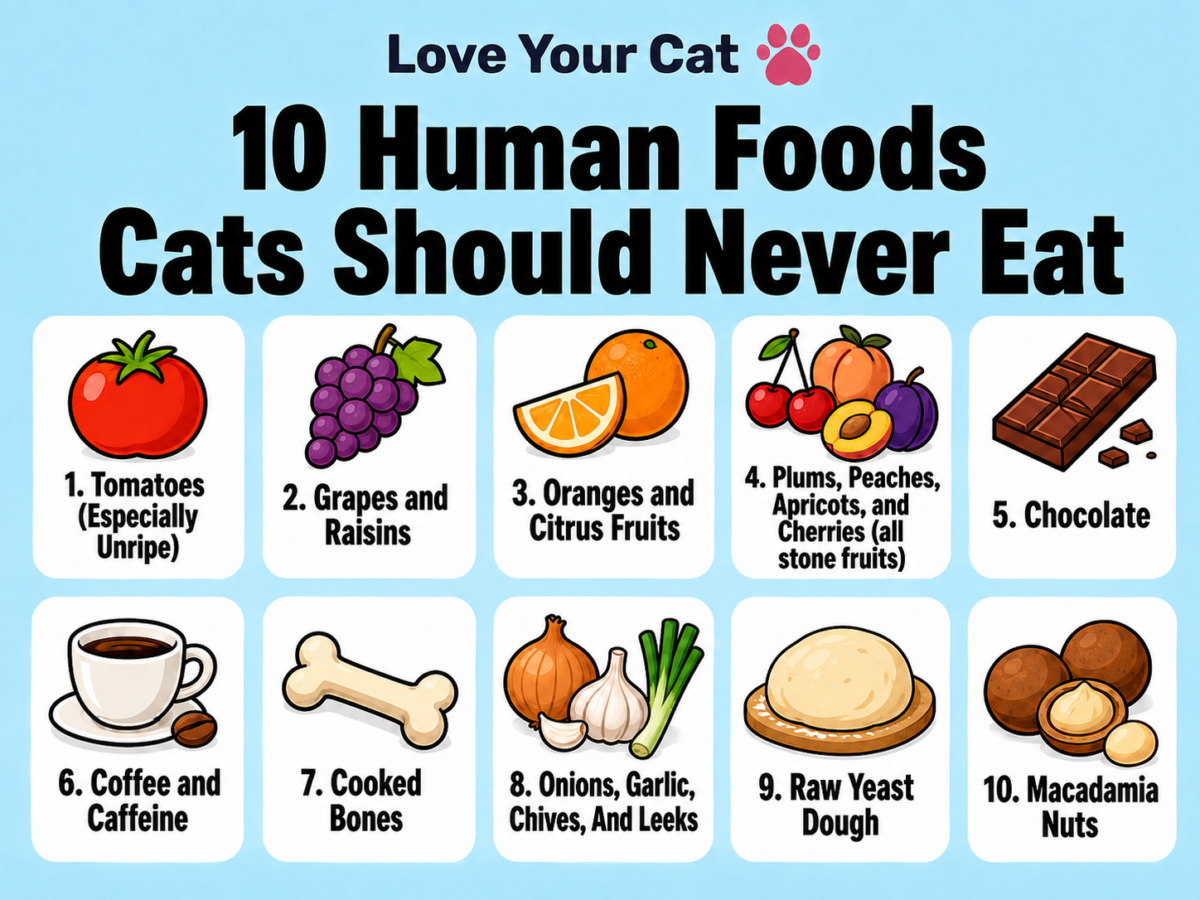
The Big No List: 10 Foods That Are Dangerous For Cats
Cats are sensitive animals with delicate digestive systems. Some foods that are totally safe for humans, or even dogs, can be dangerous or even deadly to cats. The best rule of thumb: if you’re not sure it’s safe, don’t offer it.
Below are the most important red-flag foods to keep far away from your feline.
1. Tomatoes (Especially Unripe)
Green, unripe tomatoes and tomato plants contain solanine, a toxic compound that can cause stomach pain, lethargy, slow heart rate, and drooling. Even ripe tomatoes aren’t worth the risk. Tomato sauces and soups often include onions, garlic, and salt, all of which are harmful to cats.

2. Grapes and Raisins
Even a single grape or raisin can trigger acute kidney failure in cats. The exact cause is unknown, but the results can be deadly.
- Warning signs include vomiting, lethargy, abdominal pain, excessive thirst, and decreased urination.
- If your cat eats a grape or raisin, call your vet immediately.
3. Oranges and Citrus Fruits
Oranges, lemons, limes, and other citrus fruits contain essential oils and psoralens, both toxic to cats. They can cause vomiting, diarrhea, drooling, depression, and skin irritation. The rind, seeds, and leaves are especially dangerous. Citrus has no place in a cat’s diet.
4. Plums, Peaches, Apricots, and Cherries (all stone fruits)
Stone fruits like peaches and cherries all contain pits loaded with cyanide, a deadly toxin to cats. Ingestion can lead to dilated pupils, breathing difficulty, shock, and even death. Pits are also serious choking hazards and can cause internal injuries.
Never let your cat near stone fruits.
5. Chocolate
Chocolate contains theobromine and caffeine, both extremely toxic to cats. Even small amounts can cause hyperactivity, vomiting, tremors, seizures, and heart arrhythmias. Dark chocolate and baking chocolate are the most dangerous.
No amount is safe. Avoid your cat eating any kind of candy if you can. If your cat ingests chocolate or other candy, seek emergency care.
6. Coffee and Caffeine
Caffeine is toxic to cats and can be fatal. It’s found in coffee, tea, soda, energy drinks, and even some medications.
Symptoms include restlessness, vomiting, a fast heart rate, muscle tremors, and collapse. Keep all caffeine far out of reach.
7. Cooked Bones
Cooked bones can splinter and cause choking, digestive blockages, or even internal bleeding.
Raw bones may be safe under close supervision, but never feed cooked bones of any kind. It’s not worth the risk.

8. Onions, Garlic, Chives, And Leeks
Cats should never eat onions, garlic, chives, leeks, scallions, or foods seasoned with them. These ingredients can damage a cat’s red blood cells and may lead to anemia.
This includes raw, cooked, powdered, dried, and dehydrated forms, so watch for onion powder and garlic powder in gravy, broth, soup, rotisserie chicken, stuffing, sauces, and seasoning blends.
9. Raw Yeast Dough
Raw yeast dough is dangerous for cats because it can keep rising after it is eaten. That means it can expand in the stomach, causing painful bloating or even a serious blockage. As the yeast ferments, it can also produce alcohol, which is toxic to cats.
Keep pizza dough, bread dough, rolls, and other unbaked yeast dough well out of reach.
10. Macadamia Nuts
Cats should not eat macadamia nuts. While macadamia nut toxicity is most often discussed in dogs, these nuts are still a poor choice for cats because they are high in fat, calorie-dense, and difficult to digest.
Macadamia nuts may also show up in cookies, brownies, trail mix, or baked goods that contain other unsafe ingredients like chocolate, raisins, xylitol, or heavy sugar.
Can My Cat Eat This? The Quick Answer
Some human foods are safe for cats in tiny amounts, but only when they are plain, unseasoned, and prepared correctly. Others should never be shared, even as a small bite.
- Usually safe in small amounts: plain cooked chicken, turkey, lean beef, cooked eggs, cooked shrimp, pumpkin, blueberries, watermelon, cucumbers, and cooked carrots.
- Use caution: tuna, ham, bacon, rice, bread, oatmeal, peanut butter, yogurt, cheese, bananas, and popcorn.
- Never feed: chocolate, grapes, raisins, onions, garlic, chives, leeks, xylitol, caffeine, raw yeast dough, cooked bones, macadamia nuts, citrus fruits, and stone fruit pits.
When in doubt, skip the snack and call your veterinarian if your cat already ate something questionable.
Safe Human Foods Cats Can Eat In Small Amounts
Some plain human foods are safe for cats as occasional treats. The safest options are usually simple proteins, followed by a few plain vegetables and fruits. Always serve tiny portions with no salt, butter, oil, garlic, onion, sauces, or seasoning.

Some snacks from your plate are totally fine in small portions. Others? Surprisingly healthy. Below is a breakdown of safe options your cat can sample (with your vet’s blessing, of course). From fruit to grains to meat, here’s what’s on the feline-approved menu.
Cat-Safe Meats And Proteins
Remember, cats are obligate carnivores. That means meat isn’t just a treat. It’s a biological necessity. They rely on animal-based protein to stay healthy, and their bodies are built to digest it.
But just because cats need meat doesn’t mean all meat is safe. Especially not the way we humans cook, season, and process it. Some meats are fine in small amounts. Others? They’re best left on your plate.
Here’s what you need to know.
Steak (Lean and Unseasoned)
Verdict: Safe in moderation.
Serve: Fully cooked, lean, unseasoned steak in tiny pieces.
Avoid: Fatty cuts, bones, butter, salt, garlic, onion, marinades, and steak sauce.
A few bites are plenty. Steak can be calorie-dense, so it should be an occasional treat.
A three-ounce serving of steak has around 180 calories, and the average cat only needs about 300 calories a day. Too much steak can lead to weight gain, arthritis, or even diabetes. Cut it into tiny bites, and offer it as a treat, not a daily staple.

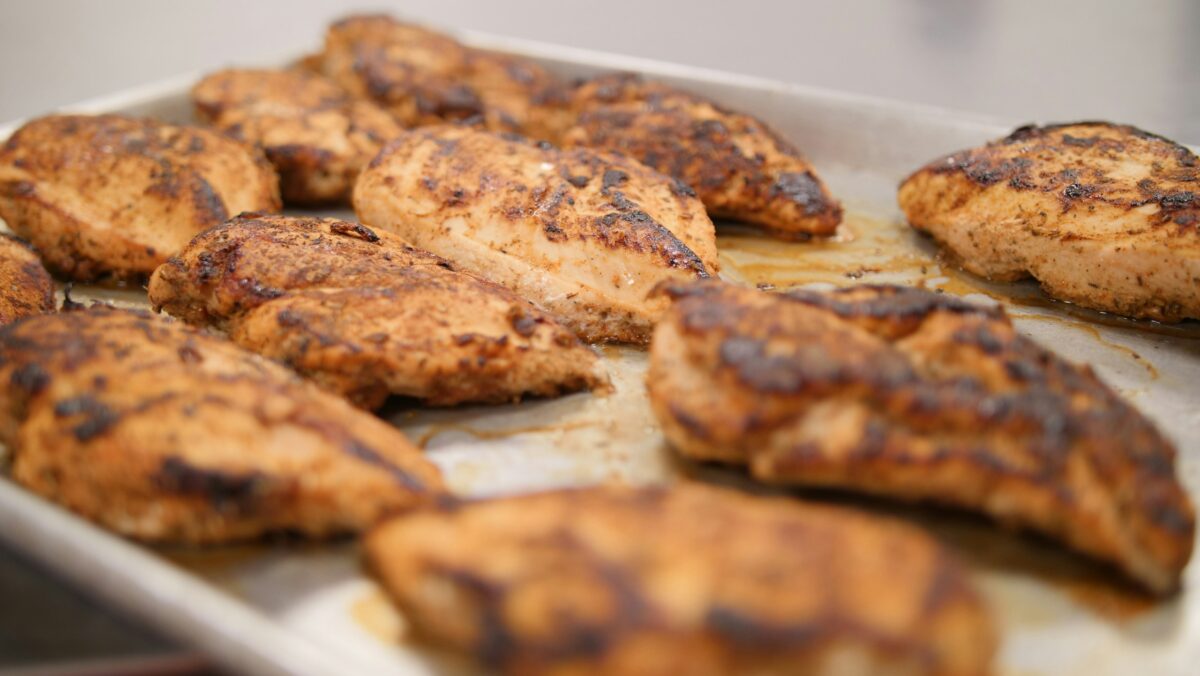
Cooked Chicken (Plain)
Verdict: Safe when plain and cooked.
Serve: Baked, boiled, grilled, or steamed; boneless, skinless, and cut into tiny pieces.
Avoid: Rotisserie chicken, fried chicken, nuggets, bones, skin, salt, garlic, onion, sauces, and seasoning.
Plain cooked chicken is one of the safest human foods for cats, but it should still be a treat or topper, not a full diet.
What About Raw Chicken?
Raw chicken is not recommended unless your cat is on a veterinarian-guided raw diet. Grocery-store raw chicken can carry bacteria such as Salmonella, E. coli, and Campylobacter, which can make pets and people sick.
The American Veterinary Medical Association discourages feeding cats and dogs animal-source proteins that have not been treated to eliminate pathogens.
Shrimp (Cooked and Deveined)
Verdict: Safe in moderation.
Serve: Boiled or steamed shrimp with the shell, tail, head, and vein removed.
Avoid: Raw shrimp, fried shrimp, breading, butter, garlic, salt, cocktail sauce, and spicy seasoning.
One or two small bites are enough for most cats.

Turkey (Cooked and Plain)
Verdict: Safe when plain and cooked.
Serve: Plain cooked white meat, cut into small bites.
Avoid: Skin, bones, gravy, stuffing, garlic, onion, butter, and holiday seasoning.
Turkey can be a good occasional snack, especially if your cat likes lean meat. Keep it simple and skip the leftovers if they were cooked with seasoning.

Skip the skin, gravy, and anything seasoned with onion or garlic. Stick to plain white meat, cut into small bites, with no bones or fat.
Turkey is a great occasional snack, but shouldn’t become part of your cat’s daily diet.
Pro Tip: Cats love meat, but treats should make up no more than 10% of their daily calories. Always cut portions small and keep things simple.
Vegetables That Are Okay For Curious Cats
Cats are curious creatures. And if they see you chopping veggies, don’t be surprised if they sneak a sniff—or try a bite.
The truth is, cats don’t need vegetables in their diet; meat is their main event. But some veggies can be a safe, crunchy bonus. A few may even offer health perks. Just keep in mind: veggies are never a replacement for quality cat food.
Let’s take a look at some vegetables cats can try safely if they show interest in your salad bowl.
Broccoli (Steamed)
Verdict: Safe in small amounts.
Serve: Steamed, boiled, or raw, chopped into tiny pieces.
Avoid: Butter, salt, cheese, garlic, onion, sauces, and large portions.
Yep, your cat can eat broccoli. It’s one of the safer veggies for felines and can even offer a few health benefits.

Broccoli is high in fiber and antioxidants. A little bit might help with digestion, and some cats enjoy nibbling it like they would cat grass. Just make sure it’s plain and bite-sized. Boiled, steamed, or raw is fine. No butter, garlic, salt, or cheese.
Carrots (Cooked and Soft)
Verdict: Safe when cooked and soft.
Serve: Peeled, steamed or boiled, and cut into tiny pieces.
Avoid: Raw carrots, carrot juice, butter, salt, sugar, garlic, onion, and seasoned baby food.
Carrots are packed with nutrients like beta-carotene, potassium, and vitamin K. They’re safe for cats, but here’s the catch: only offer cooked carrots, never raw.

Raw carrots are too tough and can be a choking hazard. Peel and chop them, steam or boil them without any seasonings, and serve them soft and simple.
Carrot juice and sugary baby food versions? Skip them. Too much sugar or unnecessary additives won’t do your cat any good.
Sweet Potatoes & Potatoes (Roasted and Peeled)
Verdict: Safe only when cooked, peeled, and plain.
Serve: Small pieces of roasted, boiled, or steamed potato or sweet potato.
Avoid: Raw potatoes, potato skins, fries, chips, butter, salt, marshmallows, spices, and seasonings.
Potatoes can be safe, but only if they’re peeled, roasted, and unseasoned. Raw potatoes are a big no. They contain solanine, a natural toxin that’s dangerous for cats. That includes raw peels, too.
Sweet potatoes? Same rules. Stick to plain, peeled, roasted pieces only: no butter, no spices, no marshmallows.

Cucumbers (Great for Hydration)
Verdict: Safe in small amounts.
Serve: Peeled, plain, and chopped into tiny pieces.
Avoid: Pickles, vinegar, salt, garlic, onion, seasoning, and large chunks.
Cucumbers are technically a fruit but treated like a vegetable, and they’re safe for cats in small amounts.
They’re low in calories, high in water, and contain a few helpful vitamins like K, C, and some B vitamins. That moisture boost can be great for cats who don’t drink enough.

Want to explore more? We have dedicated articles for other vegetables not covered here, like beets, celery, quinoa, and peppers.
Fruits Cats Can Nibble On Occasionally
Cats are meat-eaters by design. They don’t need fruit in their diet, and most won’t beg for a berry, but that doesn’t mean all fruits are off-limits.

Some fruits are safe in moderation and can even offer hydration or a vitamin boost. Others are a hard no due to toxicity, choking hazards, or digestive trouble. Some fruits are cat-friendly, but others can cause trouble. Here’s what to know before offering a taste.
Blueberries: Antioxidant-Rich and Safe
Verdict: Safe in small amounts.
Serve: Washed, fresh blueberries, whole or halved.
Avoid: Frozen, sugar-coated, syrup-packed, or flavored blueberries.
Blueberries are one of the few fruits cats can safely enjoy in small amounts. They’re low in calories, high in antioxidants, and may offer a mild digestive benefit.
Apples: Remove Seeds and Core First
Verdict: Safe with prep.
Serve: Small pieces of apple flesh with the core, stem, and seeds removed.
Avoid: Apple seeds, cores, stems, applesauce, apple pie, caramel apples, and sweetened apple snacks.
Apples can be a fun treat, but prep is everything. The flesh is safe, but seeds and cores contain cyanide and are a choking hazard.
Bananas: High in Sugar, Best in Small Pieces
Verdict: Safe, but high in sugar.
Serve: A tiny piece of peeled banana.
Avoid: Banana bread, banana pudding, dried banana chips, flavored banana snacks, and large portions.
Bananas are non-toxic to cats but should be offered sparingly. They’re loaded with sugar and starch, which aren’t part of a cat’s natural diet.
Watermelon: Seedless and Hydrating
Verdict: Safe with prep.
Serve: Tiny pieces of seedless red flesh.
Avoid: Seeds, rind, flavored watermelon candy, juice, and large chunks.
Watermelon can be a refreshing treat, especially in hot weather. Offer only the soft, red flesh in small, seedless bites. Remove all seeds and avoid the rind, which can cause stomach upset or choking.

Strawberries: Safe in Moderation
Verdict: Safe in moderation.
Serve: Washed strawberry flesh cut into small pieces.
Avoid: Leaves, stems, syrup, sugar, whipped cream, jam, and strawberry-flavored desserts.
Strawberries are safe but not especially useful for cats. They don’t get much benefit from the fruit’s vitamins or antioxidants, and they can’t taste the sweetness anyway.

Other fruits, including pineapple and mango, may be safe in tiny amounts, but they are high in sugar and acidity, so they are usually better as rare treats than regular go-tos. For more fruit facts, explore our articles on cranberries, blackberries, dragon fruit, Kiwi, guava, mango, pomegranate, and raspberries.
10 Human Foods That Need Limits, Even When They’re Not Toxic
Not all human foods are strictly toxic to cats, but that doesn’t mean they’re risk-free. Some can cause digestive upset, weight gain, or even long-term health issues if given too often. These foods are okay occasionally and in small amounts, but always with a watchful eye.
Starchy, Sugary, And Fatty Foods To Limit
Before we get into the safer protein-based treats, let’s look at the human foods that are not toxic but can still cause problems because they are starchy, sugary, fatty, or easy to overfeed.
1. Pumpkin
Plain pumpkin is safe for most cats in small amounts and may help support healthy digestion. It contains fiber and moisture, which can be useful for cats dealing with occasional constipation or loose stool.
Only use plain canned pumpkin or plain cooked pumpkin. Avoid pumpkin pie filling, which often contains sugar, spices, dairy, or other ingredients that cats should not eat.
Start with a very small amount, about 1/4 teaspoon mixed into your cat’s regular food. Too much pumpkin can cause diarrhea or stomach upset, so keep portions tiny and occasional.
- Verdict: Safe in small amounts
- Serve: Plain canned pumpkin or cooked pumpkin
- Avoid: Pumpkin pie filling, sugar, spices, butter, and large portions
2. Rice
Plain, fully cooked rice is safe for most cats in small amounts. It is sometimes used in bland diets, but it does not offer much nutritional value for cats because they are obligate carnivores.
Stick to plain white or brown rice with no seasoning, butter, oil, broth, garlic, or onion. Rice should not become a regular part of your cat’s meals.
- Verdict: Safe in small amounts
- Serve: Plain, fully cooked white or brown rice
- Avoid: Fried rice, seasoned rice, butter, oil, broth, garlic, onion, and large portions
3. Bread
A tiny nibble of plain baked bread won’t hurt most cats, but it’s mostly empty calories. Cats don’t need carbs, and too much bread can contribute to weight gain.
Avoid breads with garlic, onion, raisins, chocolate, seeds, heavy spices, or sweeteners. Never feed raw bread dough.
- Verdict: Safe rarely, but not useful
- Serve: Plain baked bread in a tiny piece
- Avoid: Raw dough, raisin bread, garlic bread, onion bread, sweet breads, chocolate bread, and large portions
4. Oatmeal
Plain, cooked oats are safe in small portions. They contain protein and fiber, but not every cat tolerates grains well.
Make sure the oatmeal is cooked with water and served plain. Avoid flavored packets, milk, sugar, honey, cinnamon, raisins, artificial sweeteners, or butter.
- Verdict: Safe in small amounts
- Serve: Plain oatmeal cooked with water
- Avoid: Milk, sugar, honey, raisins, cinnamon, flavored packets, artificial sweeteners, and butter

5. Peanut Butter
Peanut butter isn’t toxic to cats, but it’s high in fat and calories. Some brands contain xylitol, a sweetener that’s extremely toxic. Always read the label, stick with natural brands that use only peanuts, and if you offer any, keep it to a tiny lick. Watch for sticky textures that could pose a choking risk.
- Verdict: Use caution
- Serve: A tiny lick of xylitol-free peanut butter
- Avoid: Xylitol, added sugar, salt, chocolate flavors, crunchy peanut butter, and large amounts
6. Popcorn
Plain, air-popped popcorn is safe in theory, but it offers no nutrition and can be a choking hazard, especially if kernels are unpopped. Avoid anything with butter, salt, cheese, or seasoning. Most cats are more interested in batting it across the floor than eating it.
- Verdict: Not toxic, but best limited
- Serve: Plain, air-popped popcorn only
- Avoid: Unpopped kernels, butter, salt, cheese, caramel, chocolate, garlic, onion, and seasonings

Animal-Based Treats That Still Need Caution
Even animal-based foods can cause problems when they are too fatty, salty, processed, or hard to digest. These options are closer to a cat’s natural diet than bread or fruit, but they still need limits, careful prep, and tiny portions.
7. Eggs
Eggs are a protein-rich snack cats can enjoy, but only when fully cooked. Raw eggs can carry salmonella or E. coli and contain avidin, which interferes with nutrient absorption. Serve scrambled or boiled with no butter, salt, or seasoning.
- Verdict: Safe when fully cooked
- Serve: Plain boiled or scrambled egg
- Avoid: Raw eggs, butter, oil, salt, milk, cheese, and seasonings
8. Yogurt
Plain, unsweetened yogurt is one of the few dairy items cats can tolerate in small amounts. The live cultures in yogurt help break down lactose, making it easier to digest. Greek yogurt is also acceptable. Ensure it has no added sugar, flavoring, or artificial sweeteners.
Yogurt may offer some minor benefits like probiotics and protein, but it’s still not essential to a cat’s diet. A spoonful once in a while is fine. Avoid low-fat or “light” yogurts containing xylitol.
- Verdict: Use caution
- Serve: Plain, unsweetened yogurt
- Avoid: Flavored yogurt, added sugar, fruit mix-ins, artificial sweeteners, xylitol, and large portions

A Quick Note About Cats and Dairy
That classic image of a cat lapping up a bowl of milk? It’s more fiction than fact. Most adult cats are lactose intolerant and lack the enzymes needed to properly digest dairy. Even small amounts of milk, cream, cheese, ice cream, or whipped cream can lead to gas, diarrhea, and stomach cramps.
Higher fat content and added salt in products like cheeses or cream make them even harder on a cat’s system. Milk substitutes like almond or oat milk aren’t much better, as they can contain sugars, oils, and other additives cats don’t need. The same goes for dishes like mac-n-cheese. Avoid giving these to your cat.
- Verdict: Use caution
- Serve: A tiny plain crumb, rarely
- Avoid: Flavored cheese, cheese spreads, mac and cheese, garlic, onion, herbs, high salt, and large portions
9. Ham
Ham is not toxic to cats, but it is usually too salty and processed to be a good treat. A tiny bite of plain cooked ham may be okay for some healthy cats, but deli meats and cured meats are best avoided.
Avoid smoked ham, honey ham, glazed ham, deli ham, Spam, pepperoni, salami, and anything seasoned with garlic, onion, cloves, sugar, or heavy salt.
- Verdict: Use caution
- Serve: A tiny piece of plain cooked ham, rarely
- Avoid: Deli ham, cured ham, smoked ham, glazed ham, Spam, pepperoni, salami, garlic, onion, and large portions

10. Bacon
Bacon is best avoided. While a stolen crumb is not usually an emergency, bacon is high in salt, grease, and fat, which can upset your cat’s stomach and may be risky for cats prone to pancreatitis or digestive issues.
Do not intentionally feed bacon as a treat.
- Verdict: Best avoided
- Serve: Not recommended
- Avoid: Bacon strips, bacon grease, bacon bits, raw bacon, salty bacon-flavored foods, and large portions
Why Sugary Human Foods Are A Bad Idea For Cats
Cats may act interested in your dessert, but sugary foods are not a good choice for them. Cats do not need added sugar, and sweet treats can contribute to weight gain, stomach upset, dental issues, and poor nutrition over time.
Another issue? Many sweet foods come with extra risks. Desserts may contain dairy, chocolate, xylitol, raisins, caffeine, artificial sweeteners, or heavy fat, all of which can be dangerous or hard for cats to digest.

Skip sugary foods like cake, donuts, and frosted baked goods. These can contain sugar, dairy, oils, chocolate, or xylitol. Ice cream and whipped cream are also poor choices because many cats are lactose intolerant.
Even fruits that are safe for cats, like watermelon, strawberries, mango, kiwi, and dragon fruit, should only be offered in tiny amounts. They are not toxic when prepared correctly, but they are still naturally sugary and not something cats need.
If your cat wants a treat, stick with something more species-appropriate, like a small bite of plain cooked chicken, turkey, egg, or shrimp. Sweet foods are usually better left off the cat’s menu.
Dangerous Ingredients Hiding In Human Food
Some of the biggest risks are not obvious foods, but ingredients mixed into leftovers, sauces, baked goods, snacks, and “just one bite” table scraps. Before sharing anything with your cat, check for these common red flags:
- Onion, garlic, chives, leeks, and scallions: Found in gravy, broth, soup, stuffing, sauces, marinades, rotisserie chicken, and seasoning blends.
- Xylitol: Found in some sugar-free gum, candy, baked goods, peanut butter, and low-calorie foods.
- Chocolate or cocoa: Found in candy, brownies, cookies, cake, protein bars, and desserts.
- Caffeine: Found in coffee, tea, soda, energy drinks, and some medications.
- Grapes, raisins, and currants: Found in trail mix, cereals, baked goods, breads, and snack mixes.
- Raw yeast dough: Found in unbaked bread, pizza dough, rolls, and pastries.
- Salt-heavy seasonings and salty snacks: Found in chips, deli meat, cured meats, fries, and processed foods.
- Fatty scraps, grease, and pan drippings: Can upset the stomach and may trigger pancreatitis in sensitive cats.
- Cooked bones: Can splinter and cause choking, blockages, or internal injuries.
- Seeds, pits, stems, and rinds: Can be choking hazards or contain compounds cats should not eat.
- Wild or unknown mushrooms: Some varieties can be toxic, so avoid wild mushrooms, mushroom sauces, and dishes containing unidentified mushrooms.
When in doubt, do not share it. Plain, single-ingredient foods are much safer than anything sauced, seasoned, processed, fried, or baked into a dessert.
Still Wondering About Another Food?
There are some other common foods that a kitty can easily get into, or owners might want to share. These include foods like basil, beans, Cheez-Its, cilantro, crab, donuts, edamame, graham crackers, honey, oregano, pecans, pistachios, pretzels, smoked salmon, sunflower seeds, sushi, walnuts, and other more unusual substances. Many of these are not suitable for kitty consumption.

What To Do If Your Cat Eats Something Dangerous
If your cat ate a toxic food or ingredient, call your veterinarian, an emergency vet, or animal poison control right away. Do not wait for symptoms, and do not try to make your cat vomit unless a veterinary professional tells you to.
Before you call, gather as much information as you can:
- What your cat ate
- How much they may have eaten
- When they ate it
- Your cat’s weight, age, and any health conditions
- The package, label, or ingredient list, if available
Watch for warning signs like vomiting, diarrhea, drooling, tremors, weakness, pale gums, trouble breathing, collapse, extreme sleepiness, or unusual behavior.
When in doubt, make the call. Fast advice can make a big difference, especially with foods like chocolate, grapes, raisins, onions, garlic, xylitol, caffeine, raw yeast dough, or cooked bones.
Should You Consider Pet Insurance?
If you’re testing new treats or navigating a sensitive stomach, vet bills can add up fast. Pet insurance can help offset the cost of unexpected emergencies, allergies, or long-term digestive issues. It’s a smart way to protect your wallet and your peace of mind. Not sure where to start? Check out our complete guide to pet insurance to compare plans, understand what’s covered, and find the best option for your cat’s needs.
Want to explore coverage options? Learn more about the best pet insurance for cats and get a free quote using the form below.

4 Tips on How To Let Your Cat Try Something New Safely
Trying something new with your cat’s diet? Whether it’s a sliver of cooked chicken or a spoonful of plain yogurt, it’s important to go slow and stay observant. Cats have sensitive digestive systems; even small changes can cause big reactions.

1. Start Small, Very Small
When offering a new human food, start with just a tiny piece—about the size of a pea. Offer it separately or mix it into a small portion of their regular food. Never try more than one new item at a time. This makes it easier to identify the cause if your cat reacts poorly.
2. Watch for Reactions
After feeding something new, monitor your cat for the next 24 to 48 hours. Common red flags include:
- Vomiting
- Diarrhea
- Excessive drooling
- Gas or bloating
- Sudden lethargy
- Hiding or acting unusually withdrawn
Stop the food immediately and contact your veterinarian for guidance if any of these symptoms appear. Cats can’t tell us what’s wrong, so early observation is key.
3. Mix With Regular Food (If Tolerated)
If your cat enjoys the new food and shows no signs of discomfort, you can occasionally mix tiny portions into their regular meals. Keep treats to less than 10% of their daily calorie intake, and ensure their main diet remains nutritionally complete.
4. Sensitive Stomach? Go Slower
Your vet may recommend a trial period with very gradual changes for cats with known digestive sensitivities. Depending on the situation, this could mean introducing the new food over several days or even weeks.
When in doubt, err on the side of caution. Just because a food is safe doesn’t mean it’s right for your individual cat.
Frequently Asked Questions
Still wondering whether your cat can eat something from your plate? These quick answers cover the most common human-food questions cat owners ask. If we missed your question about what human food cats can eat, give us a shout-out in the comments.

How much human food can I give my cat?
Human food should only be an occasional treat. A good rule is to keep treats under 10% of your cat’s daily calories, but for many cats, that means just a few tiny bites. Start with a pea-sized amount and avoid offering new foods every day.
What human food is safest for cats?
Plain cooked chicken, plain cooked turkey, fully cooked eggs, and small amounts of cooked shrimp are some of the safest human foods for most cats. They should always be unseasoned, boneless, and served without skin, butter, oil, salt, garlic, onion, or sauces.
What should I do if my cat ate onions or garlic?
Call your veterinarian right away. Onions, garlic, chives, leeks, and scallions can damage a cat’s red blood cells and may lead to anemia. This includes raw, cooked, powdered, dried, and dehydrated forms, so garlic powder and onion powder in leftovers can also be dangerous.
Can cats eat cheese?
A tiny crumb of plain cheese is unlikely to hurt most healthy cats, but cheese is not a good regular treat. Many adult cats are lactose intolerant, and cheese is high in fat and salt. Avoid flavored cheeses, cheese spreads, mac and cheese, and anything with garlic, onion, herbs, or heavy seasoning.
Can cats eat eggs?
Yes, cats can eat eggs if they are fully cooked and plain. Boiled or scrambled eggs are safest when served without butter, oil, salt, milk, cheese, or seasoning. Do not feed raw eggs because they can carry bacteria and may interfere with nutrient absorption.
Avoid eggshells unless your veterinarian specifically recommends them, since they can be sharp, hard to digest, or add too much calcium if given incorrectly.
What do I do if my cat ate chocolate?
Don’t wait, call your vet immediately. Chocolate contains theobromine and caffeine, which can be deadly for cats. Symptoms like vomiting, restlessness, or tremors can start within hours. The darker the chocolate, the more dangerous it is.
Why are grapes toxic to cats?
Even one grape or raisin can lead to sudden kidney failure in cats. We don’t know exactly why, but it’s not worth the risk. Symptoms like vomiting, lethargy, or reduced urination can appear quickly. Keep grapes far out of reach.
Can I use human food as my cat’s full diet?
No. Even the healthiest human foods don’t provide the complete nutrition cats need, especially when it comes to taurine, B12, and certain amino acids. Long-term, this can lead to malnutrition, heart issues, or blindness. Stick to high-quality cat food and treat human food like the occasional bonus it is.
Is tuna safe for cats?
Yes, but in moderation. Too much tuna (especially canned in oil or seasoned) can lead to mercury buildup and nutritional imbalances. Use it as an occasional treat, not a daily go-to. Tuna addiction is real—and not great for your cat’s health.
Can cats eat dog food?
A bite of dog food is not usually an emergency, but cats should not eat dog food as their regular diet. Dog food does not provide the complete feline nutrition cats need, including proper levels of taurine and other nutrients.
When should I call the vet after my cat eats human food?
Call your vet right away if your cat ate chocolate, grapes, raisins, onion, garlic, chives, leeks, xylitol, caffeine, raw dough, cooked bones, or a large amount of salty, fatty, or seasoned food. You should also call if your cat has vomiting, diarrhea, tremors, weakness, pale gums, trouble breathing, collapse, or unusual behavior.
The Bottom Line On Cats And Human Food
At the end of the day, your cat’s well-being starts with what’s in their bowl. While the occasional human food treat might be okay, a complete and balanced feline diet is essential for everything from strong muscles to sharp vision and a resilient immune system.

Feeding your cat high-quality commercial cat food ensures they’re getting the right mix of protein, amino acids (like taurine), vitamins, and minerals. Whether you choose traditional kibble, grain-free cat food, fresh food, freeze-dried raw, or vet-recommended wet formulas, the goal is the same: balanced nutrition made for cats, not people.
Want to give your cat the best possible start (and finish) every day? Stick with trusted cat food brands that meet AAFCO standards, and add variety through species-appropriate treats when needed. If you’re ever unsure about what’s best for your cat’s diet, your vet is the best place to start.
Want To Make Your Own Cat Food Or Treats?
If reading ingredient labels has you side-eyeing your cat’s snack stash, you might be wondering whether homemade food or treats are a better option. They can be, but there’s a big difference between making an occasional treat and making your cat’s full diet from scratch.
Homemade cat treats are usually the safer place to start because they are meant to be occasional extras, not complete nutrition. Try simple, cat-friendly options from our homemade cat treat recipes, or make a special celebration snack with our cat cake recipe.
Homemade cat food is more complicated. Cats need specific nutrients, including taurine, animal-based protein, vitamins, minerals, and the right balance of fat and moisture. A recipe that looks healthy online can still be incomplete or unbalanced if it is not formulated correctly. If you are considering a full homemade diet, start with our guide to homemade cat food recipes and talk with your veterinarian before making the switch.
Thinking about raw feeding? That requires extra caution because raw meat can carry bacteria and may not be appropriate for every cat or household. Read our raw cat food recipe guide first, and only use a raw diet with veterinary guidance.
The safest approach for most cats is simple: feed a complete and balanced cat food as the main diet, then use homemade treats or safe human foods as tiny, occasional bonuses.
Did Your Cat Steal Something Weird?
Has your cat ever face-planted into your dinner, stolen a suspicious snack, or made you Google “can cats eat that?” at panic speed?
Tell us in the comments what human food your cat tried to claim as their own. We want the funny stories, the weird cravings, the dramatic sniff-and-reject moments, and the “should I be worried?” questions. Your cat’s questionable life choices might help another cat parent feel a little less alone.