
When you purchase through links on our site, we may earn a commission at no extra cost to you. Learn more.
We’ve all seen it. The second raw chicken hits the cutting board, our cats act like tiny jungle predators who haven’t eaten in weeks.
Table of Contents
Tail up. Eyes locked. Maybe even letting out that dramatic little meow.
To be fair, it makes sense. Cats are natural carnivores. In the wild, they eat raw prey. So giving them a little raw chicken feels… right. But here’s the part most cat owners don’t think about:
That grocery-store chicken wasn’t hunted fresh in the wild. It may carry harmful bacteria like Salmonella, dangerous parasites, or lack key nutrients your cat actually needs to stay healthy.
Want our human-written content to rank above AI-generated garbage? Help us out by clicking this button!
So when your feline begs for that raw bite, are you honoring their instincts… or putting them at risk?
Let’s break down what really happens when cats eat raw chicken, the benefits, the hidden dangers, and what veterinarians actually recommend.

Why Your Cat Goes Wild When You Prepare Raw Chicken
Cats are obligate carnivores, meaning their physiology is strictly designed to extract nutrients from animal tissue. According to the National Research Council’s definitive guide, Nutrient Requirements of Dogs and Cats, felines lack specific enzymes that other mammals possess, making a plant-based or low-protein diet physically impossible for them to sustain.
Unlike dogs (who are omnivores) or humans, a cat’s body has strict limitations:
- Taurine Dependency: Cats cannot synthesize enough of this essential amino acid on their own; it must come directly from meat.
- Vitamin A Requirements: They lack the enzyme to convert beta-carotene (found in plants) into Vitamin A. They require “preformed” Vitamin A found only in animal prey.
- Digestive Speed: Their digestive tracts are significantly shorter and more acidic than ours, designed to process raw protein quickly before harmful bacteria can multiply.
In the wild, their ancestors didn’t have kibble. They survived on a diet of fresh, raw prey, mice, birds, and small mammals.
This evolutionary history explains why your cat looks at a raw chicken breast differently than you do. To their body, that isn’t just food; it’s the exact fuel they were engineered to consume.
The Primal Trigger: Why Cats Beg for Raw Meat
Your cat has a superpower you don’t: a sense of smell roughly 14 times stronger than a human’s.
While raw chicken might just smell like “dinner prep” to you, to a feline, it releases a complex bouquet of raw proteins and amino acids that cooking destroys.
To your cat, that smell signals one thing: fresh prey.
This reaction isn’t greed; it is a biological instinct. Even subtle cues like the sound of the package opening or the texture of the meat can flip a switch in their brain, transitioning them from “house pet” to “predator.”
Raw meat activates primal responses that cooked food simply cannot replicate:
- Scent Detection: Raw flesh carries high-value scent compounds that trigger appetite.
- Texture Anticipation: Feline teeth are designed to shear raw meat, not just crunch kibble.
- The “Kill” Instinct: The sensory experience mimics the reward of a successful hunt.
Because this drive is so natural, it feels almost wrong to deny them. It leads many owners to the same logical question:
“If cats evolved eating raw prey… shouldn’t raw chicken be good for them?”
The answer is complicated. Let’s explore why modern grocery store chicken isn’t the same as a wild mouse.
So… Can Cats Eat Raw Chicken?
The Short Answer: Technically, yes.
Cats are biologically capable of digesting raw meat. However, feeding raw chicken carries significant risks regarding bacterial contamination and nutritional balance that do not exist with cooked options.
While your cat can eat raw chicken, the real question is whether they should.
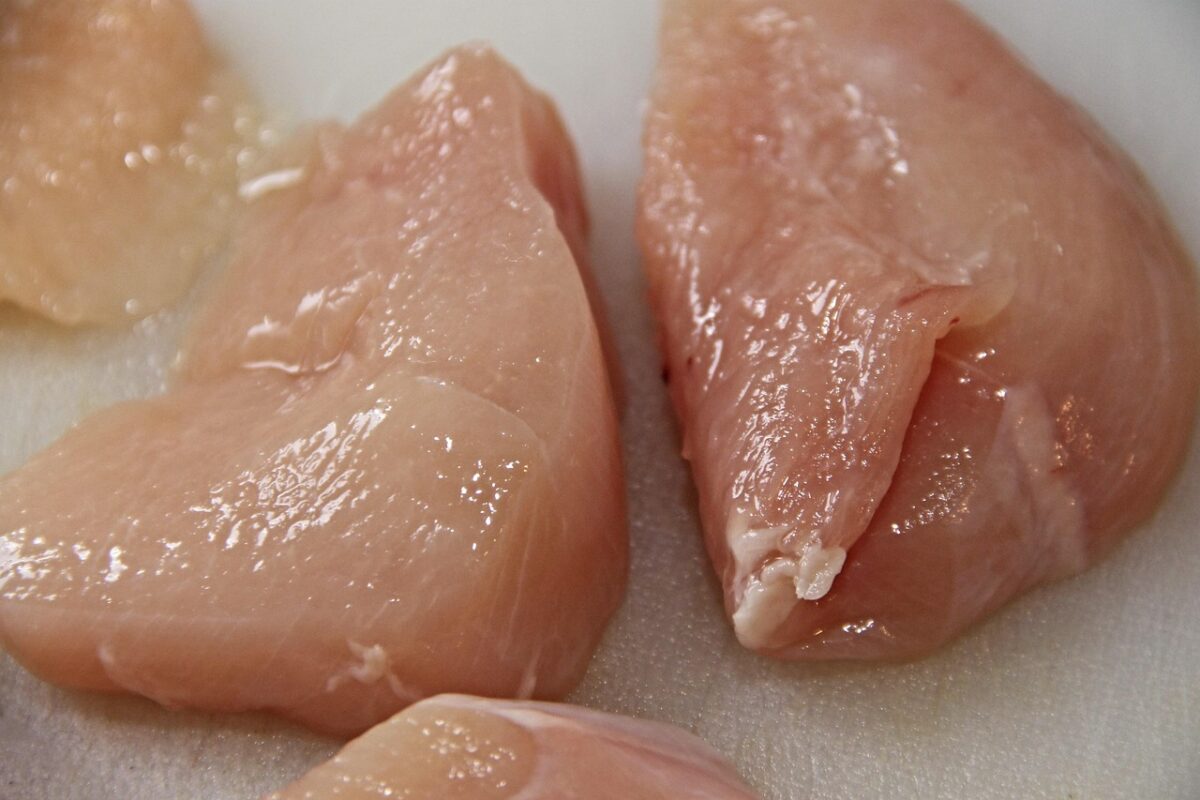
To understand why, we have to look at their biology. Cats possess a highly acidic stomach environment and a significantly shorter digestive tract than humans.
This evolutionary design allows them to process pathogens and digest bone and raw protein quickly, usually before bacteria like Salmonella can multiply enough to cause illness. In the wild, this system works perfectly for consuming freshly killed prey.
But here is the problem: The chicken in your fridge is not “fresh prey.”
Store-bought poultry goes through processing, packaging, and shipping, giving bacteria time to proliferate. Unlike a mouse caught in a field, a grocery store chicken breast is a potential host for:
- Salmonella & Campylobacter: Bacteria that can cause severe gastrointestinal distress.
- Parasites: Specifically, Toxoplasma gondii, which poses risks to both cats and humans.
- Listeria: A hardy bacterium that can survive refrigeration.
Furthermore, a piece of raw breast meat is not a complete meal.
In the wild, a cat eats the whole animal, bones, organs, and connective tissue, to get a balance of calcium, taurine, and vitamins. Feeding only raw muscle meat (like chicken breast) can lead to dangerous nutritional deficiencies over time.
So, while a healthy adult cat might handle a raw scrap without issue, making it a regular habit requires strict safety protocols.
Choking & Bone Hazards
Raw chicken can also pose a physical risk, especially if bones are involved.
While some raw-feeding advocates argue that raw bones are softer than cooked ones, they can still cause choking, dental fractures, or internal injury. Small bones may become lodged in the throat, while larger pieces can splinter or create intestinal blockages.
Cooked bones are even more dangerous, as heat makes them brittle and more likely to splinter.
If offering raw chicken, it’s safest to avoid small, sharp bones and never leave your cat unsupervised while eating.
Even a natural food can become a medical emergency if the size or texture isn’t appropriate.

What Raw Chicken Actually Contains (The Nutritional Breakdown)
At first glance, raw chicken seems like an ideal feline food. It’s animal protein. It’s moisture-rich. It looks closer to prey than kibble ever could.
But when we zoom in nutritionally, the picture becomes more complex.
Protein: A Strong Start
Raw chicken is high in protein, something cats absolutely need.
As obligate carnivores, cats rely on animal protein for:
- Muscle maintenance
- Organ function
- Immune support
- Energy
In that sense, chicken checks an important box. But protein alone doesn’t make a complete diet.
Fat: Energy, But Variable
Chicken also contains fat, which provides concentrated energy and supports skin and coat health. However, fat levels vary depending on the cut:
- Chicken breast is relatively lean
- Thighs and skin contain significantly more fat
Too little fat can lead to energy deficiencies. Too much can contribute to weight gain or digestive upset. Balance matters, and plain raw chicken doesn’t control for that balance.
What About Taurine?
Taurine is a critical amino acid for cats.
Unlike many animals, cats cannot produce enough taurine on their own. They must get it from their diet.
Taurine supports:
- Heart health
- Vision
- Reproductive health
- Immune function
Raw muscle meat does contain taurine, but levels can vary widely depending on the cut and storage method. Grinding, freezing, and handling can reduce taurine concentrations over time.
A diet consistently low in taurine can lead to serious conditions like dilated cardiomyopathy or retinal degeneration. That’s not something you’d notice immediately, but it develops quietly over time.
The Missing Nutrients
Here’s where the real question emerges. A wild prey animal isn’t just muscle meat.
When cats hunt in the wild, they consume:
- Organs (rich in vitamins and minerals)
- Bones (calcium and phosphorus)
- Connective tissue
- Blood
Plain raw chicken, especially boneless, skinless cuts, doesn’t replicate that nutrient profile.
It lacks:
- Adequate calcium
- Proper phosphorus balance
- Certain trace minerals
- A full spectrum of fat-soluble vitamins
Over time, these imbalances can affect bone strength, organ function, and overall health.
Is Muscle Meat Alone Enough?
Short-term? A small amount likely won’t cause harm in a healthy adult cat. Long-term as a primary diet? Muscle meat alone is not considered complete or balanced.
And that’s the key distinction. Raw chicken isn’t automatically dangerous because it’s raw. It becomes risky when it replaces a properly formulated, nutritionally complete diet.
Before deciding whether it’s worth incorporating, we also need to look at something less visible: food safety risks that don’t show up on a nutrition label.
The Rise of Raw Diets for Cats: Natural Choice or Risky Trend?
Raw feeding has gained serious traction over the past few decades.
Search online, and you’ll find passionate communities arguing that cats thrive on raw meat, shinier coats, better digestion, and more energy. The philosophy is simple: feed cats what their wild ancestors ate.
The raw pet food movement began in 1993 with the publication of “Give Your Dog A Bone,” written by veterinarian Dr. Ian Billinghurst. In his writing, Billinghurst suggested that many ailments seen in our companion pets are due to the commercial food they are fed.
For ultimate health, Billinghurst said cats and dogs should eat Biologically Appropriate Raw Food (BARF) in the form of raw muscle meat, organs, bones, vegetables, and fruit.

Potential Benefits of a Raw Diet
Raw feeding is often described as more “ancestral,” aiming to mimic what wild cats eat. Options range from home-prepared meals to commercial frozen, freeze-dried, or dehydrated raw formulas.
Supporters of raw diets report benefits such as:
- Improved digestion
- Shinier coats
- Healthier skin
- Smaller, less odorous stools
- Increased moisture intake
- Better weight control
Some advocates also argue that minimal processing preserves certain nutrients and reduces exposure to heat-related byproducts. However, many of these benefits are anecdotal, and results often depend more on overall diet quality and balance than on whether the food is raw or cooked.
What Raw Diet Advocates Claim
Raw diets are higher in enzymes and certain antioxidants. Heating food produces toxins, such as acrylamides and nitrosamines, which cause oxidative stress and are carcinogens. In contrast, the antioxidants in raw foods have been shown to reduce oxidative stress in cats and support immune function.
Supporters of raw feeding often argue that:
- Cooking destroys natural enzymes
- Raw diets better match feline biology
- Processed pet food is overly carbohydrate-heavy
Some owners report visible improvements after switching, especially when moving from low-quality commercial food to a carefully formulated raw plan.
But there’s an important distinction:
A professionally balanced raw diet is not the same as feeding plain raw chicken from the grocery store.
And that’s where veterinary guidance becomes critical.
What Veterinarians Say About Feeding Raw Chicken
Veterinary organizations tend to take a far more cautious stance.
- The American Veterinary Medical Association discourages feeding cats and dogs raw or undercooked animal-source protein due to the risk of foodborne illness.
- Similarly, the U.S. Food and Drug Administration has issued warnings about raw pet foods testing positive for harmful bacteria such as Salmonella and Listeria.
- The Centers for Disease Control and Prevention also highlights the risk of zoonotic transmission — meaning bacteria from raw pet food can spread to humans through handling or household surfaces.
From a veterinary perspective, the primary concerns are:
- Bacterial contamination
- Parasites
- Nutritional imbalance
- Risk to immunocompromised pets
- Risk to children, elderly adults, or immunocompromised people in the home
Most veterinarians agree on one key point:
If an owner chooses to feed raw, the diet should be carefully formulated to be complete and balanced, ideally under veterinary or veterinary nutritionist supervision.
Feeding raw chicken alone does not meet that standard.
The Human Factor: It’s Not Just About the Cat
Here is the irony of raw feeding: The biggest risk isn’t usually to the cat. It’s to you.
While a healthy feline’s short digestive tract can often process pathogens without issue, humans are far more susceptible to the bacteria found on raw chicken, specifically Salmonella and Listeria.
The danger isn’t just in the preparation, it’s in the “shedding.”
Even if your cat shows no signs of illness, they can become an asymptomatic carrier. After eating raw chicken, your cat can shed Salmonella in their stool and saliva.
This creates an invisible chain of contamination throughout your home:
- The “Kiss” Vector: A cat grooms itself immediately after eating, then licks your hand or face, transferring bacteria directly to you.
- Surface Contamination: Your cat eats from a bowl, then tracks microscopic particles across your kitchen floor or countertops.
- The Litter Box: Pathogens are excreted in waste, meaning every time you scoop the box, you are potentially exposing yourself to E. coli or Salmonella.
Who is Most at Risk? According to the CDC, raw pet diets pose a severe threat to households with:
- Children under 5 years old
- The elderly (65+)
- Pregnant individuals
- Anyone with a compromised immune system
If your home falls into one of these categories, the safety consensus is clear: Stick to cooked proteins.
Why This Debate Feels So Confusing
The raw feeding debate is emotionally charged because both sides are trying to do the same thing: protect the health of the cat.
- Owners see instinct and evolutionary logic.
- Veterinarians see modern food safety risks and long-term nutritional data.
- And the truth lies somewhere in the middle — understanding both the biology of cats and the realities of modern food production.
If You Choose to Feed Raw: Safety Guidelines
Some owners choose to feed raw despite the risks. If you decide to offer raw chicken, minimizing potential harm is essential.

Store It Safely
Keep raw chicken refrigerated at or below 40°F (4°C), sealed, and separate from other foods. Discard anything left out for more than 1–2 hours.
Freezing Helps — But Doesn’t Eliminate Risk
Freezing may reduce certain parasites, but it does not reliably kill harmful bacteria like Salmonella.
Practice Strict Hygiene
Wash hands thoroughly, disinfect bowls and surfaces, and prevent cross-contamination in your kitchen. This is especially important in homes with children, elderly adults, or immunocompromised individuals.
Choose Balanced Formulations
There’s a major difference between a commercially formulated raw diet and plain grocery-store chicken. Muscle meat alone is not complete or balanced long-term. If feeding raw regularly, consult your veterinarian to ensure nutritional adequacy.
Feeding raw isn’t just about instinct — it requires careful planning and responsible handling.
Safety note: Even commercial raw pet food could pose a risk to your cat. A CVM study of 196 raw pet foods found that nearly 25 percent tested positive for harmful microbes, including Salmonella and Listeria monocytogenes.
How to Feed Raw Chicken to Cats Safely
If you decide to feed raw, you must move beyond “instinct” and focus on biosecurity.
Treat raw feeding like a medical procedure, not just a meal. Following strict hygiene protocols protects your cat from Salmonella and protects you from cross-contamination.
1. The “Grocery Store” Trap
Never feed plain chicken breast as a meal replacer. Muscle meat is high in phosphorus but dangerously low in calcium. Without edible bone and organ meat (the “80/10/10” ratio), your cat can develop life-threatening nutritional deficiencies.
The Safer Alternative: If you want the benefits of raw without the math, we recommend starting with a commercially prepared raw diet. These are formulated to meet AAFCO nutritional standards for felines, ensuring the calcium-to-phosphorus ratio is correct.
2. The “Stainless Steel” Rule
Plastic bowls develop microscopic scratches that trap bacteria like E. coli, even after washing. Upgrade to stainless steel or ceramic: These non-porous materials are much easier to sanitize.
- Wash: Scrub bowls with hot, soapy water immediately after every meal.
- Disinfect: Use a pet-safe disinfectant on the floor area where the bowl sits.
3. Strict Temperature Control
Bacteria multiply rapidly in the “Danger Zone” (40°F – 140°F).
- Thaw Safely: Never thaw meat on the counter. Thaw in the refrigerator.
- The 30-Minute Rule: If your cat hasn’t eaten the raw food within 30 minutes, discard it. Do not save it for later.
Storage Tip: Keep raw pet food on the bottom shelf of your fridge in a sealed container to prevent juices from dripping onto human food.
Warning: The Kitten Exception: Proceed with Extreme Caution.
While adult cats have robust immune systems, kittens are immunologically fragile. Their digestive tracts are still populating with beneficial gut flora, making them highly susceptible to rapid dehydration from foodborne illness.
The “Bone Growth” Risk: Kittens have critical requirements for Calcium and Phosphorus to support rapid skeletal growth. Getting the ratio wrong in a homemade raw diet can lead to:
- Nutritional Secondary Hyperparathyroidism (Paper Bone Disease)
- Stunted growth
- Spontaneous fractures
Our Recommendation: Stick to high-quality, cooked commercial kitten food until they are at least 12 months old. The risks of raw feeding during this growth window far outweigh the benefits.

Raw vs. Cooked Chicken: Which Is Safer for Cats?
If raw chicken feels more “natural,” it’s fair to wonder how it compares to cooked chicken.
Both come from the same source, but preparation changes risk, digestibility, and safety. Understanding the difference can help you make a more informed choice.
Here’s how they stack up:
Here’s how they stack up:
| Factor | Raw Chicken | Cooked Chicken (Plain, Unseasoned) |
|---|---|---|
| Bacteria Risk | Higher risk of Salmonella or Campylobacter | Significantly reduced risk due to heat |
| Parasites | Possible (freezing may reduce some risk) | Destroyed through proper cooking |
| Nutritional Balance | Not complete if fed as muscle meat alone | Also not complete if fed alone |
| Bone Safety | Raw bones are softer but still pose a choking/blockage risk | Cooked bones are brittle and dangerous (should never be fed) |
| Digestibility | Generally digestible for healthy adults | Highly digestible and typically safer |
| Household Safety Risk | Higher (handling contamination possible) | Lower |
What This Comparison Really Means
Neither raw nor cooked chicken alone is a complete, balanced diet for cats.
The biggest difference is food safety. Cooking dramatically reduces bacterial and parasite risk — but it does not magically make chicken nutritionally complete.
So if the choice is between offering a small treat of plain cooked chicken or raw grocery-store chicken, cooked is generally the lower-risk option.
Can Cats Eat Raw Chicken? Frequently Asked Questions
Here are some frequently asked questions about feeding raw chicken to cats. Don’t see yours? Ask us in the comments.
Can Cats Get Salmonella From Raw Chicken?
Yes. Cats can contract Salmonella from contaminated raw poultry, even if they don’t show obvious symptoms.
Some cats may experience vomiting, diarrhea, fever, or lethargy. Others may appear healthy but still shed bacteria in their stool, potentially spreading it to people in the household.
Other symptoms include:
- Anorexia
- Dehydration
- Fast heart rate
- Mucus in stool
- Shock
- Swollen lymph nodes
- Weight loss
Food safety risks are one of the primary reasons veterinarians urge caution with raw diets.
If you notice these symptoms after your cat eats raw chicken, visit your vet for diagnosis and treatment.
Can Cats Eat Raw Chicken Bones?
Raw bones are softer than cooked bones, but they are not risk-free.
They can cause:
- Choking
- Dental fractures
- Intestinal blockages
Cooked chicken bones are more dangerous because they splinter easily and should never be fed to cats. If bones are included in a raw diet, they should be appropriately sized and offered under supervision.
How Much Raw Chicken Can a Cat Eat?
A small, occasional piece is very different from feeding raw chicken as a primary diet.
Raw chicken alone does not provide complete nutrition long-term. If fed regularly, the overall diet must be balanced to meet feline nutritional requirements.
When in doubt, consult your veterinarian before making dietary changes.
Can Indoor Cats Safely Eat Raw Meat?
Indoor cats have the same digestive biology as outdoor cats — but they are not exposed to the same environmental pathogens regularly.
That means foodborne illness is still a risk. Additionally, bacteria from raw meat can spread within the home through litter boxes, grooming, and shared surfaces.
Is Store-Bought Raw Chicken Safe for Cats?
Not necessarily. Grocery-store poultry is processed for human cooking, not raw consumption. It may carry bacteria that are normally destroyed during cooking.
If feeding raw regularly, commercially prepared diets designed specifically for pets are generally safer than plain store-bought chicken.
Should You Consider Pet Insurance?
While you may not think pet insurance is worth the cost when your feline is healthy, investing in a quality plan can save you thousands of dollars in future vet bills. Pet insurance can help cover the cost of accidents and illnesses related to eating raw chicken. View our picks for the best pet insurance for felines.
The Bigger Question: What Human Foods Can Cats Safely Eat?
Raw chicken is just one piece of a much larger conversation. As cat owners, we’ve all been there, cooking dinner while our feline watches closely, hoping for a bite. And it raises a common question:
What human foods are actually safe for cats? The truth is, some foods are fine in moderation. Others carry hidden risks. And a few should never be shared at all.
If you’re curious about other popular kitchen staples, you might also want to explore:
- Can cats eat bacon? → https://www.loveyourcat.com/can-cats-eat-bacon/
- Can cats eat Spam? → https://www.loveyourcat.com/can-cats-eat-spam/
- Can cats eat turkey? → https://www.loveyourcat.com/can-cats-eat-turkey/
- Can cats eat steak? → https://www.loveyourcat.com/can-cats-eat-steak/
When it comes to sharing food, balance and preparation matter more than instinct. Treats should stay occasional, and your cat’s primary nutrition should always come from a complete and balanced diet. The goal isn’t just knowing what they can eat, it’s choosing what truly supports their long-term health and well-being.
Has Your Cat Ever Tried Raw Chicken?
Every cat reacts differently. Some sniff and walk away. Others act like they’ve discovered treasure.
Have you ever offered your cat raw chicken? How did they respond? We’d love to hear your experience, whether it went smoothly or taught you something unexpected. Share your story in the comments below and help other cat owners make informed decisions.


